
.svg)

Picking the right book for an elementary school child is one of the highest-leverage things a parent can do for their reading. The right title at the right age turns a kid who tolerates reading into a kid who reaches for the next book on their own. The wrong title — too hard, too easy, too earnest — does the opposite.
Quick answer: what are the best books for elementary school students?
The best books for an elementary school student are the ones at their reading level and in the genre they actually like. For Kindergarten and 1st grade, that means rhyming picture books with strong illustrations (Mem Fox, Pamela Allen, Mo Willems). For 1st–2nd grade, early chapter books with short chapters and pictures (Mo Willems' Elephant & Piggie, Aaron Blabey's The Bad Guys). For 3rd–4th grade, classic chapter books with momentum (Roald Dahl, Charlotte's Web, Andy Griffiths' Treehouse). For 5th–6th grade, longer middle-grade with real emotional weight (Beverly Naidoo, Front Desk, Wonder). The 12-book list below is split across these four age bands so you can match the book to the child.
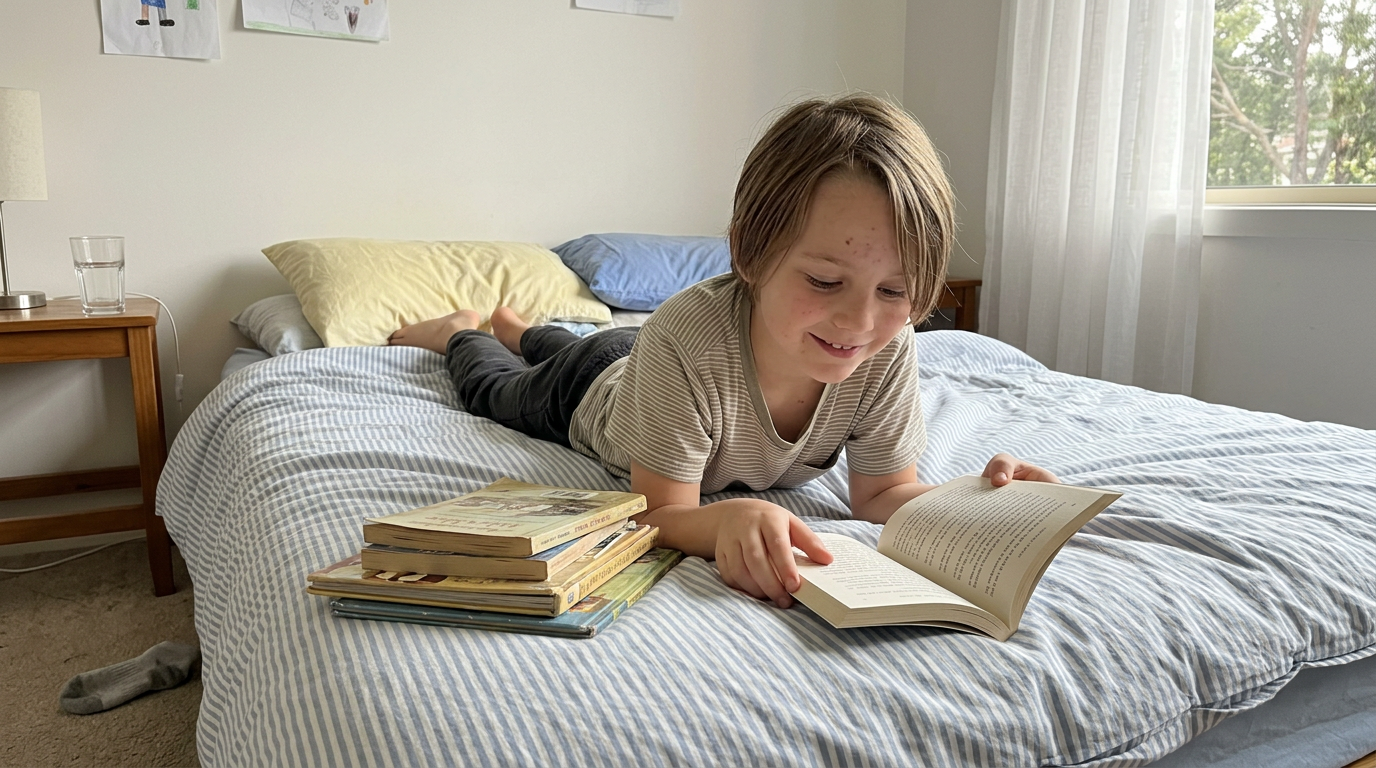
What books should I pick for Kindergarten and 1st grade (ages 5–6)?
For Kindergarten and 1st grade, pick picture books with strong rhyme, repetition, and big illustrations the child can read alongside the text. At this stage your child is decoding letters and sounds; books with predictable patterns (rhyme, repeated phrases, picture-led storytelling) let them feel like a real reader before they technically are. Read aloud first, then re-read together, then let them "read" it back to you from memory — that re-reading is one of the strongest predictors of reading confidence at age six.
- Possum Magic by Mem Fox — a picture-book classic. Hush the possum is invisible and the only cure is Vegemite, lamingtons, and mince pies. Rhythmic, funny, and a great read-aloud.
- Who Sank the Boat? by Pamela Allen — a counting and prediction book disguised as a story. Kindy children love guessing which animal sinks the boat.
- Don't Let the Pigeon Drive the Bus! by Mo Willems — interactive, hilarious, and the pigeon argues directly with the reader. A favorite for reluctant little readers.
What books should I pick for 1st and 2nd grade (ages 6–7)?
For 1st and 2nd grade, pick early chapter books with short chapters, big text, and one illustration every two or three pages. This is the bridge stage — your child is moving from shared reading to independent reading and they need books with momentum so they finish them. Finishing the book matters more than any other variable at this age. A child who finishes a 60-page chapter book gets a confidence jump that no read-aloud picture book delivers, so prioritize titles you know they can get to the end of.
- Elephant & Piggie series by Mo Willems — two friends, big-text dialogue, fewer than 60 pages each. Designed for emerging readers and adored by them.
- The Bad Guys series by Aaron Blabey — graphic-novel-meets-chapter-book hybrid. Hilarious and visually rich enough that even reluctant readers race through them.
- Dog Man series by Dav Pilkey — graphic-novel format, comedic, and the perfect "next step" for kids who started with picture books and want pictures plus a real story arc.
What books should I pick for 3rd and 4th grade (ages 8–9)?
For 3rd and 4th grade, pick chapter books with strong narrative voice and 100–250 pages — long enough to feel like a real book, short enough to finish. This is the sweet spot for the Roald Dahl / E.B. White / Andy Griffiths generation of titles, and it's also where reading really starts to build vocabulary. The American Library Association (ALA) Notable Children's Books list is a strong filter at this age — every title has been read by educators and judged for both quality and engagement.
- Charlotte's Web by E.B. White — Wilbur the pig, Charlotte the spider, and one of the most quietly devastating endings in children's literature. A book that earns the word "classic".
- Charlie and the Chocolate Factory by Roald Dahl — Dahl's voice is unmistakable, and the moral logic of the chocolate factory is the kind of structural humor that 8-year-olds love working out.
- The 13-Storey Treehouse by Andy Griffiths and Terry Denton — Illustration-heavy, and the start of a 17-book series that has carried thousands of 3rd–4th grade readers from "I don't read books" to "what's the next one?".
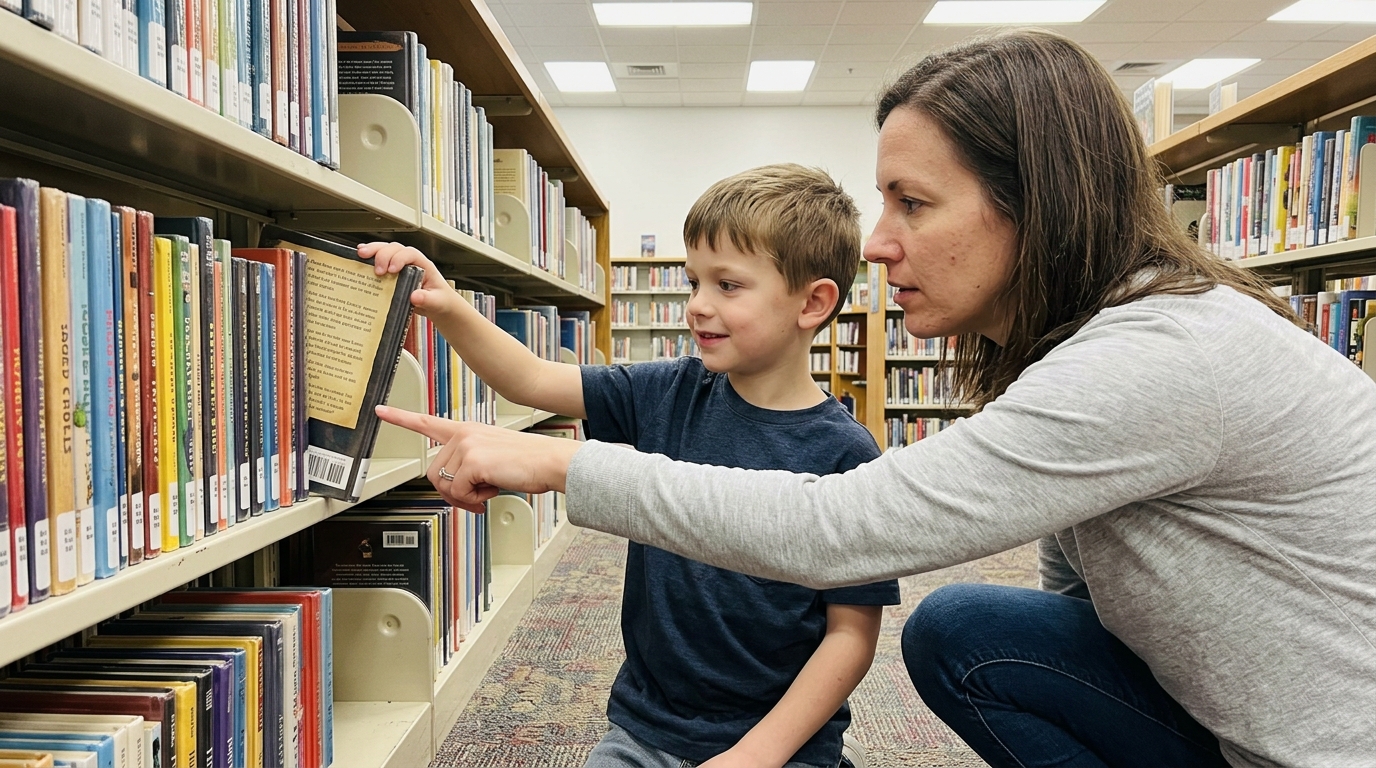
What books should I pick for 5th and 6th grade (ages 10–12)?
For 5th and 6th grade, pick middle-grade fiction with real emotional weight — books that take a child seriously as a reader who can handle grief, friendship complexity, identity, and the wider world. This is the age where readers either commit to reading for life or quietly drop it; the difference is almost always whether the books they read at 10–11 felt like they were written for them, not down to them. ALA Newbery Medal and Notable Children's Books winners are a strong shortlist.
- Wonder by R.J. Palacio — a boy with a facial difference starts mainstream school. Read by 5th–6th grade classes across the US and one of the most consistently re-read books at this age.
- Front Desk by Kelly Yang — a 10-year-old daughter of Chinese immigrants runs the front desk of a motel. Funny, sharp, and a great window for kids into a life unlike their own.
- Journey to Jo'burg by Beverley Naidoo — two children walk across apartheid-era South Africa to find their mother. Short, devastating, and the kind of book that re-shapes what a 6th grade reader thinks fiction can do.
Should I let my child re-read the same book?
Yes — re-reading is one of the most underrated drivers of reading confidence. When a child reads the same book three or four times, they stop decoding and start reading: their brain is freed up to notice voice, rhythm, character, and structure. Education Endowment Foundation (EEF) reading meta-analyses consistently find that fluency-building activities — including re-reading familiar text — produce reliable gains for primary readers. So when your 2nd grade child wants The Bad Guys #3 for the fifth time, that's not a problem; that's the work.
How do I get my child to actually love reading?
Make books easy to grab, let them choose, and protect the bedtime reading slot. The three things that move the needle most:
- Books in reach. A small basket of books in their bedroom or on the couch beats a tidy bookshelf in another room. Friction kills reading.
- Their pick, not yours. A child reading a Captain Underpants book is reading; a child grimly working through the book you chose is not. Let them choose 4 of every 5 books.
- Twenty minutes before bed. A consistent 20-minute reading window before lights-out — phone charging in another room — builds the habit faster than any other intervention.
What's the difference between a picture book and an early chapter book?
A picture book carries the story through its illustrations and is usually read aloud to a child; an early chapter book carries the story through text with one supporting illustration every few pages, and is usually read by the child. The transition between the two — typically late 1st grade or early 2nd grade — is the most fragile moment in a child's reading life. The bridge titles are the ones that look like a chapter book but feel like a picture book: short chapters, big text, an illustration every spread (Mo Willems' Elephant & Piggie, Aaron Blabey's The Bad Guys, Dog Man). Skip the bridge and your child can stall for a year.
My child says they don't like reading — what do I do?
Almost every "I don't like reading" actually means "I haven't found the right book yet" or "the book I'm trying to read is too hard for me". The fix is to drop the level by one band, swap to a graphic-novel format, and let your child finish something. Confidence comes from finishing. A 4th grade child who can't get through a 200-page chapter book will rip through a Dog Man graphic novel in an afternoon and feel like a reader again — and the next book is easier to start.
If reading confidence is a recurring sticking point — your child is avoiding reading homework, falling behind in comprehension, or struggling to keep up in class — a one-on-one tutor can rebuild reading confidence faster than home practice alone. Tutero's elementary school tutors work with kids from Kindergarten through 6th grade at US$45/hr, with no contracts, and pair every child with a tutor matched to their reading level and personality. Most parents see real momentum within four to six weeks.
Related reading
If you found this list useful, these companion guides go deeper on the habits behind it:
- 4 advantages of learning a second language at school — language learning compounds with reading.
- 5 tips to set up a positive learning environment at home — the room your child reads in matters more than you think.
- Effective strategies to improve your math study skills — for the parent thinking beyond English.
- 5 key benefits of private tutoring — what a one-on-one tutor actually does for an elementary school reader.
- The ideal time to begin tutoring — and why earlier is usually better.
- How personalized tutoring can help your child — matched-tutor model explained.
Bottom line
The best book for an elementary school student is the one they finish, then ask for the next. Match the book to the age band, let the child pick, protect a 20-minute bedtime reading slot, and don't overthink it. The 12 titles above are a tried-and-true starting list — but a public library card and an hour of browsing every couple of weeks will do more for your child's reading life than any single book on this page. Find the one they want to finish, then find the next one.
Picking the right book for an elementary school child is one of the highest-leverage things a parent can do for their reading. The right title at the right age turns a kid who tolerates reading into a kid who reaches for the next book on their own. The wrong title — too hard, too easy, too earnest — does the opposite.
Quick answer: what are the best books for elementary school students?
The best books for an elementary school student are the ones at their reading level and in the genre they actually like. For Kindergarten and 1st grade, that means rhyming picture books with strong illustrations (Mem Fox, Pamela Allen, Mo Willems). For 1st–2nd grade, early chapter books with short chapters and pictures (Mo Willems' Elephant & Piggie, Aaron Blabey's The Bad Guys). For 3rd–4th grade, classic chapter books with momentum (Roald Dahl, Charlotte's Web, Andy Griffiths' Treehouse). For 5th–6th grade, longer middle-grade with real emotional weight (Beverly Naidoo, Front Desk, Wonder). The 12-book list below is split across these four age bands so you can match the book to the child.
What books should I pick for Kindergarten and 1st grade (ages 5–6)?
For Kindergarten and 1st grade, pick picture books with strong rhyme, repetition, and big illustrations the child can read alongside the text. At this stage your child is decoding letters and sounds; books with predictable patterns (rhyme, repeated phrases, picture-led storytelling) let them feel like a real reader before they technically are. Read aloud first, then re-read together, then let them "read" it back to you from memory — that re-reading is one of the strongest predictors of reading confidence at age six.
- Possum Magic by Mem Fox — a picture-book classic. Hush the possum is invisible and the only cure is Vegemite, lamingtons, and mince pies. Rhythmic, funny, and a great read-aloud.
- Who Sank the Boat? by Pamela Allen — a counting and prediction book disguised as a story. Kindy children love guessing which animal sinks the boat.
- Don't Let the Pigeon Drive the Bus! by Mo Willems — interactive, hilarious, and the pigeon argues directly with the reader. A favorite for reluctant little readers.
What books should I pick for 1st and 2nd grade (ages 6–7)?
For 1st and 2nd grade, pick early chapter books with short chapters, big text, and one illustration every two or three pages. This is the bridge stage — your child is moving from shared reading to independent reading and they need books with momentum so they finish them. Finishing the book matters more than any other variable at this age. A child who finishes a 60-page chapter book gets a confidence jump that no read-aloud picture book delivers, so prioritize titles you know they can get to the end of.
- Elephant & Piggie series by Mo Willems — two friends, big-text dialogue, fewer than 60 pages each. Designed for emerging readers and adored by them.
- The Bad Guys series by Aaron Blabey — graphic-novel-meets-chapter-book hybrid. Hilarious and visually rich enough that even reluctant readers race through them.
- Dog Man series by Dav Pilkey — graphic-novel format, comedic, and the perfect "next step" for kids who started with picture books and want pictures plus a real story arc.
What books should I pick for 3rd and 4th grade (ages 8–9)?
For 3rd and 4th grade, pick chapter books with strong narrative voice and 100–250 pages — long enough to feel like a real book, short enough to finish. This is the sweet spot for the Roald Dahl / E.B. White / Andy Griffiths generation of titles, and it's also where reading really starts to build vocabulary. The American Library Association (ALA) Notable Children's Books list is a strong filter at this age — every title has been read by educators and judged for both quality and engagement.
- Charlotte's Web by E.B. White — Wilbur the pig, Charlotte the spider, and one of the most quietly devastating endings in children's literature. A book that earns the word "classic".
- Charlie and the Chocolate Factory by Roald Dahl — Dahl's voice is unmistakable, and the moral logic of the chocolate factory is the kind of structural humor that 8-year-olds love working out.
- The 13-Storey Treehouse by Andy Griffiths and Terry Denton — Illustration-heavy, and the start of a 17-book series that has carried thousands of 3rd–4th grade readers from "I don't read books" to "what's the next one?".
What books should I pick for 5th and 6th grade (ages 10–12)?
For 5th and 6th grade, pick middle-grade fiction with real emotional weight — books that take a child seriously as a reader who can handle grief, friendship complexity, identity, and the wider world. This is the age where readers either commit to reading for life or quietly drop it; the difference is almost always whether the books they read at 10–11 felt like they were written for them, not down to them. ALA Newbery Medal and Notable Children's Books winners are a strong shortlist.
- Wonder by R.J. Palacio — a boy with a facial difference starts mainstream school. Read by 5th–6th grade classes across the US and one of the most consistently re-read books at this age.
- Front Desk by Kelly Yang — a 10-year-old daughter of Chinese immigrants runs the front desk of a motel. Funny, sharp, and a great window for kids into a life unlike their own.
- Journey to Jo'burg by Beverley Naidoo — two children walk across apartheid-era South Africa to find their mother. Short, devastating, and the kind of book that re-shapes what a 6th grade reader thinks fiction can do.
Should I let my child re-read the same book?
Yes — re-reading is one of the most underrated drivers of reading confidence. When a child reads the same book three or four times, they stop decoding and start reading: their brain is freed up to notice voice, rhythm, character, and structure. Education Endowment Foundation (EEF) reading meta-analyses consistently find that fluency-building activities — including re-reading familiar text — produce reliable gains for primary readers. So when your 2nd grade child wants The Bad Guys #3 for the fifth time, that's not a problem; that's the work.
How do I get my child to actually love reading?
Make books easy to grab, let them choose, and protect the bedtime reading slot. The three things that move the needle most:
- Books in reach. A small basket of books in their bedroom or on the couch beats a tidy bookshelf in another room. Friction kills reading.
- Their pick, not yours. A child reading a Captain Underpants book is reading; a child grimly working through the book you chose is not. Let them choose 4 of every 5 books.
- Twenty minutes before bed. A consistent 20-minute reading window before lights-out — phone charging in another room — builds the habit faster than any other intervention.
What's the difference between a picture book and an early chapter book?
A picture book carries the story through its illustrations and is usually read aloud to a child; an early chapter book carries the story through text with one supporting illustration every few pages, and is usually read by the child. The transition between the two — typically late 1st grade or early 2nd grade — is the most fragile moment in a child's reading life. The bridge titles are the ones that look like a chapter book but feel like a picture book: short chapters, big text, an illustration every spread (Mo Willems' Elephant & Piggie, Aaron Blabey's The Bad Guys, Dog Man). Skip the bridge and your child can stall for a year.
My child says they don't like reading — what do I do?
Almost every "I don't like reading" actually means "I haven't found the right book yet" or "the book I'm trying to read is too hard for me". The fix is to drop the level by one band, swap to a graphic-novel format, and let your child finish something. Confidence comes from finishing. A 4th grade child who can't get through a 200-page chapter book will rip through a Dog Man graphic novel in an afternoon and feel like a reader again — and the next book is easier to start.
If reading confidence is a recurring sticking point — your child is avoiding reading homework, falling behind in comprehension, or struggling to keep up in class — a one-on-one tutor can rebuild reading confidence faster than home practice alone. Tutero's elementary school tutors work with kids from Kindergarten through 6th grade at US$45/hr, with no contracts, and pair every child with a tutor matched to their reading level and personality. Most parents see real momentum within four to six weeks.
Related reading
If you found this list useful, these companion guides go deeper on the habits behind it:
- 4 advantages of learning a second language at school — language learning compounds with reading.
- 5 tips to set up a positive learning environment at home — the room your child reads in matters more than you think.
- Effective strategies to improve your math study skills — for the parent thinking beyond English.
- 5 key benefits of private tutoring — what a one-on-one tutor actually does for an elementary school reader.
- The ideal time to begin tutoring — and why earlier is usually better.
- How personalized tutoring can help your child — matched-tutor model explained.
Bottom line
The best book for an elementary school student is the one they finish, then ask for the next. Match the book to the age band, let the child pick, protect a 20-minute bedtime reading slot, and don't overthink it. The 12 titles above are a tried-and-true starting list — but a public library card and an hour of browsing every couple of weeks will do more for your child's reading life than any single book on this page. Find the one they want to finish, then find the next one.

Picking the right book for an elementary school child is one of the highest-leverage things a parent can do for their reading. The right title at the right age turns a kid who tolerates reading into a kid who reaches for the next book on their own. The wrong title — too hard, too easy, too earnest — does the opposite.
Quick answer: what are the best books for elementary school students?
The best books for an elementary school student are the ones at their reading level and in the genre they actually like. For Kindergarten and 1st grade, that means rhyming picture books with strong illustrations (Mem Fox, Pamela Allen, Mo Willems). For 1st–2nd grade, early chapter books with short chapters and pictures (Mo Willems' Elephant & Piggie, Aaron Blabey's The Bad Guys). For 3rd–4th grade, classic chapter books with momentum (Roald Dahl, Charlotte's Web, Andy Griffiths' Treehouse). For 5th–6th grade, longer middle-grade with real emotional weight (Beverly Naidoo, Front Desk, Wonder). The 12-book list below is split across these four age bands so you can match the book to the child.
What books should I pick for Kindergarten and 1st grade (ages 5–6)?
For Kindergarten and 1st grade, pick picture books with strong rhyme, repetition, and big illustrations the child can read alongside the text. At this stage your child is decoding letters and sounds; books with predictable patterns (rhyme, repeated phrases, picture-led storytelling) let them feel like a real reader before they technically are. Read aloud first, then re-read together, then let them "read" it back to you from memory — that re-reading is one of the strongest predictors of reading confidence at age six.
- Possum Magic by Mem Fox — a picture-book classic. Hush the possum is invisible and the only cure is Vegemite, lamingtons, and mince pies. Rhythmic, funny, and a great read-aloud.
- Who Sank the Boat? by Pamela Allen — a counting and prediction book disguised as a story. Kindy children love guessing which animal sinks the boat.
- Don't Let the Pigeon Drive the Bus! by Mo Willems — interactive, hilarious, and the pigeon argues directly with the reader. A favorite for reluctant little readers.
What books should I pick for 1st and 2nd grade (ages 6–7)?
For 1st and 2nd grade, pick early chapter books with short chapters, big text, and one illustration every two or three pages. This is the bridge stage — your child is moving from shared reading to independent reading and they need books with momentum so they finish them. Finishing the book matters more than any other variable at this age. A child who finishes a 60-page chapter book gets a confidence jump that no read-aloud picture book delivers, so prioritize titles you know they can get to the end of.
- Elephant & Piggie series by Mo Willems — two friends, big-text dialogue, fewer than 60 pages each. Designed for emerging readers and adored by them.
- The Bad Guys series by Aaron Blabey — graphic-novel-meets-chapter-book hybrid. Hilarious and visually rich enough that even reluctant readers race through them.
- Dog Man series by Dav Pilkey — graphic-novel format, comedic, and the perfect "next step" for kids who started with picture books and want pictures plus a real story arc.
What books should I pick for 3rd and 4th grade (ages 8–9)?
For 3rd and 4th grade, pick chapter books with strong narrative voice and 100–250 pages — long enough to feel like a real book, short enough to finish. This is the sweet spot for the Roald Dahl / E.B. White / Andy Griffiths generation of titles, and it's also where reading really starts to build vocabulary. The American Library Association (ALA) Notable Children's Books list is a strong filter at this age — every title has been read by educators and judged for both quality and engagement.
- Charlotte's Web by E.B. White — Wilbur the pig, Charlotte the spider, and one of the most quietly devastating endings in children's literature. A book that earns the word "classic".
- Charlie and the Chocolate Factory by Roald Dahl — Dahl's voice is unmistakable, and the moral logic of the chocolate factory is the kind of structural humor that 8-year-olds love working out.
- The 13-Storey Treehouse by Andy Griffiths and Terry Denton — Illustration-heavy, and the start of a 17-book series that has carried thousands of 3rd–4th grade readers from "I don't read books" to "what's the next one?".
What books should I pick for 5th and 6th grade (ages 10–12)?
For 5th and 6th grade, pick middle-grade fiction with real emotional weight — books that take a child seriously as a reader who can handle grief, friendship complexity, identity, and the wider world. This is the age where readers either commit to reading for life or quietly drop it; the difference is almost always whether the books they read at 10–11 felt like they were written for them, not down to them. ALA Newbery Medal and Notable Children's Books winners are a strong shortlist.
- Wonder by R.J. Palacio — a boy with a facial difference starts mainstream school. Read by 5th–6th grade classes across the US and one of the most consistently re-read books at this age.
- Front Desk by Kelly Yang — a 10-year-old daughter of Chinese immigrants runs the front desk of a motel. Funny, sharp, and a great window for kids into a life unlike their own.
- Journey to Jo'burg by Beverley Naidoo — two children walk across apartheid-era South Africa to find their mother. Short, devastating, and the kind of book that re-shapes what a 6th grade reader thinks fiction can do.
Should I let my child re-read the same book?
Yes — re-reading is one of the most underrated drivers of reading confidence. When a child reads the same book three or four times, they stop decoding and start reading: their brain is freed up to notice voice, rhythm, character, and structure. Education Endowment Foundation (EEF) reading meta-analyses consistently find that fluency-building activities — including re-reading familiar text — produce reliable gains for primary readers. So when your 2nd grade child wants The Bad Guys #3 for the fifth time, that's not a problem; that's the work.
How do I get my child to actually love reading?
Make books easy to grab, let them choose, and protect the bedtime reading slot. The three things that move the needle most:
- Books in reach. A small basket of books in their bedroom or on the couch beats a tidy bookshelf in another room. Friction kills reading.
- Their pick, not yours. A child reading a Captain Underpants book is reading; a child grimly working through the book you chose is not. Let them choose 4 of every 5 books.
- Twenty minutes before bed. A consistent 20-minute reading window before lights-out — phone charging in another room — builds the habit faster than any other intervention.
What's the difference between a picture book and an early chapter book?
A picture book carries the story through its illustrations and is usually read aloud to a child; an early chapter book carries the story through text with one supporting illustration every few pages, and is usually read by the child. The transition between the two — typically late 1st grade or early 2nd grade — is the most fragile moment in a child's reading life. The bridge titles are the ones that look like a chapter book but feel like a picture book: short chapters, big text, an illustration every spread (Mo Willems' Elephant & Piggie, Aaron Blabey's The Bad Guys, Dog Man). Skip the bridge and your child can stall for a year.
My child says they don't like reading — what do I do?
Almost every "I don't like reading" actually means "I haven't found the right book yet" or "the book I'm trying to read is too hard for me". The fix is to drop the level by one band, swap to a graphic-novel format, and let your child finish something. Confidence comes from finishing. A 4th grade child who can't get through a 200-page chapter book will rip through a Dog Man graphic novel in an afternoon and feel like a reader again — and the next book is easier to start.
If reading confidence is a recurring sticking point — your child is avoiding reading homework, falling behind in comprehension, or struggling to keep up in class — a one-on-one tutor can rebuild reading confidence faster than home practice alone. Tutero's elementary school tutors work with kids from Kindergarten through 6th grade at US$45/hr, with no contracts, and pair every child with a tutor matched to their reading level and personality. Most parents see real momentum within four to six weeks.
Related reading
If you found this list useful, these companion guides go deeper on the habits behind it:
- 4 advantages of learning a second language at school — language learning compounds with reading.
- 5 tips to set up a positive learning environment at home — the room your child reads in matters more than you think.
- Effective strategies to improve your math study skills — for the parent thinking beyond English.
- 5 key benefits of private tutoring — what a one-on-one tutor actually does for an elementary school reader.
- The ideal time to begin tutoring — and why earlier is usually better.
- How personalized tutoring can help your child — matched-tutor model explained.
Bottom line
The best book for an elementary school student is the one they finish, then ask for the next. Match the book to the age band, let the child pick, protect a 20-minute bedtime reading slot, and don't overthink it. The 12 titles above are a tried-and-true starting list — but a public library card and an hour of browsing every couple of weeks will do more for your child's reading life than any single book on this page. Find the one they want to finish, then find the next one.
.svg)
.svg)
Hoping to improve confidence & grades?

.png)


