
.svg)
.avif)
If homework time at your house is a daily battle — endless procrastination, 8pm meltdowns, work that should take 20 minutes stretching to two hours — you're not alone. Most parents we work with at Tutero describe homework as the single most stressful 30 minutes of the school day. The good news: a calm, productive homework routine is built from four small habits, not from willpower. This guide gives you the four habits, what each looks like in practice, and how to keep the routine going on the nights everyone is tired.
Quick answer
To help your child with homework, build four habits: a written weekly schedule, a quiet dedicated space, scheduled breaks every 20–30 minutes, and the practice of breaking large tasks into smaller chunks. Done together, these four habits convert "do your homework" battles into a 30–45 minute routine the whole family can predict. Total time to set up: about 20 minutes on a Sunday afternoon, plus a 5-minute check-in each weeknight. Works from Year 1 through Year 12 — the homework load changes, but the four habits don't.
How do I plan my child's homework schedule?
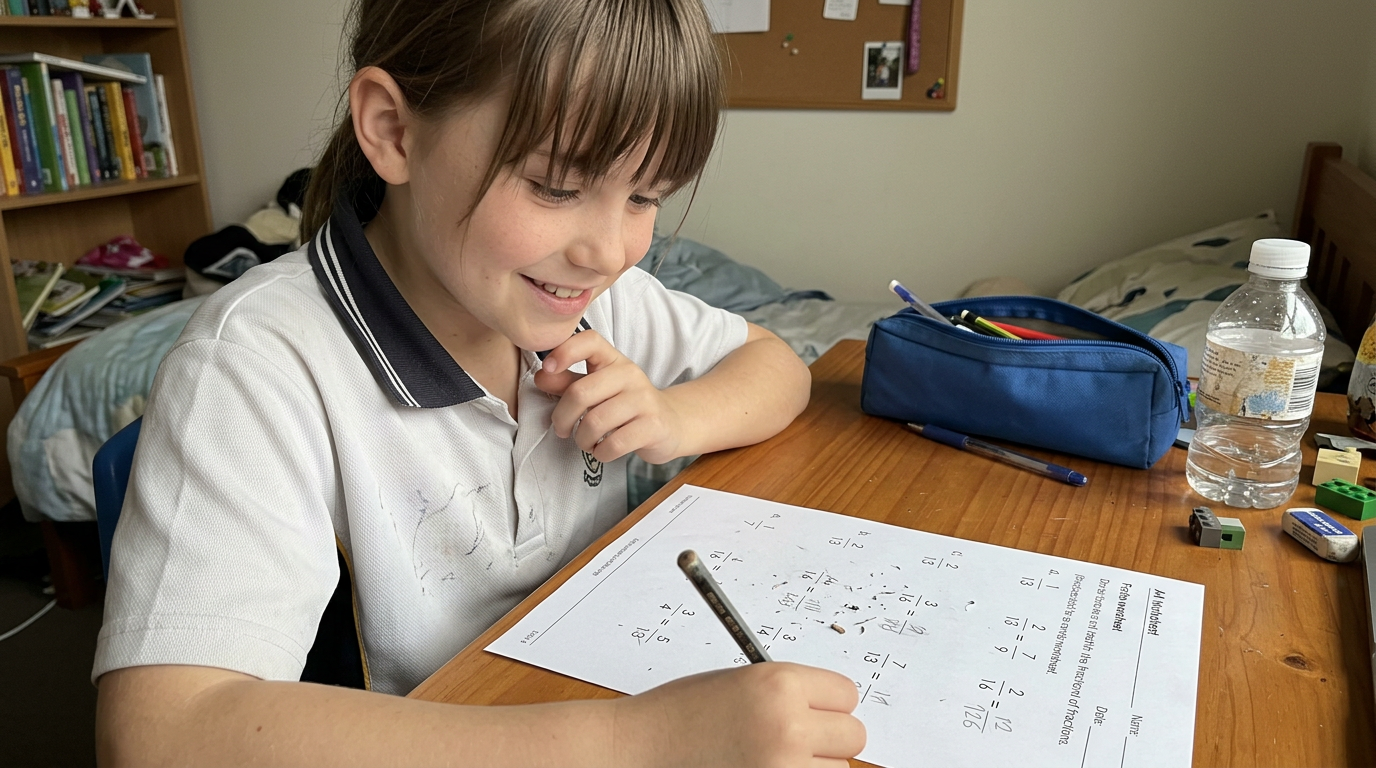
Sit down with your child for 10 minutes on a Sunday afternoon and map out the week ahead on a piece of paper or a fridge whiteboard. List every subject's homework that's due, plus any longer assignments with deadlines that week. Allocate 30–45 minutes a night for primary, 60–90 minutes for lower-secondary, and 90–120 minutes for senior. Block the time on the same days each week — most families pick straight after the after-school snack, before any screen time. The key principle: the time slot is fixed, the content is flexible. If maths is heavy on Tuesday, English shifts. If a friend's birthday is on Wednesday, the slot moves to Thursday. Predictability beats perfect planning.
What kind of space does my child need to do homework well?
A dedicated, quiet, well-lit spot — a desk in their bedroom, the kitchen table after dinner is cleared, a corner of the lounge with a folding table. Three things matter most: no TV in earshot, no phone in reach, and adequate light. Natural daylight is best for primary kids; a warm desk lamp works for late-afternoon and evening study. Keep all the supplies in one box at the desk: pencils, eraser, ruler, calculator (Year 5+), highlighters, sticky tabs, exercise books. The "I can't find a pencil" excuse alone costs 10 minutes a night across a school year. Phones go in another room, not face-down on the desk — the temptation to check is the temptation that wins.
The phone goes in another room. Not face-down on the desk, not in the next chair — in a different room. This single change adds back about 25 percent of effective homework time.
How often should my child take breaks during homework?
Every 20–30 minutes for primary, 30–45 minutes for lower-secondary, and 45–60 minutes for senior. Breaks should be 5–10 minutes long, away from the desk, and should not involve a screen. Stretching, drinking water, walking around the block, kicking a ball in the backyard, eating an apple, patting the dog — anything that gets the body moving and the eyes off close-up text. The goal is to reset attention, not to entertain. Avoid YouTube, TikTok, and Instagram during breaks — they look like rest, but they fragment attention and make it harder to come back. If your child needs help structuring 30-minute focus blocks, a 1-on-1 tutor can model the rhythm during a session, and your child carries it back to homework.
How do I help my child break big projects into smaller tasks?
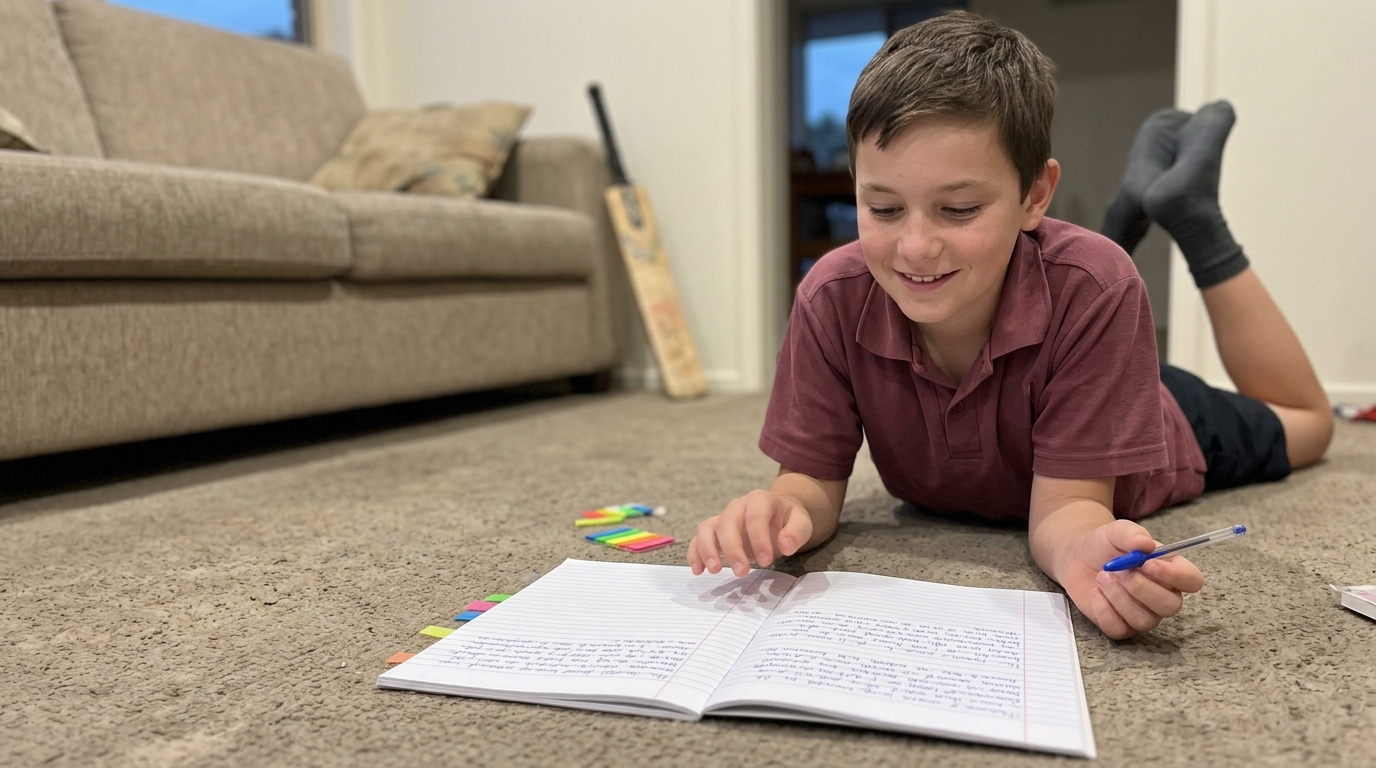
A 2,000-word history essay due in 10 days feels overwhelming to a Year 9 student. The same project, broken into "research day, outline day, draft 1, draft 2, edit, finalise," feels manageable. Sit with your child the day the project is set, work backwards from the due date, and write each sub-task on a separate line on the fridge whiteboard with a date. The first sub-task should always take 15 minutes or less — this is the "hardest part of starting" trick. Once they've done one 15-minute step, momentum carries the second. Tick each step off as it's done. Big projects this way build a study skill that lasts well beyond Year 12 — the same technique works on assignments, work projects, and the rest of life.
Time-by-year-level — how long should homework actually take?
| Year level | Time per night | Break frequency |
|---|---|---|
| Year 1–4 | 15–30 minutes | Every 15–20 min |
| Year 5–6 | 30–45 minutes | Every 20–30 min |
| Year 7–8 | 45–75 minutes | Every 30 min |
| Year 9–10 | 60–90 minutes | Every 30–45 min |
| Year 11–12 | 90–120 minutes | Every 45–60 min |
So how do I help my child build a calm homework routine?
Build the four habits — weekly schedule, dedicated space, scheduled breaks, breaking big projects down — and protect them on the nights everyone is tired. Most homework battles aren't about the work; they're about the absence of routine. Set up the routine on a Sunday afternoon, run it for three weeks, and the battles fade. If the work itself is genuinely too hard — your child is struggling with the content, not the routine — that's when a 1-on-1 tutor earns their fee. A$65/hr starting, no contracts, online from anywhere in Australia, primary through senior.
The phone goes in another room. Not face-down on the desk, not in the next chair — in a different room.
The phone goes in another room. Not face-down on the desk, not in the next chair — in a different room.
If homework time at your house is a daily battle — endless procrastination, 8pm meltdowns, work that should take 20 minutes stretching to two hours — you're not alone. Most parents we work with at Tutero describe homework as the single most stressful 30 minutes of the school day. The good news: a calm, productive homework routine is built from four small habits, not from willpower. This guide gives you the four habits, what each looks like in practice, and how to keep the routine going on the nights everyone is tired.
Quick answer
To help your child with homework, build four habits: a written weekly schedule, a quiet dedicated space, scheduled breaks every 20–30 minutes, and the practice of breaking large tasks into smaller chunks. Done together, these four habits convert "do your homework" battles into a 30–45 minute routine the whole family can predict. Total time to set up: about 20 minutes on a Sunday afternoon, plus a 5-minute check-in each weeknight. Works from Year 1 through Year 12 — the homework load changes, but the four habits don't.
How do I plan my child's homework schedule?
Sit down with your child for 10 minutes on a Sunday afternoon and map out the week ahead on a piece of paper or a fridge whiteboard. List every subject's homework that's due, plus any longer assignments with deadlines that week. Allocate 30–45 minutes a night for primary, 60–90 minutes for lower-secondary, and 90–120 minutes for senior. Block the time on the same days each week — most families pick straight after the after-school snack, before any screen time. The key principle: the time slot is fixed, the content is flexible. If maths is heavy on Tuesday, English shifts. If a friend's birthday is on Wednesday, the slot moves to Thursday. Predictability beats perfect planning.
What kind of space does my child need to do homework well?
A dedicated, quiet, well-lit spot — a desk in their bedroom, the kitchen table after dinner is cleared, a corner of the lounge with a folding table. Three things matter most: no TV in earshot, no phone in reach, and adequate light. Natural daylight is best for primary kids; a warm desk lamp works for late-afternoon and evening study. Keep all the supplies in one box at the desk: pencils, eraser, ruler, calculator (Year 5+), highlighters, sticky tabs, exercise books. The "I can't find a pencil" excuse alone costs 10 minutes a night across a school year. Phones go in another room, not face-down on the desk — the temptation to check is the temptation that wins.
The phone goes in another room. Not face-down on the desk, not in the next chair — in a different room. This single change adds back about 25 percent of effective homework time.
How often should my child take breaks during homework?
Every 20–30 minutes for primary, 30–45 minutes for lower-secondary, and 45–60 minutes for senior. Breaks should be 5–10 minutes long, away from the desk, and should not involve a screen. Stretching, drinking water, walking around the block, kicking a ball in the backyard, eating an apple, patting the dog — anything that gets the body moving and the eyes off close-up text. The goal is to reset attention, not to entertain. Avoid YouTube, TikTok, and Instagram during breaks — they look like rest, but they fragment attention and make it harder to come back. If your child needs help structuring 30-minute focus blocks, a 1-on-1 tutor can model the rhythm during a session, and your child carries it back to homework.
How do I help my child break big projects into smaller tasks?
A 2,000-word history essay due in 10 days feels overwhelming to a Year 9 student. The same project, broken into "research day, outline day, draft 1, draft 2, edit, finalise," feels manageable. Sit with your child the day the project is set, work backwards from the due date, and write each sub-task on a separate line on the fridge whiteboard with a date. The first sub-task should always take 15 minutes or less — this is the "hardest part of starting" trick. Once they've done one 15-minute step, momentum carries the second. Tick each step off as it's done. Big projects this way build a study skill that lasts well beyond Year 12 — the same technique works on assignments, work projects, and the rest of life.
Time-by-year-level — how long should homework actually take?
| Year level | Time per night | Break frequency |
|---|---|---|
| Year 1–4 | 15–30 minutes | Every 15–20 min |
| Year 5–6 | 30–45 minutes | Every 20–30 min |
| Year 7–8 | 45–75 minutes | Every 30 min |
| Year 9–10 | 60–90 minutes | Every 30–45 min |
| Year 11–12 | 90–120 minutes | Every 45–60 min |
So how do I help my child build a calm homework routine?
Build the four habits — weekly schedule, dedicated space, scheduled breaks, breaking big projects down — and protect them on the nights everyone is tired. Most homework battles aren't about the work; they're about the absence of routine. Set up the routine on a Sunday afternoon, run it for three weeks, and the battles fade. If the work itself is genuinely too hard — your child is struggling with the content, not the routine — that's when a 1-on-1 tutor earns their fee. A$65/hr starting, no contracts, online from anywhere in Australia, primary through senior.
FAQ
.svg)
.svg)
Online maths tutoring at Tutero is catering to students of all year levels. We offer programs tailored to the unique learning curves of each age group.
We also have expert NAPLAN and ATAR subject tutors, ensuring students are well-equipped for these pivotal assessments.
We recommend at least two to three session per week for consistent progress. However, this can vary based on your child's needs and goals.
Our platform uses advanced security protocols to ensure the safety and privacy of all our online sessions.
Parents are welcome to observe sessions. We believe in a collaborative approach to education.
We provide regular progress reports and assessments to track your child’s academic development.
Yes, we prioritise the student-tutor relationship and can arrange a change if the need arises.
Yes, we offer a range of resources and materials, including interactive exercises and practice worksheets.
The phone goes in another room. Not face-down on the desk, not in the next chair — in a different room.
The phone goes in another room. Not face-down on the desk, not in the next chair — in a different room.

The phone goes in another room. Not face-down on the desk, not in the next chair — in a different room.
The first sub-task should always take 15 minutes or less. Once they've done one 15-minute step, momentum carries the second.
If homework time at your house is a daily battle — endless procrastination, 8pm meltdowns, work that should take 20 minutes stretching to two hours — you're not alone. Most parents we work with at Tutero describe homework as the single most stressful 30 minutes of the school day. The good news: a calm, productive homework routine is built from four small habits, not from willpower. This guide gives you the four habits, what each looks like in practice, and how to keep the routine going on the nights everyone is tired.
Quick answer
To help your child with homework, build four habits: a written weekly schedule, a quiet dedicated space, scheduled breaks every 20–30 minutes, and the practice of breaking large tasks into smaller chunks. Done together, these four habits convert "do your homework" battles into a 30–45 minute routine the whole family can predict. Total time to set up: about 20 minutes on a Sunday afternoon, plus a 5-minute check-in each weeknight. Works from Year 1 through Year 12 — the homework load changes, but the four habits don't.
How do I plan my child's homework schedule?
Sit down with your child for 10 minutes on a Sunday afternoon and map out the week ahead on a piece of paper or a fridge whiteboard. List every subject's homework that's due, plus any longer assignments with deadlines that week. Allocate 30–45 minutes a night for primary, 60–90 minutes for lower-secondary, and 90–120 minutes for senior. Block the time on the same days each week — most families pick straight after the after-school snack, before any screen time. The key principle: the time slot is fixed, the content is flexible. If maths is heavy on Tuesday, English shifts. If a friend's birthday is on Wednesday, the slot moves to Thursday. Predictability beats perfect planning.
What kind of space does my child need to do homework well?
A dedicated, quiet, well-lit spot — a desk in their bedroom, the kitchen table after dinner is cleared, a corner of the lounge with a folding table. Three things matter most: no TV in earshot, no phone in reach, and adequate light. Natural daylight is best for primary kids; a warm desk lamp works for late-afternoon and evening study. Keep all the supplies in one box at the desk: pencils, eraser, ruler, calculator (Year 5+), highlighters, sticky tabs, exercise books. The "I can't find a pencil" excuse alone costs 10 minutes a night across a school year. Phones go in another room, not face-down on the desk — the temptation to check is the temptation that wins.
The phone goes in another room. Not face-down on the desk, not in the next chair — in a different room. This single change adds back about 25 percent of effective homework time.
How often should my child take breaks during homework?
Every 20–30 minutes for primary, 30–45 minutes for lower-secondary, and 45–60 minutes for senior. Breaks should be 5–10 minutes long, away from the desk, and should not involve a screen. Stretching, drinking water, walking around the block, kicking a ball in the backyard, eating an apple, patting the dog — anything that gets the body moving and the eyes off close-up text. The goal is to reset attention, not to entertain. Avoid YouTube, TikTok, and Instagram during breaks — they look like rest, but they fragment attention and make it harder to come back. If your child needs help structuring 30-minute focus blocks, a 1-on-1 tutor can model the rhythm during a session, and your child carries it back to homework.
How do I help my child break big projects into smaller tasks?
A 2,000-word history essay due in 10 days feels overwhelming to a Year 9 student. The same project, broken into "research day, outline day, draft 1, draft 2, edit, finalise," feels manageable. Sit with your child the day the project is set, work backwards from the due date, and write each sub-task on a separate line on the fridge whiteboard with a date. The first sub-task should always take 15 minutes or less — this is the "hardest part of starting" trick. Once they've done one 15-minute step, momentum carries the second. Tick each step off as it's done. Big projects this way build a study skill that lasts well beyond Year 12 — the same technique works on assignments, work projects, and the rest of life.
Time-by-year-level — how long should homework actually take?
| Year level | Time per night | Break frequency |
|---|---|---|
| Year 1–4 | 15–30 minutes | Every 15–20 min |
| Year 5–6 | 30–45 minutes | Every 20–30 min |
| Year 7–8 | 45–75 minutes | Every 30 min |
| Year 9–10 | 60–90 minutes | Every 30–45 min |
| Year 11–12 | 90–120 minutes | Every 45–60 min |
So how do I help my child build a calm homework routine?
Build the four habits — weekly schedule, dedicated space, scheduled breaks, breaking big projects down — and protect them on the nights everyone is tired. Most homework battles aren't about the work; they're about the absence of routine. Set up the routine on a Sunday afternoon, run it for three weeks, and the battles fade. If the work itself is genuinely too hard — your child is struggling with the content, not the routine — that's when a 1-on-1 tutor earns their fee. A$65/hr starting, no contracts, online from anywhere in Australia, primary through senior.
The phone goes in another room. Not face-down on the desk, not in the next chair — in a different room.
The first sub-task should always take 15 minutes or less. Once they've done one 15-minute step, momentum carries the second.
Year 1–4: 15–30 minutes. Year 5–6: 30–45 minutes. Year 7–8: 45–75 minutes. Year 9–10: 60–90 minutes. Year 11–12: 90–120 minutes. These are guidelines — if your child is consistently spending much longer, the work itself may be too hard (a tutor can help) or focus is leaking (the routine needs work).
A dedicated, quiet, well-lit spot with no TV in earshot, no phone in reach, and all supplies within reach. A bedroom desk works for senior; a kitchen table after dinner is fine for primary if the TV is off. The space matters less than the consistency — pick one spot and use it nightly.
Be available to answer questions, but don't do the work. Sit nearby (not next to them) and let them ask. The goal is for your child to develop independence — your help should taper as they get older. For Year 1–4, expect to be more involved; by Year 7+, you should be in another room until they call you.
If the work is genuinely too hard despite a calm routine, or if your child is consistently below expected level on assessments, a 1-on-1 tutor pays back fast. <a href="https://www.tutero.com/au/online-tutoring">Tutero starts at A$65/hr</a> with no contracts — trial a single session before committing. Tutors are matched to your child's year level, subject, and personality.
Most homework refusal is about routine, not motivation. Set a fixed time slot, remove distractions (phone in another room), break the work into 15-minute first steps, and avoid threats. If refusal continues for 2+ weeks despite a calm routine, the work itself may be too hard — a tutor or chat with the teacher unblocks it.
Yes, lightly — usually 30–60 minutes on Sunday afternoon to set up the week, plus any larger assignments. Saturdays should mostly be screen-free downtime. Senior students (Year 11–12) often need 2–4 hours of weekend study during exam blocks; outside exam blocks, weekends are recovery time.
Hoping to improve confidence & grades?

.png)


