
.svg)

Spotting what your child is great at — and where they need a hand — is one of the highest-leverage things you can do as a parent. Get it right and you steer them toward subjects, hobbies, and tutoring support that build real momentum. Get it wrong and they spend years fighting the wrong battle.
This guide walks you through six concrete ways to figure it out, in a way that doesn't require expensive testing or a psychology degree.
Quick answer
Quick answer: the fastest way to identify your child's strengths and weaknesses is to triangulate three sources — what their classroom teacher sees in school, what your child says about their own learning, and patterns you notice across schoolwork over a few weeks. A short subject-specific quiz from a qualified tutor sharpens the picture even further.
What does your child's teacher actually see at school?
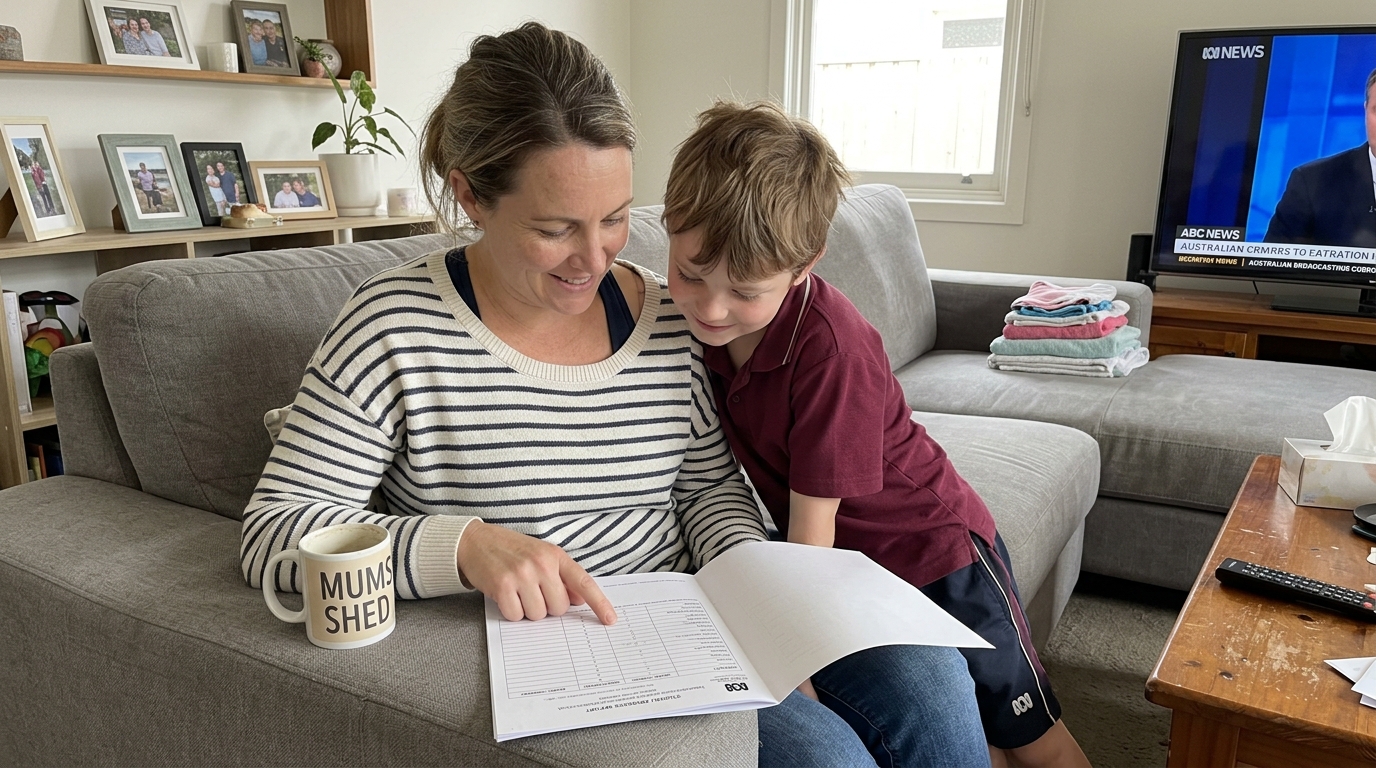
Your child's classroom teacher watches them work for 25+ hours a week alongside 25 other students at the same year level. That benchmark is hard to replicate at home. A 10-minute conversation at parent-teacher night, or a polite email asking three specific questions — "Where does my child consistently shine? Where do they consistently struggle? What would you focus on if you were us?" — gives you a calibrated, low-emotion read. Teachers usually share more candidly when you ask for a recommendation rather than a verdict. Bring this read into every other step that follows.
What does your child say about their own learning?
Children are surprisingly accurate self-assessors when the conversation is calm and the questions are concrete. Skip "What's your favourite subject?" — that's about identity, not learning. Try: "Which subjects do you feel like you're getting right now?", "Which ones feel like the answer is far away?", "What's the part of school where you feel most confident?". Listen for emotional tells too — does your child light up describing one area and shrink describing another? Their language is data. Write down what they say verbatim; you'll spot patterns across weeks.
How can a short test or quiz help identify strengths?
A targeted 20-minute quiz across the major subjects is a faster diagnostic than another month of guessing. Keep the stakes low — it's not a school assessment, it's a probe. Online maths-skills checks, reading-comprehension sample questions, and short writing prompts all work at home for free. If you want a more structured read, a one-off diagnostic session with a Tutero tutor is A$65 and produces a written summary across maths, English, and one science strand. Use the quiz as a starting line, not a final score.
Which online resources can help you spot patterns?
Free online sources are useful for two specific jobs: surfacing curriculum-aligned questions your child can try, and giving you age-anchored benchmarks for what "on track" looks like. The Australian Curriculum site lists year-level expectations in plain English. Education Endowment Foundation's Toolkit (UK-based but used widely here) summarises which interventions move the needle. Skip the "personalised report" platforms that promise a printout from a 5-question quiz — they tell you what the algorithm needed to confirm. Use online resources to gather questions, not to replace your own observation.
What patterns should you watch for over time?
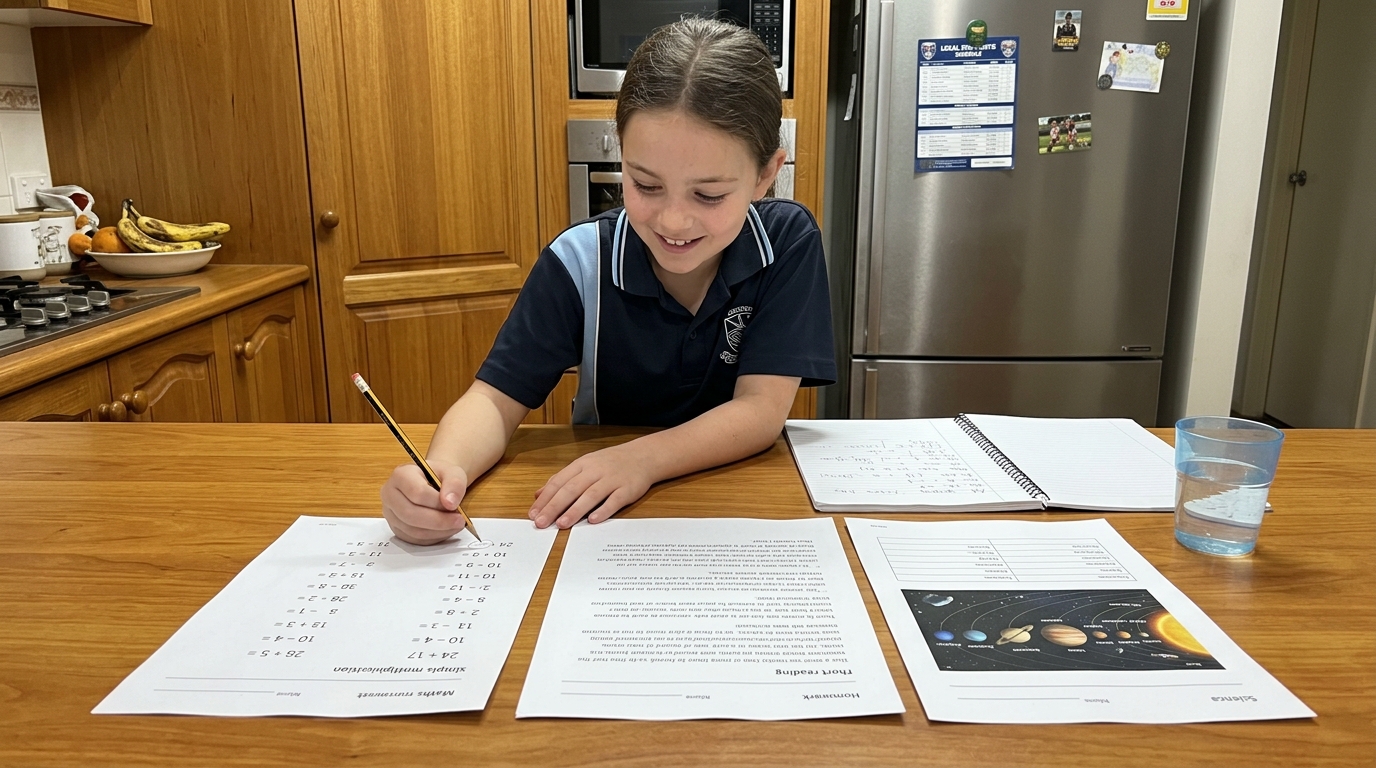
One bad maths test isn't a weakness; six in a row is. Track three things over four weeks: how long homework takes per subject, where the homework arguments cluster, and which subjects your child volunteers stories about. A real strength shows up as endurance and curiosity even when it's hard. A real weakness shows up as avoidance, brain-fog, and the same kinds of mistakes returning week after week. Our 5 signs guide lists the patterns most often flagged by parents who later said "I wish I'd acted sooner".
When should you bring in a professional?
Bring in a tutor or specialist when you've hit two thresholds: the pattern has held for 4+ weeks, and what you're trying at home isn't shifting it. A good tutor diagnoses before they teach — first session is usually a probe of where the gap is, not a lecture. If learning patterns look unusual rather than just behind (consistent letter-reversal, severe attention drop-off, very different pace across topics within the same subject), an educational psychologist assessment is worth booking through your GP. Tutero tutors are degree-qualified educators who handle the diagnostic stage as part of session one.
So how do I actually identify my child's strengths and weaknesses?
Triangulate. Ask the teacher. Ask your child. Watch homework patterns over four weeks. Run a short quiz across three subjects. The picture emerges from the overlap — not from any single test. Once you have it, you can match the right kind of support to the right area: targeted tutoring for a specific weakness, enrichment activities for an emerging strength, and confidence-building for the in-between subjects. Book a one-off diagnostic session if you want a tutor's read alongside your own.
Ready to take the next step? Match with a Tutero tutor who can run a structured diagnostic in your child's strongest and weakest subjects — A$65 for the first session, no contracts, and a written summary you can act on the same week.
Triangulate three sources — teacher view, child's view, your own observation — and the picture emerges from the overlap.
Triangulate three sources — teacher view, child's view, your own observation — and the picture emerges from the overlap.
Spotting what your child is great at — and where they need a hand — is one of the highest-leverage things you can do as a parent. Get it right and you steer them toward subjects, hobbies, and tutoring support that build real momentum. Get it wrong and they spend years fighting the wrong battle.
This guide walks you through six concrete ways to figure it out, in a way that doesn't require expensive testing or a psychology degree.
Quick answer
Quick answer: the fastest way to identify your child's strengths and weaknesses is to triangulate three sources — what their classroom teacher sees in school, what your child says about their own learning, and patterns you notice across schoolwork over a few weeks. A short subject-specific quiz from a qualified tutor sharpens the picture even further.
What does your child's teacher actually see at school?
Your child's classroom teacher watches them work for 25+ hours a week alongside 25 other students at the same year level. That benchmark is hard to replicate at home. A 10-minute conversation at parent-teacher night, or a polite email asking three specific questions — "Where does my child consistently shine? Where do they consistently struggle? What would you focus on if you were us?" — gives you a calibrated, low-emotion read. Teachers usually share more candidly when you ask for a recommendation rather than a verdict. Bring this read into every other step that follows.
What does your child say about their own learning?
Children are surprisingly accurate self-assessors when the conversation is calm and the questions are concrete. Skip "What's your favourite subject?" — that's about identity, not learning. Try: "Which subjects do you feel like you're getting right now?", "Which ones feel like the answer is far away?", "What's the part of school where you feel most confident?". Listen for emotional tells too — does your child light up describing one area and shrink describing another? Their language is data. Write down what they say verbatim; you'll spot patterns across weeks.
How can a short test or quiz help identify strengths?
A targeted 20-minute quiz across the major subjects is a faster diagnostic than another month of guessing. Keep the stakes low — it's not a school assessment, it's a probe. Online maths-skills checks, reading-comprehension sample questions, and short writing prompts all work at home for free. If you want a more structured read, a one-off diagnostic session with a Tutero tutor is A$65 and produces a written summary across maths, English, and one science strand. Use the quiz as a starting line, not a final score.
Which online resources can help you spot patterns?
Free online sources are useful for two specific jobs: surfacing curriculum-aligned questions your child can try, and giving you age-anchored benchmarks for what "on track" looks like. The Australian Curriculum site lists year-level expectations in plain English. Education Endowment Foundation's Toolkit (UK-based but used widely here) summarises which interventions move the needle. Skip the "personalised report" platforms that promise a printout from a 5-question quiz — they tell you what the algorithm needed to confirm. Use online resources to gather questions, not to replace your own observation.
What patterns should you watch for over time?
One bad maths test isn't a weakness; six in a row is. Track three things over four weeks: how long homework takes per subject, where the homework arguments cluster, and which subjects your child volunteers stories about. A real strength shows up as endurance and curiosity even when it's hard. A real weakness shows up as avoidance, brain-fog, and the same kinds of mistakes returning week after week. Our 5 signs guide lists the patterns most often flagged by parents who later said "I wish I'd acted sooner".
When should you bring in a professional?
Bring in a tutor or specialist when you've hit two thresholds: the pattern has held for 4+ weeks, and what you're trying at home isn't shifting it. A good tutor diagnoses before they teach — first session is usually a probe of where the gap is, not a lecture. If learning patterns look unusual rather than just behind (consistent letter-reversal, severe attention drop-off, very different pace across topics within the same subject), an educational psychologist assessment is worth booking through your GP. Tutero tutors are degree-qualified educators who handle the diagnostic stage as part of session one.
So how do I actually identify my child's strengths and weaknesses?
Triangulate. Ask the teacher. Ask your child. Watch homework patterns over four weeks. Run a short quiz across three subjects. The picture emerges from the overlap — not from any single test. Once you have it, you can match the right kind of support to the right area: targeted tutoring for a specific weakness, enrichment activities for an emerging strength, and confidence-building for the in-between subjects. Book a one-off diagnostic session if you want a tutor's read alongside your own.
Ready to take the next step? Match with a Tutero tutor who can run a structured diagnostic in your child's strongest and weakest subjects — A$65 for the first session, no contracts, and a written summary you can act on the same week.
FAQ
.svg)
.svg)
Online maths tutoring at Tutero is catering to students of all year levels. We offer programs tailored to the unique learning curves of each age group.
We also have expert NAPLAN and ATAR subject tutors, ensuring students are well-equipped for these pivotal assessments.
We recommend at least two to three session per week for consistent progress. However, this can vary based on your child's needs and goals.
Our platform uses advanced security protocols to ensure the safety and privacy of all our online sessions.
Parents are welcome to observe sessions. We believe in a collaborative approach to education.
We provide regular progress reports and assessments to track your child’s academic development.
Yes, we prioritise the student-tutor relationship and can arrange a change if the need arises.
Yes, we offer a range of resources and materials, including interactive exercises and practice worksheets.
Triangulate three sources — teacher view, child's view, your own observation — and the picture emerges from the overlap.
Triangulate three sources — teacher view, child's view, your own observation — and the picture emerges from the overlap.

Triangulate three sources — teacher view, child's view, your own observation — and the picture emerges from the overlap.
One bad maths test isn't a weakness; six in a row is.
Spotting what your child is great at — and where they need a hand — is one of the highest-leverage things you can do as a parent. Get it right and you steer them toward subjects, hobbies, and tutoring support that build real momentum. Get it wrong and they spend years fighting the wrong battle.
This guide walks you through six concrete ways to figure it out, in a way that doesn't require expensive testing or a psychology degree.
Quick answer
Quick answer: the fastest way to identify your child's strengths and weaknesses is to triangulate three sources — what their classroom teacher sees in school, what your child says about their own learning, and patterns you notice across schoolwork over a few weeks. A short subject-specific quiz from a qualified tutor sharpens the picture even further.
What does your child's teacher actually see at school?
Your child's classroom teacher watches them work for 25+ hours a week alongside 25 other students at the same year level. That benchmark is hard to replicate at home. A 10-minute conversation at parent-teacher night, or a polite email asking three specific questions — "Where does my child consistently shine? Where do they consistently struggle? What would you focus on if you were us?" — gives you a calibrated, low-emotion read. Teachers usually share more candidly when you ask for a recommendation rather than a verdict. Bring this read into every other step that follows.
What does your child say about their own learning?
Children are surprisingly accurate self-assessors when the conversation is calm and the questions are concrete. Skip "What's your favourite subject?" — that's about identity, not learning. Try: "Which subjects do you feel like you're getting right now?", "Which ones feel like the answer is far away?", "What's the part of school where you feel most confident?". Listen for emotional tells too — does your child light up describing one area and shrink describing another? Their language is data. Write down what they say verbatim; you'll spot patterns across weeks.
How can a short test or quiz help identify strengths?
A targeted 20-minute quiz across the major subjects is a faster diagnostic than another month of guessing. Keep the stakes low — it's not a school assessment, it's a probe. Online maths-skills checks, reading-comprehension sample questions, and short writing prompts all work at home for free. If you want a more structured read, a one-off diagnostic session with a Tutero tutor is A$65 and produces a written summary across maths, English, and one science strand. Use the quiz as a starting line, not a final score.
Which online resources can help you spot patterns?
Free online sources are useful for two specific jobs: surfacing curriculum-aligned questions your child can try, and giving you age-anchored benchmarks for what "on track" looks like. The Australian Curriculum site lists year-level expectations in plain English. Education Endowment Foundation's Toolkit (UK-based but used widely here) summarises which interventions move the needle. Skip the "personalised report" platforms that promise a printout from a 5-question quiz — they tell you what the algorithm needed to confirm. Use online resources to gather questions, not to replace your own observation.
What patterns should you watch for over time?
One bad maths test isn't a weakness; six in a row is. Track three things over four weeks: how long homework takes per subject, where the homework arguments cluster, and which subjects your child volunteers stories about. A real strength shows up as endurance and curiosity even when it's hard. A real weakness shows up as avoidance, brain-fog, and the same kinds of mistakes returning week after week. Our 5 signs guide lists the patterns most often flagged by parents who later said "I wish I'd acted sooner".
When should you bring in a professional?
Bring in a tutor or specialist when you've hit two thresholds: the pattern has held for 4+ weeks, and what you're trying at home isn't shifting it. A good tutor diagnoses before they teach — first session is usually a probe of where the gap is, not a lecture. If learning patterns look unusual rather than just behind (consistent letter-reversal, severe attention drop-off, very different pace across topics within the same subject), an educational psychologist assessment is worth booking through your GP. Tutero tutors are degree-qualified educators who handle the diagnostic stage as part of session one.
So how do I actually identify my child's strengths and weaknesses?
Triangulate. Ask the teacher. Ask your child. Watch homework patterns over four weeks. Run a short quiz across three subjects. The picture emerges from the overlap — not from any single test. Once you have it, you can match the right kind of support to the right area: targeted tutoring for a specific weakness, enrichment activities for an emerging strength, and confidence-building for the in-between subjects. Book a one-off diagnostic session if you want a tutor's read alongside your own.
Ready to take the next step? Match with a Tutero tutor who can run a structured diagnostic in your child's strongest and weakest subjects — A$65 for the first session, no contracts, and a written summary you can act on the same week.
Triangulate three sources — teacher view, child's view, your own observation — and the picture emerges from the overlap.
One bad maths test isn't a weakness; six in a row is.
Hoping to improve confidence & grades?

.png)


