
.svg)

Supporting your child as a parent means being active and present across their emotional, social, and academic life. The six concrete habits in this article are the ones that make the biggest difference in our experience supporting families across primary, lower-secondary, and senior years.
Children thrive when they sense their parents are paying attention — to what they say, to what they're learning, and to how they're sleeping. The Education Endowment Foundation has shown that high-quality one-to-one feedback alone moves a typical learner forward by around five months in a year, and the same listening register applies at the kitchen table. You don't need a tutoring degree to support your child well; you need six small habits, run consistently.
Quick answer
How can I support my child as a parent? Listen without rushing to solve, stay close to their school work without taking it over, ask short open questions every week, build a daily reading habit, protect their sleep, and plan regular low-stakes fun. None of these need money or a Pinterest-perfect home — they need you to show up consistently. Six habits, five minutes each, repeated for a term, will move your child further than any one-off intervention.
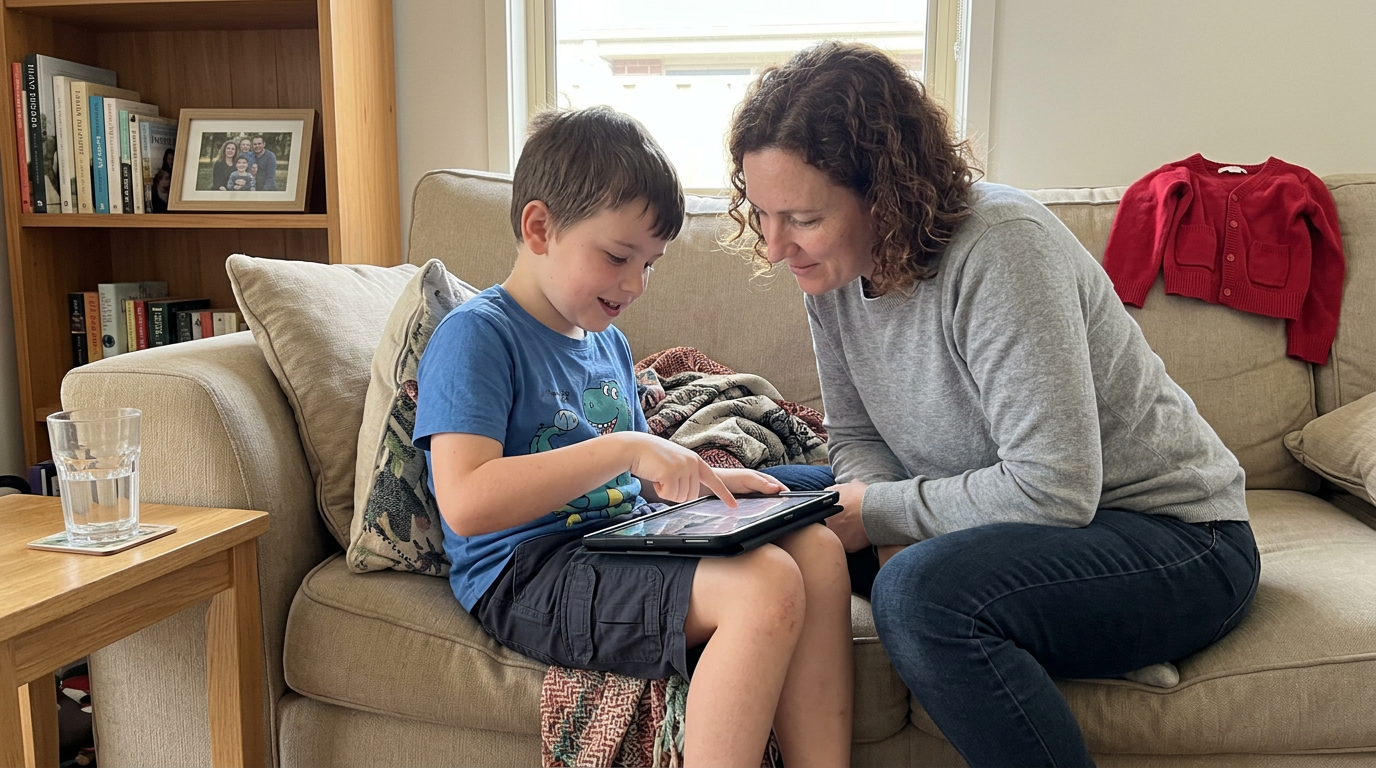
How do I really listen to my child when they want to talk?
Listening to your child means putting the phone down, turning toward them, and not interrupting for the first two minutes — even if you can already see the answer. Children read body language before they read words; they decide whether you're a safe person to talk to in the first ten seconds. The hardest part for most parents is resisting the urge to fix the problem before they've heard it. Acknowledge the feeling first ("that sounds frustrating"), then ask one open question, then wait. The pause is the part most parents skip.
What it sounds like: instead of "Just tell the teacher," try "What did it feel like when that happened?" — then say nothing for ten seconds.
When not to use it: if your child is in immediate physical danger or actively distressed beyond their ability to articulate, the listening register is not enough — call your GP or the school welfare officer. Listening is a daily habit, not a crisis tool.
How do I stay on top of my child's education without taking over?
Staying close to your child's education means knowing what they're studying, who their teachers are, and where they're stuck — without doing the work for them. The most effective parents check in weekly, not daily; daily check-ins read as surveillance and shut conversations down. Use parent-teacher interviews properly, ask the teacher specifically where your child is falling behind, and at home build a study environment that makes self-directed work easier than scrolling.
What it looks like: a Sunday-evening five-minute chat — "What's coming up this week, and what's the trickiest bit?" — beats a daily "Did you do your homework?" interrogation every time.
When not to use it: don't sit beside your child during homework as a full-time enforcer. If they need that level of support every night, the right move is a tutor — see when to start tutoring and how Tutero works.
What questions should I ask my child to show I care?
Asking the right questions is how you notice when something is shifting before it becomes a crisis. Generic prompts ("How was your day?") get generic answers ("Fine"). Specific, open prompts get real ones. Children also reveal what's actually bothering them at side angles — in the car, walking the dog, before bed — not when you sit them down across the kitchen table and announce that you'd like to have a chat.
Five questions worth asking weekly:
- What was the best part of school today? — pulls out social wins.
- Was there a part you didn't understand? — pulls out academic gaps without judgement.
- Who did you sit with at lunch? — surfaces friendship dynamics.
- What's something you're proud of from this week? — builds self-narrative.
- What's something you'd like me to help with? — invites them to drive.
When not to use it: don't fire all five at once. Ask one. Wait. Move on. Asking five in a row reads as an interrogation.
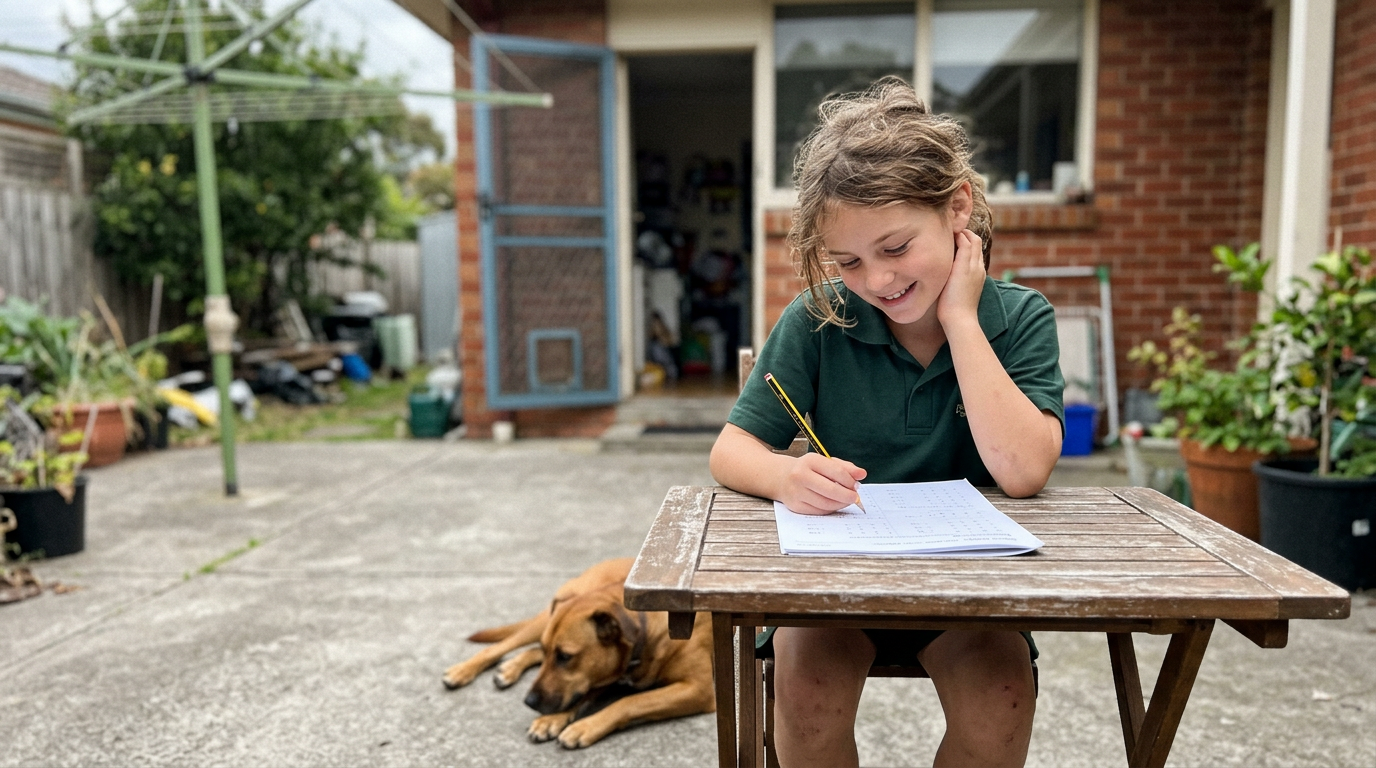
How do I encourage my child to read more?
Encouraging reading is the single highest-leverage academic habit you can build at home — readers acquire vocabulary, comprehension, and background knowledge passively, which compounds across every subject. The trick is to make reading the easiest thing to do at home, not the worthiest. That means books on every horizontal surface, a 20-minute pre-bed read-aloud (even at primary), a permanent library card, and never, ever using reading as a punishment.
What it looks like across year levels:
- Years 1–4: read aloud nightly even when they can read alone — fluency lifts comprehension, and the snuggle is the point.
- Years 5–8: a weekly library trip, free choice (graphic novels count), 20 minutes of independent reading before screens.
- Years 9–12: non-fiction and long-form journalism alongside any English novel — broadens vocabulary for the ATAR years without feeling like "more school".
When not to use it: if your child has an undiagnosed reading difficulty, more pressure makes it worse. Talk to the school first; explore one-to-one support before you double down on home reading.
How do I protect my child's sleep so they can learn?
Protecting your child's sleep is the unglamorous habit that does more for grades and mood than any tutoring program. Children who sleep 9–11 hours (primary) or 8–10 hours (lower-secondary and senior) have measurably better attention, working memory, and emotional regulation the next day. The mechanism is simple — most consolidation of what they learnt that day happens in the second half of the night — and the lever is a fixed bedtime routine that finishes 60 minutes before lights out, with screens out of the bedroom.
The non-negotiable five: a fixed wake-up time (even on weekends — drift kills it), no phone in the bedroom past 9pm, no caffeine after 2pm, dim the lights an hour before bed, and a 10-minute pre-bed read-aloud or quiet routine that signals "day is done".
When not to use it: if your senior is hitting late-term exam crunch and genuinely needs an extra hour of revision, the trade-off is fine for a week — not for a term. If sleep deprivation is chronic, talk to your GP, not just your child.
How do I help my child de-stress without bribing them?
Helping your child de-stress means scheduling low-stakes fun the same way you schedule homework — on the calendar, recurring, non-optional. The mistake parents make is treating downtime as a reward for grades, which turns play into another performance review. Instead, treat play as the maintenance dose that keeps your child's nervous system regulated enough to learn at all. The activities that work best are physical, social, and screen-free — but "screen-free" doesn't mean "educational". A bike ride, a swim, a board game, a walk to the shops together. Boring is fine. Cheap is fine.
What works at every year level: 30 minutes of unstructured outside time after school before homework starts, one weekly family activity that the child gets veto rights over, and a no-phones-at-the-dinner-table rule for the parents too — they read it, even when they don't say it.
When not to use it: de-stressing isn't a substitute for treating actual anxiety. If your child is consistently dreading school, sleeping badly, or losing weight, the right next call is your GP, not a longer trip to the park.
When should I get extra help for my child?
Most of the time, the six habits above are enough. But if your child is consistently behind across more than one subject, dreading school, or losing confidence faster than they're rebuilding it, you've moved past what evening routines can fix. The right next step is targeted one-to-one support — see when to start tutoring, how to pick a tutor and what personalised tutoring looks like. Tutero matches your child with a tutor by personality and subject, not just availability, and starts at A$65/hr with no contracts. Browse our tutors and book a 30-minute trial.
The bottom line
Supporting your child is six small daily habits run consistently for a term. Listen first. Stay close to the school work without taking it over. Ask short, specific questions. Build the reading habit. Protect the sleep. Schedule the fun. If after a term you're still seeing slipping grades or shrinking confidence, that's the signal to bring in a tutor who fits your child — the parent habits don't go away, they just get reinforced by a second adult who's earned your child's trust.
Listening for two minutes before solving anything is the cheapest and highest-leverage habit on this list.
Listening for two minutes before solving anything is the cheapest and highest-leverage habit on this list.
Supporting your child as a parent means being active and present across their emotional, social, and academic life. The six concrete habits in this article are the ones that make the biggest difference in our experience supporting families across primary, lower-secondary, and senior years.
Children thrive when they sense their parents are paying attention — to what they say, to what they're learning, and to how they're sleeping. The Education Endowment Foundation has shown that high-quality one-to-one feedback alone moves a typical learner forward by around five months in a year, and the same listening register applies at the kitchen table. You don't need a tutoring degree to support your child well; you need six small habits, run consistently.
Quick answer
How can I support my child as a parent? Listen without rushing to solve, stay close to their school work without taking it over, ask short open questions every week, build a daily reading habit, protect their sleep, and plan regular low-stakes fun. None of these need money or a Pinterest-perfect home — they need you to show up consistently. Six habits, five minutes each, repeated for a term, will move your child further than any one-off intervention.
How do I really listen to my child when they want to talk?
Listening to your child means putting the phone down, turning toward them, and not interrupting for the first two minutes — even if you can already see the answer. Children read body language before they read words; they decide whether you're a safe person to talk to in the first ten seconds. The hardest part for most parents is resisting the urge to fix the problem before they've heard it. Acknowledge the feeling first ("that sounds frustrating"), then ask one open question, then wait. The pause is the part most parents skip.
What it sounds like: instead of "Just tell the teacher," try "What did it feel like when that happened?" — then say nothing for ten seconds.
When not to use it: if your child is in immediate physical danger or actively distressed beyond their ability to articulate, the listening register is not enough — call your GP or the school welfare officer. Listening is a daily habit, not a crisis tool.
How do I stay on top of my child's education without taking over?
Staying close to your child's education means knowing what they're studying, who their teachers are, and where they're stuck — without doing the work for them. The most effective parents check in weekly, not daily; daily check-ins read as surveillance and shut conversations down. Use parent-teacher interviews properly, ask the teacher specifically where your child is falling behind, and at home build a study environment that makes self-directed work easier than scrolling.
What it looks like: a Sunday-evening five-minute chat — "What's coming up this week, and what's the trickiest bit?" — beats a daily "Did you do your homework?" interrogation every time.
When not to use it: don't sit beside your child during homework as a full-time enforcer. If they need that level of support every night, the right move is a tutor — see when to start tutoring and how Tutero works.
What questions should I ask my child to show I care?
Asking the right questions is how you notice when something is shifting before it becomes a crisis. Generic prompts ("How was your day?") get generic answers ("Fine"). Specific, open prompts get real ones. Children also reveal what's actually bothering them at side angles — in the car, walking the dog, before bed — not when you sit them down across the kitchen table and announce that you'd like to have a chat.
Five questions worth asking weekly:
- What was the best part of school today? — pulls out social wins.
- Was there a part you didn't understand? — pulls out academic gaps without judgement.
- Who did you sit with at lunch? — surfaces friendship dynamics.
- What's something you're proud of from this week? — builds self-narrative.
- What's something you'd like me to help with? — invites them to drive.
When not to use it: don't fire all five at once. Ask one. Wait. Move on. Asking five in a row reads as an interrogation.
How do I encourage my child to read more?
Encouraging reading is the single highest-leverage academic habit you can build at home — readers acquire vocabulary, comprehension, and background knowledge passively, which compounds across every subject. The trick is to make reading the easiest thing to do at home, not the worthiest. That means books on every horizontal surface, a 20-minute pre-bed read-aloud (even at primary), a permanent library card, and never, ever using reading as a punishment.
What it looks like across year levels:
- Years 1–4: read aloud nightly even when they can read alone — fluency lifts comprehension, and the snuggle is the point.
- Years 5–8: a weekly library trip, free choice (graphic novels count), 20 minutes of independent reading before screens.
- Years 9–12: non-fiction and long-form journalism alongside any English novel — broadens vocabulary for the ATAR years without feeling like "more school".
When not to use it: if your child has an undiagnosed reading difficulty, more pressure makes it worse. Talk to the school first; explore one-to-one support before you double down on home reading.
How do I protect my child's sleep so they can learn?
Protecting your child's sleep is the unglamorous habit that does more for grades and mood than any tutoring program. Children who sleep 9–11 hours (primary) or 8–10 hours (lower-secondary and senior) have measurably better attention, working memory, and emotional regulation the next day. The mechanism is simple — most consolidation of what they learnt that day happens in the second half of the night — and the lever is a fixed bedtime routine that finishes 60 minutes before lights out, with screens out of the bedroom.
The non-negotiable five: a fixed wake-up time (even on weekends — drift kills it), no phone in the bedroom past 9pm, no caffeine after 2pm, dim the lights an hour before bed, and a 10-minute pre-bed read-aloud or quiet routine that signals "day is done".
When not to use it: if your senior is hitting late-term exam crunch and genuinely needs an extra hour of revision, the trade-off is fine for a week — not for a term. If sleep deprivation is chronic, talk to your GP, not just your child.
How do I help my child de-stress without bribing them?
Helping your child de-stress means scheduling low-stakes fun the same way you schedule homework — on the calendar, recurring, non-optional. The mistake parents make is treating downtime as a reward for grades, which turns play into another performance review. Instead, treat play as the maintenance dose that keeps your child's nervous system regulated enough to learn at all. The activities that work best are physical, social, and screen-free — but "screen-free" doesn't mean "educational". A bike ride, a swim, a board game, a walk to the shops together. Boring is fine. Cheap is fine.
What works at every year level: 30 minutes of unstructured outside time after school before homework starts, one weekly family activity that the child gets veto rights over, and a no-phones-at-the-dinner-table rule for the parents too — they read it, even when they don't say it.
When not to use it: de-stressing isn't a substitute for treating actual anxiety. If your child is consistently dreading school, sleeping badly, or losing weight, the right next call is your GP, not a longer trip to the park.
When should I get extra help for my child?
Most of the time, the six habits above are enough. But if your child is consistently behind across more than one subject, dreading school, or losing confidence faster than they're rebuilding it, you've moved past what evening routines can fix. The right next step is targeted one-to-one support — see when to start tutoring, how to pick a tutor and what personalised tutoring looks like. Tutero matches your child with a tutor by personality and subject, not just availability, and starts at A$65/hr with no contracts. Browse our tutors and book a 30-minute trial.
The bottom line
Supporting your child is six small daily habits run consistently for a term. Listen first. Stay close to the school work without taking it over. Ask short, specific questions. Build the reading habit. Protect the sleep. Schedule the fun. If after a term you're still seeing slipping grades or shrinking confidence, that's the signal to bring in a tutor who fits your child — the parent habits don't go away, they just get reinforced by a second adult who's earned your child's trust.
FAQ
.svg)
.svg)
Online maths tutoring at Tutero is catering to students of all year levels. We offer programs tailored to the unique learning curves of each age group.
We also have expert NAPLAN and ATAR subject tutors, ensuring students are well-equipped for these pivotal assessments.
We recommend at least two to three session per week for consistent progress. However, this can vary based on your child's needs and goals.
Our platform uses advanced security protocols to ensure the safety and privacy of all our online sessions.
Parents are welcome to observe sessions. We believe in a collaborative approach to education.
We provide regular progress reports and assessments to track your child’s academic development.
Yes, we prioritise the student-tutor relationship and can arrange a change if the need arises.
Yes, we offer a range of resources and materials, including interactive exercises and practice worksheets.
Listening for two minutes before solving anything is the cheapest and highest-leverage habit on this list.
Listening for two minutes before solving anything is the cheapest and highest-leverage habit on this list.

Listening for two minutes before solving anything is the cheapest and highest-leverage habit on this list.
Six habits, five minutes each, repeated for a term, will move your child further than any one-off intervention.
Supporting your child as a parent means being active and present across their emotional, social, and academic life. The six concrete habits in this article are the ones that make the biggest difference in our experience supporting families across primary, lower-secondary, and senior years.
Children thrive when they sense their parents are paying attention — to what they say, to what they're learning, and to how they're sleeping. The Education Endowment Foundation has shown that high-quality one-to-one feedback alone moves a typical learner forward by around five months in a year, and the same listening register applies at the kitchen table. You don't need a tutoring degree to support your child well; you need six small habits, run consistently.
Quick answer
How can I support my child as a parent? Listen without rushing to solve, stay close to their school work without taking it over, ask short open questions every week, build a daily reading habit, protect their sleep, and plan regular low-stakes fun. None of these need money or a Pinterest-perfect home — they need you to show up consistently. Six habits, five minutes each, repeated for a term, will move your child further than any one-off intervention.
How do I really listen to my child when they want to talk?
Listening to your child means putting the phone down, turning toward them, and not interrupting for the first two minutes — even if you can already see the answer. Children read body language before they read words; they decide whether you're a safe person to talk to in the first ten seconds. The hardest part for most parents is resisting the urge to fix the problem before they've heard it. Acknowledge the feeling first ("that sounds frustrating"), then ask one open question, then wait. The pause is the part most parents skip.
What it sounds like: instead of "Just tell the teacher," try "What did it feel like when that happened?" — then say nothing for ten seconds.
When not to use it: if your child is in immediate physical danger or actively distressed beyond their ability to articulate, the listening register is not enough — call your GP or the school welfare officer. Listening is a daily habit, not a crisis tool.
How do I stay on top of my child's education without taking over?
Staying close to your child's education means knowing what they're studying, who their teachers are, and where they're stuck — without doing the work for them. The most effective parents check in weekly, not daily; daily check-ins read as surveillance and shut conversations down. Use parent-teacher interviews properly, ask the teacher specifically where your child is falling behind, and at home build a study environment that makes self-directed work easier than scrolling.
What it looks like: a Sunday-evening five-minute chat — "What's coming up this week, and what's the trickiest bit?" — beats a daily "Did you do your homework?" interrogation every time.
When not to use it: don't sit beside your child during homework as a full-time enforcer. If they need that level of support every night, the right move is a tutor — see when to start tutoring and how Tutero works.
What questions should I ask my child to show I care?
Asking the right questions is how you notice when something is shifting before it becomes a crisis. Generic prompts ("How was your day?") get generic answers ("Fine"). Specific, open prompts get real ones. Children also reveal what's actually bothering them at side angles — in the car, walking the dog, before bed — not when you sit them down across the kitchen table and announce that you'd like to have a chat.
Five questions worth asking weekly:
- What was the best part of school today? — pulls out social wins.
- Was there a part you didn't understand? — pulls out academic gaps without judgement.
- Who did you sit with at lunch? — surfaces friendship dynamics.
- What's something you're proud of from this week? — builds self-narrative.
- What's something you'd like me to help with? — invites them to drive.
When not to use it: don't fire all five at once. Ask one. Wait. Move on. Asking five in a row reads as an interrogation.
How do I encourage my child to read more?
Encouraging reading is the single highest-leverage academic habit you can build at home — readers acquire vocabulary, comprehension, and background knowledge passively, which compounds across every subject. The trick is to make reading the easiest thing to do at home, not the worthiest. That means books on every horizontal surface, a 20-minute pre-bed read-aloud (even at primary), a permanent library card, and never, ever using reading as a punishment.
What it looks like across year levels:
- Years 1–4: read aloud nightly even when they can read alone — fluency lifts comprehension, and the snuggle is the point.
- Years 5–8: a weekly library trip, free choice (graphic novels count), 20 minutes of independent reading before screens.
- Years 9–12: non-fiction and long-form journalism alongside any English novel — broadens vocabulary for the ATAR years without feeling like "more school".
When not to use it: if your child has an undiagnosed reading difficulty, more pressure makes it worse. Talk to the school first; explore one-to-one support before you double down on home reading.
How do I protect my child's sleep so they can learn?
Protecting your child's sleep is the unglamorous habit that does more for grades and mood than any tutoring program. Children who sleep 9–11 hours (primary) or 8–10 hours (lower-secondary and senior) have measurably better attention, working memory, and emotional regulation the next day. The mechanism is simple — most consolidation of what they learnt that day happens in the second half of the night — and the lever is a fixed bedtime routine that finishes 60 minutes before lights out, with screens out of the bedroom.
The non-negotiable five: a fixed wake-up time (even on weekends — drift kills it), no phone in the bedroom past 9pm, no caffeine after 2pm, dim the lights an hour before bed, and a 10-minute pre-bed read-aloud or quiet routine that signals "day is done".
When not to use it: if your senior is hitting late-term exam crunch and genuinely needs an extra hour of revision, the trade-off is fine for a week — not for a term. If sleep deprivation is chronic, talk to your GP, not just your child.
How do I help my child de-stress without bribing them?
Helping your child de-stress means scheduling low-stakes fun the same way you schedule homework — on the calendar, recurring, non-optional. The mistake parents make is treating downtime as a reward for grades, which turns play into another performance review. Instead, treat play as the maintenance dose that keeps your child's nervous system regulated enough to learn at all. The activities that work best are physical, social, and screen-free — but "screen-free" doesn't mean "educational". A bike ride, a swim, a board game, a walk to the shops together. Boring is fine. Cheap is fine.
What works at every year level: 30 minutes of unstructured outside time after school before homework starts, one weekly family activity that the child gets veto rights over, and a no-phones-at-the-dinner-table rule for the parents too — they read it, even when they don't say it.
When not to use it: de-stressing isn't a substitute for treating actual anxiety. If your child is consistently dreading school, sleeping badly, or losing weight, the right next call is your GP, not a longer trip to the park.
When should I get extra help for my child?
Most of the time, the six habits above are enough. But if your child is consistently behind across more than one subject, dreading school, or losing confidence faster than they're rebuilding it, you've moved past what evening routines can fix. The right next step is targeted one-to-one support — see when to start tutoring, how to pick a tutor and what personalised tutoring looks like. Tutero matches your child with a tutor by personality and subject, not just availability, and starts at A$65/hr with no contracts. Browse our tutors and book a 30-minute trial.
The bottom line
Supporting your child is six small daily habits run consistently for a term. Listen first. Stay close to the school work without taking it over. Ask short, specific questions. Build the reading habit. Protect the sleep. Schedule the fun. If after a term you're still seeing slipping grades or shrinking confidence, that's the signal to bring in a tutor who fits your child — the parent habits don't go away, they just get reinforced by a second adult who's earned your child's trust.
Listening for two minutes before solving anything is the cheapest and highest-leverage habit on this list.
Six habits, five minutes each, repeated for a term, will move your child further than any one-off intervention.
Sit close, but don't pick up the pen. Read the question aloud with them, ask them what they think the first step is, and wait for them to answer. If they're stuck for more than 30 seconds, prompt with a question ("What did your teacher do in class with this kind of question?"), not the answer. The goal is for them to finish the page — and to know they finished it themselves.
Twenty to thirty minutes of focused presence beats two hours of distracted hovering. A 5-minute Sunday-evening look-ahead chat, a 15-minute pre-bed read-aloud, and a 5-minute open question on the school run is more effective than a single hour-long homework session that ends in a row. Consistency over intensity, every time.
When the parent habits in this article are running consistently for a full term and your child is still slipping in one or more subjects, dreading school, or losing confidence faster than they're rebuilding it. A tutor restores the "I can do hard things" loop faster than parental encouragement alone — the wins are visible and the adult is independent. Tutero starts at A$65/hr with no contracts.
Hoping to improve confidence & grades?

.png)


