
.svg)

Updated for 2026. Learning a second language at school is one of the highest-leverage things a child can do — it strengthens reading and reasoning in their first language, opens cultural worlds, and shows up on university and graduate-job applications years later. Most Australian children leave school monolingual, and most parents are unsure whether to push for it. This guide walks through the four real advantages, the best age to start, and how to support a second language at home — with a tutor or without.
Quick answer: are there real advantages to learning a second language at school?
Yes — four of them, all backed by classroom evidence rather than marketing copy. Cognitively, bilingual children show stronger executive function and working memory (Ellen Bialystok's bilingualism research, replicated across thirty years). Academically, second-language study is associated with better literacy outcomes in the child's first language, because grammar patterns become visible. Culturally, children gain perspective-taking skills and stronger family connections where another language is spoken at home. And career-wise, bilingual graduates earn measurably more on average and have access to international study and work pathways. Tutero parents most often ask about the first two — and the honest answer is that the cognitive and academic benefits are real and durable, but only if the child gets to a useful level of fluency.
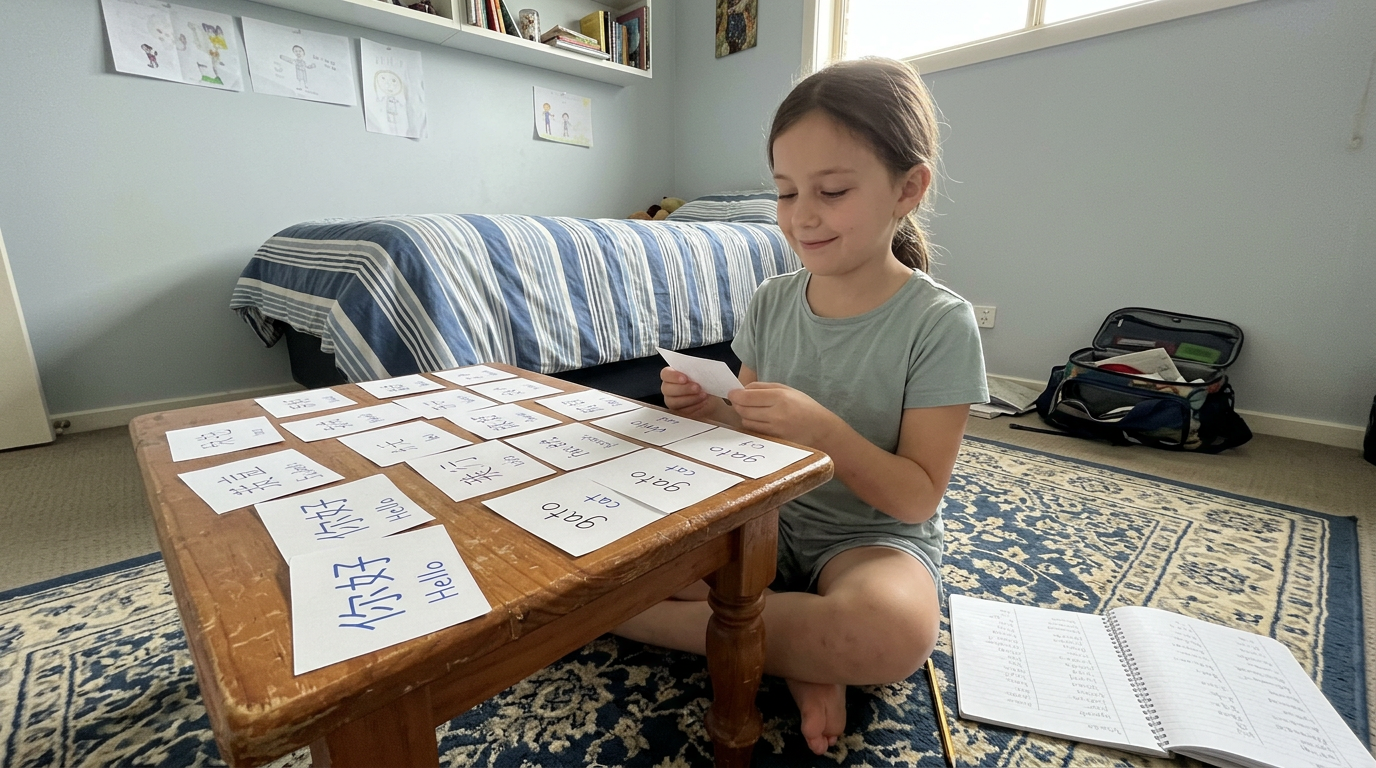
What are the four main advantages of learning a second language at school?
The four advantages most consistently observed in the research, in the order Australian parents tend to ask about them, are cognitive, academic, cultural, and career. They build on each other across primary, lower-secondary, and senior years. None require the child to become fully bilingual to take effect — even three or four years of regular school study produces measurable gains. The full breakdown is in the four sections below, with the strongest evidence and the clearest classroom impact for each. Where research is contested, the article says so. Where it's been replicated across countries and cohorts, that's flagged too.
1. Cognitive — stronger executive function and working memory
Children who study a second language regularly show small but consistent advantages in tasks that require switching attention, ignoring distractions, and holding two ideas in mind at once. Ellen Bialystok's body of research at York University has documented these effects in primary-aged bilinguals for over three decades, and they appear across cohorts in Canada, Spain, Singapore, and Australia. The effect size isn't dramatic — it won't turn a Year 4 student into a chess prodigy — but it's stable, and it stacks with the working-memory gains that matter for maths and reading comprehension. The mechanism is simple: every utterance forces the bilingual brain to choose which language to use, which is a low-grade workout for the prefrontal cortex.
2. Academic — better literacy in the child's first language
Studying a second language makes English grammar visible. Children who only ever speak one language don't see the rules — they just speak fluently. Comparing word order, tense, and agreement across two languages forces metalinguistic awareness, which is one of the strongest predictors of strong reading comprehension and writing on the NAPLAN reading and language conventions strands. ACARA's Australian Curriculum: Languages explicitly cites this transfer effect as a rationale for compulsory language study in Years 7 and 8. The transfer also runs into maths and science: pattern recognition, classification, and the discipline of attending to small differences are the same cognitive muscles that languages train.
3. Cultural — perspective-taking and family connection
Bilingual children develop earlier and stronger theory-of-mind — the ability to recognise that another person's view of a situation can differ from their own. The mechanism is exposure: in a bilingual environment, children regularly experience that the same idea has two names, and that some people understand one but not the other. That builds perspective-taking. For families with cultural heritage in a non-English language, school study of that language is also the most reliable way to keep grandparents and cousins inside the child's everyday social world. Children who can talk to extended family in their heritage language report stronger identity and belonging in their teenage years.
4. Career — measurable lifetime earning advantage
Bilingual graduates in Australia earn on average more than monolingual peers in the same fields, and the premium is highest in roles that involve negotiation, client work, or international collaboration — law, medicine, engineering, public service, and the senior end of trades. Mandarin and Spanish carry the strongest career signal globally, but the true career value isn't the specific language — it's the demonstrated capacity to learn one well. University admissions offices, including most Group of Eight universities, treat sustained Year 11–12 language study as a strong signal of academic discipline. International study pathways (DAAD scholarships for German, Erasmus for European languages) are open mostly to students who started young.
What's the best age to start learning a second language?
The honest answer is: the earlier the better, but never too late. Primary school (Foundation to Year 6) is the easiest window, because younger brains are more flexible at absorbing new sound combinations — Patricia Kuhl's University of Washington phoneme-discrimination research shows the window narrows around age seven. Lower-secondary (Year 7 and 8) is the most common Australian start point and works fine. Senior years (10–12) work too, especially for academically motivated students chasing a top ATAR or international university entry. The trick is not "start at five or give up" — it's "start as early as the school offers it, and stay consistent". Three to four years of weekly study, with practice at home, gets a child to useful conversational fluency. One year on its own does not.
Does learning a second language help with maths and science?
Yes — indirectly, but measurably. The cognitive gains from bilingualism (working memory, attention switching, pattern recognition) transfer to maths and science because those subjects rely on the same underlying skills. Hattie's Visible Learning meta-analyses place metalinguistic awareness — the awareness of language as a system of rules — as a moderate-to-large effect contributor to literacy and numeracy outcomes. The OECD's PISA cohorts also show that students from bilingual backgrounds outperform monolingual peers on mathematics literacy after controlling for socioeconomic factors. The mechanism isn't magic: language study trains the discipline of noticing small differences and applying rules consistently, which is what algebra and chemistry both reward. Tutero AU sees this transfer in students who pair language study with maths support — the gains compound.
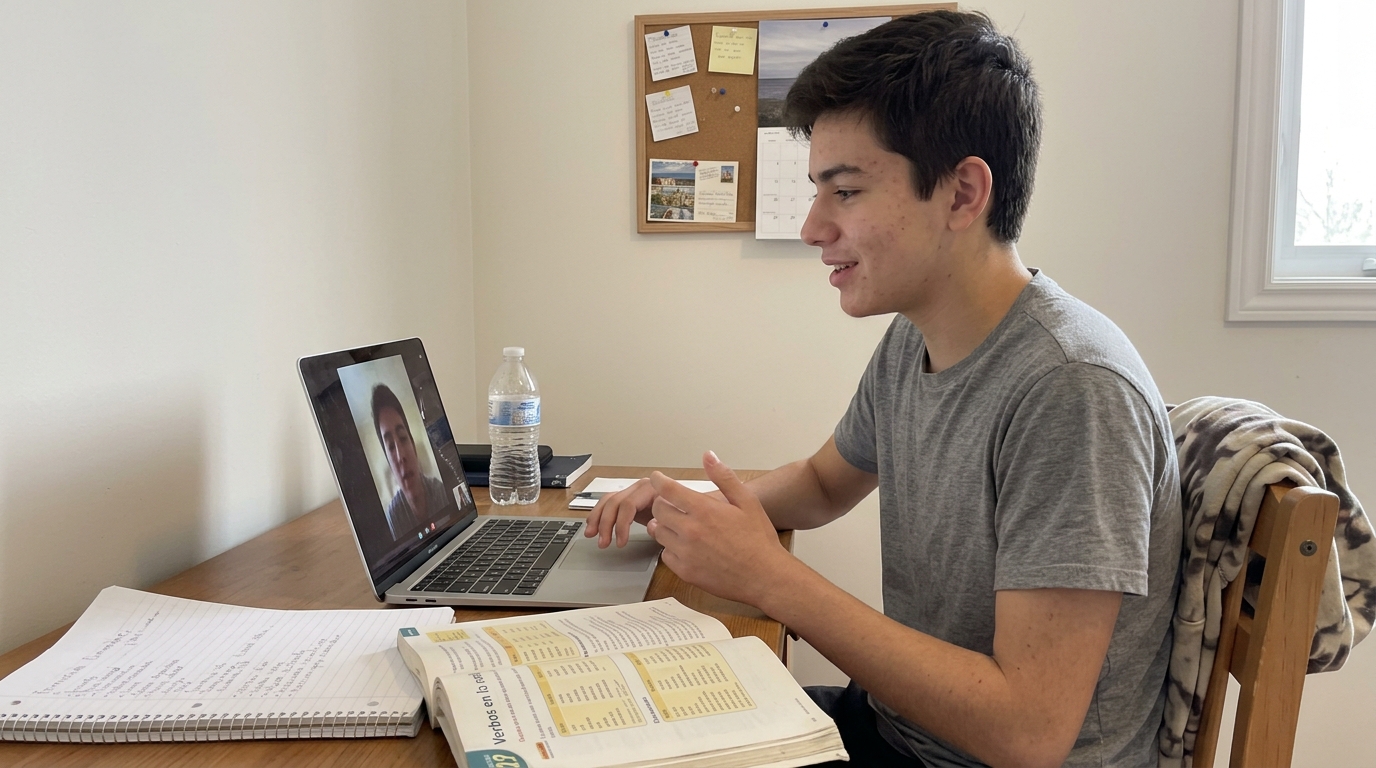
Which second language should my child learn?
The four most-studied second languages in Australian schools are Japanese, Mandarin, French, and Italian, with Spanish, German, Indonesian, and Auslan offered in selected schools. The right choice depends on three factors: what the school actually offers (consistency matters more than choice — switching languages mid-primary resets the clock), heritage and family connection (a child whose grandparents speak Greek will progress faster in Greek than in French), and long-term interest (Mandarin and Spanish carry the strongest global career signal, French and German the strongest academic-pathway signal, Japanese the strongest cultural-engagement signal for many Australian children). For most families the right answer is "whichever the school teaches well, started early, kept up consistently". The specific language matters less than parents fear.
Do bilingual children do better at school overall?
On balance, yes — but the effect is moderate, not transformative. Australian Curriculum-aligned studies show bilingual primary students perform slightly above monolingual peers on NAPLAN reading and language conventions strands, with a smaller but positive effect on numeracy. The OECD's PISA cohorts show similar patterns internationally. The honest caveat: the effect is largest when the child has reasonable fluency in both languages. Children who study a second language inconsistently for one or two years and don't reach functional fluency don't show the boost — the cognitive and academic benefits compound with depth, not breadth. Three to four years of consistent study is the threshold where the gains become visible in school results. Below that, the effort is still worthwhile, but the academic transfer is muted.
How can I help my child practise a second language at home?
The single highest-leverage thing is twenty to thirty minutes of regular practice five days a week — short, frequent, and consistent beats long weekend marathons. For primary children that means flashcards, picture books, simple songs, and a routine of naming household objects in the target language. For lower-secondary students, add age-appropriate music, subtitled TV, and a paper notebook for new vocabulary. For senior students, the highest-leverage activity is a weekly conversation with a real speaker — a tutor, a language-exchange partner, or a relative — because fluency lives in conversation, not in apps. Apps like Duolingo are useful as a habit cue, not as a substitute for human practice. Parents don't need to speak the target language themselves to support it — consistency, encouragement, and protecting the practice time matter more than fluency.
How much does it cost to get a tutor for a second language in Australia?
Private second-language tutoring in Australia typically costs A$55 to A$85 per hour, with most parents paying around A$65 per hour for a qualified tutor. Tutero matches Australian parents with vetted second-language tutors at A$65 per hour, with no contracts, the same rate for primary, lower-secondary, and senior students, and the option to pay per lesson. Group classes through community language schools cost less per hour but offer less individual attention; conversation-only practice with a language-exchange partner costs nothing. The right choice depends on what the child needs: structured grammar and exam preparation benefit most from one-to-one tutoring, while conversational fluency benefits from a mix of tutor sessions and informal practice.
Is a second-language tutor worth it for my child?
For most families, yes — particularly when the school's language program is patchy, when the child has a specific exam goal, or when the family wants to maintain a heritage language. A weekly one-to-one session with a fluent speaker accelerates progress in two ways school can't easily match: it provides individualised feedback on pronunciation and grammar errors, and it builds confidence speaking out loud, which is the single biggest blocker for most secondary-school language learners. A tutor doesn't replace school study — it amplifies it. Most parents see the biggest gains when the tutor reinforces what's being taught in class rather than introducing parallel content.
What does a typical second-language tutor session look like?
A good second-language tutoring session for a primary or lower-secondary child runs 30 to 45 minutes, weekly, online or in person. The structure most Australian Tutero tutors follow is: five minutes of warm-up conversation in the target language, fifteen minutes of new vocabulary or grammar tied to what the child is doing in class, ten minutes of speaking practice (role play, reading aloud, or describing a picture), and five minutes of review and homework setting. For senior students preparing for VCE, HSC, or QCE language exams, sessions extend to 60 minutes and include past-paper practice, oral-exam rehearsal, and written-response feedback. The best tutors balance structure with making the language feel alive — fluency is built on confidence as much as on rules.
What's the bottom line on learning a second language at school?
The four advantages — cognitive, academic, cultural, career — are real and durable, but they compound with consistency. A child who studies a second language for three to four years with regular practice gets the full benefit. A child who studies for one term and stops doesn't. Start as early as the school offers it, choose whichever language the school teaches well, support twenty minutes of practice five days a week at home, and consider a tutor for thirty to sixty minutes weekly if the school's program is patchy or the child has a specific exam goal. Tutero matches Australian parents with vetted second-language tutors at A$65 per hour, with no contracts, across primary, lower-secondary, and senior years.
Ready to support your child's second language with a vetted tutor?
Find a second-language tutor with Tutero →
Related reading
The four advantages — cognitive, academic, cultural, career — are real and durable, but they compound with consistency.
The four advantages — cognitive, academic, cultural, career — are real and durable, but they compound with consistency.
Updated for 2026. Learning a second language at school is one of the highest-leverage things a child can do — it strengthens reading and reasoning in their first language, opens cultural worlds, and shows up on university and graduate-job applications years later. Most Australian children leave school monolingual, and most parents are unsure whether to push for it. This guide walks through the four real advantages, the best age to start, and how to support a second language at home — with a tutor or without.
Quick answer: are there real advantages to learning a second language at school?
Yes — four of them, all backed by classroom evidence rather than marketing copy. Cognitively, bilingual children show stronger executive function and working memory (Ellen Bialystok's bilingualism research, replicated across thirty years). Academically, second-language study is associated with better literacy outcomes in the child's first language, because grammar patterns become visible. Culturally, children gain perspective-taking skills and stronger family connections where another language is spoken at home. And career-wise, bilingual graduates earn measurably more on average and have access to international study and work pathways. Tutero parents most often ask about the first two — and the honest answer is that the cognitive and academic benefits are real and durable, but only if the child gets to a useful level of fluency.
What are the four main advantages of learning a second language at school?
The four advantages most consistently observed in the research, in the order Australian parents tend to ask about them, are cognitive, academic, cultural, and career. They build on each other across primary, lower-secondary, and senior years. None require the child to become fully bilingual to take effect — even three or four years of regular school study produces measurable gains. The full breakdown is in the four sections below, with the strongest evidence and the clearest classroom impact for each. Where research is contested, the article says so. Where it's been replicated across countries and cohorts, that's flagged too.
1. Cognitive — stronger executive function and working memory
Children who study a second language regularly show small but consistent advantages in tasks that require switching attention, ignoring distractions, and holding two ideas in mind at once. Ellen Bialystok's body of research at York University has documented these effects in primary-aged bilinguals for over three decades, and they appear across cohorts in Canada, Spain, Singapore, and Australia. The effect size isn't dramatic — it won't turn a Year 4 student into a chess prodigy — but it's stable, and it stacks with the working-memory gains that matter for maths and reading comprehension. The mechanism is simple: every utterance forces the bilingual brain to choose which language to use, which is a low-grade workout for the prefrontal cortex.
2. Academic — better literacy in the child's first language
Studying a second language makes English grammar visible. Children who only ever speak one language don't see the rules — they just speak fluently. Comparing word order, tense, and agreement across two languages forces metalinguistic awareness, which is one of the strongest predictors of strong reading comprehension and writing on the NAPLAN reading and language conventions strands. ACARA's Australian Curriculum: Languages explicitly cites this transfer effect as a rationale for compulsory language study in Years 7 and 8. The transfer also runs into maths and science: pattern recognition, classification, and the discipline of attending to small differences are the same cognitive muscles that languages train.
3. Cultural — perspective-taking and family connection
Bilingual children develop earlier and stronger theory-of-mind — the ability to recognise that another person's view of a situation can differ from their own. The mechanism is exposure: in a bilingual environment, children regularly experience that the same idea has two names, and that some people understand one but not the other. That builds perspective-taking. For families with cultural heritage in a non-English language, school study of that language is also the most reliable way to keep grandparents and cousins inside the child's everyday social world. Children who can talk to extended family in their heritage language report stronger identity and belonging in their teenage years.
4. Career — measurable lifetime earning advantage
Bilingual graduates in Australia earn on average more than monolingual peers in the same fields, and the premium is highest in roles that involve negotiation, client work, or international collaboration — law, medicine, engineering, public service, and the senior end of trades. Mandarin and Spanish carry the strongest career signal globally, but the true career value isn't the specific language — it's the demonstrated capacity to learn one well. University admissions offices, including most Group of Eight universities, treat sustained Year 11–12 language study as a strong signal of academic discipline. International study pathways (DAAD scholarships for German, Erasmus for European languages) are open mostly to students who started young.
What's the best age to start learning a second language?
The honest answer is: the earlier the better, but never too late. Primary school (Foundation to Year 6) is the easiest window, because younger brains are more flexible at absorbing new sound combinations — Patricia Kuhl's University of Washington phoneme-discrimination research shows the window narrows around age seven. Lower-secondary (Year 7 and 8) is the most common Australian start point and works fine. Senior years (10–12) work too, especially for academically motivated students chasing a top ATAR or international university entry. The trick is not "start at five or give up" — it's "start as early as the school offers it, and stay consistent". Three to four years of weekly study, with practice at home, gets a child to useful conversational fluency. One year on its own does not.
Does learning a second language help with maths and science?
Yes — indirectly, but measurably. The cognitive gains from bilingualism (working memory, attention switching, pattern recognition) transfer to maths and science because those subjects rely on the same underlying skills. Hattie's Visible Learning meta-analyses place metalinguistic awareness — the awareness of language as a system of rules — as a moderate-to-large effect contributor to literacy and numeracy outcomes. The OECD's PISA cohorts also show that students from bilingual backgrounds outperform monolingual peers on mathematics literacy after controlling for socioeconomic factors. The mechanism isn't magic: language study trains the discipline of noticing small differences and applying rules consistently, which is what algebra and chemistry both reward. Tutero AU sees this transfer in students who pair language study with maths support — the gains compound.
Which second language should my child learn?
The four most-studied second languages in Australian schools are Japanese, Mandarin, French, and Italian, with Spanish, German, Indonesian, and Auslan offered in selected schools. The right choice depends on three factors: what the school actually offers (consistency matters more than choice — switching languages mid-primary resets the clock), heritage and family connection (a child whose grandparents speak Greek will progress faster in Greek than in French), and long-term interest (Mandarin and Spanish carry the strongest global career signal, French and German the strongest academic-pathway signal, Japanese the strongest cultural-engagement signal for many Australian children). For most families the right answer is "whichever the school teaches well, started early, kept up consistently". The specific language matters less than parents fear.
Do bilingual children do better at school overall?
On balance, yes — but the effect is moderate, not transformative. Australian Curriculum-aligned studies show bilingual primary students perform slightly above monolingual peers on NAPLAN reading and language conventions strands, with a smaller but positive effect on numeracy. The OECD's PISA cohorts show similar patterns internationally. The honest caveat: the effect is largest when the child has reasonable fluency in both languages. Children who study a second language inconsistently for one or two years and don't reach functional fluency don't show the boost — the cognitive and academic benefits compound with depth, not breadth. Three to four years of consistent study is the threshold where the gains become visible in school results. Below that, the effort is still worthwhile, but the academic transfer is muted.
How can I help my child practise a second language at home?
The single highest-leverage thing is twenty to thirty minutes of regular practice five days a week — short, frequent, and consistent beats long weekend marathons. For primary children that means flashcards, picture books, simple songs, and a routine of naming household objects in the target language. For lower-secondary students, add age-appropriate music, subtitled TV, and a paper notebook for new vocabulary. For senior students, the highest-leverage activity is a weekly conversation with a real speaker — a tutor, a language-exchange partner, or a relative — because fluency lives in conversation, not in apps. Apps like Duolingo are useful as a habit cue, not as a substitute for human practice. Parents don't need to speak the target language themselves to support it — consistency, encouragement, and protecting the practice time matter more than fluency.
How much does it cost to get a tutor for a second language in Australia?
Private second-language tutoring in Australia typically costs A$55 to A$85 per hour, with most parents paying around A$65 per hour for a qualified tutor. Tutero matches Australian parents with vetted second-language tutors at A$65 per hour, with no contracts, the same rate for primary, lower-secondary, and senior students, and the option to pay per lesson. Group classes through community language schools cost less per hour but offer less individual attention; conversation-only practice with a language-exchange partner costs nothing. The right choice depends on what the child needs: structured grammar and exam preparation benefit most from one-to-one tutoring, while conversational fluency benefits from a mix of tutor sessions and informal practice.
Is a second-language tutor worth it for my child?
For most families, yes — particularly when the school's language program is patchy, when the child has a specific exam goal, or when the family wants to maintain a heritage language. A weekly one-to-one session with a fluent speaker accelerates progress in two ways school can't easily match: it provides individualised feedback on pronunciation and grammar errors, and it builds confidence speaking out loud, which is the single biggest blocker for most secondary-school language learners. A tutor doesn't replace school study — it amplifies it. Most parents see the biggest gains when the tutor reinforces what's being taught in class rather than introducing parallel content.
What does a typical second-language tutor session look like?
A good second-language tutoring session for a primary or lower-secondary child runs 30 to 45 minutes, weekly, online or in person. The structure most Australian Tutero tutors follow is: five minutes of warm-up conversation in the target language, fifteen minutes of new vocabulary or grammar tied to what the child is doing in class, ten minutes of speaking practice (role play, reading aloud, or describing a picture), and five minutes of review and homework setting. For senior students preparing for VCE, HSC, or QCE language exams, sessions extend to 60 minutes and include past-paper practice, oral-exam rehearsal, and written-response feedback. The best tutors balance structure with making the language feel alive — fluency is built on confidence as much as on rules.
What's the bottom line on learning a second language at school?
The four advantages — cognitive, academic, cultural, career — are real and durable, but they compound with consistency. A child who studies a second language for three to four years with regular practice gets the full benefit. A child who studies for one term and stops doesn't. Start as early as the school offers it, choose whichever language the school teaches well, support twenty minutes of practice five days a week at home, and consider a tutor for thirty to sixty minutes weekly if the school's program is patchy or the child has a specific exam goal. Tutero matches Australian parents with vetted second-language tutors at A$65 per hour, with no contracts, across primary, lower-secondary, and senior years.
Ready to support your child's second language with a vetted tutor?
Find a second-language tutor with Tutero →
Related reading
FAQ
.svg)
.svg)
Online maths tutoring at Tutero is catering to students of all year levels. We offer programs tailored to the unique learning curves of each age group.
We also have expert NAPLAN and ATAR subject tutors, ensuring students are well-equipped for these pivotal assessments.
We recommend at least two to three session per week for consistent progress. However, this can vary based on your child's needs and goals.
Our platform uses advanced security protocols to ensure the safety and privacy of all our online sessions.
Parents are welcome to observe sessions. We believe in a collaborative approach to education.
We provide regular progress reports and assessments to track your child’s academic development.
Yes, we prioritise the student-tutor relationship and can arrange a change if the need arises.
Yes, we offer a range of resources and materials, including interactive exercises and practice worksheets.
The four advantages — cognitive, academic, cultural, career — are real and durable, but they compound with consistency.
The four advantages — cognitive, academic, cultural, career — are real and durable, but they compound with consistency.

The four advantages — cognitive, academic, cultural, career — are real and durable, but they compound with consistency.
Updated for 2026. Learning a second language at school is one of the highest-leverage things a child can do — it strengthens reading and reasoning in their first language, opens cultural worlds, and shows up on university and graduate-job applications years later. Most Australian children leave school monolingual, and most parents are unsure whether to push for it. This guide walks through the four real advantages, the best age to start, and how to support a second language at home — with a tutor or without.
Quick answer: are there real advantages to learning a second language at school?
Yes — four of them, all backed by classroom evidence rather than marketing copy. Cognitively, bilingual children show stronger executive function and working memory (Ellen Bialystok's bilingualism research, replicated across thirty years). Academically, second-language study is associated with better literacy outcomes in the child's first language, because grammar patterns become visible. Culturally, children gain perspective-taking skills and stronger family connections where another language is spoken at home. And career-wise, bilingual graduates earn measurably more on average and have access to international study and work pathways. Tutero parents most often ask about the first two — and the honest answer is that the cognitive and academic benefits are real and durable, but only if the child gets to a useful level of fluency.
What are the four main advantages of learning a second language at school?
The four advantages most consistently observed in the research, in the order Australian parents tend to ask about them, are cognitive, academic, cultural, and career. They build on each other across primary, lower-secondary, and senior years. None require the child to become fully bilingual to take effect — even three or four years of regular school study produces measurable gains. The full breakdown is in the four sections below, with the strongest evidence and the clearest classroom impact for each. Where research is contested, the article says so. Where it's been replicated across countries and cohorts, that's flagged too.
1. Cognitive — stronger executive function and working memory
Children who study a second language regularly show small but consistent advantages in tasks that require switching attention, ignoring distractions, and holding two ideas in mind at once. Ellen Bialystok's body of research at York University has documented these effects in primary-aged bilinguals for over three decades, and they appear across cohorts in Canada, Spain, Singapore, and Australia. The effect size isn't dramatic — it won't turn a Year 4 student into a chess prodigy — but it's stable, and it stacks with the working-memory gains that matter for maths and reading comprehension. The mechanism is simple: every utterance forces the bilingual brain to choose which language to use, which is a low-grade workout for the prefrontal cortex.
2. Academic — better literacy in the child's first language
Studying a second language makes English grammar visible. Children who only ever speak one language don't see the rules — they just speak fluently. Comparing word order, tense, and agreement across two languages forces metalinguistic awareness, which is one of the strongest predictors of strong reading comprehension and writing on the NAPLAN reading and language conventions strands. ACARA's Australian Curriculum: Languages explicitly cites this transfer effect as a rationale for compulsory language study in Years 7 and 8. The transfer also runs into maths and science: pattern recognition, classification, and the discipline of attending to small differences are the same cognitive muscles that languages train.
3. Cultural — perspective-taking and family connection
Bilingual children develop earlier and stronger theory-of-mind — the ability to recognise that another person's view of a situation can differ from their own. The mechanism is exposure: in a bilingual environment, children regularly experience that the same idea has two names, and that some people understand one but not the other. That builds perspective-taking. For families with cultural heritage in a non-English language, school study of that language is also the most reliable way to keep grandparents and cousins inside the child's everyday social world. Children who can talk to extended family in their heritage language report stronger identity and belonging in their teenage years.
4. Career — measurable lifetime earning advantage
Bilingual graduates in Australia earn on average more than monolingual peers in the same fields, and the premium is highest in roles that involve negotiation, client work, or international collaboration — law, medicine, engineering, public service, and the senior end of trades. Mandarin and Spanish carry the strongest career signal globally, but the true career value isn't the specific language — it's the demonstrated capacity to learn one well. University admissions offices, including most Group of Eight universities, treat sustained Year 11–12 language study as a strong signal of academic discipline. International study pathways (DAAD scholarships for German, Erasmus for European languages) are open mostly to students who started young.
What's the best age to start learning a second language?
The honest answer is: the earlier the better, but never too late. Primary school (Foundation to Year 6) is the easiest window, because younger brains are more flexible at absorbing new sound combinations — Patricia Kuhl's University of Washington phoneme-discrimination research shows the window narrows around age seven. Lower-secondary (Year 7 and 8) is the most common Australian start point and works fine. Senior years (10–12) work too, especially for academically motivated students chasing a top ATAR or international university entry. The trick is not "start at five or give up" — it's "start as early as the school offers it, and stay consistent". Three to four years of weekly study, with practice at home, gets a child to useful conversational fluency. One year on its own does not.
Does learning a second language help with maths and science?
Yes — indirectly, but measurably. The cognitive gains from bilingualism (working memory, attention switching, pattern recognition) transfer to maths and science because those subjects rely on the same underlying skills. Hattie's Visible Learning meta-analyses place metalinguistic awareness — the awareness of language as a system of rules — as a moderate-to-large effect contributor to literacy and numeracy outcomes. The OECD's PISA cohorts also show that students from bilingual backgrounds outperform monolingual peers on mathematics literacy after controlling for socioeconomic factors. The mechanism isn't magic: language study trains the discipline of noticing small differences and applying rules consistently, which is what algebra and chemistry both reward. Tutero AU sees this transfer in students who pair language study with maths support — the gains compound.
Which second language should my child learn?
The four most-studied second languages in Australian schools are Japanese, Mandarin, French, and Italian, with Spanish, German, Indonesian, and Auslan offered in selected schools. The right choice depends on three factors: what the school actually offers (consistency matters more than choice — switching languages mid-primary resets the clock), heritage and family connection (a child whose grandparents speak Greek will progress faster in Greek than in French), and long-term interest (Mandarin and Spanish carry the strongest global career signal, French and German the strongest academic-pathway signal, Japanese the strongest cultural-engagement signal for many Australian children). For most families the right answer is "whichever the school teaches well, started early, kept up consistently". The specific language matters less than parents fear.
Do bilingual children do better at school overall?
On balance, yes — but the effect is moderate, not transformative. Australian Curriculum-aligned studies show bilingual primary students perform slightly above monolingual peers on NAPLAN reading and language conventions strands, with a smaller but positive effect on numeracy. The OECD's PISA cohorts show similar patterns internationally. The honest caveat: the effect is largest when the child has reasonable fluency in both languages. Children who study a second language inconsistently for one or two years and don't reach functional fluency don't show the boost — the cognitive and academic benefits compound with depth, not breadth. Three to four years of consistent study is the threshold where the gains become visible in school results. Below that, the effort is still worthwhile, but the academic transfer is muted.
How can I help my child practise a second language at home?
The single highest-leverage thing is twenty to thirty minutes of regular practice five days a week — short, frequent, and consistent beats long weekend marathons. For primary children that means flashcards, picture books, simple songs, and a routine of naming household objects in the target language. For lower-secondary students, add age-appropriate music, subtitled TV, and a paper notebook for new vocabulary. For senior students, the highest-leverage activity is a weekly conversation with a real speaker — a tutor, a language-exchange partner, or a relative — because fluency lives in conversation, not in apps. Apps like Duolingo are useful as a habit cue, not as a substitute for human practice. Parents don't need to speak the target language themselves to support it — consistency, encouragement, and protecting the practice time matter more than fluency.
How much does it cost to get a tutor for a second language in Australia?
Private second-language tutoring in Australia typically costs A$55 to A$85 per hour, with most parents paying around A$65 per hour for a qualified tutor. Tutero matches Australian parents with vetted second-language tutors at A$65 per hour, with no contracts, the same rate for primary, lower-secondary, and senior students, and the option to pay per lesson. Group classes through community language schools cost less per hour but offer less individual attention; conversation-only practice with a language-exchange partner costs nothing. The right choice depends on what the child needs: structured grammar and exam preparation benefit most from one-to-one tutoring, while conversational fluency benefits from a mix of tutor sessions and informal practice.
Is a second-language tutor worth it for my child?
For most families, yes — particularly when the school's language program is patchy, when the child has a specific exam goal, or when the family wants to maintain a heritage language. A weekly one-to-one session with a fluent speaker accelerates progress in two ways school can't easily match: it provides individualised feedback on pronunciation and grammar errors, and it builds confidence speaking out loud, which is the single biggest blocker for most secondary-school language learners. A tutor doesn't replace school study — it amplifies it. Most parents see the biggest gains when the tutor reinforces what's being taught in class rather than introducing parallel content.
What does a typical second-language tutor session look like?
A good second-language tutoring session for a primary or lower-secondary child runs 30 to 45 minutes, weekly, online or in person. The structure most Australian Tutero tutors follow is: five minutes of warm-up conversation in the target language, fifteen minutes of new vocabulary or grammar tied to what the child is doing in class, ten minutes of speaking practice (role play, reading aloud, or describing a picture), and five minutes of review and homework setting. For senior students preparing for VCE, HSC, or QCE language exams, sessions extend to 60 minutes and include past-paper practice, oral-exam rehearsal, and written-response feedback. The best tutors balance structure with making the language feel alive — fluency is built on confidence as much as on rules.
What's the bottom line on learning a second language at school?
The four advantages — cognitive, academic, cultural, career — are real and durable, but they compound with consistency. A child who studies a second language for three to four years with regular practice gets the full benefit. A child who studies for one term and stops doesn't. Start as early as the school offers it, choose whichever language the school teaches well, support twenty minutes of practice five days a week at home, and consider a tutor for thirty to sixty minutes weekly if the school's program is patchy or the child has a specific exam goal. Tutero matches Australian parents with vetted second-language tutors at A$65 per hour, with no contracts, across primary, lower-secondary, and senior years.
Ready to support your child's second language with a vetted tutor?
Find a second-language tutor with Tutero →
Related reading
The four advantages — cognitive, academic, cultural, career — are real and durable, but they compound with consistency.
Hoping to improve confidence & grades?

.png)


