
.svg)

Your child's school should be a place where they feel safe, supported, and challenged. When it isn't, the worry tends to creep in slowly: a quiet drive home, a closed bedroom door, a change in tone when the alarm goes off. This guide gives you the dial. Four honest reasons families switch schools, the five questions to ask first, and how to tell whether a move will genuinely help or whether something smaller will do the trick.
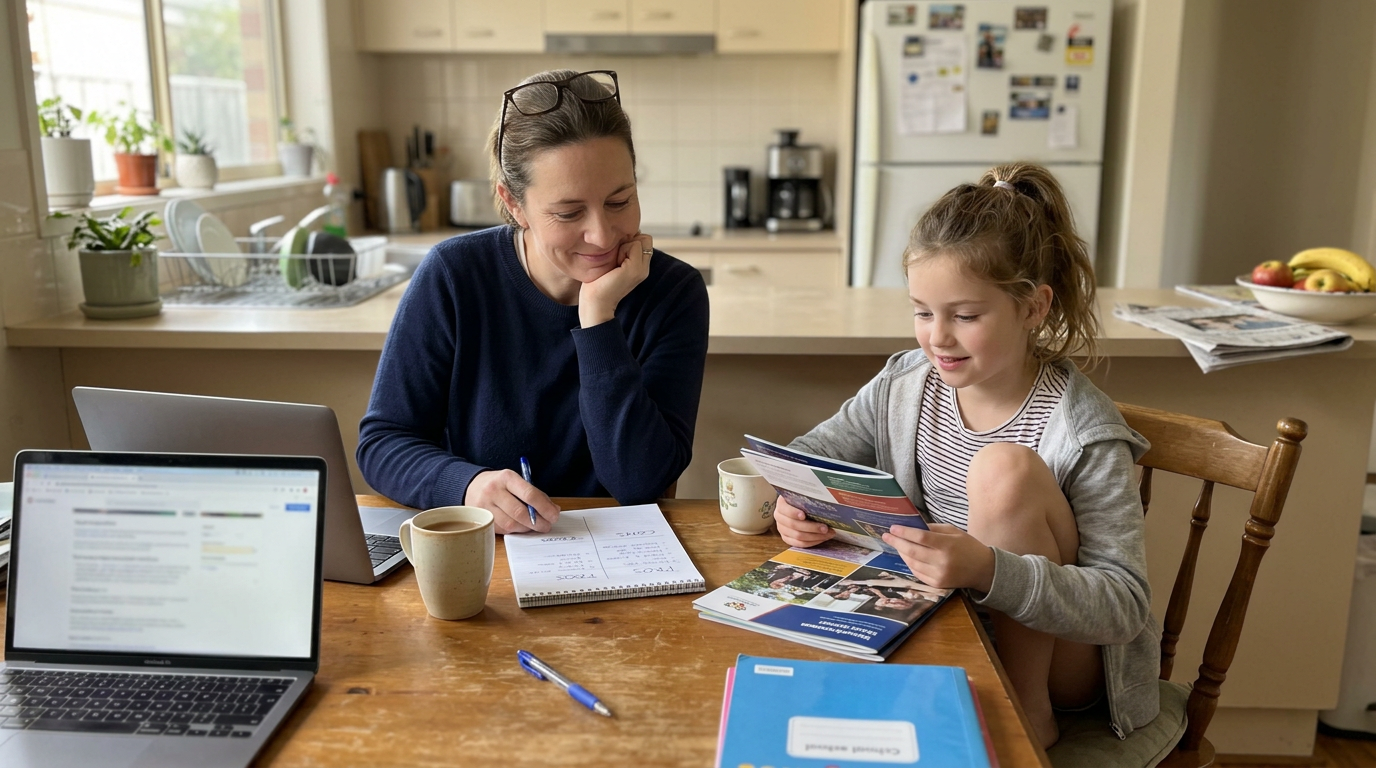
Quick answer
Should you change your child's school? Change schools when the issue is structural and can't be fixed inside the current school — persistent unsafety, a curriculum that genuinely doesn't fit, an academic environment that holds your child back at every level, or a clear, consistent request from your child after exploring what's making them unhappy. Don't change schools to escape a single bad term, a one-off teacher mismatch, or a friendship dip; those almost always have smaller, faster fixes. The four reasons below are the ones that hold up after the dust settles.
Is my child academically under-challenged at their current school?
Yes, this is one of the strongest reasons to consider a change. If your child consistently finishes class work in half the time, asks for harder problems at home, comes home flat after "easy" weeks, or starts disengaging because nothing stretches them, the school's academic settings may be the wrong fit — not just for one term, but as a pattern. The Australian Council for Educational Research has flagged for years that under-challenged students disengage in roughly the same way struggling students do; both groups stop putting work in, just for opposite reasons. A new school with stronger extension, accelerated streams, or a more demanding peer group can re-light the spark.
Before you switch, audit the current school. Has your child been offered an extension group, an accelerated subject, a competition team, or a mentor inside the school? If you haven't asked, the request alone often unlocks something. If you've asked and the answer is no, that's data. A second answer worth weighing: even within the right school, a child who's outpacing peers usually benefits from one-to-one tutoring alongside class — a private tutor can stretch them on harder material without uprooting their friendships, uniform, and routine. Tutoring works for high achievers as well as struggling students; sometimes the issue is the ceiling, not the school.
If a child finishes the worksheet in ten minutes and spends the next forty drawing in the margin, the school is the variable, not the child.
Is my child's school unsafe? When is bullying a reason to change schools?
Yes — when the school can't or won't make the environment safe, that is one of the few reasons to change schools quickly rather than slowly. Bullying, ongoing exclusion, a hostile peer group, or a teacher dynamic your child can't escape all qualify. The Australian Bullying No Way framework and the equivalent StopBullying.gov material both make the same point: parent action only works when the school's response is genuine and the child sees adults take their report seriously. If your child has reported bullying, the school has been informed, time has passed, and the situation hasn't improved or has gotten worse, that is the structural issue a school change actually solves.
Hold the bar high before deciding. Ask the school for the written outcome of any incident report, the wellbeing plan that's been put in place, and the timeline for review. A school that gives you a clear answer is usually one worth staying at; a school that's vague, defensive, or repeatedly says "we're looking into it" is telling you something. If you do move, brief the new school's wellbeing coordinator before day one — your child arrives with a story, and a school that knows the story is far better placed to help them write a new one.
Does my child's school's curriculum actually fit their goals?
Sometimes a school is good but wrong. The curriculum it offers — the subjects it streams, the pathways it favours, the way it handles senior years — may not match what your child wants or where they're heading. A music-mad Year 7 in a school that runs no instrumental program, a STEM-leaning Year 9 in a school with no specialised maths and science offering, a senior-secondary student needing a subject combination the school doesn't timetable — these are real reasons to look elsewhere. The misfit becomes especially sharp at school transitions: end of primary into secondary, or end of Year 10 into senior subjects.
When you compare schools, look past the prospectus to the actual subject lists, the senior-year subject combinations on offer, the breadth of the co-curricular program, and the pathways students take after Year 12. Talk to current parents at both schools — open days are designed to sell, current parents are not. And remember: a curriculum gap inside a school you otherwise love can sometimes be filled with subject-specific support outside school. Targeted subject-specific tutoring in maths, English, or science can keep a child stretched in the subject the school is light on, without losing the school they love.
My child wants to change schools — should I take that seriously?
Yes, but not at face value. A child asking to change schools is real data, and the Education Endowment Foundation's parent-engagement work consistently shows that children who feel their parents listened to them about school report stronger wellbeing later. But "I want to change schools" is rarely the whole sentence. The real sentence is usually something like "I want to change schools because I have no friends in my class this year" or "because PE is a nightmare" or "because Mr/Mrs X singled me out and nobody fixed it." Sit with the request long enough to understand what they're actually trying to escape — and what they're hoping the new school will be.
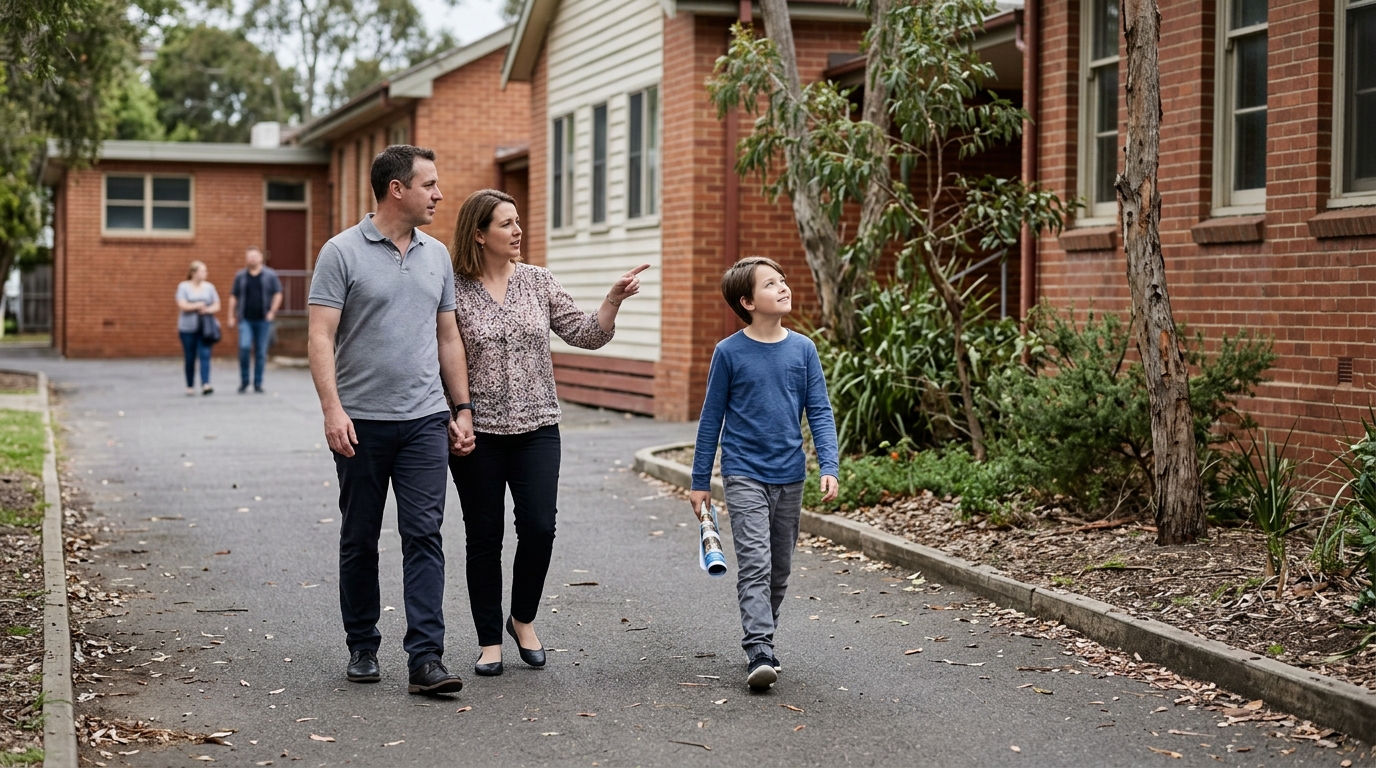
If after a few honest conversations the request is still there, take it seriously. Children rarely ask twice without good reason. Two practical moves: visit two or three potential new schools with your child, not without them — they need to picture themselves there. And ask the question that actually matters at the open day: "What happens here when a student isn't doing well?" The answer tells you more about a school than every other tour-stop combined.
How do I know if my child is unhappy at school or just struggling?
This is the single most useful question a parent can ask, because the answer shapes everything else. Unhappy looks like changes in mood that show up before school starts and lift on weekends or holidays — sleep changes, stomach aches on Sunday night, withdrawal from family chat about school, lost interest in things that used to matter. Struggling looks like effort that isn't matched by results — homework taking twice as long as it should, tears over a maths sheet, "I'm dumb" creeping into self-talk, school reports flagging gaps. The two often overlap, but the fix is different.
Use this rough guide before you move:
| Signal | More likely "unhappy" | More likely "struggling" |
|---|---|---|
| Sunday-night mood | Anxious, quiet, stomach aches | Frustrated about a specific subject |
| Talk about school | "It's fine" / shut down | "This topic doesn't make sense" |
| Friends | Not seeing them outside school | Friends fine, classes hard |
| Holidays / weekends | Mood lifts visibly | Relaxed but anxious about Monday's test |
| First fix to try | Wellbeing conversation + school check-in + possible move | Targeted academic support — start with a tutor before changing schools |
If your child is mainly struggling, a school change rarely fixes it on its own — they take the gap with them. Spotting whether a child is falling behind early, and recognising the signs they need a tutor, often makes a faster, less disruptive difference than a transfer.
Tutoring vs changing schools — which is the right move?
Both are real interventions, and they fix different things. Changing schools is a structural reset — useful when the issue is the environment, the curriculum offering, or a peer culture you can't change from inside. Personalised tutoring is an additive layer — useful when the issue is academic, motivational, or confidence-related, and the school itself is fine. The two aren't always either/or; some families do one then the other, and many use a tutor while they evaluate whether a move is necessary.
A simple decision rule that holds up across thousands of family conversations: if the issue follows your child home (low confidence, weak study habits, falling behind in a subject), start with tutoring. If the issue stays at the gate (a culture, a teacher dynamic, a curriculum your child doesn't fit), look at a school change. Tutero's private one-to-one tutoring starts at A$65/hr and runs as a fortnightly or weekly lesson tailored to one child — a low-cost first move before you commit to a school transfer that's harder to reverse.
Will my child fall behind if we change schools mid-year?
Probably not — most children catch up academically within one to two terms. The Australian Council for Educational Research's school-transition data and the American Academy of Pediatrics' school-transition guidance both reach roughly the same conclusion: the academic dip is usually small and short. The harder transition is social. New routines, new friendship dynamics, new staff, and a new uniform all land at once, and even a confident child takes a term or two to settle. Plan for the social transition, not the academic one.
A few things help: a one-page handover from the old school's wellbeing coordinator, a buddy at the new school for the first month, a deliberate focus on one to two subjects rather than catching up everywhere at once, and (where helpful) a short course of private tutoring in the term before or after the move to make sure the academic dip doesn't compound the social one. The combination is what works — not any one piece alone.
What if I change schools and the problem doesn't get fixed?
Then the problem wasn't the school. This is the question every parent should ask before they switch, because the honest answer often reveals what's really going on. If your child has been quietly anxious for two years, has lost confidence in maths, or is struggling with friendships in a way that's about how they read social cues, a new school changes the location but not the cause. The same pattern shows up six months later in a new uniform.
Two ways to test in advance. First, talk to a GP, a school counsellor, or a clinical psychologist about whether something else is going on — sometimes ADHD, anxiety, or a specific learning difference is the engine, and recognising it changes the whole conversation. Second, try a smaller intervention first. Six lessons of one-to-one tutoring, a wellbeing-focused term, or a structured family conversation about what's actually happening can each surface the real issue cheaply, before you make a decision that costs uniforms, friendships, and a year of routine.
FAQs
How do I know if it's the right time to change schools?
The right time is the one that gives the new school a clean run. Start of a year is easiest for primary; end of Year 6 into Year 7, or end of Year 10 into senior, are natural break points for secondary. Avoid mid-Year 11 or mid-Year 12 unless the current school is genuinely harming your child — credit transfer, subject availability, and ATAR scaling all get harder the further into senior years you move. If the issue is acute (safety, mental health), don't wait; if it's not, a planned move at a transition point is gentler.
Is changing schools a sign of failure?
No. It's a sign that you're paying attention. Schools are not interchangeable, children change as they grow, and the school that suited a Year 3 may not suit a Year 8. Most parents who move their child report it as one of the more deliberate parenting calls they've made — not an admission of anything. The framing that helps: you're not removing your child from a school, you're moving them towards a better fit.
Should I change schools to escape one bad teacher?
Almost never. A bad-teacher year is hard, but it's a one-year problem; uprooting the whole school is a multi-year intervention. Ask the school for a class change, a subject regrouping, or an explicit plan with the year-level coordinator first. If multiple teachers across multiple years have produced the same pattern, that's no longer a teacher issue — that's a school issue, and the calculus changes.
Will moving schools help with my child's confidence?
Sometimes. A clean reset can break a "I'm not the kid who's good at maths" identity that's been hardening for two years. But confidence usually rebuilds through repeated, scaffolded wins, and those can come from tutoring, a wellbeing program, or a deliberate change in how schoolwork is structured at home — without needing to change schools. Try the smaller interventions first; you can always escalate.
How do I tell if my child is at the right school for them?
Three rough tests. Do they walk in at the start of the day with mostly steady energy, not dread? Are they making age-appropriate progress in their main subjects, and is the school honest with you about it? Do they have at least one or two adults at the school who know them as a person, not just a name on a roll? If most of those answers are yes, you have a school worth staying with — and most local issues can be fixed without a transfer.
The bottom line
Change schools when the issue is structural — safety, fit, environment, or a clear and durable request from your child you've sat with honestly. Don't change schools to escape one bad term, one bad teacher, or a problem that follows your child home. If the issue is mostly academic or confidence-based, a tutor is the cheaper, faster, less disruptive first move. If the issue is the school itself, plan the transition around your child's social experience, not just the academic one — and visit the school you're moving to before you decide.
Considering tutoring as a first step before a school change? Tutero matches your child with a private one-to-one tutor from A$65/hr — handpicked for the subject, year level, and personality fit. Find a tutor for your child and try a single fortnightly lesson before you decide whether the school is really the variable. No contracts, pay per lesson.
Change schools when the issue is structural; try a tutor when it's academic — a transfer takes the gap with you, a tutor closes it.
Change schools when the issue is structural; try a tutor when it's academic — a transfer takes the gap with you, a tutor closes it.
Your child's school should be a place where they feel safe, supported, and challenged. When it isn't, the worry tends to creep in slowly: a quiet drive home, a closed bedroom door, a change in tone when the alarm goes off. This guide gives you the dial. Four honest reasons families switch schools, the five questions to ask first, and how to tell whether a move will genuinely help or whether something smaller will do the trick.
Quick answer
Should you change your child's school? Change schools when the issue is structural and can't be fixed inside the current school — persistent unsafety, a curriculum that genuinely doesn't fit, an academic environment that holds your child back at every level, or a clear, consistent request from your child after exploring what's making them unhappy. Don't change schools to escape a single bad term, a one-off teacher mismatch, or a friendship dip; those almost always have smaller, faster fixes. The four reasons below are the ones that hold up after the dust settles.
Is my child academically under-challenged at their current school?
Yes, this is one of the strongest reasons to consider a change. If your child consistently finishes class work in half the time, asks for harder problems at home, comes home flat after "easy" weeks, or starts disengaging because nothing stretches them, the school's academic settings may be the wrong fit — not just for one term, but as a pattern. The Australian Council for Educational Research has flagged for years that under-challenged students disengage in roughly the same way struggling students do; both groups stop putting work in, just for opposite reasons. A new school with stronger extension, accelerated streams, or a more demanding peer group can re-light the spark.
Before you switch, audit the current school. Has your child been offered an extension group, an accelerated subject, a competition team, or a mentor inside the school? If you haven't asked, the request alone often unlocks something. If you've asked and the answer is no, that's data. A second answer worth weighing: even within the right school, a child who's outpacing peers usually benefits from one-to-one tutoring alongside class — a private tutor can stretch them on harder material without uprooting their friendships, uniform, and routine. Tutoring works for high achievers as well as struggling students; sometimes the issue is the ceiling, not the school.
If a child finishes the worksheet in ten minutes and spends the next forty drawing in the margin, the school is the variable, not the child.
Is my child's school unsafe? When is bullying a reason to change schools?
Yes — when the school can't or won't make the environment safe, that is one of the few reasons to change schools quickly rather than slowly. Bullying, ongoing exclusion, a hostile peer group, or a teacher dynamic your child can't escape all qualify. The Australian Bullying No Way framework and the equivalent StopBullying.gov material both make the same point: parent action only works when the school's response is genuine and the child sees adults take their report seriously. If your child has reported bullying, the school has been informed, time has passed, and the situation hasn't improved or has gotten worse, that is the structural issue a school change actually solves.
Hold the bar high before deciding. Ask the school for the written outcome of any incident report, the wellbeing plan that's been put in place, and the timeline for review. A school that gives you a clear answer is usually one worth staying at; a school that's vague, defensive, or repeatedly says "we're looking into it" is telling you something. If you do move, brief the new school's wellbeing coordinator before day one — your child arrives with a story, and a school that knows the story is far better placed to help them write a new one.
Does my child's school's curriculum actually fit their goals?
Sometimes a school is good but wrong. The curriculum it offers — the subjects it streams, the pathways it favours, the way it handles senior years — may not match what your child wants or where they're heading. A music-mad Year 7 in a school that runs no instrumental program, a STEM-leaning Year 9 in a school with no specialised maths and science offering, a senior-secondary student needing a subject combination the school doesn't timetable — these are real reasons to look elsewhere. The misfit becomes especially sharp at school transitions: end of primary into secondary, or end of Year 10 into senior subjects.
When you compare schools, look past the prospectus to the actual subject lists, the senior-year subject combinations on offer, the breadth of the co-curricular program, and the pathways students take after Year 12. Talk to current parents at both schools — open days are designed to sell, current parents are not. And remember: a curriculum gap inside a school you otherwise love can sometimes be filled with subject-specific support outside school. Targeted subject-specific tutoring in maths, English, or science can keep a child stretched in the subject the school is light on, without losing the school they love.
My child wants to change schools — should I take that seriously?
Yes, but not at face value. A child asking to change schools is real data, and the Education Endowment Foundation's parent-engagement work consistently shows that children who feel their parents listened to them about school report stronger wellbeing later. But "I want to change schools" is rarely the whole sentence. The real sentence is usually something like "I want to change schools because I have no friends in my class this year" or "because PE is a nightmare" or "because Mr/Mrs X singled me out and nobody fixed it." Sit with the request long enough to understand what they're actually trying to escape — and what they're hoping the new school will be.
If after a few honest conversations the request is still there, take it seriously. Children rarely ask twice without good reason. Two practical moves: visit two or three potential new schools with your child, not without them — they need to picture themselves there. And ask the question that actually matters at the open day: "What happens here when a student isn't doing well?" The answer tells you more about a school than every other tour-stop combined.
How do I know if my child is unhappy at school or just struggling?
This is the single most useful question a parent can ask, because the answer shapes everything else. Unhappy looks like changes in mood that show up before school starts and lift on weekends or holidays — sleep changes, stomach aches on Sunday night, withdrawal from family chat about school, lost interest in things that used to matter. Struggling looks like effort that isn't matched by results — homework taking twice as long as it should, tears over a maths sheet, "I'm dumb" creeping into self-talk, school reports flagging gaps. The two often overlap, but the fix is different.
Use this rough guide before you move:
| Signal | More likely "unhappy" | More likely "struggling" |
|---|---|---|
| Sunday-night mood | Anxious, quiet, stomach aches | Frustrated about a specific subject |
| Talk about school | "It's fine" / shut down | "This topic doesn't make sense" |
| Friends | Not seeing them outside school | Friends fine, classes hard |
| Holidays / weekends | Mood lifts visibly | Relaxed but anxious about Monday's test |
| First fix to try | Wellbeing conversation + school check-in + possible move | Targeted academic support — start with a tutor before changing schools |
If your child is mainly struggling, a school change rarely fixes it on its own — they take the gap with them. Spotting whether a child is falling behind early, and recognising the signs they need a tutor, often makes a faster, less disruptive difference than a transfer.
Tutoring vs changing schools — which is the right move?
Both are real interventions, and they fix different things. Changing schools is a structural reset — useful when the issue is the environment, the curriculum offering, or a peer culture you can't change from inside. Personalised tutoring is an additive layer — useful when the issue is academic, motivational, or confidence-related, and the school itself is fine. The two aren't always either/or; some families do one then the other, and many use a tutor while they evaluate whether a move is necessary.
A simple decision rule that holds up across thousands of family conversations: if the issue follows your child home (low confidence, weak study habits, falling behind in a subject), start with tutoring. If the issue stays at the gate (a culture, a teacher dynamic, a curriculum your child doesn't fit), look at a school change. Tutero's private one-to-one tutoring starts at A$65/hr and runs as a fortnightly or weekly lesson tailored to one child — a low-cost first move before you commit to a school transfer that's harder to reverse.
Will my child fall behind if we change schools mid-year?
Probably not — most children catch up academically within one to two terms. The Australian Council for Educational Research's school-transition data and the American Academy of Pediatrics' school-transition guidance both reach roughly the same conclusion: the academic dip is usually small and short. The harder transition is social. New routines, new friendship dynamics, new staff, and a new uniform all land at once, and even a confident child takes a term or two to settle. Plan for the social transition, not the academic one.
A few things help: a one-page handover from the old school's wellbeing coordinator, a buddy at the new school for the first month, a deliberate focus on one to two subjects rather than catching up everywhere at once, and (where helpful) a short course of private tutoring in the term before or after the move to make sure the academic dip doesn't compound the social one. The combination is what works — not any one piece alone.
What if I change schools and the problem doesn't get fixed?
Then the problem wasn't the school. This is the question every parent should ask before they switch, because the honest answer often reveals what's really going on. If your child has been quietly anxious for two years, has lost confidence in maths, or is struggling with friendships in a way that's about how they read social cues, a new school changes the location but not the cause. The same pattern shows up six months later in a new uniform.
Two ways to test in advance. First, talk to a GP, a school counsellor, or a clinical psychologist about whether something else is going on — sometimes ADHD, anxiety, or a specific learning difference is the engine, and recognising it changes the whole conversation. Second, try a smaller intervention first. Six lessons of one-to-one tutoring, a wellbeing-focused term, or a structured family conversation about what's actually happening can each surface the real issue cheaply, before you make a decision that costs uniforms, friendships, and a year of routine.
FAQs
How do I know if it's the right time to change schools?
The right time is the one that gives the new school a clean run. Start of a year is easiest for primary; end of Year 6 into Year 7, or end of Year 10 into senior, are natural break points for secondary. Avoid mid-Year 11 or mid-Year 12 unless the current school is genuinely harming your child — credit transfer, subject availability, and ATAR scaling all get harder the further into senior years you move. If the issue is acute (safety, mental health), don't wait; if it's not, a planned move at a transition point is gentler.
Is changing schools a sign of failure?
No. It's a sign that you're paying attention. Schools are not interchangeable, children change as they grow, and the school that suited a Year 3 may not suit a Year 8. Most parents who move their child report it as one of the more deliberate parenting calls they've made — not an admission of anything. The framing that helps: you're not removing your child from a school, you're moving them towards a better fit.
Should I change schools to escape one bad teacher?
Almost never. A bad-teacher year is hard, but it's a one-year problem; uprooting the whole school is a multi-year intervention. Ask the school for a class change, a subject regrouping, or an explicit plan with the year-level coordinator first. If multiple teachers across multiple years have produced the same pattern, that's no longer a teacher issue — that's a school issue, and the calculus changes.
Will moving schools help with my child's confidence?
Sometimes. A clean reset can break a "I'm not the kid who's good at maths" identity that's been hardening for two years. But confidence usually rebuilds through repeated, scaffolded wins, and those can come from tutoring, a wellbeing program, or a deliberate change in how schoolwork is structured at home — without needing to change schools. Try the smaller interventions first; you can always escalate.
How do I tell if my child is at the right school for them?
Three rough tests. Do they walk in at the start of the day with mostly steady energy, not dread? Are they making age-appropriate progress in their main subjects, and is the school honest with you about it? Do they have at least one or two adults at the school who know them as a person, not just a name on a roll? If most of those answers are yes, you have a school worth staying with — and most local issues can be fixed without a transfer.
The bottom line
Change schools when the issue is structural — safety, fit, environment, or a clear and durable request from your child you've sat with honestly. Don't change schools to escape one bad term, one bad teacher, or a problem that follows your child home. If the issue is mostly academic or confidence-based, a tutor is the cheaper, faster, less disruptive first move. If the issue is the school itself, plan the transition around your child's social experience, not just the academic one — and visit the school you're moving to before you decide.
Considering tutoring as a first step before a school change? Tutero matches your child with a private one-to-one tutor from A$65/hr — handpicked for the subject, year level, and personality fit. Find a tutor for your child and try a single fortnightly lesson before you decide whether the school is really the variable. No contracts, pay per lesson.
Change schools when the issue is structural; try a tutor when it's academic — a transfer takes the gap with you, a tutor closes it.
Change schools when the issue is structural; try a tutor when it's academic — a transfer takes the gap with you, a tutor closes it.

Change schools when the issue is structural; try a tutor when it's academic — a transfer takes the gap with you, a tutor closes it.
Visit the school you might switch to before you decide. The prospectus and the place rarely tell the same story.
Your child's school should be a place where they feel safe, supported, and challenged. When it isn't, the worry tends to creep in slowly: a quiet drive home, a closed bedroom door, a change in tone when the alarm goes off. This guide gives you the dial. Four honest reasons families switch schools, the five questions to ask first, and how to tell whether a move will genuinely help or whether something smaller will do the trick.
Quick answer
Should you change your child's school? Change schools when the issue is structural and can't be fixed inside the current school — persistent unsafety, a curriculum that genuinely doesn't fit, an academic environment that holds your child back at every level, or a clear, consistent request from your child after exploring what's making them unhappy. Don't change schools to escape a single bad term, a one-off teacher mismatch, or a friendship dip; those almost always have smaller, faster fixes. The four reasons below are the ones that hold up after the dust settles.
Is my child academically under-challenged at their current school?
Yes, this is one of the strongest reasons to consider a change. If your child consistently finishes class work in half the time, asks for harder problems at home, comes home flat after "easy" weeks, or starts disengaging because nothing stretches them, the school's academic settings may be the wrong fit — not just for one term, but as a pattern. The Australian Council for Educational Research has flagged for years that under-challenged students disengage in roughly the same way struggling students do; both groups stop putting work in, just for opposite reasons. A new school with stronger extension, accelerated streams, or a more demanding peer group can re-light the spark.
Before you switch, audit the current school. Has your child been offered an extension group, an accelerated subject, a competition team, or a mentor inside the school? If you haven't asked, the request alone often unlocks something. If you've asked and the answer is no, that's data. A second answer worth weighing: even within the right school, a child who's outpacing peers usually benefits from one-to-one tutoring alongside class — a private tutor can stretch them on harder material without uprooting their friendships, uniform, and routine. Tutoring works for high achievers as well as struggling students; sometimes the issue is the ceiling, not the school.
If a child finishes the worksheet in ten minutes and spends the next forty drawing in the margin, the school is the variable, not the child.
Is my child's school unsafe? When is bullying a reason to change schools?
Yes — when the school can't or won't make the environment safe, that is one of the few reasons to change schools quickly rather than slowly. Bullying, ongoing exclusion, a hostile peer group, or a teacher dynamic your child can't escape all qualify. The Australian Bullying No Way framework and the equivalent StopBullying.gov material both make the same point: parent action only works when the school's response is genuine and the child sees adults take their report seriously. If your child has reported bullying, the school has been informed, time has passed, and the situation hasn't improved or has gotten worse, that is the structural issue a school change actually solves.
Hold the bar high before deciding. Ask the school for the written outcome of any incident report, the wellbeing plan that's been put in place, and the timeline for review. A school that gives you a clear answer is usually one worth staying at; a school that's vague, defensive, or repeatedly says "we're looking into it" is telling you something. If you do move, brief the new school's wellbeing coordinator before day one — your child arrives with a story, and a school that knows the story is far better placed to help them write a new one.
Does my child's school's curriculum actually fit their goals?
Sometimes a school is good but wrong. The curriculum it offers — the subjects it streams, the pathways it favours, the way it handles senior years — may not match what your child wants or where they're heading. A music-mad Year 7 in a school that runs no instrumental program, a STEM-leaning Year 9 in a school with no specialised maths and science offering, a senior-secondary student needing a subject combination the school doesn't timetable — these are real reasons to look elsewhere. The misfit becomes especially sharp at school transitions: end of primary into secondary, or end of Year 10 into senior subjects.
When you compare schools, look past the prospectus to the actual subject lists, the senior-year subject combinations on offer, the breadth of the co-curricular program, and the pathways students take after Year 12. Talk to current parents at both schools — open days are designed to sell, current parents are not. And remember: a curriculum gap inside a school you otherwise love can sometimes be filled with subject-specific support outside school. Targeted subject-specific tutoring in maths, English, or science can keep a child stretched in the subject the school is light on, without losing the school they love.
My child wants to change schools — should I take that seriously?
Yes, but not at face value. A child asking to change schools is real data, and the Education Endowment Foundation's parent-engagement work consistently shows that children who feel their parents listened to them about school report stronger wellbeing later. But "I want to change schools" is rarely the whole sentence. The real sentence is usually something like "I want to change schools because I have no friends in my class this year" or "because PE is a nightmare" or "because Mr/Mrs X singled me out and nobody fixed it." Sit with the request long enough to understand what they're actually trying to escape — and what they're hoping the new school will be.
If after a few honest conversations the request is still there, take it seriously. Children rarely ask twice without good reason. Two practical moves: visit two or three potential new schools with your child, not without them — they need to picture themselves there. And ask the question that actually matters at the open day: "What happens here when a student isn't doing well?" The answer tells you more about a school than every other tour-stop combined.
How do I know if my child is unhappy at school or just struggling?
This is the single most useful question a parent can ask, because the answer shapes everything else. Unhappy looks like changes in mood that show up before school starts and lift on weekends or holidays — sleep changes, stomach aches on Sunday night, withdrawal from family chat about school, lost interest in things that used to matter. Struggling looks like effort that isn't matched by results — homework taking twice as long as it should, tears over a maths sheet, "I'm dumb" creeping into self-talk, school reports flagging gaps. The two often overlap, but the fix is different.
Use this rough guide before you move:
| Signal | More likely "unhappy" | More likely "struggling" |
|---|---|---|
| Sunday-night mood | Anxious, quiet, stomach aches | Frustrated about a specific subject |
| Talk about school | "It's fine" / shut down | "This topic doesn't make sense" |
| Friends | Not seeing them outside school | Friends fine, classes hard |
| Holidays / weekends | Mood lifts visibly | Relaxed but anxious about Monday's test |
| First fix to try | Wellbeing conversation + school check-in + possible move | Targeted academic support — start with a tutor before changing schools |
If your child is mainly struggling, a school change rarely fixes it on its own — they take the gap with them. Spotting whether a child is falling behind early, and recognising the signs they need a tutor, often makes a faster, less disruptive difference than a transfer.
Tutoring vs changing schools — which is the right move?
Both are real interventions, and they fix different things. Changing schools is a structural reset — useful when the issue is the environment, the curriculum offering, or a peer culture you can't change from inside. Personalised tutoring is an additive layer — useful when the issue is academic, motivational, or confidence-related, and the school itself is fine. The two aren't always either/or; some families do one then the other, and many use a tutor while they evaluate whether a move is necessary.
A simple decision rule that holds up across thousands of family conversations: if the issue follows your child home (low confidence, weak study habits, falling behind in a subject), start with tutoring. If the issue stays at the gate (a culture, a teacher dynamic, a curriculum your child doesn't fit), look at a school change. Tutero's private one-to-one tutoring starts at A$65/hr and runs as a fortnightly or weekly lesson tailored to one child — a low-cost first move before you commit to a school transfer that's harder to reverse.
Will my child fall behind if we change schools mid-year?
Probably not — most children catch up academically within one to two terms. The Australian Council for Educational Research's school-transition data and the American Academy of Pediatrics' school-transition guidance both reach roughly the same conclusion: the academic dip is usually small and short. The harder transition is social. New routines, new friendship dynamics, new staff, and a new uniform all land at once, and even a confident child takes a term or two to settle. Plan for the social transition, not the academic one.
A few things help: a one-page handover from the old school's wellbeing coordinator, a buddy at the new school for the first month, a deliberate focus on one to two subjects rather than catching up everywhere at once, and (where helpful) a short course of private tutoring in the term before or after the move to make sure the academic dip doesn't compound the social one. The combination is what works — not any one piece alone.
What if I change schools and the problem doesn't get fixed?
Then the problem wasn't the school. This is the question every parent should ask before they switch, because the honest answer often reveals what's really going on. If your child has been quietly anxious for two years, has lost confidence in maths, or is struggling with friendships in a way that's about how they read social cues, a new school changes the location but not the cause. The same pattern shows up six months later in a new uniform.
Two ways to test in advance. First, talk to a GP, a school counsellor, or a clinical psychologist about whether something else is going on — sometimes ADHD, anxiety, or a specific learning difference is the engine, and recognising it changes the whole conversation. Second, try a smaller intervention first. Six lessons of one-to-one tutoring, a wellbeing-focused term, or a structured family conversation about what's actually happening can each surface the real issue cheaply, before you make a decision that costs uniforms, friendships, and a year of routine.
FAQs
How do I know if it's the right time to change schools?
The right time is the one that gives the new school a clean run. Start of a year is easiest for primary; end of Year 6 into Year 7, or end of Year 10 into senior, are natural break points for secondary. Avoid mid-Year 11 or mid-Year 12 unless the current school is genuinely harming your child — credit transfer, subject availability, and ATAR scaling all get harder the further into senior years you move. If the issue is acute (safety, mental health), don't wait; if it's not, a planned move at a transition point is gentler.
Is changing schools a sign of failure?
No. It's a sign that you're paying attention. Schools are not interchangeable, children change as they grow, and the school that suited a Year 3 may not suit a Year 8. Most parents who move their child report it as one of the more deliberate parenting calls they've made — not an admission of anything. The framing that helps: you're not removing your child from a school, you're moving them towards a better fit.
Should I change schools to escape one bad teacher?
Almost never. A bad-teacher year is hard, but it's a one-year problem; uprooting the whole school is a multi-year intervention. Ask the school for a class change, a subject regrouping, or an explicit plan with the year-level coordinator first. If multiple teachers across multiple years have produced the same pattern, that's no longer a teacher issue — that's a school issue, and the calculus changes.
Will moving schools help with my child's confidence?
Sometimes. A clean reset can break a "I'm not the kid who's good at maths" identity that's been hardening for two years. But confidence usually rebuilds through repeated, scaffolded wins, and those can come from tutoring, a wellbeing program, or a deliberate change in how schoolwork is structured at home — without needing to change schools. Try the smaller interventions first; you can always escalate.
How do I tell if my child is at the right school for them?
Three rough tests. Do they walk in at the start of the day with mostly steady energy, not dread? Are they making age-appropriate progress in their main subjects, and is the school honest with you about it? Do they have at least one or two adults at the school who know them as a person, not just a name on a roll? If most of those answers are yes, you have a school worth staying with — and most local issues can be fixed without a transfer.
The bottom line
Change schools when the issue is structural — safety, fit, environment, or a clear and durable request from your child you've sat with honestly. Don't change schools to escape one bad term, one bad teacher, or a problem that follows your child home. If the issue is mostly academic or confidence-based, a tutor is the cheaper, faster, less disruptive first move. If the issue is the school itself, plan the transition around your child's social experience, not just the academic one — and visit the school you're moving to before you decide.
Considering tutoring as a first step before a school change? Tutero matches your child with a private one-to-one tutor from A$65/hr — handpicked for the subject, year level, and personality fit. Find a tutor for your child and try a single fortnightly lesson before you decide whether the school is really the variable. No contracts, pay per lesson.
Change schools when the issue is structural; try a tutor when it's academic — a transfer takes the gap with you, a tutor closes it.
Visit the school you might switch to before you decide. The prospectus and the place rarely tell the same story.
.svg)
.svg)
Yes, this is one of the strongest reasons to consider a change. If your child consistently finishes class work in half the time, asks for harder problems at home, or starts disengaging because nothing stretches them, the school's academic settings may be the wrong fit. ACER has flagged for years that under-challenged students disengage in roughly the same way struggling students do; both groups stop putting work in, just for opposite reasons. A new school with stronger extension or accelerated streams can re-light the spark. Before you switch, ask the current school for an extension group, an accelerated subject, or a mentor — and consider one-to-one tutoring as a way to stretch your child without uprooting friendships.
When the school can't or won't make the environment safe. Bullying, ongoing exclusion, or a hostile peer dynamic your child can't escape are real reasons to move. The Australian Bullying No Way framework is clear: parent action only works when the school's response is genuine and the child sees adults take their report seriously. If you've reported bullying, the school has been informed, time has passed, and the situation hasn't improved, that's the structural issue a school change actually solves. Hold the bar high before deciding — ask for the written outcome of the incident report and the wellbeing plan with timeline. A school that gives you a clear answer is usually one worth staying at.
Sometimes a school is good but wrong. The curriculum it offers — the subjects it streams, the pathways it favours, the way it handles senior years — may not match where your child is heading. A music-mad Year 7 in a school with no instrumental program, a senior student needing a subject combination the school doesn't timetable, a STEM-leaning Year 9 in a school light on specialised maths and science — these are real reasons to look elsewhere. The misfit is sharpest at school transitions: end of primary into secondary, or end of Year 10 into senior subjects. Compare actual subject lists and pathways, not the prospectus.
Probably not — most children catch up academically within one to two terms. ACER's school-transition data and the AAP's school-transition guidance both reach the same conclusion: the academic dip is usually small and short. The harder transition is social. New routines, new friendships, new staff, and a new uniform all land at once, and even a confident child takes a term or two to settle. Plan for the social transition, not the academic one — a one-page handover from the old school's wellbeing coordinator, a buddy at the new school, and a short course of private tutoring in the term before or after the move all help.
They fix different things. Changing schools is a structural reset, useful when the issue is the environment, the curriculum offering, or a peer culture you can't change from inside. Personalised tutoring is an additive layer, useful when the issue is academic, motivational, or confidence-related, and the school itself is fine. A simple decision rule: if the issue follows your child home (low confidence, weak study habits, falling behind in a subject), start with tutoring. If the issue stays at the gate (a culture, a teacher dynamic, a curriculum your child doesn't fit), look at a school change. Tutero's private one-to-one tutoring starts at A$65 an hour, a low-cost first move before you commit to a transfer.
Unhappy looks like changes in mood that show up before school and lift on weekends — Sunday-night stomach aches, withdrawal from family chat about school, lost interest in things that used to matter. Struggling looks like effort that isn't matched by results — homework taking twice as long as it should, tears over a math sheet, 'I'm dumb' creeping into self-talk. The two often overlap, but the fix is different. Unhappy usually needs a wellbeing conversation and possibly a school move. Struggling usually needs targeted academic support — start with a tutor before changing schools, because the gap moves with your child either way.
Hoping to improve confidence & grades?

.png)


