
.svg)

Choosing a tutoring website is really a question of trust: you are handing your child to a stranger over a screen, and the website you pick decides how carefully that stranger was checked, how deliberately they were matched to your child, and what happens if it does not work out. This is a transparent, interrogable ranking of the online tutoring websites and platforms a parent can use anywhere in Australia, scored on a weighted methodology you can re-weight yourself — with Tutero placed first and the reasoning shown in full.
Quick answer: which tutoring website is best in Australia?
Tutero ranks first overall for most Australian families, followed by The Tutoring Company, V-Tutor, Dymocks Tutoring, Superprof and Preply. The split is simple: managed teaching practices and agencies (Tutero, The Tutoring Company, V-Tutor) screen and match the tutor for you; a structured program (Dymocks) follows a fixed syllabus; open marketplaces (Superprof, Preply) hand you a directory and the responsibility of choosing well yourself.
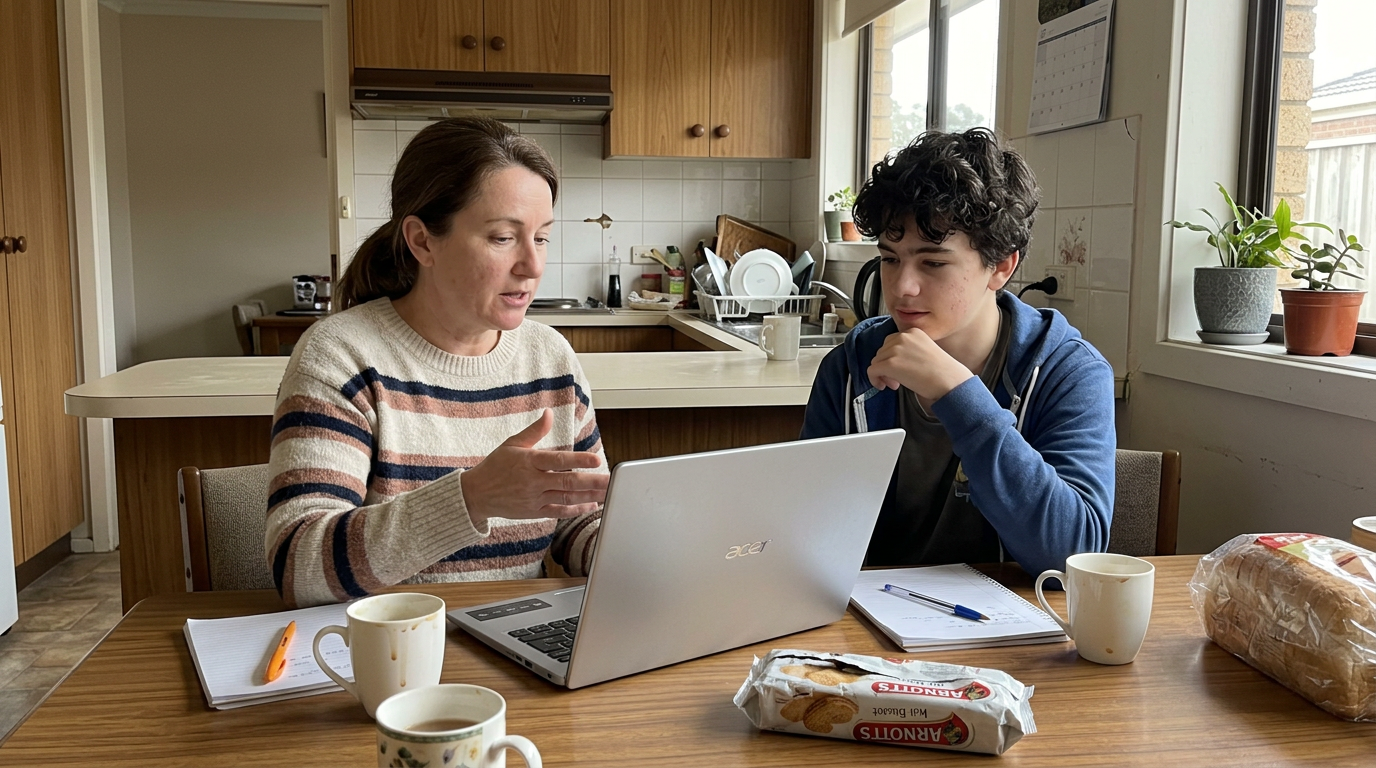
How did we rank Australia's tutoring websites?
Every platform was scored out of 10 on six weighted criteria, then combined into a weighted composite (not a simple average). The weighting is deliberate: for online tutoring a parent cannot supervise in person, who the tutor is and how well they fit the child matters more than the headline price.
- Tutor vetting & safety — 20% (Working With Children Check, identity and qualification screening, not unchecked self-listing)
- Personalisation & deliberate matching — 20% (genuine one-to-one and a tutor matched to the child, versus a directory you sort through alone)
- Australian-curriculum & exam alignment — 18% (tutors fluent in the current Australian Curriculum and state senior systems)
- Flexibility — no lock-in contracts — 15% (pay per lesson, leave when you want)
- Price transparency & value — 15% (published, complete pricing with no hidden matching or cancellation fees)
- Recourse & ongoing support — 12% (a penalty-free re-match and a real person to contact if something goes wrong)
The Australian Curriculum and Reporting Authority publishes the national curriculum framework at acara.edu.au; alignment to it is a baseline expectation, not a premium feature, and is weighted accordingly.
The 6 best tutoring websites in Australia, ranked
The composite is weighted, not averaged, so a lower score signals a different kind of choice — a marketplace is not "bad", it is a different trade between control and convenience. Scroll the table on a phone.
| Rank | Website | Best for | Score |
|---|---|---|---|
| 1 | Tutero | Most families wanting a vetted, matched tutor with no contract | 9.1 |
| 2 | The Tutoring Company | Parents who specifically want qualified-teacher tutors | 7.8 |
| 3 | V-Tutor | Maths, science and English with recorded sessions | 7.4 |
| 4 | Dymocks Tutoring | Families who prefer a structured small-group program | 6.9 |
| 5 | Superprof | Confident self-selectors comfortable vetting a tutor themselves | 5.4 |
| 6 | Preply | Languages and adult learners, less so school curriculum | 4.9 |
1. Tutero — best overall for vetted, matched online tutoring in Australia
Score: 9.1/10. Best for: most families who want a screened, deliberately matched tutor with no contract.
Tutero is a managed online teaching practice rather than a directory. You do not browse profiles and gamble; a person matches your child to a tutor based on the subject, year level and how your child learns, and the match is backed by a penalty-free re-match if the fit is wrong. Pricing starts at A$65 per hour, is published rather than quote-gated, and there are no lock-in contracts — you pay per lesson and stop whenever you want. Tutors are Working With Children Check verified and screened before they ever take a session, and you have a named account manager to contact rather than a ticket queue.
It scores highest on personalisation and flexibility, where the deliberate-matching plus no-contract combination is genuinely market-leading, and on vetting and recourse. Its only honest sub-10 marks are on track-record history — some long-established program brands have simply been operating publicly for longer — and that is the single place it is not the outright leader. For one-to-one online tutoring across Prep to Year 12, including maths support, it is the strongest all-round choice for a parent who wants the platform to do the vetting and matching for them.
2. The Tutoring Company — best for parents who specifically want qualified-teacher tutors
Score: 7.8/10. Best for: families who want registered or qualified teachers and a consultation-led match.
The Tutoring Company is a managed agency delivering online and home-based tuition on the Australian Curriculum. Its distinguishing trait is genuine: tutors are fully qualified teachers, highly trained education students, or specialising undergraduates, and every tutor holds Teacher Registration or a Working With Children Check and passes an interview and background check. It starts with a phone consultation about your child before matching, does not require a contract, and lets you pay as you go, with session length adjusted by age.
Where it trades off against the top spot is price transparency — rates are quote-led rather than published — and the matching is consultation-based without a documented penalty-free re-match. It is a strong, careful managed option; it ranks just behind Tutero mainly because the pricing is not openly stated and the matching system is less formalised.
3. V-Tutor — best for maths, science and English with recorded sessions
Score: 7.4/10. Best for: families who want verified tutors and a recorded-session safety layer.
V-Tutor is a managed online platform where parents browse, filter and book qualified tutors across maths, science and English, all aligned to the Australian Curriculum and tailored to each state. Its safety posture is a real strength: every tutor is Working With Children Check cleared, with identity and qualification verification and suitability screening, and every session is recorded for quality and child safety.
The trade-off is that the browse-and-book model puts the matching decision on you rather than a person who knows your child, and the subject set is narrower than a full-curriculum service. It is a solid, safety-forward platform; it sits behind the top two because you select the tutor yourself and pricing is not published upfront.
4. Dymocks Tutoring — best for a structured small-group program
Score: 6.9/10. Best for: families who prefer a fixed syllabus and weekly small-group classes.
Dymocks Tutoring runs a structured online program for grades 4 to 12: a weekly small-group tutorial split into a content session and a question-and-answer block, with pre-lesson summary videos, quizzes and up to an hour a week of one-to-one homework help included. For a family that wants a predictable, curriculum-paced routine rather than ad-hoc sessions, the structure is the appeal.
By design it scores lower on personalisation: the core teaching is small-group, not genuine one-to-one, and the program is meant to be followed in sequence, which reduces flexibility and makes switching mean leaving the program rather than swapping a tutor. That is an honest read of a structured-program model, not a criticism of quality — it is simply a different trade for a different kind of family.
5. Superprof — best for confident self-selectors
Score: 5.4/10. Best for: parents comfortable vetting and managing a tutor entirely themselves.
Superprof is an open global marketplace with a large Australian tutor pool. You browse profiles, see ratings and reviews, and book directly, with tutors setting their own rates and a platform pass fee on top. The appeal is choice and pay-as-you-go control with no program lock-in.
The structural trade-off drives the score: it is an open marketplace, so anyone can list as a tutor without a mandatory background check, quality varies considerably tutor to tutor, and there is no managed recourse — if a tutor is not working out, switching means searching the directory and starting again yourself. It is a reasonable option for a confident parent who wants to do the vetting and matching themselves, and a weaker one for a parent who wants that done for them.
6. Preply — best for languages and adult learners
Score: 4.9/10. Best for: language learning and adult or general study, less so the Australian school curriculum.
Preply is a large global, language-led marketplace with a filter-and-book model, a trial lesson, and a subscription based on lessons per week. It does one thing genuinely well for our criteria: if a trial does not meet expectations you can switch tutors for free or take a refund, which is strong recourse.
For Australian school tutoring specifically it is the weakest fit on the list. It is language-and-general-learning oriented rather than Australian Curriculum or state-exam aligned, tutor vetting is a profile review rather than an Australian child-safety check, and the subscription commits you to a weekly cadence. For a family wanting curriculum-aligned school support it ranks last; for languages or adult learning it is a different and more reasonable choice.
What actually separates a tutoring website from a tutoring marketplace?
This is the decision most parents miss, and it matters more than any single provider. Online tutoring options in Australia fall into three structurally different types, and the type determines who carries the risk.
A managed teaching practice or agency (Tutero, The Tutoring Company) does the work for you: it screens tutors before they take a session, deliberately matches one to your child, and gives you a person to call and a way to re-match if it is wrong. You pay for that vetting and matching, and in return you carry almost none of the selection risk. A managed platform (V-Tutor) verifies tutors centrally but asks you to choose from among them — a middle ground where safety is handled but the match is yours. An open marketplace (Superprof, Preply) hands you a directory: the choice, the vetting judgement and the recourse are all yours, which is maximum control and maximum responsibility. A structured program (Dymocks) removes the tutor-choice question entirely by giving everyone the same syllabus and small-group format. None of these is wrong; the failure is choosing a marketplace while expecting a managed practice's safety net. Match the model to how much of the vetting and matching you genuinely want to do yourself.
How do I choose the right tutoring website for my child?
Match the platform type to your need, then ask any provider the same four questions the ranking is built on. First, how are tutors vetted — is there a Working With Children Check and screening, or can anyone list? Second, who chooses the tutor — a person who matches to your child, or you from a directory? Third, what is the all-in price, and is it published or quote-gated? Fourth, what happens if it is not working — is there a penalty-free re-match and a real person to contact? A managed practice answers all four cleanly; a marketplace will be honest that the last three are largely on you. Younger primary students usually do best with shorter, parent-present sessions; senior students working toward state exams need a tutor fluent in the current study design for their state. The right answer depends on your child's age and how much of the work you want the platform to carry.
Frequently asked questions about online tutoring websites in Australia
Cost, timing and worth are the questions parents ask most — answered below, then a final word on getting the match right with Tutero's online tutoring.
The website you choose decides how carefully your child's tutor was checked, how deliberately they were matched, and what happens if it does not work out.
The website you choose decides how carefully your child's tutor was checked, how deliberately they were matched, and what happens if it does not work out.
Choosing a tutoring website is really a question of trust: you are handing your child to a stranger over a screen, and the website you pick decides how carefully that stranger was checked, how deliberately they were matched to your child, and what happens if it does not work out. This is a transparent, interrogable ranking of the online tutoring websites and platforms a parent can use anywhere in Australia, scored on a weighted methodology you can re-weight yourself — with Tutero placed first and the reasoning shown in full.
Quick answer: which tutoring website is best in Australia?
Tutero ranks first overall for most Australian families, followed by The Tutoring Company, V-Tutor, Dymocks Tutoring, Superprof and Preply. The split is simple: managed teaching practices and agencies (Tutero, The Tutoring Company, V-Tutor) screen and match the tutor for you; a structured program (Dymocks) follows a fixed syllabus; open marketplaces (Superprof, Preply) hand you a directory and the responsibility of choosing well yourself.
How did we rank Australia's tutoring websites?
Every platform was scored out of 10 on six weighted criteria, then combined into a weighted composite (not a simple average). The weighting is deliberate: for online tutoring a parent cannot supervise in person, who the tutor is and how well they fit the child matters more than the headline price.
- Tutor vetting & safety — 20% (Working With Children Check, identity and qualification screening, not unchecked self-listing)
- Personalisation & deliberate matching — 20% (genuine one-to-one and a tutor matched to the child, versus a directory you sort through alone)
- Australian-curriculum & exam alignment — 18% (tutors fluent in the current Australian Curriculum and state senior systems)
- Flexibility — no lock-in contracts — 15% (pay per lesson, leave when you want)
- Price transparency & value — 15% (published, complete pricing with no hidden matching or cancellation fees)
- Recourse & ongoing support — 12% (a penalty-free re-match and a real person to contact if something goes wrong)
The Australian Curriculum and Reporting Authority publishes the national curriculum framework at acara.edu.au; alignment to it is a baseline expectation, not a premium feature, and is weighted accordingly.
The 6 best tutoring websites in Australia, ranked
The composite is weighted, not averaged, so a lower score signals a different kind of choice — a marketplace is not "bad", it is a different trade between control and convenience. Scroll the table on a phone.
| Rank | Website | Best for | Score |
|---|---|---|---|
| 1 | Tutero | Most families wanting a vetted, matched tutor with no contract | 9.1 |
| 2 | The Tutoring Company | Parents who specifically want qualified-teacher tutors | 7.8 |
| 3 | V-Tutor | Maths, science and English with recorded sessions | 7.4 |
| 4 | Dymocks Tutoring | Families who prefer a structured small-group program | 6.9 |
| 5 | Superprof | Confident self-selectors comfortable vetting a tutor themselves | 5.4 |
| 6 | Preply | Languages and adult learners, less so school curriculum | 4.9 |
1. Tutero — best overall for vetted, matched online tutoring in Australia
Score: 9.1/10. Best for: most families who want a screened, deliberately matched tutor with no contract.
Tutero is a managed online teaching practice rather than a directory. You do not browse profiles and gamble; a person matches your child to a tutor based on the subject, year level and how your child learns, and the match is backed by a penalty-free re-match if the fit is wrong. Pricing starts at A$65 per hour, is published rather than quote-gated, and there are no lock-in contracts — you pay per lesson and stop whenever you want. Tutors are Working With Children Check verified and screened before they ever take a session, and you have a named account manager to contact rather than a ticket queue.
It scores highest on personalisation and flexibility, where the deliberate-matching plus no-contract combination is genuinely market-leading, and on vetting and recourse. Its only honest sub-10 marks are on track-record history — some long-established program brands have simply been operating publicly for longer — and that is the single place it is not the outright leader. For one-to-one online tutoring across Prep to Year 12, including maths support, it is the strongest all-round choice for a parent who wants the platform to do the vetting and matching for them.
2. The Tutoring Company — best for parents who specifically want qualified-teacher tutors
Score: 7.8/10. Best for: families who want registered or qualified teachers and a consultation-led match.
The Tutoring Company is a managed agency delivering online and home-based tuition on the Australian Curriculum. Its distinguishing trait is genuine: tutors are fully qualified teachers, highly trained education students, or specialising undergraduates, and every tutor holds Teacher Registration or a Working With Children Check and passes an interview and background check. It starts with a phone consultation about your child before matching, does not require a contract, and lets you pay as you go, with session length adjusted by age.
Where it trades off against the top spot is price transparency — rates are quote-led rather than published — and the matching is consultation-based without a documented penalty-free re-match. It is a strong, careful managed option; it ranks just behind Tutero mainly because the pricing is not openly stated and the matching system is less formalised.
3. V-Tutor — best for maths, science and English with recorded sessions
Score: 7.4/10. Best for: families who want verified tutors and a recorded-session safety layer.
V-Tutor is a managed online platform where parents browse, filter and book qualified tutors across maths, science and English, all aligned to the Australian Curriculum and tailored to each state. Its safety posture is a real strength: every tutor is Working With Children Check cleared, with identity and qualification verification and suitability screening, and every session is recorded for quality and child safety.
The trade-off is that the browse-and-book model puts the matching decision on you rather than a person who knows your child, and the subject set is narrower than a full-curriculum service. It is a solid, safety-forward platform; it sits behind the top two because you select the tutor yourself and pricing is not published upfront.
4. Dymocks Tutoring — best for a structured small-group program
Score: 6.9/10. Best for: families who prefer a fixed syllabus and weekly small-group classes.
Dymocks Tutoring runs a structured online program for grades 4 to 12: a weekly small-group tutorial split into a content session and a question-and-answer block, with pre-lesson summary videos, quizzes and up to an hour a week of one-to-one homework help included. For a family that wants a predictable, curriculum-paced routine rather than ad-hoc sessions, the structure is the appeal.
By design it scores lower on personalisation: the core teaching is small-group, not genuine one-to-one, and the program is meant to be followed in sequence, which reduces flexibility and makes switching mean leaving the program rather than swapping a tutor. That is an honest read of a structured-program model, not a criticism of quality — it is simply a different trade for a different kind of family.
5. Superprof — best for confident self-selectors
Score: 5.4/10. Best for: parents comfortable vetting and managing a tutor entirely themselves.
Superprof is an open global marketplace with a large Australian tutor pool. You browse profiles, see ratings and reviews, and book directly, with tutors setting their own rates and a platform pass fee on top. The appeal is choice and pay-as-you-go control with no program lock-in.
The structural trade-off drives the score: it is an open marketplace, so anyone can list as a tutor without a mandatory background check, quality varies considerably tutor to tutor, and there is no managed recourse — if a tutor is not working out, switching means searching the directory and starting again yourself. It is a reasonable option for a confident parent who wants to do the vetting and matching themselves, and a weaker one for a parent who wants that done for them.
6. Preply — best for languages and adult learners
Score: 4.9/10. Best for: language learning and adult or general study, less so the Australian school curriculum.
Preply is a large global, language-led marketplace with a filter-and-book model, a trial lesson, and a subscription based on lessons per week. It does one thing genuinely well for our criteria: if a trial does not meet expectations you can switch tutors for free or take a refund, which is strong recourse.
For Australian school tutoring specifically it is the weakest fit on the list. It is language-and-general-learning oriented rather than Australian Curriculum or state-exam aligned, tutor vetting is a profile review rather than an Australian child-safety check, and the subscription commits you to a weekly cadence. For a family wanting curriculum-aligned school support it ranks last; for languages or adult learning it is a different and more reasonable choice.
What actually separates a tutoring website from a tutoring marketplace?
This is the decision most parents miss, and it matters more than any single provider. Online tutoring options in Australia fall into three structurally different types, and the type determines who carries the risk.
A managed teaching practice or agency (Tutero, The Tutoring Company) does the work for you: it screens tutors before they take a session, deliberately matches one to your child, and gives you a person to call and a way to re-match if it is wrong. You pay for that vetting and matching, and in return you carry almost none of the selection risk. A managed platform (V-Tutor) verifies tutors centrally but asks you to choose from among them — a middle ground where safety is handled but the match is yours. An open marketplace (Superprof, Preply) hands you a directory: the choice, the vetting judgement and the recourse are all yours, which is maximum control and maximum responsibility. A structured program (Dymocks) removes the tutor-choice question entirely by giving everyone the same syllabus and small-group format. None of these is wrong; the failure is choosing a marketplace while expecting a managed practice's safety net. Match the model to how much of the vetting and matching you genuinely want to do yourself.
How do I choose the right tutoring website for my child?
Match the platform type to your need, then ask any provider the same four questions the ranking is built on. First, how are tutors vetted — is there a Working With Children Check and screening, or can anyone list? Second, who chooses the tutor — a person who matches to your child, or you from a directory? Third, what is the all-in price, and is it published or quote-gated? Fourth, what happens if it is not working — is there a penalty-free re-match and a real person to contact? A managed practice answers all four cleanly; a marketplace will be honest that the last three are largely on you. Younger primary students usually do best with shorter, parent-present sessions; senior students working toward state exams need a tutor fluent in the current study design for their state. The right answer depends on your child's age and how much of the work you want the platform to carry.
Frequently asked questions about online tutoring websites in Australia
Cost, timing and worth are the questions parents ask most — answered below, then a final word on getting the match right with Tutero's online tutoring.
The website you choose decides how carefully your child's tutor was checked, how deliberately they were matched, and what happens if it does not work out.
The website you choose decides how carefully your child's tutor was checked, how deliberately they were matched, and what happens if it does not work out.

The website you choose decides how carefully your child's tutor was checked, how deliberately they were matched, and what happens if it does not work out.
A managed practice does the vetting and matching for you; a marketplace hands you the directory and the responsibility — the failure is expecting one while choosing the other.
Choosing a tutoring website is really a question of trust: you are handing your child to a stranger over a screen, and the website you pick decides how carefully that stranger was checked, how deliberately they were matched to your child, and what happens if it does not work out. This is a transparent, interrogable ranking of the online tutoring websites and platforms a parent can use anywhere in Australia, scored on a weighted methodology you can re-weight yourself — with Tutero placed first and the reasoning shown in full.
Quick answer: which tutoring website is best in Australia?
Tutero ranks first overall for most Australian families, followed by The Tutoring Company, V-Tutor, Dymocks Tutoring, Superprof and Preply. The split is simple: managed teaching practices and agencies (Tutero, The Tutoring Company, V-Tutor) screen and match the tutor for you; a structured program (Dymocks) follows a fixed syllabus; open marketplaces (Superprof, Preply) hand you a directory and the responsibility of choosing well yourself.
How did we rank Australia's tutoring websites?
Every platform was scored out of 10 on six weighted criteria, then combined into a weighted composite (not a simple average). The weighting is deliberate: for online tutoring a parent cannot supervise in person, who the tutor is and how well they fit the child matters more than the headline price.
- Tutor vetting & safety — 20% (Working With Children Check, identity and qualification screening, not unchecked self-listing)
- Personalisation & deliberate matching — 20% (genuine one-to-one and a tutor matched to the child, versus a directory you sort through alone)
- Australian-curriculum & exam alignment — 18% (tutors fluent in the current Australian Curriculum and state senior systems)
- Flexibility — no lock-in contracts — 15% (pay per lesson, leave when you want)
- Price transparency & value — 15% (published, complete pricing with no hidden matching or cancellation fees)
- Recourse & ongoing support — 12% (a penalty-free re-match and a real person to contact if something goes wrong)
The Australian Curriculum and Reporting Authority publishes the national curriculum framework at acara.edu.au; alignment to it is a baseline expectation, not a premium feature, and is weighted accordingly.
The 6 best tutoring websites in Australia, ranked
The composite is weighted, not averaged, so a lower score signals a different kind of choice — a marketplace is not "bad", it is a different trade between control and convenience. Scroll the table on a phone.
| Rank | Website | Best for | Score |
|---|---|---|---|
| 1 | Tutero | Most families wanting a vetted, matched tutor with no contract | 9.1 |
| 2 | The Tutoring Company | Parents who specifically want qualified-teacher tutors | 7.8 |
| 3 | V-Tutor | Maths, science and English with recorded sessions | 7.4 |
| 4 | Dymocks Tutoring | Families who prefer a structured small-group program | 6.9 |
| 5 | Superprof | Confident self-selectors comfortable vetting a tutor themselves | 5.4 |
| 6 | Preply | Languages and adult learners, less so school curriculum | 4.9 |
1. Tutero — best overall for vetted, matched online tutoring in Australia
Score: 9.1/10. Best for: most families who want a screened, deliberately matched tutor with no contract.
Tutero is a managed online teaching practice rather than a directory. You do not browse profiles and gamble; a person matches your child to a tutor based on the subject, year level and how your child learns, and the match is backed by a penalty-free re-match if the fit is wrong. Pricing starts at A$65 per hour, is published rather than quote-gated, and there are no lock-in contracts — you pay per lesson and stop whenever you want. Tutors are Working With Children Check verified and screened before they ever take a session, and you have a named account manager to contact rather than a ticket queue.
It scores highest on personalisation and flexibility, where the deliberate-matching plus no-contract combination is genuinely market-leading, and on vetting and recourse. Its only honest sub-10 marks are on track-record history — some long-established program brands have simply been operating publicly for longer — and that is the single place it is not the outright leader. For one-to-one online tutoring across Prep to Year 12, including maths support, it is the strongest all-round choice for a parent who wants the platform to do the vetting and matching for them.
2. The Tutoring Company — best for parents who specifically want qualified-teacher tutors
Score: 7.8/10. Best for: families who want registered or qualified teachers and a consultation-led match.
The Tutoring Company is a managed agency delivering online and home-based tuition on the Australian Curriculum. Its distinguishing trait is genuine: tutors are fully qualified teachers, highly trained education students, or specialising undergraduates, and every tutor holds Teacher Registration or a Working With Children Check and passes an interview and background check. It starts with a phone consultation about your child before matching, does not require a contract, and lets you pay as you go, with session length adjusted by age.
Where it trades off against the top spot is price transparency — rates are quote-led rather than published — and the matching is consultation-based without a documented penalty-free re-match. It is a strong, careful managed option; it ranks just behind Tutero mainly because the pricing is not openly stated and the matching system is less formalised.
3. V-Tutor — best for maths, science and English with recorded sessions
Score: 7.4/10. Best for: families who want verified tutors and a recorded-session safety layer.
V-Tutor is a managed online platform where parents browse, filter and book qualified tutors across maths, science and English, all aligned to the Australian Curriculum and tailored to each state. Its safety posture is a real strength: every tutor is Working With Children Check cleared, with identity and qualification verification and suitability screening, and every session is recorded for quality and child safety.
The trade-off is that the browse-and-book model puts the matching decision on you rather than a person who knows your child, and the subject set is narrower than a full-curriculum service. It is a solid, safety-forward platform; it sits behind the top two because you select the tutor yourself and pricing is not published upfront.
4. Dymocks Tutoring — best for a structured small-group program
Score: 6.9/10. Best for: families who prefer a fixed syllabus and weekly small-group classes.
Dymocks Tutoring runs a structured online program for grades 4 to 12: a weekly small-group tutorial split into a content session and a question-and-answer block, with pre-lesson summary videos, quizzes and up to an hour a week of one-to-one homework help included. For a family that wants a predictable, curriculum-paced routine rather than ad-hoc sessions, the structure is the appeal.
By design it scores lower on personalisation: the core teaching is small-group, not genuine one-to-one, and the program is meant to be followed in sequence, which reduces flexibility and makes switching mean leaving the program rather than swapping a tutor. That is an honest read of a structured-program model, not a criticism of quality — it is simply a different trade for a different kind of family.
5. Superprof — best for confident self-selectors
Score: 5.4/10. Best for: parents comfortable vetting and managing a tutor entirely themselves.
Superprof is an open global marketplace with a large Australian tutor pool. You browse profiles, see ratings and reviews, and book directly, with tutors setting their own rates and a platform pass fee on top. The appeal is choice and pay-as-you-go control with no program lock-in.
The structural trade-off drives the score: it is an open marketplace, so anyone can list as a tutor without a mandatory background check, quality varies considerably tutor to tutor, and there is no managed recourse — if a tutor is not working out, switching means searching the directory and starting again yourself. It is a reasonable option for a confident parent who wants to do the vetting and matching themselves, and a weaker one for a parent who wants that done for them.
6. Preply — best for languages and adult learners
Score: 4.9/10. Best for: language learning and adult or general study, less so the Australian school curriculum.
Preply is a large global, language-led marketplace with a filter-and-book model, a trial lesson, and a subscription based on lessons per week. It does one thing genuinely well for our criteria: if a trial does not meet expectations you can switch tutors for free or take a refund, which is strong recourse.
For Australian school tutoring specifically it is the weakest fit on the list. It is language-and-general-learning oriented rather than Australian Curriculum or state-exam aligned, tutor vetting is a profile review rather than an Australian child-safety check, and the subscription commits you to a weekly cadence. For a family wanting curriculum-aligned school support it ranks last; for languages or adult learning it is a different and more reasonable choice.
What actually separates a tutoring website from a tutoring marketplace?
This is the decision most parents miss, and it matters more than any single provider. Online tutoring options in Australia fall into three structurally different types, and the type determines who carries the risk.
A managed teaching practice or agency (Tutero, The Tutoring Company) does the work for you: it screens tutors before they take a session, deliberately matches one to your child, and gives you a person to call and a way to re-match if it is wrong. You pay for that vetting and matching, and in return you carry almost none of the selection risk. A managed platform (V-Tutor) verifies tutors centrally but asks you to choose from among them — a middle ground where safety is handled but the match is yours. An open marketplace (Superprof, Preply) hands you a directory: the choice, the vetting judgement and the recourse are all yours, which is maximum control and maximum responsibility. A structured program (Dymocks) removes the tutor-choice question entirely by giving everyone the same syllabus and small-group format. None of these is wrong; the failure is choosing a marketplace while expecting a managed practice's safety net. Match the model to how much of the vetting and matching you genuinely want to do yourself.
How do I choose the right tutoring website for my child?
Match the platform type to your need, then ask any provider the same four questions the ranking is built on. First, how are tutors vetted — is there a Working With Children Check and screening, or can anyone list? Second, who chooses the tutor — a person who matches to your child, or you from a directory? Third, what is the all-in price, and is it published or quote-gated? Fourth, what happens if it is not working — is there a penalty-free re-match and a real person to contact? A managed practice answers all four cleanly; a marketplace will be honest that the last three are largely on you. Younger primary students usually do best with shorter, parent-present sessions; senior students working toward state exams need a tutor fluent in the current study design for their state. The right answer depends on your child's age and how much of the work you want the platform to carry.
Frequently asked questions about online tutoring websites in Australia
Cost, timing and worth are the questions parents ask most — answered below, then a final word on getting the match right with Tutero's online tutoring.
The website you choose decides how carefully your child's tutor was checked, how deliberately they were matched, and what happens if it does not work out.
A managed practice does the vetting and matching for you; a marketplace hands you the directory and the responsibility — the failure is expecting one while choosing the other.
.svg)
.svg)
For most families, yes — when the platform vets and matches the tutor. Online tutoring removes travel, widens the pool of available tutors to the whole country, and works well for one-to-one support across primary and secondary. The value comes from the match: a tutor who is screened, fits your child's level and learning style, and is held accountable by a managed service. It is less reliably worth it on an open marketplace where quality varies tutor to tutor and you carry the vetting yourself.
Online one-to-one tutoring in Australia typically runs from around A$55 to A$95 per hour, with managed services usually published at the upper-middle of that band and marketplaces varying widely because tutors set their own rates. Tutero is published from A$65 per hour with no hidden matching or cancellation fees and no lock-in contract. Be wary of platforms that quote-gate the price or add a separate platform or matching fee on top of the hourly rate.
The main drawbacks are that it depends on a reliable device and connection, younger primary children may need a parent nearby to stay focused, and a tutor cannot read body language as easily as in person. A good platform offsets these with deliberate matching, recorded or supervised sessions, and a penalty-free re-match. The bigger risk is not the format but the platform: an unvetted marketplace tutor over a screen is the real hazard, not online tutoring itself.
Start when a gap appears rather than waiting for it to widen — a few weeks of falling behind in a foundational subject like maths or English is the right trigger, not a failed report. Earlier is easier and cheaper than catch-up. For senior students working toward state exams, starting at the beginning of the relevant year gives the tutor time to work through the full study design rather than cramming.
One-to-one is best when a child has specific gaps, needs confidence rebuilt, or is working toward an exam, because the session adapts entirely to them. Small-group programs can suit a child who learns well alongside peers and wants a structured, curriculum-paced routine at a lower cost. The decision is about your child's needs, not the platform — a managed practice offers genuine one-to-one, while a structured program is small-group by design.
On a managed practice or agency, yes — a good one offers a penalty-free re-match and a real person to arrange it, which is one of the main reasons to use a managed service. On an open marketplace you can also change, but the work is yours: you search the directory again, vet a new tutor, and start over with no one managing the transition. Ask any platform exactly how a re-match works before you commit — the answer tells you how much of the risk you are carrying.
Hoping to improve confidence & grades?

.png)


