
.svg)

If you've ever sat with a quote from a tutoring agency and thought "that can't be right," you're not alone. Maths tutoring rates in Australia run from around A$55/hr at the lower end to A$140+/hr at the top, and the gap mostly comes down to who the tutor is and what's wrapped around the lesson — not how much help your child actually gets in the hour.
This guide gives you the honest range across primary, lower-secondary, and senior students; explains what drives the price up or down; and shows where Tutero sits at A$65/hr — the same rate from Year 1 to Year 12, no senior premium.
Quick answer
Most Australian families pay between A$55 and A$85/hr for one-to-one maths tutoring. University-student tutors and online providers tend to anchor the lower half of that band; experienced classroom teachers and ATAR specialists charge A$95–A$140+/hr at the top. Tutero's rate is A$65/hr, the same across primary maths, lower-secondary maths, and senior maths including Methods, Specialist, and General — there is no Year 12 premium.
How much does maths tutoring cost in Australia in 2026?
Across the country, one-to-one maths tutoring sits in a A$55–A$85/hr typical band, with senior-specialist and centre-based options stretching to A$140/hr or more. Online tutoring is generally A$10–A$25/hr cheaper than in-person because there's no travel and no premises overhead. Sydney and Melbourne pricing leans slightly higher than Brisbane, Adelaide, Perth, and regional Australia for in-person sessions, but online tutoring flattens that gap entirely — a Year 7 maths student in regional Victoria pays the same as a Year 7 student in inner-city Sydney.
The price difference inside that band isn't really about quality of teaching in the hour. It's about the tutor's qualifications, what gets included with the lesson (lesson plans, between-lesson resources, account-manager support, parent reporting), and the agency's cost base. A great university-student tutor running confident Year 4 fractions sessions can be every bit as effective as a senior-specialist teacher on Specialist Maths — they're just suited to different students.
What's a fair hourly rate for a maths tutor?
For most families, anywhere between A$55 and A$85/hr is a fair rate for genuine one-to-one maths tutoring with a screened tutor who plans the lesson and reports back to you. Below A$55/hr you're usually looking at unvetted marketplace tutors, very early university students with no screening, or lessons where there's no preparation between sessions. Above A$140/hr you're paying for either a centre-based group classroom, a celebrity-credentialled exam coach, or layers of overhead the lesson itself doesn't need.
Cheap isn't automatically poor value, and expensive isn't automatically better. The fair-rate question is really: does the price match what's wrapped around the hour? A A$60/hr lesson with a vetted tutor, a written lesson plan, and parent updates after every session is excellent value. A A$90/hr lesson with no preparation, no progress tracking, and no recourse if it goes wrong isn't.

Why do tutors charge different rates?
Five things move the price up or down for any given maths tutor in Australia. Once you can see them clearly, the spread of quotes you'll get from different providers stops feeling random.
- The tutor's background. A second-year university student tutoring Year 5 maths sits at the lower end of the band. A NESA-, VIT-, or QCT-registered classroom teacher with current curriculum experience charges more because their day-job rate sets a floor. ATAR specialists who coach students through HSC, VCE, QCE, WACE, or SACE Methods and Specialist Maths sit at the top.
- What's wrapped around the lesson. Marketplace tutors usually quote bare hourly rates with no planning time, no resources, and no oversight. Managed services include lesson planning, parent reporting, an account manager you can call when something isn't working, and tutor-replacement if the match is off — that wrapper costs A$10–A$25/hr.
- Online or in-person. Online tutoring removes the tutor's travel time, fuel, and the family's overheads (drop-off, snacks, the awkward 5pm timing). It's typically A$10–A$25/hr cheaper for the same tutor.
- City vs regional. In-person Sydney and Melbourne rates run higher than Brisbane, Perth, Adelaide, and regional Australia. Online removes this gap.
- Screening and recourse. Marketplaces and classifieds let anyone list as a tutor; managed services screen for Working with Children Checks, references, and a teaching trial. The screening cost gets reflected in the rate, and the recourse if something goes wrong is what you're really buying.
How much does Tutero charge for maths tutoring?
Tutero is A$65/hr for one-to-one maths tutoring — the same rate from Year 1 through Year 12. Primary maths is A$65/hr. Year 7 algebra is A$65/hr. Year 12 Methods, Specialist, and General are all A$65/hr. There's no senior-subject premium; the tutor changes by year level, the price doesn't.
That A$65/hr includes a tutor we've screened (Working with Children Check verified, referenced, and trial-taught), a written lesson plan tailored to your child's curriculum and current gap, parent reporting after every session, and an account manager you can speak to if anything is off. Lessons run online by default, which keeps the price flat across Sydney, Melbourne, Brisbane, Perth, Adelaide, Hobart, Darwin, and regional postcodes. There are no contracts — you pay per lesson and stop whenever you want.
Are expensive tutors better than cheap ones?
Not reliably. The strongest signal of a good tutor is the match to the student, not the price tag. A A$140/hr ATAR specialist who has decades of HSC Methods experience is brilliant for a Year 12 student aiming for a Band 6 — and the wrong fit for a Year 4 student who needs to enjoy maths again. A A$60/hr university-student tutor who relates well to primary-school kids and explains times tables three different ways is excellent for that Year 4 student — and the wrong fit for the Year 12.
Where higher rates do reliably buy something: ATAR exam-marking accuracy, deep familiarity with state-specific marking rubrics, and intensive past-paper coaching for Methods and Specialist. Where they don't: Year 1–8 maths, where good explanation, patience, and confidence-building matter far more than 99.95-ATAR credentials.
How many hours of tutoring should I pay for each week?
For most students, one hour a week is the right starting point. It's enough time to work through the current week's misunderstandings, do a small piece of practice together, and leave the student with two or three between-lesson questions. For students preparing for NAPLAN, year-end exams, or the HSC/VCE/QCE/WACE/SACE final, two hours a week from about three months out is the typical step-up.
What doesn't work: booking three hours a week from the start because you want to "make up for lost time." Maths is a confidence subject — overloading a student who's already wobbling pushes them further from the page, not closer. Build the habit at one hour, see the small wins land, and add a second hour if the student starts wanting more.
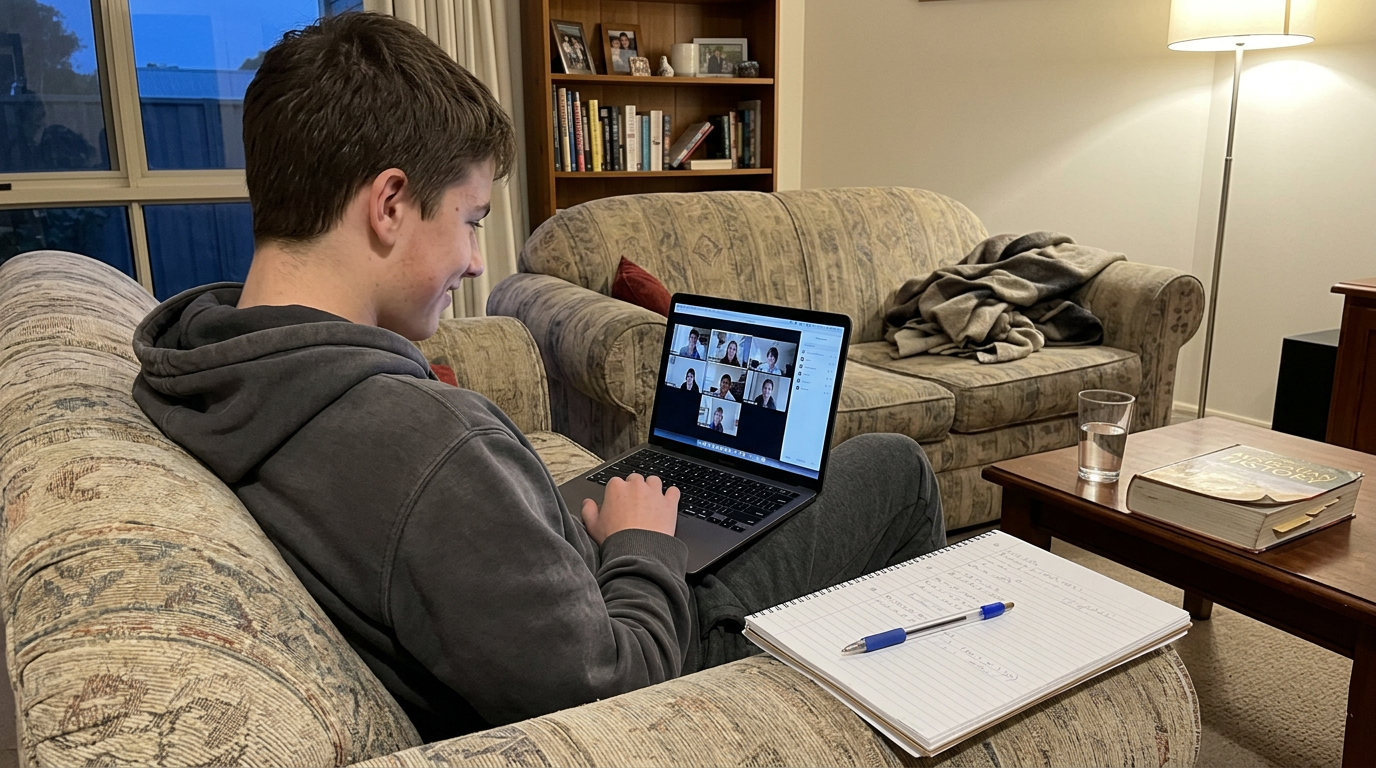
Is online maths tutoring cheaper than in-person?
Almost always — by about A$10–A$25/hr. Online tutoring removes the tutor's travel time and fuel, plus the premises overhead a tutoring centre carries. For families, it also removes the household disruption of a tutor coming through the door at 4:30pm, dinner getting pushed back, and younger siblings circling the lesson.
The other quiet advantage of online: the tutor pool stops being limited by your postcode. A regional Victorian family can be matched with a Methods specialist based in Sydney; a Perth family with a primary maths tutor based in Melbourne. A more detailed online vs in-person comparison sits here if you're weighing the trade-offs.
Is private maths tutoring worth the money?
For most families who notice a maths-confidence problem early and act on it, yes — when the tutor is matched to the student and the schedule is sustainable. The Education Endowment Foundation's review of one-to-one tuition put the average gain at around five additional months of progress over a school year, which lines up with what happens in real Year 5 and Year 9 households we work with: a child who used to dread Wednesday-night homework starts asking when the next lesson is.
It's not worth the money in three situations: when the family books and forgets it (no parent buy-in, no follow-through between lessons); when the tutor and student don't click on the third or fourth lesson and the family doesn't switch tutors; or when the rate is being paid for credentials the student doesn't need (a Year 4 student doesn't need a 99.95-ATAR coach, no matter how impressive the brochure). A deeper "is it worth it" breakdown is here, and our take on the five biggest benefits is here. If you're still deciding whether your child needs a tutor at all, these five signs are the cleanest checklist.
How do I know I'm getting good value at A$65/hr?
Three concrete things to expect from any maths tutor at the A$55–A$85/hr range, and a fair test of whether the money is being put to work:
- A written plan before lesson three. Lessons one and two are diagnostic — the tutor is figuring out where the gap actually sits. By lesson three, you should have a written plan: which topics, in which order, over how many lessons. If you don't, ask for one.
- A short summary after every lesson. What was covered, how the student went, what to practise before next week. Two paragraphs, not a marketing email. Personalised tutoring depends on this feedback loop — without it, the tutor is just a homework buddy.
- A noticeable mood shift in 4–6 lessons. The fastest signal good tutoring is working isn't the test mark — it's the student volunteering to do maths homework, or stopping the "I'm not a maths person" line. If that hasn't budged at lesson six, raise it with the tutor or the agency. Confidence is the leading indicator; the grade follows.
FAQs
The strongest signal of a good tutor is the match to the student, not the price tag.
The strongest signal of a good tutor is the match to the student, not the price tag.
If you've ever sat with a quote from a tutoring agency and thought "that can't be right," you're not alone. Maths tutoring rates in Australia run from around A$55/hr at the lower end to A$140+/hr at the top, and the gap mostly comes down to who the tutor is and what's wrapped around the lesson — not how much help your child actually gets in the hour.
This guide gives you the honest range across primary, lower-secondary, and senior students; explains what drives the price up or down; and shows where Tutero sits at A$65/hr — the same rate from Year 1 to Year 12, no senior premium.
Quick answer
Most Australian families pay between A$55 and A$85/hr for one-to-one maths tutoring. University-student tutors and online providers tend to anchor the lower half of that band; experienced classroom teachers and ATAR specialists charge A$95–A$140+/hr at the top. Tutero's rate is A$65/hr, the same across primary maths, lower-secondary maths, and senior maths including Methods, Specialist, and General — there is no Year 12 premium.
How much does maths tutoring cost in Australia in 2026?
Across the country, one-to-one maths tutoring sits in a A$55–A$85/hr typical band, with senior-specialist and centre-based options stretching to A$140/hr or more. Online tutoring is generally A$10–A$25/hr cheaper than in-person because there's no travel and no premises overhead. Sydney and Melbourne pricing leans slightly higher than Brisbane, Adelaide, Perth, and regional Australia for in-person sessions, but online tutoring flattens that gap entirely — a Year 7 maths student in regional Victoria pays the same as a Year 7 student in inner-city Sydney.
The price difference inside that band isn't really about quality of teaching in the hour. It's about the tutor's qualifications, what gets included with the lesson (lesson plans, between-lesson resources, account-manager support, parent reporting), and the agency's cost base. A great university-student tutor running confident Year 4 fractions sessions can be every bit as effective as a senior-specialist teacher on Specialist Maths — they're just suited to different students.
What's a fair hourly rate for a maths tutor?
For most families, anywhere between A$55 and A$85/hr is a fair rate for genuine one-to-one maths tutoring with a screened tutor who plans the lesson and reports back to you. Below A$55/hr you're usually looking at unvetted marketplace tutors, very early university students with no screening, or lessons where there's no preparation between sessions. Above A$140/hr you're paying for either a centre-based group classroom, a celebrity-credentialled exam coach, or layers of overhead the lesson itself doesn't need.
Cheap isn't automatically poor value, and expensive isn't automatically better. The fair-rate question is really: does the price match what's wrapped around the hour? A A$60/hr lesson with a vetted tutor, a written lesson plan, and parent updates after every session is excellent value. A A$90/hr lesson with no preparation, no progress tracking, and no recourse if it goes wrong isn't.
Why do tutors charge different rates?
Five things move the price up or down for any given maths tutor in Australia. Once you can see them clearly, the spread of quotes you'll get from different providers stops feeling random.
- The tutor's background. A second-year university student tutoring Year 5 maths sits at the lower end of the band. A NESA-, VIT-, or QCT-registered classroom teacher with current curriculum experience charges more because their day-job rate sets a floor. ATAR specialists who coach students through HSC, VCE, QCE, WACE, or SACE Methods and Specialist Maths sit at the top.
- What's wrapped around the lesson. Marketplace tutors usually quote bare hourly rates with no planning time, no resources, and no oversight. Managed services include lesson planning, parent reporting, an account manager you can call when something isn't working, and tutor-replacement if the match is off — that wrapper costs A$10–A$25/hr.
- Online or in-person. Online tutoring removes the tutor's travel time, fuel, and the family's overheads (drop-off, snacks, the awkward 5pm timing). It's typically A$10–A$25/hr cheaper for the same tutor.
- City vs regional. In-person Sydney and Melbourne rates run higher than Brisbane, Perth, Adelaide, and regional Australia. Online removes this gap.
- Screening and recourse. Marketplaces and classifieds let anyone list as a tutor; managed services screen for Working with Children Checks, references, and a teaching trial. The screening cost gets reflected in the rate, and the recourse if something goes wrong is what you're really buying.
How much does Tutero charge for maths tutoring?
Tutero is A$65/hr for one-to-one maths tutoring — the same rate from Year 1 through Year 12. Primary maths is A$65/hr. Year 7 algebra is A$65/hr. Year 12 Methods, Specialist, and General are all A$65/hr. There's no senior-subject premium; the tutor changes by year level, the price doesn't.
That A$65/hr includes a tutor we've screened (Working with Children Check verified, referenced, and trial-taught), a written lesson plan tailored to your child's curriculum and current gap, parent reporting after every session, and an account manager you can speak to if anything is off. Lessons run online by default, which keeps the price flat across Sydney, Melbourne, Brisbane, Perth, Adelaide, Hobart, Darwin, and regional postcodes. There are no contracts — you pay per lesson and stop whenever you want.
Are expensive tutors better than cheap ones?
Not reliably. The strongest signal of a good tutor is the match to the student, not the price tag. A A$140/hr ATAR specialist who has decades of HSC Methods experience is brilliant for a Year 12 student aiming for a Band 6 — and the wrong fit for a Year 4 student who needs to enjoy maths again. A A$60/hr university-student tutor who relates well to primary-school kids and explains times tables three different ways is excellent for that Year 4 student — and the wrong fit for the Year 12.
Where higher rates do reliably buy something: ATAR exam-marking accuracy, deep familiarity with state-specific marking rubrics, and intensive past-paper coaching for Methods and Specialist. Where they don't: Year 1–8 maths, where good explanation, patience, and confidence-building matter far more than 99.95-ATAR credentials.
How many hours of tutoring should I pay for each week?
For most students, one hour a week is the right starting point. It's enough time to work through the current week's misunderstandings, do a small piece of practice together, and leave the student with two or three between-lesson questions. For students preparing for NAPLAN, year-end exams, or the HSC/VCE/QCE/WACE/SACE final, two hours a week from about three months out is the typical step-up.
What doesn't work: booking three hours a week from the start because you want to "make up for lost time." Maths is a confidence subject — overloading a student who's already wobbling pushes them further from the page, not closer. Build the habit at one hour, see the small wins land, and add a second hour if the student starts wanting more.
Is online maths tutoring cheaper than in-person?
Almost always — by about A$10–A$25/hr. Online tutoring removes the tutor's travel time and fuel, plus the premises overhead a tutoring centre carries. For families, it also removes the household disruption of a tutor coming through the door at 4:30pm, dinner getting pushed back, and younger siblings circling the lesson.
The other quiet advantage of online: the tutor pool stops being limited by your postcode. A regional Victorian family can be matched with a Methods specialist based in Sydney; a Perth family with a primary maths tutor based in Melbourne. A more detailed online vs in-person comparison sits here if you're weighing the trade-offs.
Is private maths tutoring worth the money?
For most families who notice a maths-confidence problem early and act on it, yes — when the tutor is matched to the student and the schedule is sustainable. The Education Endowment Foundation's review of one-to-one tuition put the average gain at around five additional months of progress over a school year, which lines up with what happens in real Year 5 and Year 9 households we work with: a child who used to dread Wednesday-night homework starts asking when the next lesson is.
It's not worth the money in three situations: when the family books and forgets it (no parent buy-in, no follow-through between lessons); when the tutor and student don't click on the third or fourth lesson and the family doesn't switch tutors; or when the rate is being paid for credentials the student doesn't need (a Year 4 student doesn't need a 99.95-ATAR coach, no matter how impressive the brochure). A deeper "is it worth it" breakdown is here, and our take on the five biggest benefits is here. If you're still deciding whether your child needs a tutor at all, these five signs are the cleanest checklist.
How do I know I'm getting good value at A$65/hr?
Three concrete things to expect from any maths tutor at the A$55–A$85/hr range, and a fair test of whether the money is being put to work:
- A written plan before lesson three. Lessons one and two are diagnostic — the tutor is figuring out where the gap actually sits. By lesson three, you should have a written plan: which topics, in which order, over how many lessons. If you don't, ask for one.
- A short summary after every lesson. What was covered, how the student went, what to practise before next week. Two paragraphs, not a marketing email. Personalised tutoring depends on this feedback loop — without it, the tutor is just a homework buddy.
- A noticeable mood shift in 4–6 lessons. The fastest signal good tutoring is working isn't the test mark — it's the student volunteering to do maths homework, or stopping the "I'm not a maths person" line. If that hasn't budged at lesson six, raise it with the tutor or the agency. Confidence is the leading indicator; the grade follows.
FAQs
FAQ
.svg)
.svg)
Online maths tutoring at Tutero is catering to students of all year levels. We offer programs tailored to the unique learning curves of each age group.
We also have expert NAPLAN and ATAR subject tutors, ensuring students are well-equipped for these pivotal assessments.
We recommend at least two to three session per week for consistent progress. However, this can vary based on your child's needs and goals.
Our platform uses advanced security protocols to ensure the safety and privacy of all our online sessions.
Parents are welcome to observe sessions. We believe in a collaborative approach to education.
We provide regular progress reports and assessments to track your child’s academic development.
Yes, we prioritise the student-tutor relationship and can arrange a change if the need arises.
Yes, we offer a range of resources and materials, including interactive exercises and practice worksheets.
The strongest signal of a good tutor is the match to the student, not the price tag.
The strongest signal of a good tutor is the match to the student, not the price tag.

The strongest signal of a good tutor is the match to the student, not the price tag.
A$65/hr at Tutero — same rate for Year 1, Year 7, and Year 12. The tutor changes by year level. The price doesn't.
If you've ever sat with a quote from a tutoring agency and thought "that can't be right," you're not alone. Maths tutoring rates in Australia run from around A$55/hr at the lower end to A$140+/hr at the top, and the gap mostly comes down to who the tutor is and what's wrapped around the lesson — not how much help your child actually gets in the hour.
This guide gives you the honest range across primary, lower-secondary, and senior students; explains what drives the price up or down; and shows where Tutero sits at A$65/hr — the same rate from Year 1 to Year 12, no senior premium.
Quick answer
Most Australian families pay between A$55 and A$85/hr for one-to-one maths tutoring. University-student tutors and online providers tend to anchor the lower half of that band; experienced classroom teachers and ATAR specialists charge A$95–A$140+/hr at the top. Tutero's rate is A$65/hr, the same across primary maths, lower-secondary maths, and senior maths including Methods, Specialist, and General — there is no Year 12 premium.
How much does maths tutoring cost in Australia in 2026?
Across the country, one-to-one maths tutoring sits in a A$55–A$85/hr typical band, with senior-specialist and centre-based options stretching to A$140/hr or more. Online tutoring is generally A$10–A$25/hr cheaper than in-person because there's no travel and no premises overhead. Sydney and Melbourne pricing leans slightly higher than Brisbane, Adelaide, Perth, and regional Australia for in-person sessions, but online tutoring flattens that gap entirely — a Year 7 maths student in regional Victoria pays the same as a Year 7 student in inner-city Sydney.
The price difference inside that band isn't really about quality of teaching in the hour. It's about the tutor's qualifications, what gets included with the lesson (lesson plans, between-lesson resources, account-manager support, parent reporting), and the agency's cost base. A great university-student tutor running confident Year 4 fractions sessions can be every bit as effective as a senior-specialist teacher on Specialist Maths — they're just suited to different students.
What's a fair hourly rate for a maths tutor?
For most families, anywhere between A$55 and A$85/hr is a fair rate for genuine one-to-one maths tutoring with a screened tutor who plans the lesson and reports back to you. Below A$55/hr you're usually looking at unvetted marketplace tutors, very early university students with no screening, or lessons where there's no preparation between sessions. Above A$140/hr you're paying for either a centre-based group classroom, a celebrity-credentialled exam coach, or layers of overhead the lesson itself doesn't need.
Cheap isn't automatically poor value, and expensive isn't automatically better. The fair-rate question is really: does the price match what's wrapped around the hour? A A$60/hr lesson with a vetted tutor, a written lesson plan, and parent updates after every session is excellent value. A A$90/hr lesson with no preparation, no progress tracking, and no recourse if it goes wrong isn't.
Why do tutors charge different rates?
Five things move the price up or down for any given maths tutor in Australia. Once you can see them clearly, the spread of quotes you'll get from different providers stops feeling random.
- The tutor's background. A second-year university student tutoring Year 5 maths sits at the lower end of the band. A NESA-, VIT-, or QCT-registered classroom teacher with current curriculum experience charges more because their day-job rate sets a floor. ATAR specialists who coach students through HSC, VCE, QCE, WACE, or SACE Methods and Specialist Maths sit at the top.
- What's wrapped around the lesson. Marketplace tutors usually quote bare hourly rates with no planning time, no resources, and no oversight. Managed services include lesson planning, parent reporting, an account manager you can call when something isn't working, and tutor-replacement if the match is off — that wrapper costs A$10–A$25/hr.
- Online or in-person. Online tutoring removes the tutor's travel time, fuel, and the family's overheads (drop-off, snacks, the awkward 5pm timing). It's typically A$10–A$25/hr cheaper for the same tutor.
- City vs regional. In-person Sydney and Melbourne rates run higher than Brisbane, Perth, Adelaide, and regional Australia. Online removes this gap.
- Screening and recourse. Marketplaces and classifieds let anyone list as a tutor; managed services screen for Working with Children Checks, references, and a teaching trial. The screening cost gets reflected in the rate, and the recourse if something goes wrong is what you're really buying.
How much does Tutero charge for maths tutoring?
Tutero is A$65/hr for one-to-one maths tutoring — the same rate from Year 1 through Year 12. Primary maths is A$65/hr. Year 7 algebra is A$65/hr. Year 12 Methods, Specialist, and General are all A$65/hr. There's no senior-subject premium; the tutor changes by year level, the price doesn't.
That A$65/hr includes a tutor we've screened (Working with Children Check verified, referenced, and trial-taught), a written lesson plan tailored to your child's curriculum and current gap, parent reporting after every session, and an account manager you can speak to if anything is off. Lessons run online by default, which keeps the price flat across Sydney, Melbourne, Brisbane, Perth, Adelaide, Hobart, Darwin, and regional postcodes. There are no contracts — you pay per lesson and stop whenever you want.
Are expensive tutors better than cheap ones?
Not reliably. The strongest signal of a good tutor is the match to the student, not the price tag. A A$140/hr ATAR specialist who has decades of HSC Methods experience is brilliant for a Year 12 student aiming for a Band 6 — and the wrong fit for a Year 4 student who needs to enjoy maths again. A A$60/hr university-student tutor who relates well to primary-school kids and explains times tables three different ways is excellent for that Year 4 student — and the wrong fit for the Year 12.
Where higher rates do reliably buy something: ATAR exam-marking accuracy, deep familiarity with state-specific marking rubrics, and intensive past-paper coaching for Methods and Specialist. Where they don't: Year 1–8 maths, where good explanation, patience, and confidence-building matter far more than 99.95-ATAR credentials.
How many hours of tutoring should I pay for each week?
For most students, one hour a week is the right starting point. It's enough time to work through the current week's misunderstandings, do a small piece of practice together, and leave the student with two or three between-lesson questions. For students preparing for NAPLAN, year-end exams, or the HSC/VCE/QCE/WACE/SACE final, two hours a week from about three months out is the typical step-up.
What doesn't work: booking three hours a week from the start because you want to "make up for lost time." Maths is a confidence subject — overloading a student who's already wobbling pushes them further from the page, not closer. Build the habit at one hour, see the small wins land, and add a second hour if the student starts wanting more.
Is online maths tutoring cheaper than in-person?
Almost always — by about A$10–A$25/hr. Online tutoring removes the tutor's travel time and fuel, plus the premises overhead a tutoring centre carries. For families, it also removes the household disruption of a tutor coming through the door at 4:30pm, dinner getting pushed back, and younger siblings circling the lesson.
The other quiet advantage of online: the tutor pool stops being limited by your postcode. A regional Victorian family can be matched with a Methods specialist based in Sydney; a Perth family with a primary maths tutor based in Melbourne. A more detailed online vs in-person comparison sits here if you're weighing the trade-offs.
Is private maths tutoring worth the money?
For most families who notice a maths-confidence problem early and act on it, yes — when the tutor is matched to the student and the schedule is sustainable. The Education Endowment Foundation's review of one-to-one tuition put the average gain at around five additional months of progress over a school year, which lines up with what happens in real Year 5 and Year 9 households we work with: a child who used to dread Wednesday-night homework starts asking when the next lesson is.
It's not worth the money in three situations: when the family books and forgets it (no parent buy-in, no follow-through between lessons); when the tutor and student don't click on the third or fourth lesson and the family doesn't switch tutors; or when the rate is being paid for credentials the student doesn't need (a Year 4 student doesn't need a 99.95-ATAR coach, no matter how impressive the brochure). A deeper "is it worth it" breakdown is here, and our take on the five biggest benefits is here. If you're still deciding whether your child needs a tutor at all, these five signs are the cleanest checklist.
How do I know I'm getting good value at A$65/hr?
Three concrete things to expect from any maths tutor at the A$55–A$85/hr range, and a fair test of whether the money is being put to work:
- A written plan before lesson three. Lessons one and two are diagnostic — the tutor is figuring out where the gap actually sits. By lesson three, you should have a written plan: which topics, in which order, over how many lessons. If you don't, ask for one.
- A short summary after every lesson. What was covered, how the student went, what to practise before next week. Two paragraphs, not a marketing email. Personalised tutoring depends on this feedback loop — without it, the tutor is just a homework buddy.
- A noticeable mood shift in 4–6 lessons. The fastest signal good tutoring is working isn't the test mark — it's the student volunteering to do maths homework, or stopping the "I'm not a maths person" line. If that hasn't budged at lesson six, raise it with the tutor or the agency. Confidence is the leading indicator; the grade follows.
FAQs
The strongest signal of a good tutor is the match to the student, not the price tag.
A$65/hr at Tutero — same rate for Year 1, Year 7, and Year 12. The tutor changes by year level. The price doesn't.
Most Australian families pay between A$55 and A$85/hr for one-to-one maths tutoring. University-student tutors and online providers anchor the lower end; experienced classroom teachers and ATAR specialists charge A$95–A$140+/hr at the top. Tutero's rate is A$65/hr — the same across primary, lower-secondary, and senior maths, including Methods, Specialist, and General — with no Year 12 premium. The fair-rate question isn't really cheap vs expensive; it's whether the price matches what's wrapped around the lesson (lesson plans, parent reporting, account-manager support, tutor-replacement if the match is off).
For most students, yes — one hour a week is the right starting point. It's enough to work through the current week's misunderstandings, do a small piece of practice together, and leave the student with two or three things to try before next week. Doubling up to two hours a week makes sense from about three months out from NAPLAN, year-end exams, or HSC/VCE/QCE/WACE/SACE finals. Booking three hours a week from the start usually backfires — maths is a confidence subject, and overloading a wobbling student pushes them further from the page, not closer.
Maths tutoring sometimes carries a small premium over English or humanities because the tutor pool is smaller (fewer adults are confident teaching senior maths) and because senior subjects like Methods and Specialist Mathematics require curriculum-specific expertise. That said, the gap is overstated. At Tutero, every subject is A$65/hr — maths, English, science, and the humanities all share the same rate. Where you'll see senior maths cost noticeably more is with specialist ATAR coaches charging A$140+/hr, and that's typically only worth it for Year 12 students aiming at top ATAR bands.
Almost always — by about A$10–A$25/hr. Online removes the tutor's travel time, fuel, and the agency's premises overhead. It also removes the household disruption of a tutor coming through the door at 4:30pm and dinner getting pushed back. The other quiet upside: a regional Victorian family can be matched with a Sydney-based Methods specialist, or a Perth family with a Melbourne-based primary tutor — the postcode stops being a cap on the tutor pool. Tutero's A$65/hr is online by default, which is why the rate stays flat across every Australian capital and regional postcode.
No — A$65/hr is the same rate from Year 1 to Year 12. A Year 3 maths-confidence session, a Year 9 algebra session, and a Year 12 Mathematical Methods session all cost the same. We don't run a senior premium because the lesson changes by year level, not the price; senior tutors are paid more from our side, but that's our cost to manage, not yours. There are no contracts and no bundle commitments — you pay per lesson and stop whenever you want.
The cheapest reliable option is online one-to-one tutoring with a managed service that screens its tutors — typically A$55–A$70/hr. Below that you're looking at unscreened marketplaces and classifieds, which can work but carry real risks: no Working with Children Check verification, no recourse if the lesson goes wrong, and you're doing the matching yourself. Group tutoring at a centre is sometimes cheaper per student per hour but rarely cheaper per outcome — most families find one-to-one at A$65/hr produces more progress in fewer sessions than group sessions at A$40 per student.
Hoping to improve confidence & grades?

.png)


