
.svg)

Getting into a Sydney selective high school is one of the most competitive academic decisions a family will make in primary school — and the single test that decides it rewards preparation that is structured, calm and started early, not last-minute cramming. The NSW Selective High School Placement Test is sat by Year 5 and Year 6 students for Year 7 entry, it is computer-based, and a child's rank on it is what determines whether an offer arrives. This guide gives you five concrete, expert tips — built around how the test is actually structured today and the mistakes that quietly cost places every cohort.
What is the NSW Selective High School Placement Test?
The Selective High School Placement Test is the single computer-based assessment the NSW Department of Education uses to rank applicants for entry into selective high schools. It has four sections, each worth 25% of the result: Reading (17 questions, 45 minutes), Mathematical Reasoning (35 questions, 40 minutes), Thinking Skills (40 questions, 40 minutes) and Writing (one extended task, 30 minutes). It runs about 175 minutes in total and no calculator is permitted. Families apply when a child is in Year 5 or Year 6, list up to three school preferences, and placement is decided purely on test rank — there is no separate school-assessment score in the current model, and no fixed minimum mark, because the cut-off for each school changes every year with the applicant field.
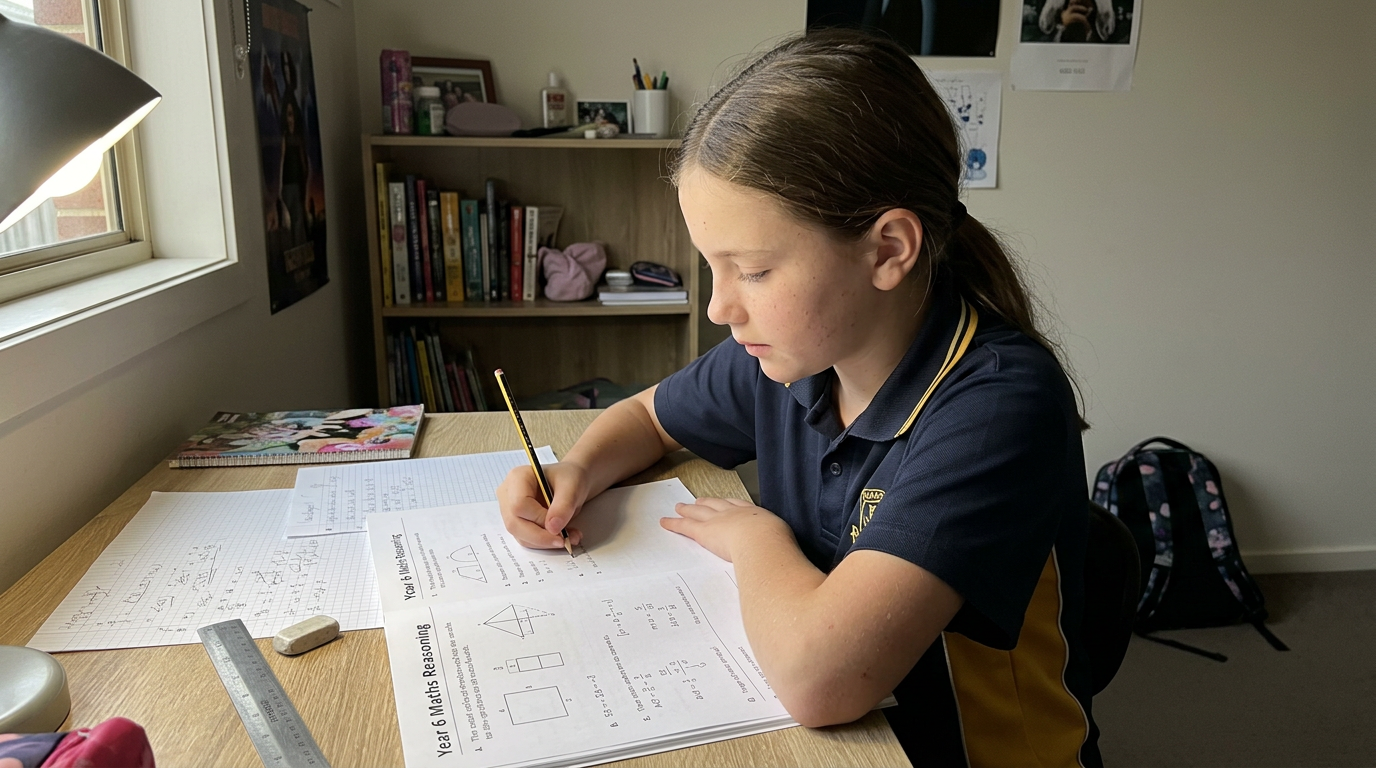
What are the 5 best tips for preparing for the selective exam in Sydney?
The strongest preparation treats the placement test as a set of four distinct skills, builds them over months, and rehearses them under real exam conditions. The five tips below — covering the four sections, a realistic timeline, computer-based exam technique, the under-prepared Writing task, and managing pressure and school choices — are the ones that most reliably move a child's rank.
1. Prepare for all four sections — they each count for exactly 25%
The most common strategic error is over-investing in Mathematical Reasoning and Reading because they feel familiar from school, and under-preparing Thinking Skills and Writing. Every section is weighted equally, so a child who is excellent at maths but average at Thinking Skills loses as many marks as the reverse. Thinking Skills — 40 questions in 40 minutes testing logical reasoning, pattern recognition and problem-solving with no prior content knowledge required — is unfamiliar to most primary students because nothing in the standard curriculum looks like it. Map your child's four sections honestly with a diagnostic, then spend the most time on their two weakest, not their two strongest. A balanced score across all four almost always out-ranks a spiky one.
2. Build a realistic timeline — start nine to twelve months out, not in the holidays
Selective preparation works when it is distributed, not compressed. A realistic plan begins roughly nine to twelve months before the test — typically across Year 5 into early Year 6 — with short, frequent sessions rather than long blocks. A workable rhythm is two to four focused hours a week split across the four sections, building in difficulty, with full timed practice tests reserved for the final two to three months once the underlying skills are in place. Starting in the school holidays immediately before the test is the single most common timing mistake: there is enough time to build familiarity but not enough to build the reasoning fluency the test actually measures. Applications generally open late in the year before the test and close early the next year, with the test held around the middle of the year — so the preparation window is the months before applications even open.
3. Practise under real exam conditions — timed, on a screen, no calculator
Because the test is computer-based and tightly timed, a child who has only ever practised on paper at their own pace is being assessed on something they have never rehearsed. Reading allows roughly 2.5 minutes per question, Mathematical Reasoning and Thinking Skills barely a minute each, and there is no calculator. Replicate those conditions: practice papers done on a screen, a visible timer running, mental and written calculation only, and no stopping mid-section. The skill that decides a good rank is rarely "can my child solve this question" — it is "can my child solve enough of them at this pace without panicking when one is hard". Teach the habit of flagging a hard question, moving on, and returning if time allows; the test does not reward perfectionism on a single item.
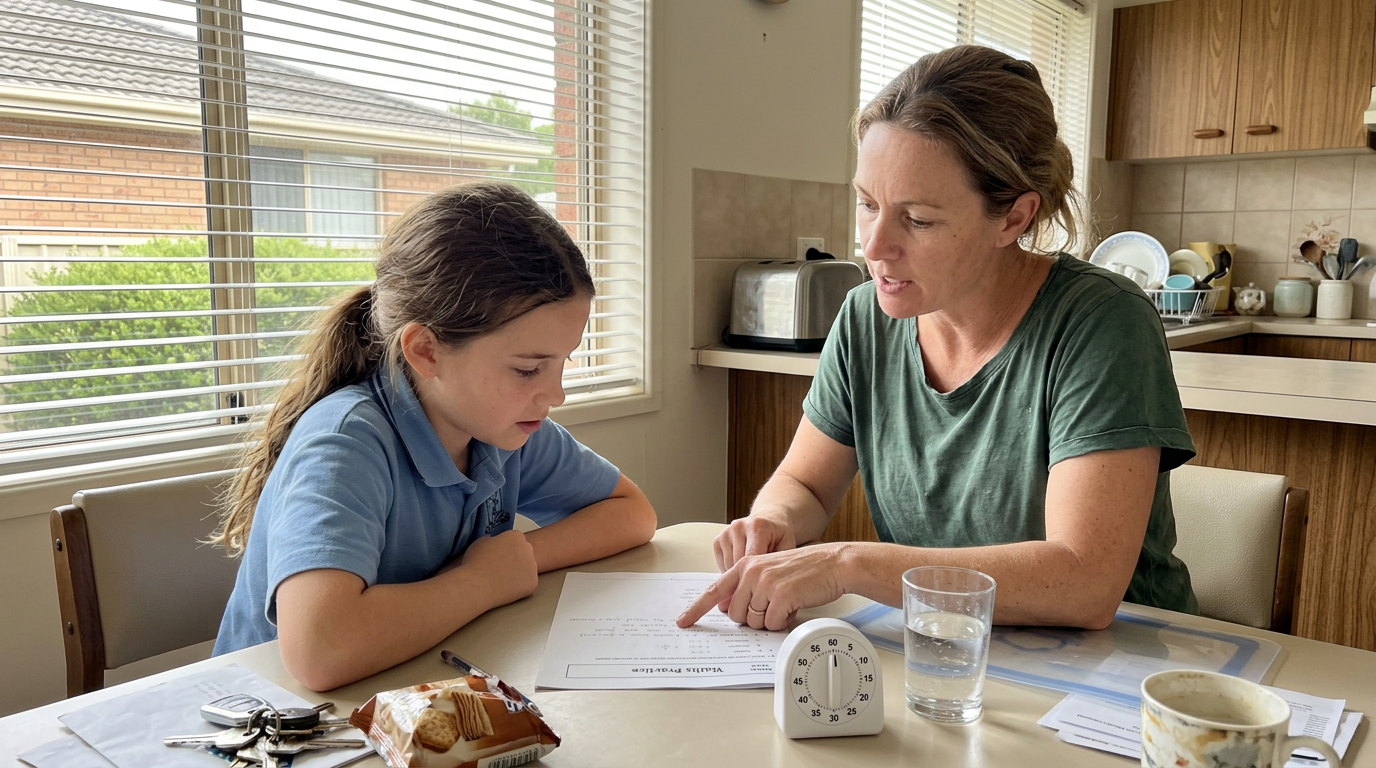
4. Take the Writing task seriously — it is a full quarter of the score
Writing is one task in 30 minutes, yet it carries the same 25% weight as 35 maths questions, and it is the section families most often neglect because it is the hardest to drill. Markers assess the quality and creativity of ideas and the ability to write effectively under time pressure — not handwriting or length. The reliable way to prepare is a repeatable structure a child can deploy on any prompt (a strong opening, a clear middle that develops one or two ideas well rather than many ideas thinly, and a deliberate ending), rehearsed across persuasive, narrative and informative prompt types since the genre is not announced in advance. Practise to the clock, then read the piece back together and improve one specific thing each time. A child who walks in with a planning method and three or four rehearsed prompt types is far calmer than one improvising from a blank screen.
5. Manage test-day pressure and choose your three school preferences wisely
The placement test is high-stakes for an eleven-year-old, and anxiety costs more marks than knowledge gaps in the final weeks. In the last fortnight, reduce new content and shift to light timed practice, sleep and routine; rehearse the logistics (the test centre, the format, what happens if a question is hard) so nothing on the day is a surprise. Equally important is the strategic choice: you can list up to three school preferences, and because each selective school's cut-off rank shifts every year with the applicant field, a sensible list pairs an aspirational first choice with realistic second and third choices rather than three of the most competitive schools. Well-known Sydney selective schools such as James Ruse, Baulkham Hills, North Sydney Boys, North Sydney Girls and Hornsby Girls sit at the most competitive end; many strong students thrive at a school slightly below the very top of the rank table, and a balanced preference list protects against a near-miss on a single choice. If a child is unwell or something disrupts the test, an illness or misadventure request can be lodged within the published deadline — know that the process exists before test day, not after.
How do I know if my child is on track for a Sydney selective school?
The honest signal is performance on full, timed, computer-based practice tests across all four sections — not how a child feels about maths or how they go on untimed worksheets. Run a baseline diagnostic early, then a timed full test every few weeks in the final months and track the trend per section. You are looking for a child who is steady across all four areas and finishing each section, not one who is brilliant in one and running out of time in another. Because cut-off ranks move every year and there is no fixed pass mark, treat practice-test results as a relative guide to readiness and pacing, not a guaranteed predictor — the goal is a balanced, complete performance under real conditions. The NSW Department of Education publishes the official practice materials and is the authoritative source for test format and dates; cross-check anything you read elsewhere against it.
Some families prepare effectively at home with the official practice tests and a clear weekly plan; others find a tutor valuable specifically for the unfamiliar sections — Thinking Skills and Writing — and for keeping the timeline structured over many months. Tutero matches Sydney students with vetted tutors for one-to-one selective preparation built around the four sections and a realistic schedule, with no lock-in contracts. If you want a structured plan or targeted help on the harder sections, you can explore Year 6 tutoring or one-to-one maths tutoring with Tutero.
Frequently asked questions about selective exam preparation in Sydney
Short, practical answers to the questions Sydney parents most often ask about preparing for the NSW Selective High School Placement Test.
Every section is worth exactly 25% — a balanced score across all four almost always out-ranks a spiky one.
Every section is worth exactly 25% — a balanced score across all four almost always out-ranks a spiky one.
Getting into a Sydney selective high school is one of the most competitive academic decisions a family will make in primary school — and the single test that decides it rewards preparation that is structured, calm and started early, not last-minute cramming. The NSW Selective High School Placement Test is sat by Year 5 and Year 6 students for Year 7 entry, it is computer-based, and a child's rank on it is what determines whether an offer arrives. This guide gives you five concrete, expert tips — built around how the test is actually structured today and the mistakes that quietly cost places every cohort.
What is the NSW Selective High School Placement Test?
The Selective High School Placement Test is the single computer-based assessment the NSW Department of Education uses to rank applicants for entry into selective high schools. It has four sections, each worth 25% of the result: Reading (17 questions, 45 minutes), Mathematical Reasoning (35 questions, 40 minutes), Thinking Skills (40 questions, 40 minutes) and Writing (one extended task, 30 minutes). It runs about 175 minutes in total and no calculator is permitted. Families apply when a child is in Year 5 or Year 6, list up to three school preferences, and placement is decided purely on test rank — there is no separate school-assessment score in the current model, and no fixed minimum mark, because the cut-off for each school changes every year with the applicant field.
What are the 5 best tips for preparing for the selective exam in Sydney?
The strongest preparation treats the placement test as a set of four distinct skills, builds them over months, and rehearses them under real exam conditions. The five tips below — covering the four sections, a realistic timeline, computer-based exam technique, the under-prepared Writing task, and managing pressure and school choices — are the ones that most reliably move a child's rank.
1. Prepare for all four sections — they each count for exactly 25%
The most common strategic error is over-investing in Mathematical Reasoning and Reading because they feel familiar from school, and under-preparing Thinking Skills and Writing. Every section is weighted equally, so a child who is excellent at maths but average at Thinking Skills loses as many marks as the reverse. Thinking Skills — 40 questions in 40 minutes testing logical reasoning, pattern recognition and problem-solving with no prior content knowledge required — is unfamiliar to most primary students because nothing in the standard curriculum looks like it. Map your child's four sections honestly with a diagnostic, then spend the most time on their two weakest, not their two strongest. A balanced score across all four almost always out-ranks a spiky one.
2. Build a realistic timeline — start nine to twelve months out, not in the holidays
Selective preparation works when it is distributed, not compressed. A realistic plan begins roughly nine to twelve months before the test — typically across Year 5 into early Year 6 — with short, frequent sessions rather than long blocks. A workable rhythm is two to four focused hours a week split across the four sections, building in difficulty, with full timed practice tests reserved for the final two to three months once the underlying skills are in place. Starting in the school holidays immediately before the test is the single most common timing mistake: there is enough time to build familiarity but not enough to build the reasoning fluency the test actually measures. Applications generally open late in the year before the test and close early the next year, with the test held around the middle of the year — so the preparation window is the months before applications even open.
3. Practise under real exam conditions — timed, on a screen, no calculator
Because the test is computer-based and tightly timed, a child who has only ever practised on paper at their own pace is being assessed on something they have never rehearsed. Reading allows roughly 2.5 minutes per question, Mathematical Reasoning and Thinking Skills barely a minute each, and there is no calculator. Replicate those conditions: practice papers done on a screen, a visible timer running, mental and written calculation only, and no stopping mid-section. The skill that decides a good rank is rarely "can my child solve this question" — it is "can my child solve enough of them at this pace without panicking when one is hard". Teach the habit of flagging a hard question, moving on, and returning if time allows; the test does not reward perfectionism on a single item.
4. Take the Writing task seriously — it is a full quarter of the score
Writing is one task in 30 minutes, yet it carries the same 25% weight as 35 maths questions, and it is the section families most often neglect because it is the hardest to drill. Markers assess the quality and creativity of ideas and the ability to write effectively under time pressure — not handwriting or length. The reliable way to prepare is a repeatable structure a child can deploy on any prompt (a strong opening, a clear middle that develops one or two ideas well rather than many ideas thinly, and a deliberate ending), rehearsed across persuasive, narrative and informative prompt types since the genre is not announced in advance. Practise to the clock, then read the piece back together and improve one specific thing each time. A child who walks in with a planning method and three or four rehearsed prompt types is far calmer than one improvising from a blank screen.
5. Manage test-day pressure and choose your three school preferences wisely
The placement test is high-stakes for an eleven-year-old, and anxiety costs more marks than knowledge gaps in the final weeks. In the last fortnight, reduce new content and shift to light timed practice, sleep and routine; rehearse the logistics (the test centre, the format, what happens if a question is hard) so nothing on the day is a surprise. Equally important is the strategic choice: you can list up to three school preferences, and because each selective school's cut-off rank shifts every year with the applicant field, a sensible list pairs an aspirational first choice with realistic second and third choices rather than three of the most competitive schools. Well-known Sydney selective schools such as James Ruse, Baulkham Hills, North Sydney Boys, North Sydney Girls and Hornsby Girls sit at the most competitive end; many strong students thrive at a school slightly below the very top of the rank table, and a balanced preference list protects against a near-miss on a single choice. If a child is unwell or something disrupts the test, an illness or misadventure request can be lodged within the published deadline — know that the process exists before test day, not after.
How do I know if my child is on track for a Sydney selective school?
The honest signal is performance on full, timed, computer-based practice tests across all four sections — not how a child feels about maths or how they go on untimed worksheets. Run a baseline diagnostic early, then a timed full test every few weeks in the final months and track the trend per section. You are looking for a child who is steady across all four areas and finishing each section, not one who is brilliant in one and running out of time in another. Because cut-off ranks move every year and there is no fixed pass mark, treat practice-test results as a relative guide to readiness and pacing, not a guaranteed predictor — the goal is a balanced, complete performance under real conditions. The NSW Department of Education publishes the official practice materials and is the authoritative source for test format and dates; cross-check anything you read elsewhere against it.
Some families prepare effectively at home with the official practice tests and a clear weekly plan; others find a tutor valuable specifically for the unfamiliar sections — Thinking Skills and Writing — and for keeping the timeline structured over many months. Tutero matches Sydney students with vetted tutors for one-to-one selective preparation built around the four sections and a realistic schedule, with no lock-in contracts. If you want a structured plan or targeted help on the harder sections, you can explore Year 6 tutoring or one-to-one maths tutoring with Tutero.
Frequently asked questions about selective exam preparation in Sydney
Short, practical answers to the questions Sydney parents most often ask about preparing for the NSW Selective High School Placement Test.
FAQ
.svg)
.svg)
Online maths tutoring at Tutero is catering to students of all year levels. We offer programs tailored to the unique learning curves of each age group.
We also have expert NAPLAN and ATAR subject tutors, ensuring students are well-equipped for these pivotal assessments.
We recommend at least two to three session per week for consistent progress. However, this can vary based on your child's needs and goals.
Our platform uses advanced security protocols to ensure the safety and privacy of all our online sessions.
Parents are welcome to observe sessions. We believe in a collaborative approach to education.
We provide regular progress reports and assessments to track your child’s academic development.
Yes, we prioritise the student-tutor relationship and can arrange a change if the need arises.
Yes, we offer a range of resources and materials, including interactive exercises and practice worksheets.
Every section is worth exactly 25% — a balanced score across all four almost always out-ranks a spiky one.
Every section is worth exactly 25% — a balanced score across all four almost always out-ranks a spiky one.

Every section is worth exactly 25% — a balanced score across all four almost always out-ranks a spiky one.
The skill that decides a good rank is rarely whether a child can solve a question — it is whether they can solve enough of them at pace without panicking.
Getting into a Sydney selective high school is one of the most competitive academic decisions a family will make in primary school — and the single test that decides it rewards preparation that is structured, calm and started early, not last-minute cramming. The NSW Selective High School Placement Test is sat by Year 5 and Year 6 students for Year 7 entry, it is computer-based, and a child's rank on it is what determines whether an offer arrives. This guide gives you five concrete, expert tips — built around how the test is actually structured today and the mistakes that quietly cost places every cohort.
What is the NSW Selective High School Placement Test?
The Selective High School Placement Test is the single computer-based assessment the NSW Department of Education uses to rank applicants for entry into selective high schools. It has four sections, each worth 25% of the result: Reading (17 questions, 45 minutes), Mathematical Reasoning (35 questions, 40 minutes), Thinking Skills (40 questions, 40 minutes) and Writing (one extended task, 30 minutes). It runs about 175 minutes in total and no calculator is permitted. Families apply when a child is in Year 5 or Year 6, list up to three school preferences, and placement is decided purely on test rank — there is no separate school-assessment score in the current model, and no fixed minimum mark, because the cut-off for each school changes every year with the applicant field.
What are the 5 best tips for preparing for the selective exam in Sydney?
The strongest preparation treats the placement test as a set of four distinct skills, builds them over months, and rehearses them under real exam conditions. The five tips below — covering the four sections, a realistic timeline, computer-based exam technique, the under-prepared Writing task, and managing pressure and school choices — are the ones that most reliably move a child's rank.
1. Prepare for all four sections — they each count for exactly 25%
The most common strategic error is over-investing in Mathematical Reasoning and Reading because they feel familiar from school, and under-preparing Thinking Skills and Writing. Every section is weighted equally, so a child who is excellent at maths but average at Thinking Skills loses as many marks as the reverse. Thinking Skills — 40 questions in 40 minutes testing logical reasoning, pattern recognition and problem-solving with no prior content knowledge required — is unfamiliar to most primary students because nothing in the standard curriculum looks like it. Map your child's four sections honestly with a diagnostic, then spend the most time on their two weakest, not their two strongest. A balanced score across all four almost always out-ranks a spiky one.
2. Build a realistic timeline — start nine to twelve months out, not in the holidays
Selective preparation works when it is distributed, not compressed. A realistic plan begins roughly nine to twelve months before the test — typically across Year 5 into early Year 6 — with short, frequent sessions rather than long blocks. A workable rhythm is two to four focused hours a week split across the four sections, building in difficulty, with full timed practice tests reserved for the final two to three months once the underlying skills are in place. Starting in the school holidays immediately before the test is the single most common timing mistake: there is enough time to build familiarity but not enough to build the reasoning fluency the test actually measures. Applications generally open late in the year before the test and close early the next year, with the test held around the middle of the year — so the preparation window is the months before applications even open.
3. Practise under real exam conditions — timed, on a screen, no calculator
Because the test is computer-based and tightly timed, a child who has only ever practised on paper at their own pace is being assessed on something they have never rehearsed. Reading allows roughly 2.5 minutes per question, Mathematical Reasoning and Thinking Skills barely a minute each, and there is no calculator. Replicate those conditions: practice papers done on a screen, a visible timer running, mental and written calculation only, and no stopping mid-section. The skill that decides a good rank is rarely "can my child solve this question" — it is "can my child solve enough of them at this pace without panicking when one is hard". Teach the habit of flagging a hard question, moving on, and returning if time allows; the test does not reward perfectionism on a single item.
4. Take the Writing task seriously — it is a full quarter of the score
Writing is one task in 30 minutes, yet it carries the same 25% weight as 35 maths questions, and it is the section families most often neglect because it is the hardest to drill. Markers assess the quality and creativity of ideas and the ability to write effectively under time pressure — not handwriting or length. The reliable way to prepare is a repeatable structure a child can deploy on any prompt (a strong opening, a clear middle that develops one or two ideas well rather than many ideas thinly, and a deliberate ending), rehearsed across persuasive, narrative and informative prompt types since the genre is not announced in advance. Practise to the clock, then read the piece back together and improve one specific thing each time. A child who walks in with a planning method and three or four rehearsed prompt types is far calmer than one improvising from a blank screen.
5. Manage test-day pressure and choose your three school preferences wisely
The placement test is high-stakes for an eleven-year-old, and anxiety costs more marks than knowledge gaps in the final weeks. In the last fortnight, reduce new content and shift to light timed practice, sleep and routine; rehearse the logistics (the test centre, the format, what happens if a question is hard) so nothing on the day is a surprise. Equally important is the strategic choice: you can list up to three school preferences, and because each selective school's cut-off rank shifts every year with the applicant field, a sensible list pairs an aspirational first choice with realistic second and third choices rather than three of the most competitive schools. Well-known Sydney selective schools such as James Ruse, Baulkham Hills, North Sydney Boys, North Sydney Girls and Hornsby Girls sit at the most competitive end; many strong students thrive at a school slightly below the very top of the rank table, and a balanced preference list protects against a near-miss on a single choice. If a child is unwell or something disrupts the test, an illness or misadventure request can be lodged within the published deadline — know that the process exists before test day, not after.
How do I know if my child is on track for a Sydney selective school?
The honest signal is performance on full, timed, computer-based practice tests across all four sections — not how a child feels about maths or how they go on untimed worksheets. Run a baseline diagnostic early, then a timed full test every few weeks in the final months and track the trend per section. You are looking for a child who is steady across all four areas and finishing each section, not one who is brilliant in one and running out of time in another. Because cut-off ranks move every year and there is no fixed pass mark, treat practice-test results as a relative guide to readiness and pacing, not a guaranteed predictor — the goal is a balanced, complete performance under real conditions. The NSW Department of Education publishes the official practice materials and is the authoritative source for test format and dates; cross-check anything you read elsewhere against it.
Some families prepare effectively at home with the official practice tests and a clear weekly plan; others find a tutor valuable specifically for the unfamiliar sections — Thinking Skills and Writing — and for keeping the timeline structured over many months. Tutero matches Sydney students with vetted tutors for one-to-one selective preparation built around the four sections and a realistic schedule, with no lock-in contracts. If you want a structured plan or targeted help on the harder sections, you can explore Year 6 tutoring or one-to-one maths tutoring with Tutero.
Frequently asked questions about selective exam preparation in Sydney
Short, practical answers to the questions Sydney parents most often ask about preparing for the NSW Selective High School Placement Test.
Every section is worth exactly 25% — a balanced score across all four almost always out-ranks a spiky one.
The skill that decides a good rank is rarely whether a child can solve a question — it is whether they can solve enough of them at pace without panicking.
It is a computer-based test with four sections, each worth 25% of the result: Reading (17 questions, 45 minutes), Mathematical Reasoning (35 questions, 40 minutes), Thinking Skills (40 questions, 40 minutes) and Writing (one task, 30 minutes). It runs about 175 minutes in total and no calculator is allowed. Placement is decided purely on a student's rank in this test.
A realistic plan starts roughly nine to twelve months before the test, typically across Year 5 into early Year 6, using short and frequent sessions rather than long blocks. Full timed practice tests are best reserved for the final two to three months once the underlying skills are in place. Starting only in the holidays immediately before the test is the most common timing mistake.
Students apply in Year 5 or Year 6 and sit the test for Year 7 entry. Families can list up to three school preferences. A sensible list pairs an aspirational first choice with realistic second and third choices, because each school's cut-off rank changes every year with the applicant field and there is no fixed minimum entry score.
It depends on the child. Some families prepare effectively at home with the official NSW practice tests and a structured weekly plan. Others find one-to-one tutoring valuable specifically for the unfamiliar sections — Thinking Skills and Writing — and for keeping a long, distributed timeline on track. The decision should rest on which sections need work and whether the family can sustain a structured plan independently.
Thinking Skills and Writing. Thinking Skills is unfamiliar because nothing in the standard primary curriculum resembles its logical-reasoning questions, and Writing is hard to drill so it gets neglected — yet each is worth a full 25%. Strong preparation deliberately spends the most time on a child's two weakest sections rather than reinforcing their strongest.
The NSW Department of Education has an illness or misadventure process. A request can be lodged within the published deadline, usually shortly after the test date. The practical advice is to know this process exists before test day rather than discovering it afterwards, and to confirm the current details and deadlines on the official NSW Department of Education website, which is the authoritative source.
Hoping to improve confidence & grades?

.png)


