
.svg)

Melbourne is a city built for curious kids. From dinosaur skeletons in Carlton to penguin feedings in Parkville, your child can spend a Saturday surrounded by the kind of real-world learning that no homework sheet can match. The challenge for most parents isn't finding things to do — it's picking the handful that actually nudge a child's reading, maths or science forward without turning a fun day into a marked-up worksheet.
This guide is the parent shortlist: five educational places in Melbourne worth your weekend, four genuinely free options for tighter weeks, and an honest read on when an activity-rich life still needs a few hours of structured help.
Quick answer
Melbourne's best educational activities for kids are Melbourne Museum, Scienceworks, the Royal Botanic Gardens (and the Ian Potter Foundation Children's Garden inside them), Melbourne Zoo, and the National Gallery of Victoria's Ian Potter Centre. Together they cover natural history, hands-on science, life sciences, the arts, and First Nations culture — and a chunk of them are free or pay-what-you-can. Pair two visits a term with a clear "what did you learn?" conversation on the way home, and you'll see real curiosity build over the school year.
What are the best educational activities for kids in Melbourne?
The five best educational activities for kids in Melbourne are Melbourne Museum (Carlton — Australia's largest natural-history collection plus the Children's Gallery), Scienceworks (Spotswood — interactive physics, the Lightning Room, and the planetarium), the Royal Botanic Gardens with the Ian Potter Foundation Children's Garden (South Yarra — free, sensory, and a parent favourite for primary kids), Melbourne Zoo (Parkville — bioclimatic zones, keeper talks, and the Roar & Snore overnight), and the NGV's Ian Potter Centre at Federation Square (free Australian and First Nations art with daily kids' programs). Together they cover the four broad domains primary teachers care about: science, nature, the arts, and culture.
For senior students, add the State Library of Victoria (Swanston Street — free study spaces and exhibitions on Victorian history) and ACMI at Federation Square (the moving image, animation, and games-design exhibits speak directly to creative-tech career paths).
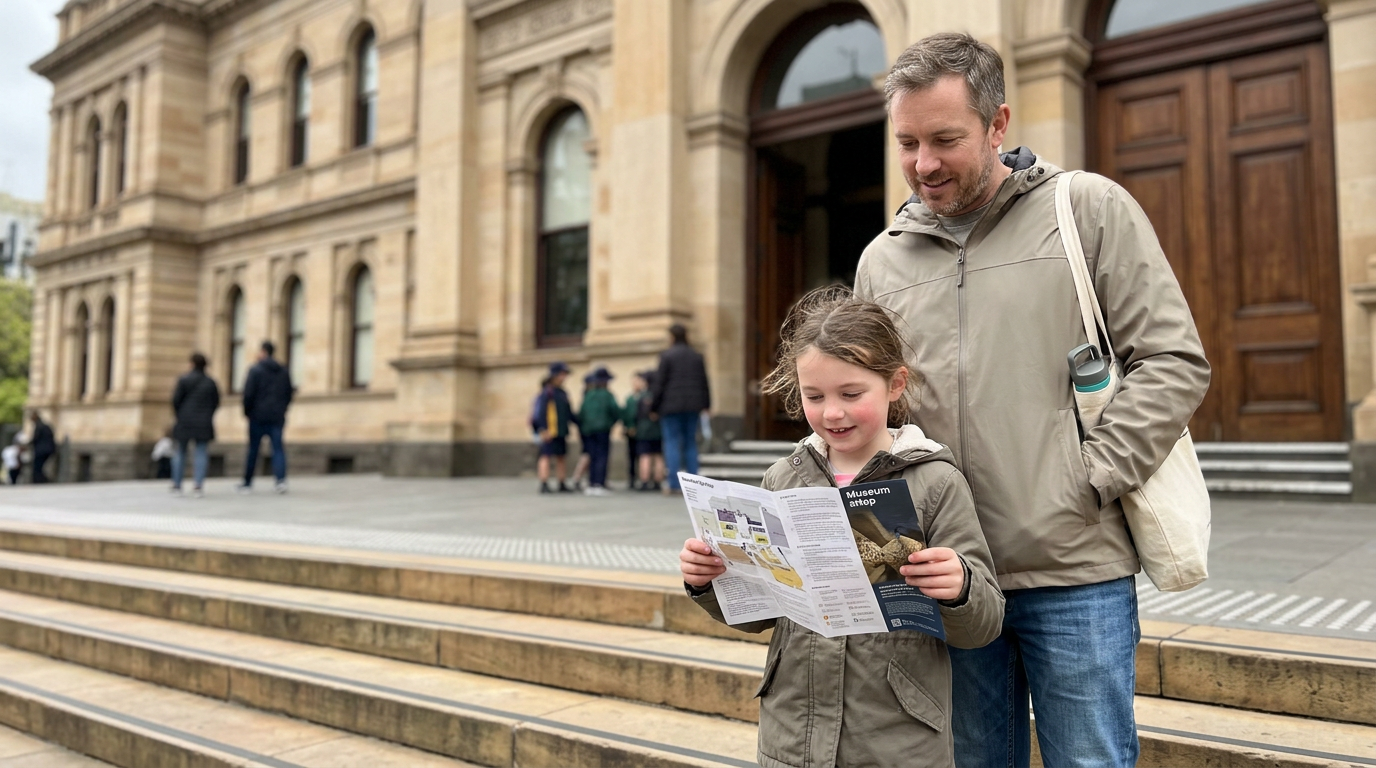
Where can my child learn maths through play in Melbourne?
The two strongest play-based maths venues in Melbourne are Scienceworks in Spotswood and the Lightning Room and Planetarium inside it. Scienceworks builds whole exhibits around measurement, ratios, force and motion — a child who's just spent twenty minutes balancing weights on a giant lever has more to anchor decimals to on Monday than the kid who watched a fractions video. The Planetarium adds astronomy and large-number scale (light-years, planet sizes) in a way primary-aged children can actually feel.
For younger primary, the Children's Gallery at Melbourne Museum teaches counting, sorting and shape recognition through tactile objects, and the Ian Potter Foundation Children's Garden at the Royal Botanic Gardens lets pre-prep through Year 3 work with measurement (water flow, plant heights) without ever calling it maths. If your child has slipped behind in maths and you want the activity to count toward catching up, pair it with twenty minutes of structured practice afterwards — see our guide on building maths study skills at home.
What free educational activities exist for children in Melbourne?
Melbourne has four genuinely free educational venues that any family can use any week of the year: the National Gallery of Victoria (both the Ian Potter Centre at Federation Square and NGV International on St Kilda Road run free daily kids' tours and self-guided trails), the State Library of Victoria (free children's reading rooms, free exhibitions, and the Dome reading room is a primary-school field-trip in itself), the Immigration Museum's general galleries (free entry for under-16s and during specific community days; family-history activities aimed at Year 3–6), and the Royal Botanic Gardens including the Ian Potter Foundation Children's Garden (entirely free, sensory, and easy to combine with a packed lunch).
Two more low-cost options worth knowing: Melbourne Museum and Scienceworks have free entry for Victorian children under 16 through the Museums Victoria policy (an adult ticket is paid; the child's isn't), and local councils run free school-holiday science and reading workshops at most Melbourne library branches — check your council's library page two weeks before each holiday block.
What outdoor educational activities work for Melbourne kids?
The four outdoor educational options Melbourne parents lean on most are the Royal Botanic Gardens (guided plant walks, kids' garden, free), Werribee Open Range Zoo (safari-bus access to African and Asian species — a longer trip but worth a full Saturday), the Melbourne Star skyline circuit and Docklands harbour walk (free, geographically literate, good for Year 3–6 city-as-classroom learning), and Collingwood Children's Farm (working farm in Abbotsford — practical animal husbandry, food-systems learning, low cost). For more bookish primary kids, the Heide Museum of Modern Art's outdoor sculpture park in Bulleen mixes art with nature on a low-stress weekend afternoon.
An hour of structured outdoor exploration with three concrete questions — "what did you notice?", "what surprised you?", "what would you ask a scientist about this?" — does more for primary literacy and observation skills than another structured activity in front of a screen.
The activities matter less than what happens on the way home. The car ride is where a museum visit becomes a memory.
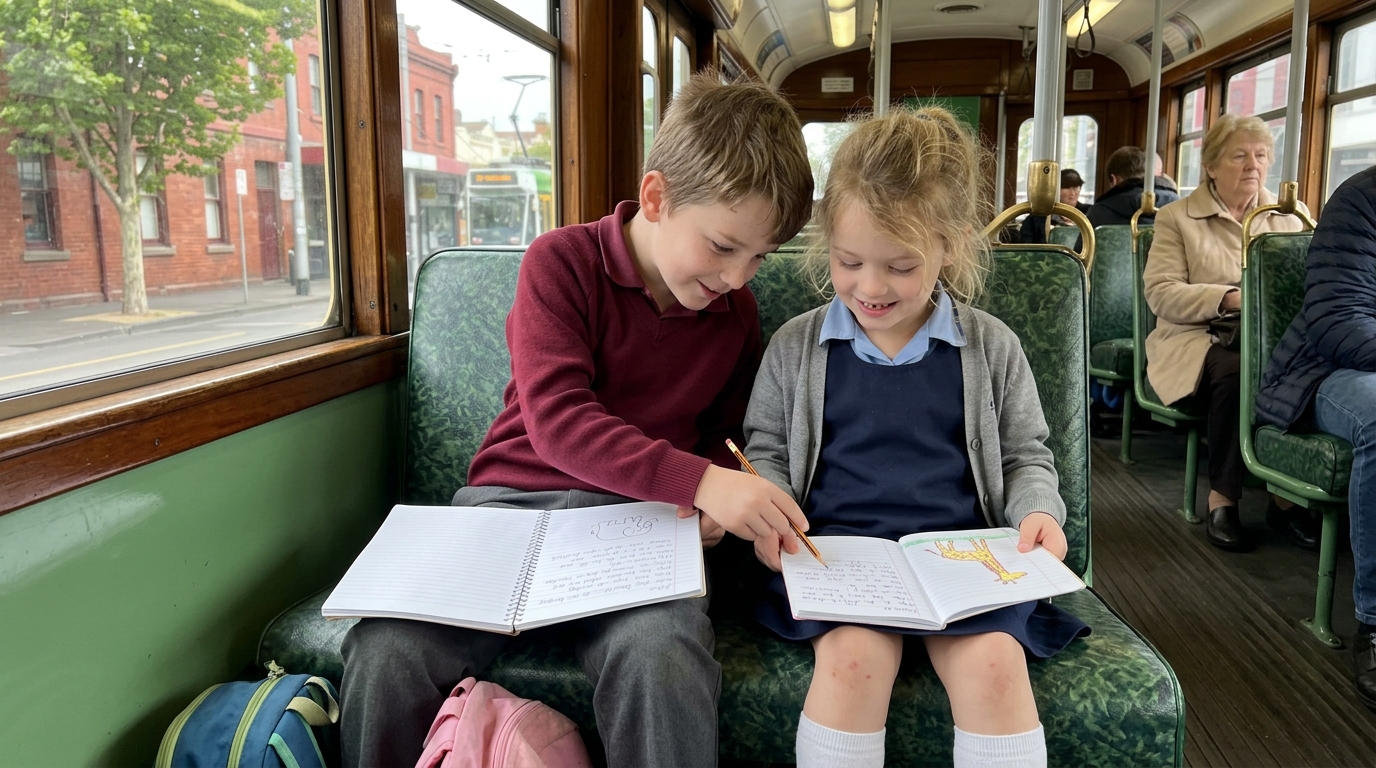
How do I balance Melbourne school holidays with learning?
The simplest pattern that works across primary and lower-secondary is two activity days per holiday week, three quieter learning days, and the weekend kept loose. The activity days do the heavy lifting on inspiration — a Tuesday at Scienceworks, a Thursday at Melbourne Zoo. The quieter learning days hold a 20–40 minute reading block, a short maths sheet, and free time. The weekend stays unscheduled so the family actually rests.
For Years 7–10, swap one activity day for a State Library of Victoria study session (Year 9 students consistently report that working in a real library beats a kitchen table for two-hour focus blocks), and keep one quieter day for catching up on subjects they've fallen behind in. For Years 11–12, the holidays are when consolidation actually happens — limit activity days to one per week and lean on past papers, study group sessions, or a few online tutoring sessions targeted at the topics they flagged as shaky in Term 1 reports.
When should I add tutoring to my child's weekend activities?
The honest answer is: when an enriched out-of-school life still hasn't moved the needle on a specific subject after a full term. A child who has been to Melbourne Museum twice, joined the State Library kids' programs, and still scores in the bottom third of a Year 5 maths assessment doesn't need more activities — they need targeted teaching on the gap. The signs are usually clear: homework battles every night, a slip in confidence, a teacher comment in the mid-term report, or a child who used to like a subject and doesn't anymore. Our guide on 5 signs that your child needs tutoring covers this in more detail.
Melbourne tutoring rates start around A$65 per hour at Tutero, with the same rate across primary, lower-secondary, and senior students — the lesson changes by year level, the rate doesn't. The Melbourne range typically runs A$55–A$85 per hour for managed online tutoring; cheaper marketplace options exist but usually come without screening, recourse, or a Working with Children Check verification. For a comparison of the two, see online vs in-person tutoring in Australia, and for a clear-eyed look at cost, see how much does maths tutoring cost in Australia.
For year-level specifics, our subject hubs cover Melbourne maths tutoring, English tutoring, and science tutoring for Prep through Year 12.
How do I make a museum visit count as real learning?
Three small rituals turn a Saturday at Melbourne Museum into something that shows up in Monday's classroom. Before the visit: spend five minutes asking your child what they're hoping to see — pick one or two exhibits to visit properly rather than rushing all of them. During the visit: let your child lead, but pause once at each exhibit and ask "what's one thing you didn't know?" — the question forces a moment of explicit learning rather than passive looking. After the visit: on the tram, in the car, or over dinner, ask your child to teach you the most interesting thing they saw. Teaching is the strongest learning signal a primary or lower-secondary student can practise.
For senior students, add a notebook. Year 11–12 students preparing for VCE Biology, History, or Studio Arts can use a Melbourne Museum, NGV, or ACMI visit as primary-source observation that genuinely builds their SAC and exam answers — provided they record what they see at the time, not from memory two weeks later.
So what's the right balance of activities and tutoring for my child?
Melbourne gives parents one of the richest informal-learning environments in Australia. The five places worth the most repeat visits are Melbourne Museum, Scienceworks, the Royal Botanic Gardens with the Children's Garden, Melbourne Zoo, and the NGV's Ian Potter Centre. Free options cover four of those five at child level. The school holidays are best run as a two-and-three split — two activity days, three quieter learning days, weekends loose. And when an active life still hasn't shifted a specific subject, that's when targeted help matters more than another excursion.
Looking for online tutoring in Melbourne for Prep–Year 12 students? Speak to Tutero's Melbourne team — same A$65/hr starting rate across all year levels, no contracts, and tutors matched to your child's exact subject and learning style.
The activities matter less than what happens on the way home. The car ride is where a museum visit becomes a memory.
The activities matter less than what happens on the way home. The car ride is where a museum visit becomes a memory.
Melbourne is a city built for curious kids. From dinosaur skeletons in Carlton to penguin feedings in Parkville, your child can spend a Saturday surrounded by the kind of real-world learning that no homework sheet can match. The challenge for most parents isn't finding things to do — it's picking the handful that actually nudge a child's reading, maths or science forward without turning a fun day into a marked-up worksheet.
This guide is the parent shortlist: five educational places in Melbourne worth your weekend, four genuinely free options for tighter weeks, and an honest read on when an activity-rich life still needs a few hours of structured help.
Quick answer
Melbourne's best educational activities for kids are Melbourne Museum, Scienceworks, the Royal Botanic Gardens (and the Ian Potter Foundation Children's Garden inside them), Melbourne Zoo, and the National Gallery of Victoria's Ian Potter Centre. Together they cover natural history, hands-on science, life sciences, the arts, and First Nations culture — and a chunk of them are free or pay-what-you-can. Pair two visits a term with a clear "what did you learn?" conversation on the way home, and you'll see real curiosity build over the school year.
What are the best educational activities for kids in Melbourne?
The five best educational activities for kids in Melbourne are Melbourne Museum (Carlton — Australia's largest natural-history collection plus the Children's Gallery), Scienceworks (Spotswood — interactive physics, the Lightning Room, and the planetarium), the Royal Botanic Gardens with the Ian Potter Foundation Children's Garden (South Yarra — free, sensory, and a parent favourite for primary kids), Melbourne Zoo (Parkville — bioclimatic zones, keeper talks, and the Roar & Snore overnight), and the NGV's Ian Potter Centre at Federation Square (free Australian and First Nations art with daily kids' programs). Together they cover the four broad domains primary teachers care about: science, nature, the arts, and culture.
For senior students, add the State Library of Victoria (Swanston Street — free study spaces and exhibitions on Victorian history) and ACMI at Federation Square (the moving image, animation, and games-design exhibits speak directly to creative-tech career paths).
Where can my child learn maths through play in Melbourne?
The two strongest play-based maths venues in Melbourne are Scienceworks in Spotswood and the Lightning Room and Planetarium inside it. Scienceworks builds whole exhibits around measurement, ratios, force and motion — a child who's just spent twenty minutes balancing weights on a giant lever has more to anchor decimals to on Monday than the kid who watched a fractions video. The Planetarium adds astronomy and large-number scale (light-years, planet sizes) in a way primary-aged children can actually feel.
For younger primary, the Children's Gallery at Melbourne Museum teaches counting, sorting and shape recognition through tactile objects, and the Ian Potter Foundation Children's Garden at the Royal Botanic Gardens lets pre-prep through Year 3 work with measurement (water flow, plant heights) without ever calling it maths. If your child has slipped behind in maths and you want the activity to count toward catching up, pair it with twenty minutes of structured practice afterwards — see our guide on building maths study skills at home.
What free educational activities exist for children in Melbourne?
Melbourne has four genuinely free educational venues that any family can use any week of the year: the National Gallery of Victoria (both the Ian Potter Centre at Federation Square and NGV International on St Kilda Road run free daily kids' tours and self-guided trails), the State Library of Victoria (free children's reading rooms, free exhibitions, and the Dome reading room is a primary-school field-trip in itself), the Immigration Museum's general galleries (free entry for under-16s and during specific community days; family-history activities aimed at Year 3–6), and the Royal Botanic Gardens including the Ian Potter Foundation Children's Garden (entirely free, sensory, and easy to combine with a packed lunch).
Two more low-cost options worth knowing: Melbourne Museum and Scienceworks have free entry for Victorian children under 16 through the Museums Victoria policy (an adult ticket is paid; the child's isn't), and local councils run free school-holiday science and reading workshops at most Melbourne library branches — check your council's library page two weeks before each holiday block.
What outdoor educational activities work for Melbourne kids?
The four outdoor educational options Melbourne parents lean on most are the Royal Botanic Gardens (guided plant walks, kids' garden, free), Werribee Open Range Zoo (safari-bus access to African and Asian species — a longer trip but worth a full Saturday), the Melbourne Star skyline circuit and Docklands harbour walk (free, geographically literate, good for Year 3–6 city-as-classroom learning), and Collingwood Children's Farm (working farm in Abbotsford — practical animal husbandry, food-systems learning, low cost). For more bookish primary kids, the Heide Museum of Modern Art's outdoor sculpture park in Bulleen mixes art with nature on a low-stress weekend afternoon.
An hour of structured outdoor exploration with three concrete questions — "what did you notice?", "what surprised you?", "what would you ask a scientist about this?" — does more for primary literacy and observation skills than another structured activity in front of a screen.
The activities matter less than what happens on the way home. The car ride is where a museum visit becomes a memory.
How do I balance Melbourne school holidays with learning?
The simplest pattern that works across primary and lower-secondary is two activity days per holiday week, three quieter learning days, and the weekend kept loose. The activity days do the heavy lifting on inspiration — a Tuesday at Scienceworks, a Thursday at Melbourne Zoo. The quieter learning days hold a 20–40 minute reading block, a short maths sheet, and free time. The weekend stays unscheduled so the family actually rests.
For Years 7–10, swap one activity day for a State Library of Victoria study session (Year 9 students consistently report that working in a real library beats a kitchen table for two-hour focus blocks), and keep one quieter day for catching up on subjects they've fallen behind in. For Years 11–12, the holidays are when consolidation actually happens — limit activity days to one per week and lean on past papers, study group sessions, or a few online tutoring sessions targeted at the topics they flagged as shaky in Term 1 reports.
When should I add tutoring to my child's weekend activities?
The honest answer is: when an enriched out-of-school life still hasn't moved the needle on a specific subject after a full term. A child who has been to Melbourne Museum twice, joined the State Library kids' programs, and still scores in the bottom third of a Year 5 maths assessment doesn't need more activities — they need targeted teaching on the gap. The signs are usually clear: homework battles every night, a slip in confidence, a teacher comment in the mid-term report, or a child who used to like a subject and doesn't anymore. Our guide on 5 signs that your child needs tutoring covers this in more detail.
Melbourne tutoring rates start around A$65 per hour at Tutero, with the same rate across primary, lower-secondary, and senior students — the lesson changes by year level, the rate doesn't. The Melbourne range typically runs A$55–A$85 per hour for managed online tutoring; cheaper marketplace options exist but usually come without screening, recourse, or a Working with Children Check verification. For a comparison of the two, see online vs in-person tutoring in Australia, and for a clear-eyed look at cost, see how much does maths tutoring cost in Australia.
For year-level specifics, our subject hubs cover Melbourne maths tutoring, English tutoring, and science tutoring for Prep through Year 12.
How do I make a museum visit count as real learning?
Three small rituals turn a Saturday at Melbourne Museum into something that shows up in Monday's classroom. Before the visit: spend five minutes asking your child what they're hoping to see — pick one or two exhibits to visit properly rather than rushing all of them. During the visit: let your child lead, but pause once at each exhibit and ask "what's one thing you didn't know?" — the question forces a moment of explicit learning rather than passive looking. After the visit: on the tram, in the car, or over dinner, ask your child to teach you the most interesting thing they saw. Teaching is the strongest learning signal a primary or lower-secondary student can practise.
For senior students, add a notebook. Year 11–12 students preparing for VCE Biology, History, or Studio Arts can use a Melbourne Museum, NGV, or ACMI visit as primary-source observation that genuinely builds their SAC and exam answers — provided they record what they see at the time, not from memory two weeks later.
So what's the right balance of activities and tutoring for my child?
Melbourne gives parents one of the richest informal-learning environments in Australia. The five places worth the most repeat visits are Melbourne Museum, Scienceworks, the Royal Botanic Gardens with the Children's Garden, Melbourne Zoo, and the NGV's Ian Potter Centre. Free options cover four of those five at child level. The school holidays are best run as a two-and-three split — two activity days, three quieter learning days, weekends loose. And when an active life still hasn't shifted a specific subject, that's when targeted help matters more than another excursion.
Looking for online tutoring in Melbourne for Prep–Year 12 students? Speak to Tutero's Melbourne team — same A$65/hr starting rate across all year levels, no contracts, and tutors matched to your child's exact subject and learning style.
FAQ
.svg)
.svg)
Online maths tutoring at Tutero is catering to students of all year levels. We offer programs tailored to the unique learning curves of each age group.
We also have expert NAPLAN and ATAR subject tutors, ensuring students are well-equipped for these pivotal assessments.
We recommend at least two to three session per week for consistent progress. However, this can vary based on your child's needs and goals.
Our platform uses advanced security protocols to ensure the safety and privacy of all our online sessions.
Parents are welcome to observe sessions. We believe in a collaborative approach to education.
We provide regular progress reports and assessments to track your child’s academic development.
Yes, we prioritise the student-tutor relationship and can arrange a change if the need arises.
Yes, we offer a range of resources and materials, including interactive exercises and practice worksheets.
The activities matter less than what happens on the way home. The car ride is where a museum visit becomes a memory.
The activities matter less than what happens on the way home. The car ride is where a museum visit becomes a memory.

The activities matter less than what happens on the way home. The car ride is where a museum visit becomes a memory.
An enriched out-of-school life is brilliant for curiosity. It's not always enough to lift a slipping grade — and that's okay.
Melbourne is a city built for curious kids. From dinosaur skeletons in Carlton to penguin feedings in Parkville, your child can spend a Saturday surrounded by the kind of real-world learning that no homework sheet can match. The challenge for most parents isn't finding things to do — it's picking the handful that actually nudge a child's reading, maths or science forward without turning a fun day into a marked-up worksheet.
This guide is the parent shortlist: five educational places in Melbourne worth your weekend, four genuinely free options for tighter weeks, and an honest read on when an activity-rich life still needs a few hours of structured help.
Quick answer
Melbourne's best educational activities for kids are Melbourne Museum, Scienceworks, the Royal Botanic Gardens (and the Ian Potter Foundation Children's Garden inside them), Melbourne Zoo, and the National Gallery of Victoria's Ian Potter Centre. Together they cover natural history, hands-on science, life sciences, the arts, and First Nations culture — and a chunk of them are free or pay-what-you-can. Pair two visits a term with a clear "what did you learn?" conversation on the way home, and you'll see real curiosity build over the school year.
What are the best educational activities for kids in Melbourne?
The five best educational activities for kids in Melbourne are Melbourne Museum (Carlton — Australia's largest natural-history collection plus the Children's Gallery), Scienceworks (Spotswood — interactive physics, the Lightning Room, and the planetarium), the Royal Botanic Gardens with the Ian Potter Foundation Children's Garden (South Yarra — free, sensory, and a parent favourite for primary kids), Melbourne Zoo (Parkville — bioclimatic zones, keeper talks, and the Roar & Snore overnight), and the NGV's Ian Potter Centre at Federation Square (free Australian and First Nations art with daily kids' programs). Together they cover the four broad domains primary teachers care about: science, nature, the arts, and culture.
For senior students, add the State Library of Victoria (Swanston Street — free study spaces and exhibitions on Victorian history) and ACMI at Federation Square (the moving image, animation, and games-design exhibits speak directly to creative-tech career paths).
Where can my child learn maths through play in Melbourne?
The two strongest play-based maths venues in Melbourne are Scienceworks in Spotswood and the Lightning Room and Planetarium inside it. Scienceworks builds whole exhibits around measurement, ratios, force and motion — a child who's just spent twenty minutes balancing weights on a giant lever has more to anchor decimals to on Monday than the kid who watched a fractions video. The Planetarium adds astronomy and large-number scale (light-years, planet sizes) in a way primary-aged children can actually feel.
For younger primary, the Children's Gallery at Melbourne Museum teaches counting, sorting and shape recognition through tactile objects, and the Ian Potter Foundation Children's Garden at the Royal Botanic Gardens lets pre-prep through Year 3 work with measurement (water flow, plant heights) without ever calling it maths. If your child has slipped behind in maths and you want the activity to count toward catching up, pair it with twenty minutes of structured practice afterwards — see our guide on building maths study skills at home.
What free educational activities exist for children in Melbourne?
Melbourne has four genuinely free educational venues that any family can use any week of the year: the National Gallery of Victoria (both the Ian Potter Centre at Federation Square and NGV International on St Kilda Road run free daily kids' tours and self-guided trails), the State Library of Victoria (free children's reading rooms, free exhibitions, and the Dome reading room is a primary-school field-trip in itself), the Immigration Museum's general galleries (free entry for under-16s and during specific community days; family-history activities aimed at Year 3–6), and the Royal Botanic Gardens including the Ian Potter Foundation Children's Garden (entirely free, sensory, and easy to combine with a packed lunch).
Two more low-cost options worth knowing: Melbourne Museum and Scienceworks have free entry for Victorian children under 16 through the Museums Victoria policy (an adult ticket is paid; the child's isn't), and local councils run free school-holiday science and reading workshops at most Melbourne library branches — check your council's library page two weeks before each holiday block.
What outdoor educational activities work for Melbourne kids?
The four outdoor educational options Melbourne parents lean on most are the Royal Botanic Gardens (guided plant walks, kids' garden, free), Werribee Open Range Zoo (safari-bus access to African and Asian species — a longer trip but worth a full Saturday), the Melbourne Star skyline circuit and Docklands harbour walk (free, geographically literate, good for Year 3–6 city-as-classroom learning), and Collingwood Children's Farm (working farm in Abbotsford — practical animal husbandry, food-systems learning, low cost). For more bookish primary kids, the Heide Museum of Modern Art's outdoor sculpture park in Bulleen mixes art with nature on a low-stress weekend afternoon.
An hour of structured outdoor exploration with three concrete questions — "what did you notice?", "what surprised you?", "what would you ask a scientist about this?" — does more for primary literacy and observation skills than another structured activity in front of a screen.
The activities matter less than what happens on the way home. The car ride is where a museum visit becomes a memory.
How do I balance Melbourne school holidays with learning?
The simplest pattern that works across primary and lower-secondary is two activity days per holiday week, three quieter learning days, and the weekend kept loose. The activity days do the heavy lifting on inspiration — a Tuesday at Scienceworks, a Thursday at Melbourne Zoo. The quieter learning days hold a 20–40 minute reading block, a short maths sheet, and free time. The weekend stays unscheduled so the family actually rests.
For Years 7–10, swap one activity day for a State Library of Victoria study session (Year 9 students consistently report that working in a real library beats a kitchen table for two-hour focus blocks), and keep one quieter day for catching up on subjects they've fallen behind in. For Years 11–12, the holidays are when consolidation actually happens — limit activity days to one per week and lean on past papers, study group sessions, or a few online tutoring sessions targeted at the topics they flagged as shaky in Term 1 reports.
When should I add tutoring to my child's weekend activities?
The honest answer is: when an enriched out-of-school life still hasn't moved the needle on a specific subject after a full term. A child who has been to Melbourne Museum twice, joined the State Library kids' programs, and still scores in the bottom third of a Year 5 maths assessment doesn't need more activities — they need targeted teaching on the gap. The signs are usually clear: homework battles every night, a slip in confidence, a teacher comment in the mid-term report, or a child who used to like a subject and doesn't anymore. Our guide on 5 signs that your child needs tutoring covers this in more detail.
Melbourne tutoring rates start around A$65 per hour at Tutero, with the same rate across primary, lower-secondary, and senior students — the lesson changes by year level, the rate doesn't. The Melbourne range typically runs A$55–A$85 per hour for managed online tutoring; cheaper marketplace options exist but usually come without screening, recourse, or a Working with Children Check verification. For a comparison of the two, see online vs in-person tutoring in Australia, and for a clear-eyed look at cost, see how much does maths tutoring cost in Australia.
For year-level specifics, our subject hubs cover Melbourne maths tutoring, English tutoring, and science tutoring for Prep through Year 12.
How do I make a museum visit count as real learning?
Three small rituals turn a Saturday at Melbourne Museum into something that shows up in Monday's classroom. Before the visit: spend five minutes asking your child what they're hoping to see — pick one or two exhibits to visit properly rather than rushing all of them. During the visit: let your child lead, but pause once at each exhibit and ask "what's one thing you didn't know?" — the question forces a moment of explicit learning rather than passive looking. After the visit: on the tram, in the car, or over dinner, ask your child to teach you the most interesting thing they saw. Teaching is the strongest learning signal a primary or lower-secondary student can practise.
For senior students, add a notebook. Year 11–12 students preparing for VCE Biology, History, or Studio Arts can use a Melbourne Museum, NGV, or ACMI visit as primary-source observation that genuinely builds their SAC and exam answers — provided they record what they see at the time, not from memory two weeks later.
So what's the right balance of activities and tutoring for my child?
Melbourne gives parents one of the richest informal-learning environments in Australia. The five places worth the most repeat visits are Melbourne Museum, Scienceworks, the Royal Botanic Gardens with the Children's Garden, Melbourne Zoo, and the NGV's Ian Potter Centre. Free options cover four of those five at child level. The school holidays are best run as a two-and-three split — two activity days, three quieter learning days, weekends loose. And when an active life still hasn't shifted a specific subject, that's when targeted help matters more than another excursion.
Looking for online tutoring in Melbourne for Prep–Year 12 students? Speak to Tutero's Melbourne team — same A$65/hr starting rate across all year levels, no contracts, and tutors matched to your child's exact subject and learning style.
The activities matter less than what happens on the way home. The car ride is where a museum visit becomes a memory.
An enriched out-of-school life is brilliant for curiosity. It's not always enough to lift a slipping grade — and that's okay.
The single best repeat-visit option for primary-school kids in Melbourne is Scienceworks in Spotswood — it's hands-on, free for under-16s, and the Lightning Room plus Planetarium teach measurement and physics through play in a way primary-aged children actually retain. Melbourne Museum's Children's Gallery is the second most consistent recommendation, especially for Year 1–4.
Yes — the National Gallery of Victoria (both sites), the State Library of Victoria, the Royal Botanic Gardens with the Ian Potter Foundation Children's Garden, and the Immigration Museum's general galleries are all free or have free entry for children. Melbourne Museum and Scienceworks also offer free entry for Victorian children under 16. Local council libraries run free school-holiday workshops most weeks of the year.
Three small rituals do most of the work. Before you go, pick one or two exhibits with your child rather than racing through all of them. During, ask 'what's one thing you didn't know?' at each exhibit. After, on the way home, get your child to teach you the most interesting thing they saw. Teaching what you've just learnt is the strongest signal a primary or lower-secondary student can practise.
Both, in different proportions. For primary kids, weekend activities (museums, zoos, gardens) build curiosity and general knowledge; structured tutoring is best added if a specific subject has slipped. For Years 7–10, a balance of one activity day plus 30–60 minutes of focused subject work usually works best. For Years 11–12, especially in VCE, weekends typically need to lean toward consolidation — past papers, study groups, or a targeted online tutoring session — with one activity day for rest and inspiration.
Tutero's Melbourne tutoring rate starts at A$65 per hour, with the same rate across primary, lower-secondary, and senior students. The broader Melbourne range for managed online tutoring is typically A$55–A$85 per hour. Cheaper marketplace options exist but usually come without screening, recourse, or Working with Children Check verification — important factors for a child working one-on-one with an adult online.
Hoping to improve confidence & grades?

.png)


