.svg)

Teachers do not need another beige worksheet called “Practice Set 4”. Sometimes the fastest way to earn attention is to wrap a clear learning goal in something students already recognise: a strange internet phrase, a game-show format, Minecraft, a sporting event or the chance to win the mythical Pen of Power.
That is exactly what teachers have been creating with tutero.ai. The funniest resources are not jokes with a learning objective bolted on. They use humour, competition and familiar worlds to give students a reason to practise, explain and persist. Below are some standout examples, plus copy-ready prompts teachers can adapt for their own classes.
Start with the curriculum goal, then choose a theme that makes the practice feel like an event. A strong classroom game still needs accurate questions, clear rules, manageable rounds and a way for every student to participate.
Why do funny classroom resources work?
A playful theme can lower the emotional temperature around practice. Instead of announcing another revision sheet, a teacher can introduce a challenge, mystery or game with a clear finish line. Students know what they are trying to achieve, and the novelty gives them a reason to begin.
The theme also creates a useful shared language. “You have thirty seconds in the Hot Seat” is more memorable than “complete question three”. “Earn the Pen of Power” gives an ordinary worksheet a simple story. The humour is the doorway, while retrieval, reasoning, explanation and feedback remain the actual lesson.
The key is to avoid confusing engagement with chaos. The best resources make the rules simpler, not harder. They let teachers adjust the difficulty, pause for explanation and keep the competition friendly. A funny title can win attention, but sound instructional design is what keeps the activity useful.
How can the 67 maths lesson turn an internet joke into revision?
The 67 maths lesson is a great example of meeting students where their attention already is. The resource uses multiple visual versions of 67 before moving into sums, counting, brain teasers and trivia. Students recognise the joke immediately, but the lesson redirects that recognition into mathematical thinking rather than leaving it as a throwaway reference.
This format can work with number properties, place value, factors, multiples, fractions, estimation or algebra. The teacher can decide whether 67 is the answer, part of the working or simply the recurring motif. To keep the activity educational, ask students to justify how they reached an answer and include at least one task with more than one possible method.

Copy-ready teacher prompt
Create a [year level] maths lesson based on the number 67. Include a warm-up, six short questions on [topic], two collaborative brain teasers and an exit ticket. Keep the 67 theme playful, but make every task aligned to [curriculum objective]. Provide worked answers and one extension question.
How does Pen of Power make a worksheet feel like a classroom event?
Pen of Power begins with a wonderfully small rule: students are racing to complete a worksheet, but first they must earn the special pen. That single prop changes the atmosphere. The worksheet has not disappeared; it has gained a story, a visible reward and a moment of anticipation.
The format is flexible. Students might earn the pen by solving a starter question, explaining a method, checking a partner’s work or completing a short team challenge. Once the pen is in play, teachers can use checkpoints to prevent speed from becoming more important than accuracy. For example, a team only keeps the pen when it can explain one answer clearly.
Teachers should also plan an inclusive version. More than one pen, rotating roles or team-based earning rules stop the activity from rewarding only the fastest student. The “power” can represent the right to choose the next question, request a hint or award a bonus point rather than simply finishing first.

Copy-ready teacher prompt
Turn my [topic] worksheet into a Pen of Power team challenge for [year level]. Write simple rules for earning, keeping and passing the pen. Include three checkpoints where teams must explain an answer, not just show it. Add an inclusive role for students who prefer not to race and provide a five-minute reflection at the end.
How can Hot Seat strengthen mathematical vocabulary?
Hot Seat works like a mathematical version of Celebrity Heads. One student sits in the hot seat while classmates give clues without saying the target term. The game sounds silly, but it asks students to do serious conceptual work: identify defining features, choose precise vocabulary, distinguish one concept from another and listen carefully to explanations.
For a geometry lesson, the mystery word could be “rhombus”, “parallel” or “translation”. In number, it could be “prime”, “factor” or “equivalent fraction”. Students quickly discover that vague clues are not enough. A strong clue needs to reveal a property without simply giving away the answer.
To make the game safer for quieter students, let pairs share the hot seat, allow written clues or let students choose between clue-giver and guesser roles. A final debrief can ask which clues were most useful and why. That turns the laughs into a clear discussion about mathematical language.
Copy-ready teacher prompt
Create a Hot Seat vocabulary game for [year level] on [topic]. Give me 20 target terms, three acceptable clue examples for each term and a list of words students are not allowed to say. Include pair and written-clue alternatives, a scoring system that rewards precise explanations and five reflection questions.

How can a Beast Games theme create energy without creating chaos?
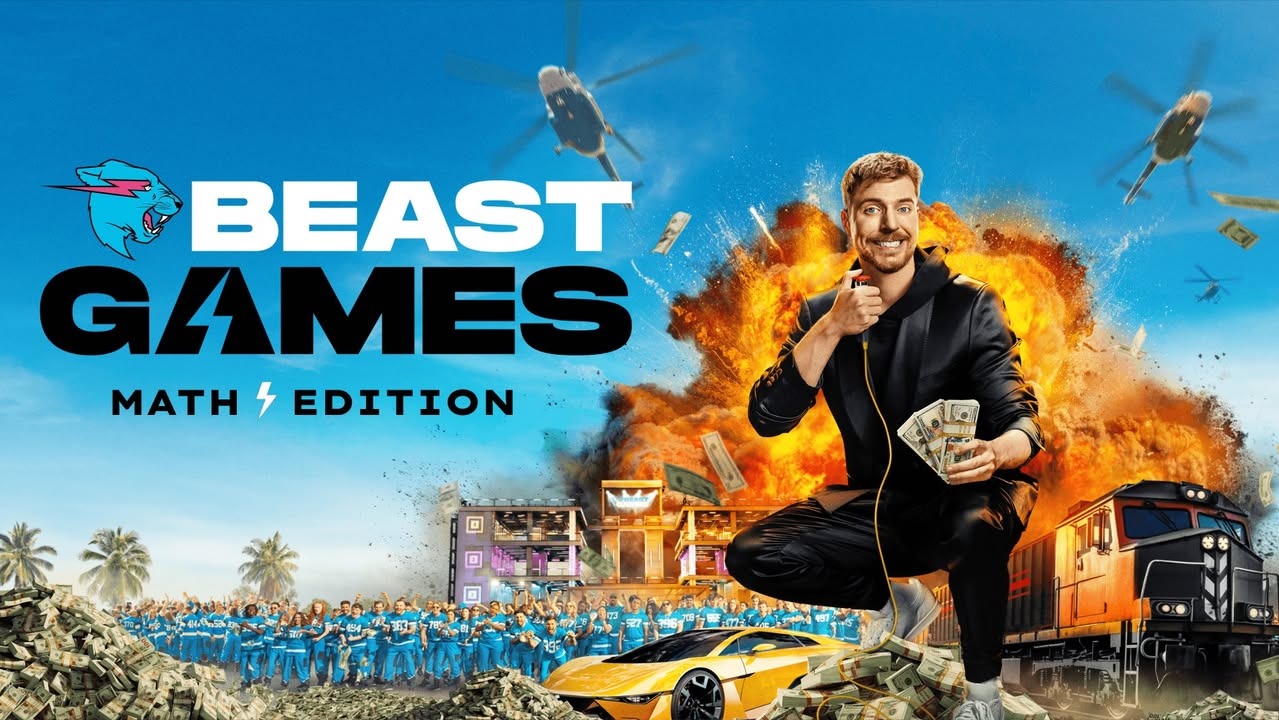
A Beast Games-style lesson can turn revision into a sequence of short, high-stakes-looking challenges. The appeal is obvious: teams, countdowns, surprise rounds and a visible path toward a final challenge. The educational value comes from using that structure to vary the kind of thinking students do.
Round one might be rapid retrieval. Round two could require teams to compare two methods. Round three might ask students to find and correct an error. A final challenge can combine multiple skills in one richer problem. This variety stops the resource from becoming twenty identical questions with dramatic music.
Keep eliminations fictional or point-based so no student is excluded from learning. Teams can lose tokens, advantages or choice rather than being removed from the activity. Teachers should also publish the success criteria before each round and leave enough time to discuss the mathematics after the timer stops.
Copy-ready teacher prompt
Create a Beast Games-inspired revision lesson for [year level] on [topic]. Build four rounds: retrieval, error spotting, explain-your-method and a final multi-step challenge. Use teams and points, but do not eliminate students. Include timings, teacher instructions, answers, differentiation and a calm reset between rounds.
How can a Super Bowl maths faceoff stay evergreen?
A Super Bowl maths faceoff uses the energy of a major sporting event without depending on one particular year, team, player or result. That makes the resource reusable. Teachers can frame the class as two sides working through a series of drives, downs or quarters, with points earned for both correct answers and clear reasoning.
The sporting context can support percentages, statistics, probability, measurement, graph interpretation and multi-step arithmetic. The lesson does not need real-time facts to work. Fictional team data avoids dating the resource and gives the teacher complete control over the numbers and difficulty.
For a balanced activity, reward strategic explanation as well as speed. A team might earn a field goal for a correct answer and a touchdown for a correct answer with a convincing explanation. Students who are not interested in sport can still participate because the rules are explained inside the lesson rather than assumed.
Copy-ready teacher prompt
Create an evergreen Super Bowl maths faceoff for [year level] on [topic]. Do not mention a year, event number, real team or player. Use two fictional teams, four quarters and a scoring system that rewards correct working and explanation. Include 16 questions, answers, a tiebreaker and a non-sport explanation of all rules.

What do Grudgeball, Trashketball and game shows add to revision?
Names such as Grudgeball and Trashketball immediately signal that this is not a standard worksheet. The useful idea underneath both is simple: students answer curriculum questions, then earn a low-stakes physical or strategic action. The action provides a short burst of suspense between problems without replacing the academic task.
Game-show formats such as Family Feud, Wheel of Fortune and Who Wants to Be a Millionaire add rounds, categories, lifelines and escalating difficulty. These structures help teachers organise a broad review. They also create natural opportunities for students to discuss an answer before committing to it.
Physical games need clear safety rules and an equivalent seated option. Game shows need enough wait time so confident students do not dominate. Small whiteboards, team captains who rotate and “everyone writes before anyone answers” are simple ways to keep participation broad.


Copy-ready teacher prompt
Turn [topic] revision for [year level] into a [Trashketball / Family Feud / Wheel of Fortune / Millionaire] game. Include clear rules, 20 curriculum-aligned questions, answers, increasing difficulty, a no-equipment alternative and a participation routine where every student writes or discusses before the team answers.
How can Minecraft, Fortnite and Aura Farming become learning hooks?
Minecraft is a natural fit for area, perimeter, volume, scale, coordinates, ratio and budgeting because students can imagine building something. Fortnite can support probability, maps, resource allocation, percentages and data interpretation. Aura Farming can become a humorous theme for points, rates, sequences or comparing strategies.
The safest approach is to borrow the broad world or mechanic rather than copying branded artwork, characters or in-game claims. A “block-building base challenge” can deliver the same mathematical hook as a Minecraft lesson. A fictional map and inventory can create a battle-game-style problem without requiring students to know a particular game.
Teachers should also explain the activity in plain language. A student who has never played the game should not be disadvantaged. Include a one-paragraph scenario, define any invented terms and make the mathematics sufficient to solve every task.
Copy-ready teacher prompt
Create a block-building base challenge for [year level] that teaches [area, perimeter, volume, ratio or coordinates]. Give students a fictional map, resource limits and three design constraints. Explain the theme so no game knowledge is required. Include a basic task, an extension, worked answers and a short written justification.
How can teachers create their own funny resource with AI?
Begin with the learning goal, not the joke. Write down what students should know or be able to do by the end. Then choose one simple frame: a game show, team challenge, mystery, sporting faceoff, fictional shop, build task or student phrase. Ask AI to create the first version, but treat that output as a draft.
- State the class and objective. Include year level, topic and curriculum skill.
- Describe the game mechanic. Explain rounds, teams, scoring or the fictional scenario.
- Set quality constraints. Request accurate answers, varied difficulty and explanation questions.
- Plan inclusion. Ask for non-speed roles, pair options and a no-equipment version.
- Review before teaching. Check every answer, instruction, image and reference for your students.
A strong reusable prompt is: “Create a [format] for [year level] students learning [objective]. Use [theme] only as the hook. Include [number] questions with answers, three difficulty levels, clear rules, inclusive participation options, a five-minute reflection and an editable teacher guide. Avoid references that depend on a particular year, event or trend.”
For more starting points, explore these AI prompts for teachers, compare the best AI tools for teachers, or read our guide to making learning fun.
What should teachers check before using an AI-created resource?
Check the mathematics first. Recalculate answers, review worked examples and confirm that the vocabulary matches what students have learned. Then check the difficulty curve: the first task should help students enter the activity, while later tasks should require explanation or transfer rather than only repetition.
Next, test the rules. Can they be explained in under two minutes? Does every student have a meaningful role? Is there a way to pause the competition and discuss an important misconception? Remove any rule that creates waiting time or excludes a student after one mistake.
Finally, check the theme. Avoid embarrassing individual students, relying on a culture reference everyone may not know or using a joke that will age badly. The strongest resource is still understandable after the trend has passed because the learning goal and game mechanic can stand on their own.
What makes a funny teaching resource worth keeping?
A funny resource is worth keeping when it saves preparation time, earns attention and produces useful student thinking. The title might be Pen of Power, Hot Seat or Trashketball, but the lasting value comes from clear questions, thoughtful pacing and opportunities to explain.
Teachers do not have to make every lesson a spectacle. One playful activity at the right moment can reset the room, make revision feel different and give students a shared memory connected to the content. Start with one topic your class needs to practise, choose one simple mechanic and use tutero.ai to turn the idea into an editable first draft.
Teachers do not need another beige worksheet called “Practice Set 4”. Sometimes the fastest way to earn attention is to wrap a clear learning goal in something students already recognise: a strange internet phrase, a game-show format, Minecraft, a sporting event or the chance to win the mythical Pen of Power.
That is exactly what teachers have been creating with tutero.ai. The funniest resources are not jokes with a learning objective bolted on. They use humour, competition and familiar worlds to give students a reason to practise, explain and persist. Below are some standout examples, plus copy-ready prompts teachers can adapt for their own classes.
Start with the curriculum goal, then choose a theme that makes the practice feel like an event. A strong classroom game still needs accurate questions, clear rules, manageable rounds and a way for every student to participate.
Why do funny classroom resources work?
A playful theme can lower the emotional temperature around practice. Instead of announcing another revision sheet, a teacher can introduce a challenge, mystery or game with a clear finish line. Students know what they are trying to achieve, and the novelty gives them a reason to begin.
The theme also creates a useful shared language. “You have thirty seconds in the Hot Seat” is more memorable than “complete question three”. “Earn the Pen of Power” gives an ordinary worksheet a simple story. The humour is the doorway, while retrieval, reasoning, explanation and feedback remain the actual lesson.
The key is to avoid confusing engagement with chaos. The best resources make the rules simpler, not harder. They let teachers adjust the difficulty, pause for explanation and keep the competition friendly. A funny title can win attention, but sound instructional design is what keeps the activity useful.
How can the 67 maths lesson turn an internet joke into revision?
The 67 maths lesson is a great example of meeting students where their attention already is. The resource uses multiple visual versions of 67 before moving into sums, counting, brain teasers and trivia. Students recognise the joke immediately, but the lesson redirects that recognition into mathematical thinking rather than leaving it as a throwaway reference.
This format can work with number properties, place value, factors, multiples, fractions, estimation or algebra. The teacher can decide whether 67 is the answer, part of the working or simply the recurring motif. To keep the activity educational, ask students to justify how they reached an answer and include at least one task with more than one possible method.
Copy-ready teacher prompt
Create a [year level] maths lesson based on the number 67. Include a warm-up, six short questions on [topic], two collaborative brain teasers and an exit ticket. Keep the 67 theme playful, but make every task aligned to [curriculum objective]. Provide worked answers and one extension question.
How does Pen of Power make a worksheet feel like a classroom event?
Pen of Power begins with a wonderfully small rule: students are racing to complete a worksheet, but first they must earn the special pen. That single prop changes the atmosphere. The worksheet has not disappeared; it has gained a story, a visible reward and a moment of anticipation.
The format is flexible. Students might earn the pen by solving a starter question, explaining a method, checking a partner’s work or completing a short team challenge. Once the pen is in play, teachers can use checkpoints to prevent speed from becoming more important than accuracy. For example, a team only keeps the pen when it can explain one answer clearly.
Teachers should also plan an inclusive version. More than one pen, rotating roles or team-based earning rules stop the activity from rewarding only the fastest student. The “power” can represent the right to choose the next question, request a hint or award a bonus point rather than simply finishing first.
Copy-ready teacher prompt
Turn my [topic] worksheet into a Pen of Power team challenge for [year level]. Write simple rules for earning, keeping and passing the pen. Include three checkpoints where teams must explain an answer, not just show it. Add an inclusive role for students who prefer not to race and provide a five-minute reflection at the end.
How can Hot Seat strengthen mathematical vocabulary?
Hot Seat works like a mathematical version of Celebrity Heads. One student sits in the hot seat while classmates give clues without saying the target term. The game sounds silly, but it asks students to do serious conceptual work: identify defining features, choose precise vocabulary, distinguish one concept from another and listen carefully to explanations.
For a geometry lesson, the mystery word could be “rhombus”, “parallel” or “translation”. In number, it could be “prime”, “factor” or “equivalent fraction”. Students quickly discover that vague clues are not enough. A strong clue needs to reveal a property without simply giving away the answer.
To make the game safer for quieter students, let pairs share the hot seat, allow written clues or let students choose between clue-giver and guesser roles. A final debrief can ask which clues were most useful and why. That turns the laughs into a clear discussion about mathematical language.
Copy-ready teacher prompt
Create a Hot Seat vocabulary game for [year level] on [topic]. Give me 20 target terms, three acceptable clue examples for each term and a list of words students are not allowed to say. Include pair and written-clue alternatives, a scoring system that rewards precise explanations and five reflection questions.
How can a Beast Games theme create energy without creating chaos?
A Beast Games-style lesson can turn revision into a sequence of short, high-stakes-looking challenges. The appeal is obvious: teams, countdowns, surprise rounds and a visible path toward a final challenge. The educational value comes from using that structure to vary the kind of thinking students do.
Round one might be rapid retrieval. Round two could require teams to compare two methods. Round three might ask students to find and correct an error. A final challenge can combine multiple skills in one richer problem. This variety stops the resource from becoming twenty identical questions with dramatic music.
Keep eliminations fictional or point-based so no student is excluded from learning. Teams can lose tokens, advantages or choice rather than being removed from the activity. Teachers should also publish the success criteria before each round and leave enough time to discuss the mathematics after the timer stops.
Copy-ready teacher prompt
Create a Beast Games-inspired revision lesson for [year level] on [topic]. Build four rounds: retrieval, error spotting, explain-your-method and a final multi-step challenge. Use teams and points, but do not eliminate students. Include timings, teacher instructions, answers, differentiation and a calm reset between rounds.
How can a Super Bowl maths faceoff stay evergreen?
A Super Bowl maths faceoff uses the energy of a major sporting event without depending on one particular year, team, player or result. That makes the resource reusable. Teachers can frame the class as two sides working through a series of drives, downs or quarters, with points earned for both correct answers and clear reasoning.
The sporting context can support percentages, statistics, probability, measurement, graph interpretation and multi-step arithmetic. The lesson does not need real-time facts to work. Fictional team data avoids dating the resource and gives the teacher complete control over the numbers and difficulty.
For a balanced activity, reward strategic explanation as well as speed. A team might earn a field goal for a correct answer and a touchdown for a correct answer with a convincing explanation. Students who are not interested in sport can still participate because the rules are explained inside the lesson rather than assumed.
Copy-ready teacher prompt
Create an evergreen Super Bowl maths faceoff for [year level] on [topic]. Do not mention a year, event number, real team or player. Use two fictional teams, four quarters and a scoring system that rewards correct working and explanation. Include 16 questions, answers, a tiebreaker and a non-sport explanation of all rules.
What do Grudgeball, Trashketball and game shows add to revision?
Names such as Grudgeball and Trashketball immediately signal that this is not a standard worksheet. The useful idea underneath both is simple: students answer curriculum questions, then earn a low-stakes physical or strategic action. The action provides a short burst of suspense between problems without replacing the academic task.
Game-show formats such as Family Feud, Wheel of Fortune and Who Wants to Be a Millionaire add rounds, categories, lifelines and escalating difficulty. These structures help teachers organise a broad review. They also create natural opportunities for students to discuss an answer before committing to it.
Physical games need clear safety rules and an equivalent seated option. Game shows need enough wait time so confident students do not dominate. Small whiteboards, team captains who rotate and “everyone writes before anyone answers” are simple ways to keep participation broad.
Copy-ready teacher prompt
Turn [topic] revision for [year level] into a [Trashketball / Family Feud / Wheel of Fortune / Millionaire] game. Include clear rules, 20 curriculum-aligned questions, answers, increasing difficulty, a no-equipment alternative and a participation routine where every student writes or discusses before the team answers.
How can Minecraft, Fortnite and Aura Farming become learning hooks?
Minecraft is a natural fit for area, perimeter, volume, scale, coordinates, ratio and budgeting because students can imagine building something. Fortnite can support probability, maps, resource allocation, percentages and data interpretation. Aura Farming can become a humorous theme for points, rates, sequences or comparing strategies.
The safest approach is to borrow the broad world or mechanic rather than copying branded artwork, characters or in-game claims. A “block-building base challenge” can deliver the same mathematical hook as a Minecraft lesson. A fictional map and inventory can create a battle-game-style problem without requiring students to know a particular game.
Teachers should also explain the activity in plain language. A student who has never played the game should not be disadvantaged. Include a one-paragraph scenario, define any invented terms and make the mathematics sufficient to solve every task.
Copy-ready teacher prompt
Create a block-building base challenge for [year level] that teaches [area, perimeter, volume, ratio or coordinates]. Give students a fictional map, resource limits and three design constraints. Explain the theme so no game knowledge is required. Include a basic task, an extension, worked answers and a short written justification.
How can teachers create their own funny resource with AI?
Begin with the learning goal, not the joke. Write down what students should know or be able to do by the end. Then choose one simple frame: a game show, team challenge, mystery, sporting faceoff, fictional shop, build task or student phrase. Ask AI to create the first version, but treat that output as a draft.
- State the class and objective. Include year level, topic and curriculum skill.
- Describe the game mechanic. Explain rounds, teams, scoring or the fictional scenario.
- Set quality constraints. Request accurate answers, varied difficulty and explanation questions.
- Plan inclusion. Ask for non-speed roles, pair options and a no-equipment version.
- Review before teaching. Check every answer, instruction, image and reference for your students.
A strong reusable prompt is: “Create a [format] for [year level] students learning [objective]. Use [theme] only as the hook. Include [number] questions with answers, three difficulty levels, clear rules, inclusive participation options, a five-minute reflection and an editable teacher guide. Avoid references that depend on a particular year, event or trend.”
For more starting points, explore these AI prompts for teachers, compare the best AI tools for teachers, or read our guide to making learning fun.
What should teachers check before using an AI-created resource?
Check the mathematics first. Recalculate answers, review worked examples and confirm that the vocabulary matches what students have learned. Then check the difficulty curve: the first task should help students enter the activity, while later tasks should require explanation or transfer rather than only repetition.
Next, test the rules. Can they be explained in under two minutes? Does every student have a meaningful role? Is there a way to pause the competition and discuss an important misconception? Remove any rule that creates waiting time or excludes a student after one mistake.
Finally, check the theme. Avoid embarrassing individual students, relying on a culture reference everyone may not know or using a joke that will age badly. The strongest resource is still understandable after the trend has passed because the learning goal and game mechanic can stand on their own.
What makes a funny teaching resource worth keeping?
A funny resource is worth keeping when it saves preparation time, earns attention and produces useful student thinking. The title might be Pen of Power, Hot Seat or Trashketball, but the lasting value comes from clear questions, thoughtful pacing and opportunities to explain.
Teachers do not have to make every lesson a spectacle. One playful activity at the right moment can reset the room, make revision feel different and give students a shared memory connected to the content. Start with one topic your class needs to practise, choose one simple mechanic and use tutero.ai to turn the idea into an editable first draft.

Teachers do not need another beige worksheet called “Practice Set 4”. Sometimes the fastest way to earn attention is to wrap a clear learning goal in something students already recognise: a strange internet phrase, a game-show format, Minecraft, a sporting event or the chance to win the mythical Pen of Power.
That is exactly what teachers have been creating with tutero.ai. The funniest resources are not jokes with a learning objective bolted on. They use humour, competition and familiar worlds to give students a reason to practise, explain and persist. Below are some standout examples, plus copy-ready prompts teachers can adapt for their own classes.
Start with the curriculum goal, then choose a theme that makes the practice feel like an event. A strong classroom game still needs accurate questions, clear rules, manageable rounds and a way for every student to participate.
Why do funny classroom resources work?
A playful theme can lower the emotional temperature around practice. Instead of announcing another revision sheet, a teacher can introduce a challenge, mystery or game with a clear finish line. Students know what they are trying to achieve, and the novelty gives them a reason to begin.
The theme also creates a useful shared language. “You have thirty seconds in the Hot Seat” is more memorable than “complete question three”. “Earn the Pen of Power” gives an ordinary worksheet a simple story. The humour is the doorway, while retrieval, reasoning, explanation and feedback remain the actual lesson.
The key is to avoid confusing engagement with chaos. The best resources make the rules simpler, not harder. They let teachers adjust the difficulty, pause for explanation and keep the competition friendly. A funny title can win attention, but sound instructional design is what keeps the activity useful.
How can the 67 maths lesson turn an internet joke into revision?
The 67 maths lesson is a great example of meeting students where their attention already is. The resource uses multiple visual versions of 67 before moving into sums, counting, brain teasers and trivia. Students recognise the joke immediately, but the lesson redirects that recognition into mathematical thinking rather than leaving it as a throwaway reference.
This format can work with number properties, place value, factors, multiples, fractions, estimation or algebra. The teacher can decide whether 67 is the answer, part of the working or simply the recurring motif. To keep the activity educational, ask students to justify how they reached an answer and include at least one task with more than one possible method.
Copy-ready teacher prompt
Create a [year level] maths lesson based on the number 67. Include a warm-up, six short questions on [topic], two collaborative brain teasers and an exit ticket. Keep the 67 theme playful, but make every task aligned to [curriculum objective]. Provide worked answers and one extension question.
How does Pen of Power make a worksheet feel like a classroom event?
Pen of Power begins with a wonderfully small rule: students are racing to complete a worksheet, but first they must earn the special pen. That single prop changes the atmosphere. The worksheet has not disappeared; it has gained a story, a visible reward and a moment of anticipation.
The format is flexible. Students might earn the pen by solving a starter question, explaining a method, checking a partner’s work or completing a short team challenge. Once the pen is in play, teachers can use checkpoints to prevent speed from becoming more important than accuracy. For example, a team only keeps the pen when it can explain one answer clearly.
Teachers should also plan an inclusive version. More than one pen, rotating roles or team-based earning rules stop the activity from rewarding only the fastest student. The “power” can represent the right to choose the next question, request a hint or award a bonus point rather than simply finishing first.
Copy-ready teacher prompt
Turn my [topic] worksheet into a Pen of Power team challenge for [year level]. Write simple rules for earning, keeping and passing the pen. Include three checkpoints where teams must explain an answer, not just show it. Add an inclusive role for students who prefer not to race and provide a five-minute reflection at the end.
How can Hot Seat strengthen mathematical vocabulary?
Hot Seat works like a mathematical version of Celebrity Heads. One student sits in the hot seat while classmates give clues without saying the target term. The game sounds silly, but it asks students to do serious conceptual work: identify defining features, choose precise vocabulary, distinguish one concept from another and listen carefully to explanations.
For a geometry lesson, the mystery word could be “rhombus”, “parallel” or “translation”. In number, it could be “prime”, “factor” or “equivalent fraction”. Students quickly discover that vague clues are not enough. A strong clue needs to reveal a property without simply giving away the answer.
To make the game safer for quieter students, let pairs share the hot seat, allow written clues or let students choose between clue-giver and guesser roles. A final debrief can ask which clues were most useful and why. That turns the laughs into a clear discussion about mathematical language.
Copy-ready teacher prompt
Create a Hot Seat vocabulary game for [year level] on [topic]. Give me 20 target terms, three acceptable clue examples for each term and a list of words students are not allowed to say. Include pair and written-clue alternatives, a scoring system that rewards precise explanations and five reflection questions.
How can a Beast Games theme create energy without creating chaos?
A Beast Games-style lesson can turn revision into a sequence of short, high-stakes-looking challenges. The appeal is obvious: teams, countdowns, surprise rounds and a visible path toward a final challenge. The educational value comes from using that structure to vary the kind of thinking students do.
Round one might be rapid retrieval. Round two could require teams to compare two methods. Round three might ask students to find and correct an error. A final challenge can combine multiple skills in one richer problem. This variety stops the resource from becoming twenty identical questions with dramatic music.
Keep eliminations fictional or point-based so no student is excluded from learning. Teams can lose tokens, advantages or choice rather than being removed from the activity. Teachers should also publish the success criteria before each round and leave enough time to discuss the mathematics after the timer stops.
Copy-ready teacher prompt
Create a Beast Games-inspired revision lesson for [year level] on [topic]. Build four rounds: retrieval, error spotting, explain-your-method and a final multi-step challenge. Use teams and points, but do not eliminate students. Include timings, teacher instructions, answers, differentiation and a calm reset between rounds.
How can a Super Bowl maths faceoff stay evergreen?
A Super Bowl maths faceoff uses the energy of a major sporting event without depending on one particular year, team, player or result. That makes the resource reusable. Teachers can frame the class as two sides working through a series of drives, downs or quarters, with points earned for both correct answers and clear reasoning.
The sporting context can support percentages, statistics, probability, measurement, graph interpretation and multi-step arithmetic. The lesson does not need real-time facts to work. Fictional team data avoids dating the resource and gives the teacher complete control over the numbers and difficulty.
For a balanced activity, reward strategic explanation as well as speed. A team might earn a field goal for a correct answer and a touchdown for a correct answer with a convincing explanation. Students who are not interested in sport can still participate because the rules are explained inside the lesson rather than assumed.
Copy-ready teacher prompt
Create an evergreen Super Bowl maths faceoff for [year level] on [topic]. Do not mention a year, event number, real team or player. Use two fictional teams, four quarters and a scoring system that rewards correct working and explanation. Include 16 questions, answers, a tiebreaker and a non-sport explanation of all rules.
What do Grudgeball, Trashketball and game shows add to revision?
Names such as Grudgeball and Trashketball immediately signal that this is not a standard worksheet. The useful idea underneath both is simple: students answer curriculum questions, then earn a low-stakes physical or strategic action. The action provides a short burst of suspense between problems without replacing the academic task.
Game-show formats such as Family Feud, Wheel of Fortune and Who Wants to Be a Millionaire add rounds, categories, lifelines and escalating difficulty. These structures help teachers organise a broad review. They also create natural opportunities for students to discuss an answer before committing to it.
Physical games need clear safety rules and an equivalent seated option. Game shows need enough wait time so confident students do not dominate. Small whiteboards, team captains who rotate and “everyone writes before anyone answers” are simple ways to keep participation broad.
Copy-ready teacher prompt
Turn [topic] revision for [year level] into a [Trashketball / Family Feud / Wheel of Fortune / Millionaire] game. Include clear rules, 20 curriculum-aligned questions, answers, increasing difficulty, a no-equipment alternative and a participation routine where every student writes or discusses before the team answers.
How can Minecraft, Fortnite and Aura Farming become learning hooks?
Minecraft is a natural fit for area, perimeter, volume, scale, coordinates, ratio and budgeting because students can imagine building something. Fortnite can support probability, maps, resource allocation, percentages and data interpretation. Aura Farming can become a humorous theme for points, rates, sequences or comparing strategies.
The safest approach is to borrow the broad world or mechanic rather than copying branded artwork, characters or in-game claims. A “block-building base challenge” can deliver the same mathematical hook as a Minecraft lesson. A fictional map and inventory can create a battle-game-style problem without requiring students to know a particular game.
Teachers should also explain the activity in plain language. A student who has never played the game should not be disadvantaged. Include a one-paragraph scenario, define any invented terms and make the mathematics sufficient to solve every task.
Copy-ready teacher prompt
Create a block-building base challenge for [year level] that teaches [area, perimeter, volume, ratio or coordinates]. Give students a fictional map, resource limits and three design constraints. Explain the theme so no game knowledge is required. Include a basic task, an extension, worked answers and a short written justification.
How can teachers create their own funny resource with AI?
Begin with the learning goal, not the joke. Write down what students should know or be able to do by the end. Then choose one simple frame: a game show, team challenge, mystery, sporting faceoff, fictional shop, build task or student phrase. Ask AI to create the first version, but treat that output as a draft.
- State the class and objective. Include year level, topic and curriculum skill.
- Describe the game mechanic. Explain rounds, teams, scoring or the fictional scenario.
- Set quality constraints. Request accurate answers, varied difficulty and explanation questions.
- Plan inclusion. Ask for non-speed roles, pair options and a no-equipment version.
- Review before teaching. Check every answer, instruction, image and reference for your students.
A strong reusable prompt is: “Create a [format] for [year level] students learning [objective]. Use [theme] only as the hook. Include [number] questions with answers, three difficulty levels, clear rules, inclusive participation options, a five-minute reflection and an editable teacher guide. Avoid references that depend on a particular year, event or trend.”
For more starting points, explore these AI prompts for teachers, compare the best AI tools for teachers, or read our guide to making learning fun.
What should teachers check before using an AI-created resource?
Check the mathematics first. Recalculate answers, review worked examples and confirm that the vocabulary matches what students have learned. Then check the difficulty curve: the first task should help students enter the activity, while later tasks should require explanation or transfer rather than only repetition.
Next, test the rules. Can they be explained in under two minutes? Does every student have a meaningful role? Is there a way to pause the competition and discuss an important misconception? Remove any rule that creates waiting time or excludes a student after one mistake.
Finally, check the theme. Avoid embarrassing individual students, relying on a culture reference everyone may not know or using a joke that will age badly. The strongest resource is still understandable after the trend has passed because the learning goal and game mechanic can stand on their own.
What makes a funny teaching resource worth keeping?
A funny resource is worth keeping when it saves preparation time, earns attention and produces useful student thinking. The title might be Pen of Power, Hot Seat or Trashketball, but the lasting value comes from clear questions, thoughtful pacing and opportunities to explain.
Teachers do not have to make every lesson a spectacle. One playful activity at the right moment can reset the room, make revision feel different and give students a shared memory connected to the content. Start with one topic your class needs to practise, choose one simple mechanic and use tutero.ai to turn the idea into an editable first draft.
.svg)
.svg)
Teachers can create themed lessons, worksheets, revision games, quizzes and slide decks. Ideas can use game-show formats, sporting events, build challenges, classroom props or student-friendly humour while keeping a clear curriculum objective.
Yes. The theme attracts attention, but the learning goal, question quality, clear rules and appropriate difficulty determine whether the resource is useful.
Yes. Teachers should review every answer, change questions, adjust difficulty and tailor the language, examples and participation rules to their class before using it.
State the year level, topic and learning objective first. Then describe the theme, rounds, scoring, number of questions, answer requirements, differentiation and inclusive participation options.
Use team roles, pair options, written responses and points instead of elimination. Reward explanation as well as speed, and make sure every student thinks or discusses before a team submits an answer.
Hoping to improve confidence & grades?

.png)