
.svg)

Empowering your child means raising a person who knows what they think, can make a small decision under pressure, and bounces back when something goes wrong. Six habits below — listening, building real confidence, sharing decisions, framing language positively, teaching problem-solving, and backing their interests — do the bulk of the work across primary, lower-secondary, and senior years.
Empowerment is not a personality trait you're born with; it's a stack of small skills built over years of being treated like a capable person. The earlier you start, the easier each layer is to add — but children at every age can begin from where they are.
Quick answer
How can I empower my child? Listen properly when they speak so they know their voice counts, build real confidence by giving them tasks they can almost-but-not-quite do, hand over small daily decisions, replace negative labels with descriptions of effort, teach a problem-solving routine they can run on their own, and back their interests even when those interests are inconvenient. Empowerment compounds — six small habits across a year do more than one big intervention.
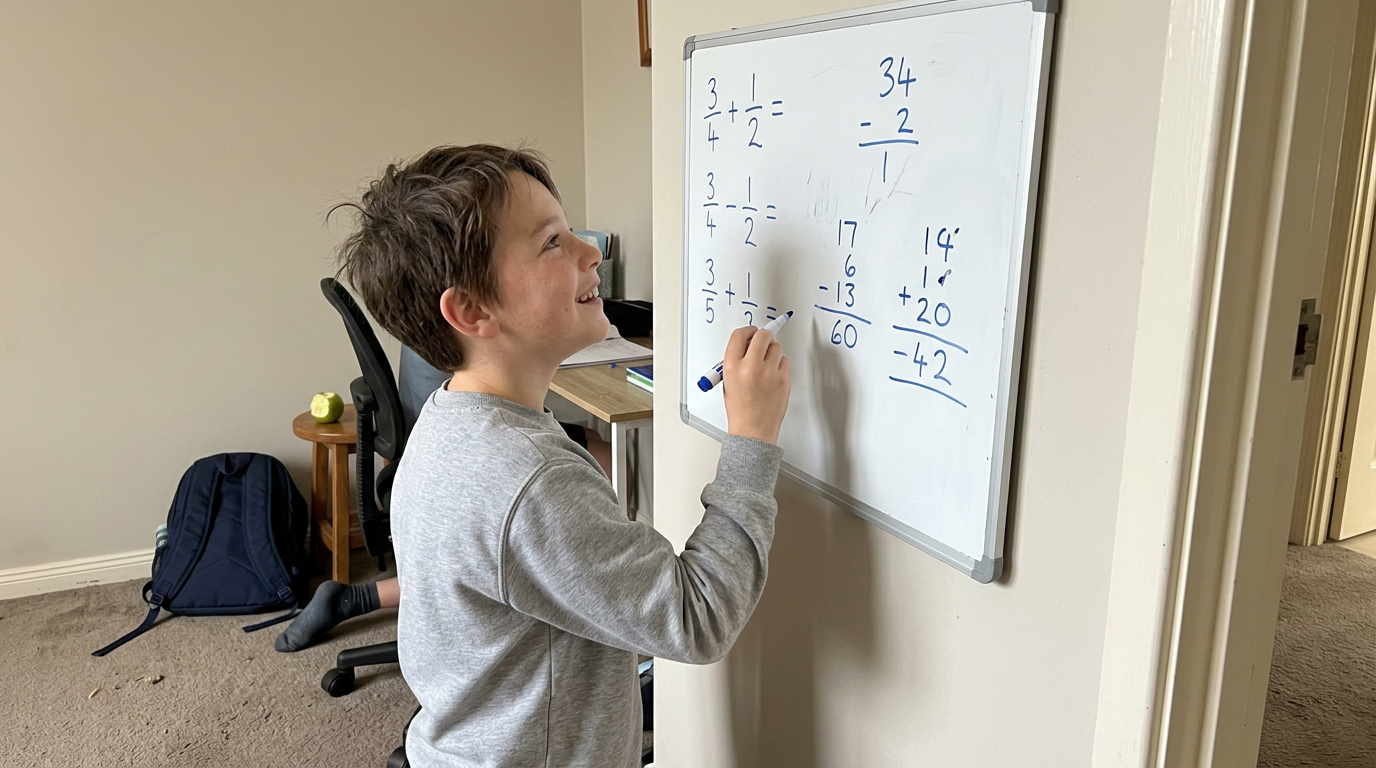
How do I listen to my child in a way that empowers them?
Listening to empower your child means hearing what they say without immediately fixing, judging, or redirecting. Children learn whether their voice matters from how the adults around them respond to it. If every time your child speaks you cut in to correct or solve, they internalise that their thinking isn't valuable. The repair is small but specific: when they start talking, stop what you're doing, turn your body toward them, and let them finish before you respond. Then ask one follow-up question that proves you were listening, before offering an opinion.
What it looks like: instead of "Yeah but you should have just told them," try "That's tricky — how did you decide what to do?". The first answer ends the conversation; the second extends it.
When not to use it: when safety is on the line ("I went swimming alone at the river"), the listening register is not enough — name the rule, then return to the listening register tomorrow. Empowerment doesn't override basic safety boundaries.
How do I help my child build real confidence?
Building real confidence is about giving your child tasks that are slightly harder than they think they can do, then letting them finish without rescuing. Praise for being smart or talented is fragile — it crumbles the moment they hit something hard. Praise for effort, persistence, and problem-solving is durable, because it's tied to what they did, not who they are. The household equivalent is real-world responsibility scaled to age: laying their own bed at five, packing their own school bag at eight, cooking one family dinner a week at twelve.
What it looks like across year levels:
- Years 1–4: they make their bed, pack their lunchbox, and choose their own clothes — even if it doesn't match.
- Years 5–8: they manage their school diary, book their own dentist appointment over the phone (with you in the room), and run one family chore weekly.
- Years 9–12: they fill out their own subject selections, write their own emails to teachers, and make their own GP appointment when sick.
When not to use it: if your child is in genuine emotional distress, this is not the moment to add a stretch task. Confidence is built when their nervous system is regulated, not when it's overloaded. If a confidence dip has lasted a full term, that's the moment for a tutor — not for more stretch tasks.
How do I let my child make their own decisions safely?
Letting your child make decisions is how they build the muscle of decision-making before the decisions get hard. The trick is to scale the stakes to age — small choices for small children, big choices for big children — and to let them live with the consequences as long as those consequences are not catastrophic. A six-year-old picking their own outfit and getting cold at the park learns more about cause-and-effect in one afternoon than a year of lectures. A sixteen-year-old picking the wrong elective and dropping it next term learns more about self-knowledge than any guidance counsellor session.
What it looks like: at the dinner table, instead of "Eat your peas," try "How much do you want — half a spoon or a full spoon?". You set the floor; they choose within it. Same dinner, completely different signal.
When not to use it: safety, school attendance, and bedtime are not negotiable. Empowerment doesn't mean democracy. The areas you hand over are the ones where the cost of a bad call is small and reversible.

How do I speak positively to my child without overpraising?
Speaking positively to your child means describing what they did rather than labelling who they are — and avoiding the lazy negatives ("naughty", "lazy", "bad at maths") that stick. Children believe what we tell them about themselves; "you're not a maths person" said in a tired moment becomes a self-narrative that follows them for years. The replacement is descriptive language: "that took you twenty minutes and you didn't give up — that's the part that matters". Same outcome, different signal. The praise is tied to effort and strategy, which they can repeat, not to ability, which they can't.
What to swap:
- Instead of "You're so smart," try "You worked through that problem really carefully."
- Instead of "Good girl," try "You remembered to take your hat — thanks."
- Instead of "You're useless at this," try "You haven't worked it out yet."
When not to use it: don't praise everything — children calibrate quickly to inflated praise and stop hearing it. Calibrated, descriptive feedback is what builds the inner voice.
How do I teach my child to solve problems themselves?
Teaching problem-solving is teaching a routine your child can run when they're stuck and you're not in the room. The routine has four steps: name the problem, list two possible moves, pick one and try it, check if it worked. Run it out loud the first ten times — "Right, the problem is the homework's due tomorrow and you don't get question 3. What are two things you could try?" — until they can run it themselves. The same routine works for an unfinished essay, an argument with a friend, or a maths problem they can't crack.
The four-step problem-solving routine:
- Name the problem. One sentence. "I don't understand fractions."
- List two moves. "I could re-watch the lesson, or I could ask the teacher tomorrow."
- Pick one and try it. "I'll re-watch tonight."
- Check if it worked. "Yes — got it. Or no — I'll go to plan B."
When not to use it: if your child is in tears, the four-step routine is not the right intervention — the right intervention is a hug, ten minutes, then come back to the routine when their nervous system has settled.
How do I encourage my child to pursue their own interests?
Encouraging your child's interests means backing the things they choose, even when those things are inconvenient — drum kit, niche sport, obscure hobby — and not subtly steering them toward the interests you wish you'd had. Children who feel their interests are respected develop a strong inner compass; children whose interests are constantly redirected develop chronic decision-paralysis. The signal you want to send is: "I see what you're choosing, I trust you to choose it, I'll help you go deep." Not "I see what you're choosing, but have you considered…".
What it looks like: if your Year 6 wants to spend Saturday afternoon learning to identify Australian birds, drive them to the park, hand them a field guide, and sit on the bench with a coffee. You don't need to share the interest; you need to make it possible.
When not to use it: interests that are dangerous, illegal, or genuinely consuming the rest of their life are areas to redirect, not to back. The default is back-it; the exception is reroute when there's a real problem.
When should I get extra help for my child's confidence?
Most empowerment work is done at home, week by week. But if your child has shrunk visibly across a term — opting out of things they used to love, going quiet at the dinner table, struggling with school work they used to enjoy — that's the signal to bring in a second adult who can rebuild the academic side of their confidence one win at a time. A good tutor restores the "I can do hard things" feeling faster than parental encouragement alone, because the wins are visible and the adult is independent. Personalised tutoring is built around exactly this loop — see the five benefits of one-to-one tutoring and how Tutero matches a tutor to your child from A$65/hr, no contracts.
The bottom line
Empowering your child is six small habits, run for years, that compound into a kid who knows what they think and bounces back from setbacks. Listen properly. Build real confidence through real responsibility. Hand over decisions sized to the consequence. Speak descriptively, not in labels. Teach the four-step problem-solving routine. Back the interests they choose. If their academic confidence has slipped beyond what evening routines can rebuild, a tutor who fits your child can do in eight weeks what parental encouragement alone takes a year to do.
Empowerment is not a personality trait you're born with; it's a stack of small skills built over years of being treated like a capable person.
Empowerment is not a personality trait you're born with; it's a stack of small skills built over years of being treated like a capable person.
Empowering your child means raising a person who knows what they think, can make a small decision under pressure, and bounces back when something goes wrong. Six habits below — listening, building real confidence, sharing decisions, framing language positively, teaching problem-solving, and backing their interests — do the bulk of the work across primary, lower-secondary, and senior years.
Empowerment is not a personality trait you're born with; it's a stack of small skills built over years of being treated like a capable person. The earlier you start, the easier each layer is to add — but children at every age can begin from where they are.
Quick answer
How can I empower my child? Listen properly when they speak so they know their voice counts, build real confidence by giving them tasks they can almost-but-not-quite do, hand over small daily decisions, replace negative labels with descriptions of effort, teach a problem-solving routine they can run on their own, and back their interests even when those interests are inconvenient. Empowerment compounds — six small habits across a year do more than one big intervention.
How do I listen to my child in a way that empowers them?
Listening to empower your child means hearing what they say without immediately fixing, judging, or redirecting. Children learn whether their voice matters from how the adults around them respond to it. If every time your child speaks you cut in to correct or solve, they internalise that their thinking isn't valuable. The repair is small but specific: when they start talking, stop what you're doing, turn your body toward them, and let them finish before you respond. Then ask one follow-up question that proves you were listening, before offering an opinion.
What it looks like: instead of "Yeah but you should have just told them," try "That's tricky — how did you decide what to do?". The first answer ends the conversation; the second extends it.
When not to use it: when safety is on the line ("I went swimming alone at the river"), the listening register is not enough — name the rule, then return to the listening register tomorrow. Empowerment doesn't override basic safety boundaries.
How do I help my child build real confidence?
Building real confidence is about giving your child tasks that are slightly harder than they think they can do, then letting them finish without rescuing. Praise for being smart or talented is fragile — it crumbles the moment they hit something hard. Praise for effort, persistence, and problem-solving is durable, because it's tied to what they did, not who they are. The household equivalent is real-world responsibility scaled to age: laying their own bed at five, packing their own school bag at eight, cooking one family dinner a week at twelve.
What it looks like across year levels:
- Years 1–4: they make their bed, pack their lunchbox, and choose their own clothes — even if it doesn't match.
- Years 5–8: they manage their school diary, book their own dentist appointment over the phone (with you in the room), and run one family chore weekly.
- Years 9–12: they fill out their own subject selections, write their own emails to teachers, and make their own GP appointment when sick.
When not to use it: if your child is in genuine emotional distress, this is not the moment to add a stretch task. Confidence is built when their nervous system is regulated, not when it's overloaded. If a confidence dip has lasted a full term, that's the moment for a tutor — not for more stretch tasks.
How do I let my child make their own decisions safely?
Letting your child make decisions is how they build the muscle of decision-making before the decisions get hard. The trick is to scale the stakes to age — small choices for small children, big choices for big children — and to let them live with the consequences as long as those consequences are not catastrophic. A six-year-old picking their own outfit and getting cold at the park learns more about cause-and-effect in one afternoon than a year of lectures. A sixteen-year-old picking the wrong elective and dropping it next term learns more about self-knowledge than any guidance counsellor session.
What it looks like: at the dinner table, instead of "Eat your peas," try "How much do you want — half a spoon or a full spoon?". You set the floor; they choose within it. Same dinner, completely different signal.
When not to use it: safety, school attendance, and bedtime are not negotiable. Empowerment doesn't mean democracy. The areas you hand over are the ones where the cost of a bad call is small and reversible.
How do I speak positively to my child without overpraising?
Speaking positively to your child means describing what they did rather than labelling who they are — and avoiding the lazy negatives ("naughty", "lazy", "bad at maths") that stick. Children believe what we tell them about themselves; "you're not a maths person" said in a tired moment becomes a self-narrative that follows them for years. The replacement is descriptive language: "that took you twenty minutes and you didn't give up — that's the part that matters". Same outcome, different signal. The praise is tied to effort and strategy, which they can repeat, not to ability, which they can't.
What to swap:
- Instead of "You're so smart," try "You worked through that problem really carefully."
- Instead of "Good girl," try "You remembered to take your hat — thanks."
- Instead of "You're useless at this," try "You haven't worked it out yet."
When not to use it: don't praise everything — children calibrate quickly to inflated praise and stop hearing it. Calibrated, descriptive feedback is what builds the inner voice.
How do I teach my child to solve problems themselves?
Teaching problem-solving is teaching a routine your child can run when they're stuck and you're not in the room. The routine has four steps: name the problem, list two possible moves, pick one and try it, check if it worked. Run it out loud the first ten times — "Right, the problem is the homework's due tomorrow and you don't get question 3. What are two things you could try?" — until they can run it themselves. The same routine works for an unfinished essay, an argument with a friend, or a maths problem they can't crack.
The four-step problem-solving routine:
- Name the problem. One sentence. "I don't understand fractions."
- List two moves. "I could re-watch the lesson, or I could ask the teacher tomorrow."
- Pick one and try it. "I'll re-watch tonight."
- Check if it worked. "Yes — got it. Or no — I'll go to plan B."
When not to use it: if your child is in tears, the four-step routine is not the right intervention — the right intervention is a hug, ten minutes, then come back to the routine when their nervous system has settled.
How do I encourage my child to pursue their own interests?
Encouraging your child's interests means backing the things they choose, even when those things are inconvenient — drum kit, niche sport, obscure hobby — and not subtly steering them toward the interests you wish you'd had. Children who feel their interests are respected develop a strong inner compass; children whose interests are constantly redirected develop chronic decision-paralysis. The signal you want to send is: "I see what you're choosing, I trust you to choose it, I'll help you go deep." Not "I see what you're choosing, but have you considered…".
What it looks like: if your Year 6 wants to spend Saturday afternoon learning to identify Australian birds, drive them to the park, hand them a field guide, and sit on the bench with a coffee. You don't need to share the interest; you need to make it possible.
When not to use it: interests that are dangerous, illegal, or genuinely consuming the rest of their life are areas to redirect, not to back. The default is back-it; the exception is reroute when there's a real problem.
When should I get extra help for my child's confidence?
Most empowerment work is done at home, week by week. But if your child has shrunk visibly across a term — opting out of things they used to love, going quiet at the dinner table, struggling with school work they used to enjoy — that's the signal to bring in a second adult who can rebuild the academic side of their confidence one win at a time. A good tutor restores the "I can do hard things" feeling faster than parental encouragement alone, because the wins are visible and the adult is independent. Personalised tutoring is built around exactly this loop — see the five benefits of one-to-one tutoring and how Tutero matches a tutor to your child from A$65/hr, no contracts.
The bottom line
Empowering your child is six small habits, run for years, that compound into a kid who knows what they think and bounces back from setbacks. Listen properly. Build real confidence through real responsibility. Hand over decisions sized to the consequence. Speak descriptively, not in labels. Teach the four-step problem-solving routine. Back the interests they choose. If their academic confidence has slipped beyond what evening routines can rebuild, a tutor who fits your child can do in eight weeks what parental encouragement alone takes a year to do.
Empowerment is not a personality trait you're born with; it's a stack of small skills built over years of being treated like a capable person.
Empowerment is not a personality trait you're born with; it's a stack of small skills built over years of being treated like a capable person.

Empowerment is not a personality trait you're born with; it's a stack of small skills built over years of being treated like a capable person.
Empowerment compounds — six small habits across a year do more than one big intervention.
Empowering your child means raising a person who knows what they think, can make a small decision under pressure, and bounces back when something goes wrong. Six habits below — listening, building real confidence, sharing decisions, framing language positively, teaching problem-solving, and backing their interests — do the bulk of the work across primary, lower-secondary, and senior years.
Empowerment is not a personality trait you're born with; it's a stack of small skills built over years of being treated like a capable person. The earlier you start, the easier each layer is to add — but children at every age can begin from where they are.
Quick answer
How can I empower my child? Listen properly when they speak so they know their voice counts, build real confidence by giving them tasks they can almost-but-not-quite do, hand over small daily decisions, replace negative labels with descriptions of effort, teach a problem-solving routine they can run on their own, and back their interests even when those interests are inconvenient. Empowerment compounds — six small habits across a year do more than one big intervention.
How do I listen to my child in a way that empowers them?
Listening to empower your child means hearing what they say without immediately fixing, judging, or redirecting. Children learn whether their voice matters from how the adults around them respond to it. If every time your child speaks you cut in to correct or solve, they internalise that their thinking isn't valuable. The repair is small but specific: when they start talking, stop what you're doing, turn your body toward them, and let them finish before you respond. Then ask one follow-up question that proves you were listening, before offering an opinion.
What it looks like: instead of "Yeah but you should have just told them," try "That's tricky — how did you decide what to do?". The first answer ends the conversation; the second extends it.
When not to use it: when safety is on the line ("I went swimming alone at the river"), the listening register is not enough — name the rule, then return to the listening register tomorrow. Empowerment doesn't override basic safety boundaries.
How do I help my child build real confidence?
Building real confidence is about giving your child tasks that are slightly harder than they think they can do, then letting them finish without rescuing. Praise for being smart or talented is fragile — it crumbles the moment they hit something hard. Praise for effort, persistence, and problem-solving is durable, because it's tied to what they did, not who they are. The household equivalent is real-world responsibility scaled to age: laying their own bed at five, packing their own school bag at eight, cooking one family dinner a week at twelve.
What it looks like across year levels:
- Years 1–4: they make their bed, pack their lunchbox, and choose their own clothes — even if it doesn't match.
- Years 5–8: they manage their school diary, book their own dentist appointment over the phone (with you in the room), and run one family chore weekly.
- Years 9–12: they fill out their own subject selections, write their own emails to teachers, and make their own GP appointment when sick.
When not to use it: if your child is in genuine emotional distress, this is not the moment to add a stretch task. Confidence is built when their nervous system is regulated, not when it's overloaded. If a confidence dip has lasted a full term, that's the moment for a tutor — not for more stretch tasks.
How do I let my child make their own decisions safely?
Letting your child make decisions is how they build the muscle of decision-making before the decisions get hard. The trick is to scale the stakes to age — small choices for small children, big choices for big children — and to let them live with the consequences as long as those consequences are not catastrophic. A six-year-old picking their own outfit and getting cold at the park learns more about cause-and-effect in one afternoon than a year of lectures. A sixteen-year-old picking the wrong elective and dropping it next term learns more about self-knowledge than any guidance counsellor session.
What it looks like: at the dinner table, instead of "Eat your peas," try "How much do you want — half a spoon or a full spoon?". You set the floor; they choose within it. Same dinner, completely different signal.
When not to use it: safety, school attendance, and bedtime are not negotiable. Empowerment doesn't mean democracy. The areas you hand over are the ones where the cost of a bad call is small and reversible.
How do I speak positively to my child without overpraising?
Speaking positively to your child means describing what they did rather than labelling who they are — and avoiding the lazy negatives ("naughty", "lazy", "bad at maths") that stick. Children believe what we tell them about themselves; "you're not a maths person" said in a tired moment becomes a self-narrative that follows them for years. The replacement is descriptive language: "that took you twenty minutes and you didn't give up — that's the part that matters". Same outcome, different signal. The praise is tied to effort and strategy, which they can repeat, not to ability, which they can't.
What to swap:
- Instead of "You're so smart," try "You worked through that problem really carefully."
- Instead of "Good girl," try "You remembered to take your hat — thanks."
- Instead of "You're useless at this," try "You haven't worked it out yet."
When not to use it: don't praise everything — children calibrate quickly to inflated praise and stop hearing it. Calibrated, descriptive feedback is what builds the inner voice.
How do I teach my child to solve problems themselves?
Teaching problem-solving is teaching a routine your child can run when they're stuck and you're not in the room. The routine has four steps: name the problem, list two possible moves, pick one and try it, check if it worked. Run it out loud the first ten times — "Right, the problem is the homework's due tomorrow and you don't get question 3. What are two things you could try?" — until they can run it themselves. The same routine works for an unfinished essay, an argument with a friend, or a maths problem they can't crack.
The four-step problem-solving routine:
- Name the problem. One sentence. "I don't understand fractions."
- List two moves. "I could re-watch the lesson, or I could ask the teacher tomorrow."
- Pick one and try it. "I'll re-watch tonight."
- Check if it worked. "Yes — got it. Or no — I'll go to plan B."
When not to use it: if your child is in tears, the four-step routine is not the right intervention — the right intervention is a hug, ten minutes, then come back to the routine when their nervous system has settled.
How do I encourage my child to pursue their own interests?
Encouraging your child's interests means backing the things they choose, even when those things are inconvenient — drum kit, niche sport, obscure hobby — and not subtly steering them toward the interests you wish you'd had. Children who feel their interests are respected develop a strong inner compass; children whose interests are constantly redirected develop chronic decision-paralysis. The signal you want to send is: "I see what you're choosing, I trust you to choose it, I'll help you go deep." Not "I see what you're choosing, but have you considered…".
What it looks like: if your Year 6 wants to spend Saturday afternoon learning to identify Australian birds, drive them to the park, hand them a field guide, and sit on the bench with a coffee. You don't need to share the interest; you need to make it possible.
When not to use it: interests that are dangerous, illegal, or genuinely consuming the rest of their life are areas to redirect, not to back. The default is back-it; the exception is reroute when there's a real problem.
When should I get extra help for my child's confidence?
Most empowerment work is done at home, week by week. But if your child has shrunk visibly across a term — opting out of things they used to love, going quiet at the dinner table, struggling with school work they used to enjoy — that's the signal to bring in a second adult who can rebuild the academic side of their confidence one win at a time. A good tutor restores the "I can do hard things" feeling faster than parental encouragement alone, because the wins are visible and the adult is independent. Personalised tutoring is built around exactly this loop — see the five benefits of one-to-one tutoring and how Tutero matches a tutor to your child from A$65/hr, no contracts.
The bottom line
Empowering your child is six small habits, run for years, that compound into a kid who knows what they think and bounces back from setbacks. Listen properly. Build real confidence through real responsibility. Hand over decisions sized to the consequence. Speak descriptively, not in labels. Teach the four-step problem-solving routine. Back the interests they choose. If their academic confidence has slipped beyond what evening routines can rebuild, a tutor who fits your child can do in eight weeks what parental encouragement alone takes a year to do.
Empowerment is not a personality trait you're born with; it's a stack of small skills built over years of being treated like a capable person.
Empowerment compounds — six small habits across a year do more than one big intervention.
.svg)
.svg)
Praise tells your child what you think of them; empowerment gives them the chance to find out what they think of themselves. Praise ("you're so smart") is fragile — it crumbles the first time they hit something hard. Empowerment is a slow build of small responsibilities (lay the bed, pack the lunchbox, manage the diary, book the appointment) that prove to your child, in their own evidence, that they can do hard things.
Start now, at whatever age they are. A four-year-old chooses between two outfits; an eight-year-old packs their own school bag; a twelve-year-old manages their own diary; a sixteen-year-old fills their own subject form. The earlier you start the easier each layer is, but children at every age can begin from where they are — pick the next age-appropriate responsibility and hand it over this week.
A tutor builds confidence in the place parents can't always reach: the academic side. When a child has been told for a term that they're "not a maths person", parental encouragement helps but doesn't quite move it. A tutor delivers visible, repeated wins on the same subject — a fraction problem solved, then ten, then twenty — and the inner narrative shifts from "I can't" to "I haven't yet." Tutero matches the tutor to your child by personality and subject, from A$65/hr.
Hoping to improve confidence & grades?

.png)


