
.svg)

Melbourne has more tutoring options than ever — and choosing wrongly costs more than money. The right tutor lifts a confident grade or takes the panic out of VCE; the wrong one quietly drains an evening a week with no real progress. Here's how Melbourne parents — from the inner east to the bayside suburbs to the Mornington Peninsula — work out which route fits, what to ask before the first lesson, and the five questions that catch a mismatch early, whether your child is in Year 1 or Year 12.
Quick answer: How do you find the right tutor in Melbourne?
Most Melbourne parents land on one of three routes: a managed online tutoring service that vets and matches a tutor for you (Tutero and Cluey Learning are the largest), a marketplace where you browse and book directly (Superprof, Tutor Finder, Learnmate), or an in-centre franchise like Kip McGrath. The right one depends on your child's year level, how much vetting you want to do yourself, and how flexible lessons need to be — whether you're after Year 2 phonics support, NAPLAN preparation, or VCE-level help.
What are the three main routes to finding a tutor in Melbourne?
Melbourne tutoring covers every year level — Year 1 phonics, primary maths confidence, NAPLAN preparation in Year 3, 5, 7, and 9, lower-secondary essay writing, and senior VCE subjects (more than 50,000 Victorian students sit VCE each year). The route that fits depends mostly on how much vetting the parent wants to do. Three working categories to know.
Managed online tutoring. A service screens, trains, and matches a tutor to your child. You pay an hourly rate, the service handles the admin, and if the match isn't right they swap the tutor without restarting the search. Best for parents who want one decision instead of fifty.
Marketplaces and directories. You browse public tutor profiles and contact them directly. Hourly rates can look cheaper, but you're doing all the vetting — credential checks, Working with Children Check checks, lesson-quality monitoring. Best for parents who already know what good teaching looks like and have the time to manage it.
In-centre franchises. Your child attends a small-group lesson at a local centre. Lower per-hour cost, fixed weekly schedule, and no online setup. Worth considering for younger primary students who prefer learning in a room rather than at a screen.
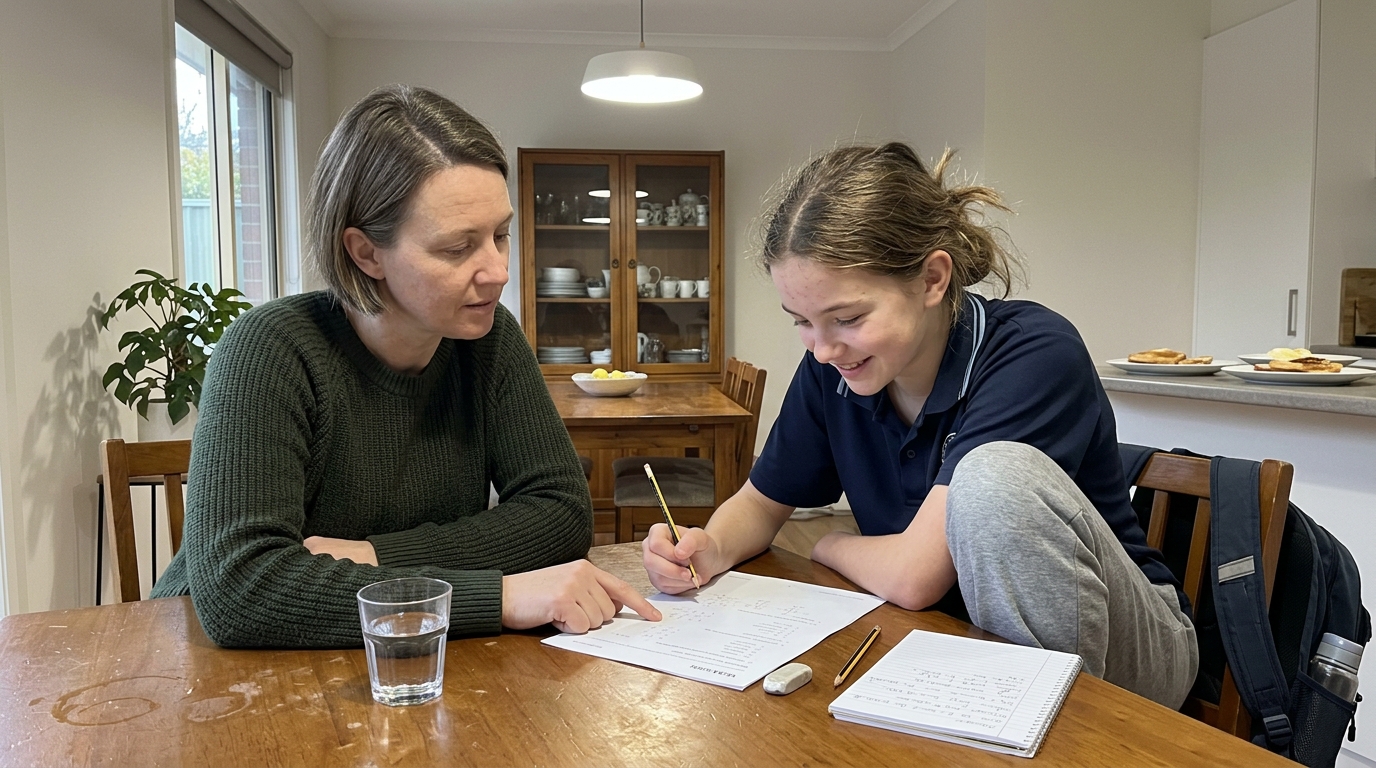
Where do Melbourne parents actually find tutors?
The "three routes" framing is the shape; the actual channels are broader. Six places worth knowing.
Managed online tutoring services
This is the largest category across every year level — primary literacy and numeracy, NAPLAN preparation, lower-secondary essay writing, VCE senior subjects — when parents want one decision instead of fifty. You fill out a short form, an account manager calls within 24 hours, and a tutor is matched to your child. The trade-off: you pay for the matching layer, but you skip the vetting risk entirely. Tutero sits in this category — qualified Australian tutors, no contracts, billed after each lesson rather than upfront. Online means it doesn't matter which Melbourne suburb you're in — from Brighton down to Frankston, from Toorak out to Box Hill, the matching pool is the same. Subject-level pages such as Melbourne chemistry tutoring go deeper on senior subjects.
Tutoring marketplaces
Public profiles, public reviews, public prices. You contact tutors yourself. The catch is that screening rigour varies wildly between platforms, and the lowest-priced profiles often involve overseas tutors unfamiliar with the Victorian Curriculum. Worth using only if you have the time to do the credential checks, the Working with Children Check checks, and the first-lesson quality assessment yourself.
Local in-centre franchises
In-centre tutoring runs as small-group lessons at a local centre. Weekly to a fixed schedule, lessons follow the centre's own progress framework rather than your child's school content. Useful for younger primary students who prefer learning in a room rather than at a screen, though most Melbourne families with a specific subject or year-level goal end up choosing 1-on-1 instead. Major franchise networks run centres in Glen Waverley, Doncaster, Camberwell, Brighton, Werribee, and a handful of inner-suburban locations.
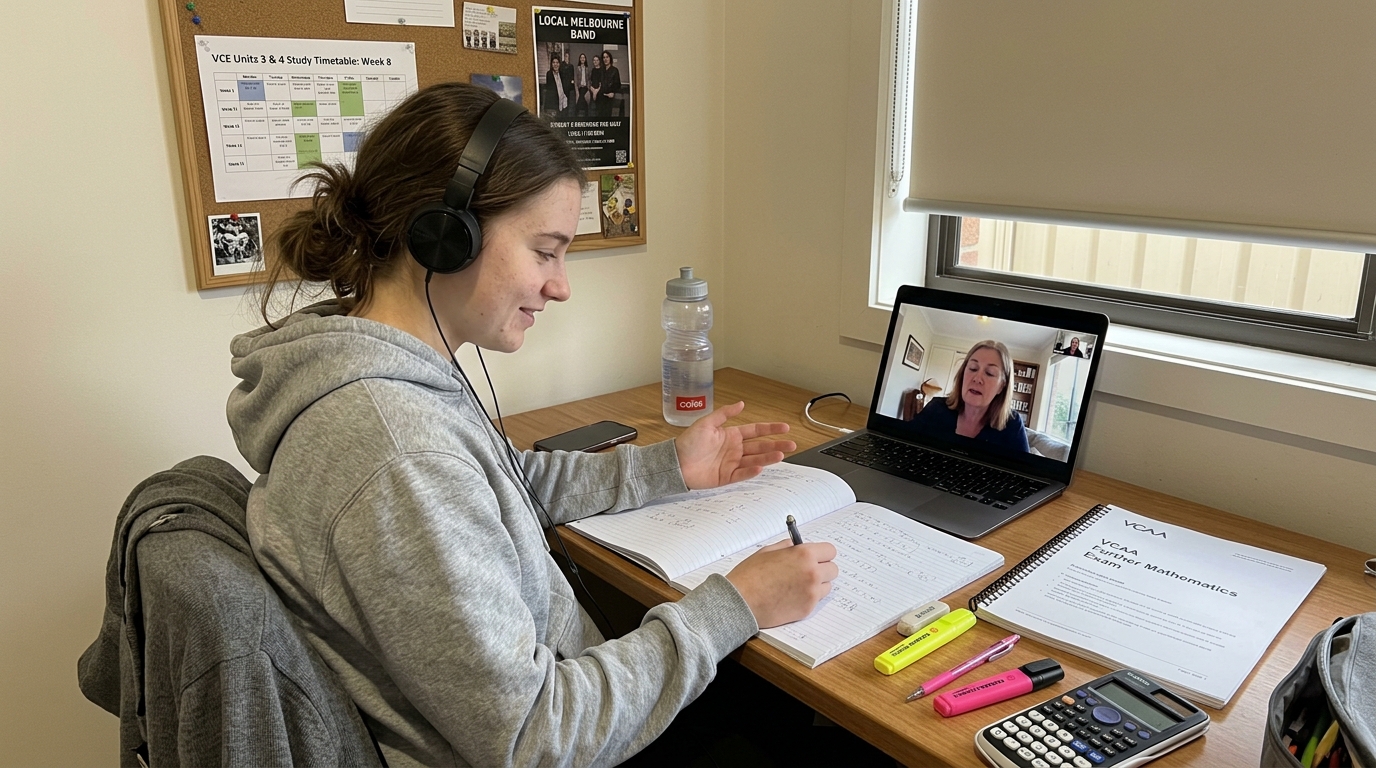
Year-level specialists
Some Melbourne tutoring businesses focus on a single age band — primary literacy and numeracy specialists running through phonics and times-table fluency, NAPLAN-prep tutors for Year 3, 5, 7, and 9, or Year 11 and 12 VCE specialists working through Maths Methods, Chemistry, Physics, and English. They tend to be smaller, run by ex-teachers, and the lessons follow the year-level curriculum closely. Worth knowing about for any specific cohort goal — a confident reading transition in Year 1, a Year 5 NAPLAN target, or a Year 12 VCE study score aggregate.
School-recommended tutors
Many Melbourne schools, both primary and secondary, maintain informal lists of past students or staff who tutor on the side. The academic-pressure schools in particular — Melbourne High, MacRobertson Girls', Mac.Robertson, Nossal, Suzanne Cory, Glen Waverley Secondary — and the GPS and APS schools across the inner suburbs often have staff who recommend named tutors when families ask. Ask the year-level coordinator or the front office. The trust comes from the school knowing the person, not from any formal vetting — so still ask the same vetting questions you would of any tutor before the first lesson.
Word-of-mouth
Local Melbourne parent groups — the inner-east networks (Hawthorn, Camberwell, Kew), the bayside ones (Brighton, Hampton, Sandringham), and the eastern-suburbs belt (Glen Waverley, Box Hill, Mount Waverley) — plus school P&F networks and family friends. Often the cheapest option and often the most variable — a tutor great for one student can be wrong for the next. Ask the recommending parent what changed for their child specifically before you take it as a recommendation. "My friend's tutor is really nice" is not the same as "my friend's child went from struggling with reading in Year 2 to reading independently within a term."
How much does a tutor in Melbourne cost?
Most qualified Melbourne tutors charge between A$55 and A$85 an hour. Tutero starts at A$65 an hour for online tutoring with a qualified Australian tutor — the same rate whether your child is in primary school working on Year 4 maths, in Year 7 building essay-writing, or in Year 12 preparing for VCE. In-person rates can run higher if a tutor needs to travel — particularly into the inner-east bayside corridor or out to the Mornington Peninsula — which is one reason most Melbourne families now choose online instead. Cheaper rates exist on open marketplaces, but those listings come with no screening, no Working with Children Check verification, and no recourse if a lesson doesn't happen — you're hiring a stranger directly. Travel time is the reason online suits outer suburbs too, including tutoring for Point Cook families.
The hourly rate is the same across most year levels. What changes is how the lesson is used: a Year 4 student might focus on confidence and number sense; a Year 8 student on essay structure or the topics that didn't land in class; a Year 12 student on past VCE Maths, VCE Chemistry, or VCE English exams and exam timing. Group sessions at an in-centre franchise can run lower per child, but you trade per-child attention for the price drop.
Are Melbourne tutors worth it?
For most Melbourne families with a specific academic goal — primary, secondary, or senior — yes, provided three conditions are met: the tutor knows the Victorian Curriculum at your child's year level (and the VCAA study designs if your child is in VCE), the lesson cadence is at least weekly, and you sit in on the first lesson to confirm the teaching style fits your child. Without all three, a tutor turns into another expense rather than a result.
The most common way Melbourne families misuse tutoring is treating it as homework supervision. Homework supervision costs A$30 an hour from a uni student; a real tutor diagnoses what your child doesn't yet understand and rebuilds it. If the lesson is just "do your homework with someone watching", the format isn't doing its job — at any year level.
How do you vet a Melbourne tutor before you commit?
Five questions to ask before the first lesson. The answers reveal more than any qualification list — at any year level.
- 1. Which year levels and curriculum have you taught the most? Look for the Victorian Curriculum at your child's year level (or specific VCAA VCE study designs for senior students). A primary tutor should be specific about phonics method, number-sense routines, and how they rebuild a child who has lost confidence; a senior tutor should be specific about VCAA VCE units.
- 2. What's your Working with Children Check status? Every tutor working with a Melbourne student under 18 needs a current Victorian Working with Children Check. The answer should be specific (a card number is fine; "I'm in the process" isn't).
- 3. What does a normal lesson with you look like? A good answer mentions a brief diagnostic at the start, focused work on the weakest concept, a worked example, and a homework-style question for the student to attempt. A vague answer ("we go through whatever they need help with") is a red flag.
- 4. How will I know it's working in three weeks? Listen for specifics — a numerical assessment, a self-marked practice paper, a topic that's gone from "I don't get it" to "I can teach it back." Vague answers about "more confidence" are not enough.
- 5. What happens if my child and you don't click? A managed service should swap tutors at no charge. An independent tutor should be honest that the wrong fit ends the engagement — not pretend everyone clicks with everyone.
The clearest sign you've found the right Melbourne tutor: your child volunteers a question about the subject between lessons. That's the marker that the tutor has rebuilt confidence, not just covered material — true whether they're in Year 2 at a local primary school or in Year 12 at Melbourne High, Mac.Rob, or any of the inner-east academic schools.
What about the disadvantages?
The honest version: online tutoring works across every year level once the lesson format fits the child. For Year 1–4 students new to the format, shorter 30-minute sessions with a parent in the room for the first few lessons make the screen feel manageable; older students can go straight to 60-minute lessons on their own. The standard concerns — connection issues, screen fatigue, and "not as engaging as in person" — are real but solvable: a wired headset, lessons before screen-fatigue hours, and a tutor who uses an interactive whiteboard rather than just talking at the camera.
The underrated risk is starting too late, at any year level. A Year 3 student struggling with reading in October is far easier to support than a Year 5 student who's quietly fallen behind for two years. Families who wait until Term 3 of Year 12 to find a tutor for VCE Maths Methods are buying crisis management, not preparation. Whatever year your child is in, start tutoring before the gap shows up on a report card — the first month is diagnosis, the second is rebuilding, and from there the tutor is actually building forward.
Related reading
For parents weighing format, online tutoring vs in-person tutoring in Australia covers the trade-offs in detail. For Year 3, 5, 7, or 9 students, how to find a reliable NAPLAN tutor is the natural next step. For families weighing whether the spend is worth it, how much does maths tutoring cost in Australia walks through the bands. And for sister-city context, finding the ideal tutor in Brisbane and finding the right tutor in Perth follow the same shape.
The bottom line
Finding a tutor in Melbourne comes down to one trade-off: how much vetting you want to do yourself versus how much you'd rather pay a service to do it for you. Marketplaces are cheaper but you become the matching layer; managed services cost more per hour but you make one decision instead of fifty. If you'd like a Melbourne tutor matched to your child — anywhere from the inner east to bayside to the Mornington Peninsula, in any year level from primary to VCE — Tutero's matched online tutoring is the route most Melbourne families take. No contracts; you're billed after each lesson, not before.
The clearest sign you have found the right Melbourne tutor: your child volunteers a question about the subject between lessons.
The clearest sign you have found the right Melbourne tutor: your child volunteers a question about the subject between lessons.
Melbourne has more tutoring options than ever — and choosing wrongly costs more than money. The right tutor lifts a confident grade or takes the panic out of VCE; the wrong one quietly drains an evening a week with no real progress. Here's how Melbourne parents — from the inner east to the bayside suburbs to the Mornington Peninsula — work out which route fits, what to ask before the first lesson, and the five questions that catch a mismatch early, whether your child is in Year 1 or Year 12.
Quick answer: How do you find the right tutor in Melbourne?
Most Melbourne parents land on one of three routes: a managed online tutoring service that vets and matches a tutor for you (Tutero and Cluey Learning are the largest), a marketplace where you browse and book directly (Superprof, Tutor Finder, Learnmate), or an in-centre franchise like Kip McGrath. The right one depends on your child's year level, how much vetting you want to do yourself, and how flexible lessons need to be — whether you're after Year 2 phonics support, NAPLAN preparation, or VCE-level help.
What are the three main routes to finding a tutor in Melbourne?
Melbourne tutoring covers every year level — Year 1 phonics, primary maths confidence, NAPLAN preparation in Year 3, 5, 7, and 9, lower-secondary essay writing, and senior VCE subjects (more than 50,000 Victorian students sit VCE each year). The route that fits depends mostly on how much vetting the parent wants to do. Three working categories to know.
Managed online tutoring. A service screens, trains, and matches a tutor to your child. You pay an hourly rate, the service handles the admin, and if the match isn't right they swap the tutor without restarting the search. Best for parents who want one decision instead of fifty.
Marketplaces and directories. You browse public tutor profiles and contact them directly. Hourly rates can look cheaper, but you're doing all the vetting — credential checks, Working with Children Check checks, lesson-quality monitoring. Best for parents who already know what good teaching looks like and have the time to manage it.
In-centre franchises. Your child attends a small-group lesson at a local centre. Lower per-hour cost, fixed weekly schedule, and no online setup. Worth considering for younger primary students who prefer learning in a room rather than at a screen.
Where do Melbourne parents actually find tutors?
The "three routes" framing is the shape; the actual channels are broader. Six places worth knowing.
Managed online tutoring services
This is the largest category across every year level — primary literacy and numeracy, NAPLAN preparation, lower-secondary essay writing, VCE senior subjects — when parents want one decision instead of fifty. You fill out a short form, an account manager calls within 24 hours, and a tutor is matched to your child. The trade-off: you pay for the matching layer, but you skip the vetting risk entirely. Tutero sits in this category — qualified Australian tutors, no contracts, billed after each lesson rather than upfront. Online means it doesn't matter which Melbourne suburb you're in — from Brighton down to Frankston, from Toorak out to Box Hill, the matching pool is the same. Subject-level pages such as Melbourne chemistry tutoring go deeper on senior subjects.
Tutoring marketplaces
Public profiles, public reviews, public prices. You contact tutors yourself. The catch is that screening rigour varies wildly between platforms, and the lowest-priced profiles often involve overseas tutors unfamiliar with the Victorian Curriculum. Worth using only if you have the time to do the credential checks, the Working with Children Check checks, and the first-lesson quality assessment yourself.
Local in-centre franchises
In-centre tutoring runs as small-group lessons at a local centre. Weekly to a fixed schedule, lessons follow the centre's own progress framework rather than your child's school content. Useful for younger primary students who prefer learning in a room rather than at a screen, though most Melbourne families with a specific subject or year-level goal end up choosing 1-on-1 instead. Major franchise networks run centres in Glen Waverley, Doncaster, Camberwell, Brighton, Werribee, and a handful of inner-suburban locations.
Year-level specialists
Some Melbourne tutoring businesses focus on a single age band — primary literacy and numeracy specialists running through phonics and times-table fluency, NAPLAN-prep tutors for Year 3, 5, 7, and 9, or Year 11 and 12 VCE specialists working through Maths Methods, Chemistry, Physics, and English. They tend to be smaller, run by ex-teachers, and the lessons follow the year-level curriculum closely. Worth knowing about for any specific cohort goal — a confident reading transition in Year 1, a Year 5 NAPLAN target, or a Year 12 VCE study score aggregate.
School-recommended tutors
Many Melbourne schools, both primary and secondary, maintain informal lists of past students or staff who tutor on the side. The academic-pressure schools in particular — Melbourne High, MacRobertson Girls', Mac.Robertson, Nossal, Suzanne Cory, Glen Waverley Secondary — and the GPS and APS schools across the inner suburbs often have staff who recommend named tutors when families ask. Ask the year-level coordinator or the front office. The trust comes from the school knowing the person, not from any formal vetting — so still ask the same vetting questions you would of any tutor before the first lesson.
Word-of-mouth
Local Melbourne parent groups — the inner-east networks (Hawthorn, Camberwell, Kew), the bayside ones (Brighton, Hampton, Sandringham), and the eastern-suburbs belt (Glen Waverley, Box Hill, Mount Waverley) — plus school P&F networks and family friends. Often the cheapest option and often the most variable — a tutor great for one student can be wrong for the next. Ask the recommending parent what changed for their child specifically before you take it as a recommendation. "My friend's tutor is really nice" is not the same as "my friend's child went from struggling with reading in Year 2 to reading independently within a term."
How much does a tutor in Melbourne cost?
Most qualified Melbourne tutors charge between A$55 and A$85 an hour. Tutero starts at A$65 an hour for online tutoring with a qualified Australian tutor — the same rate whether your child is in primary school working on Year 4 maths, in Year 7 building essay-writing, or in Year 12 preparing for VCE. In-person rates can run higher if a tutor needs to travel — particularly into the inner-east bayside corridor or out to the Mornington Peninsula — which is one reason most Melbourne families now choose online instead. Cheaper rates exist on open marketplaces, but those listings come with no screening, no Working with Children Check verification, and no recourse if a lesson doesn't happen — you're hiring a stranger directly. Travel time is the reason online suits outer suburbs too, including tutoring for Point Cook families.
The hourly rate is the same across most year levels. What changes is how the lesson is used: a Year 4 student might focus on confidence and number sense; a Year 8 student on essay structure or the topics that didn't land in class; a Year 12 student on past VCE Maths, VCE Chemistry, or VCE English exams and exam timing. Group sessions at an in-centre franchise can run lower per child, but you trade per-child attention for the price drop.
Are Melbourne tutors worth it?
For most Melbourne families with a specific academic goal — primary, secondary, or senior — yes, provided three conditions are met: the tutor knows the Victorian Curriculum at your child's year level (and the VCAA study designs if your child is in VCE), the lesson cadence is at least weekly, and you sit in on the first lesson to confirm the teaching style fits your child. Without all three, a tutor turns into another expense rather than a result.
The most common way Melbourne families misuse tutoring is treating it as homework supervision. Homework supervision costs A$30 an hour from a uni student; a real tutor diagnoses what your child doesn't yet understand and rebuilds it. If the lesson is just "do your homework with someone watching", the format isn't doing its job — at any year level.
How do you vet a Melbourne tutor before you commit?
Five questions to ask before the first lesson. The answers reveal more than any qualification list — at any year level.
- 1. Which year levels and curriculum have you taught the most? Look for the Victorian Curriculum at your child's year level (or specific VCAA VCE study designs for senior students). A primary tutor should be specific about phonics method, number-sense routines, and how they rebuild a child who has lost confidence; a senior tutor should be specific about VCAA VCE units.
- 2. What's your Working with Children Check status? Every tutor working with a Melbourne student under 18 needs a current Victorian Working with Children Check. The answer should be specific (a card number is fine; "I'm in the process" isn't).
- 3. What does a normal lesson with you look like? A good answer mentions a brief diagnostic at the start, focused work on the weakest concept, a worked example, and a homework-style question for the student to attempt. A vague answer ("we go through whatever they need help with") is a red flag.
- 4. How will I know it's working in three weeks? Listen for specifics — a numerical assessment, a self-marked practice paper, a topic that's gone from "I don't get it" to "I can teach it back." Vague answers about "more confidence" are not enough.
- 5. What happens if my child and you don't click? A managed service should swap tutors at no charge. An independent tutor should be honest that the wrong fit ends the engagement — not pretend everyone clicks with everyone.
The clearest sign you've found the right Melbourne tutor: your child volunteers a question about the subject between lessons. That's the marker that the tutor has rebuilt confidence, not just covered material — true whether they're in Year 2 at a local primary school or in Year 12 at Melbourne High, Mac.Rob, or any of the inner-east academic schools.
What about the disadvantages?
The honest version: online tutoring works across every year level once the lesson format fits the child. For Year 1–4 students new to the format, shorter 30-minute sessions with a parent in the room for the first few lessons make the screen feel manageable; older students can go straight to 60-minute lessons on their own. The standard concerns — connection issues, screen fatigue, and "not as engaging as in person" — are real but solvable: a wired headset, lessons before screen-fatigue hours, and a tutor who uses an interactive whiteboard rather than just talking at the camera.
The underrated risk is starting too late, at any year level. A Year 3 student struggling with reading in October is far easier to support than a Year 5 student who's quietly fallen behind for two years. Families who wait until Term 3 of Year 12 to find a tutor for VCE Maths Methods are buying crisis management, not preparation. Whatever year your child is in, start tutoring before the gap shows up on a report card — the first month is diagnosis, the second is rebuilding, and from there the tutor is actually building forward.
Related reading
For parents weighing format, online tutoring vs in-person tutoring in Australia covers the trade-offs in detail. For Year 3, 5, 7, or 9 students, how to find a reliable NAPLAN tutor is the natural next step. For families weighing whether the spend is worth it, how much does maths tutoring cost in Australia walks through the bands. And for sister-city context, finding the ideal tutor in Brisbane and finding the right tutor in Perth follow the same shape.
The bottom line
Finding a tutor in Melbourne comes down to one trade-off: how much vetting you want to do yourself versus how much you'd rather pay a service to do it for you. Marketplaces are cheaper but you become the matching layer; managed services cost more per hour but you make one decision instead of fifty. If you'd like a Melbourne tutor matched to your child — anywhere from the inner east to bayside to the Mornington Peninsula, in any year level from primary to VCE — Tutero's matched online tutoring is the route most Melbourne families take. No contracts; you're billed after each lesson, not before.
The clearest sign you have found the right Melbourne tutor: your child volunteers a question about the subject between lessons.
The clearest sign you have found the right Melbourne tutor: your child volunteers a question about the subject between lessons.

The clearest sign you have found the right Melbourne tutor: your child volunteers a question about the subject between lessons.
Whatever year your child is in, start tutoring before the gap shows up on a report card — not after.
Melbourne has more tutoring options than ever — and choosing wrongly costs more than money. The right tutor lifts a confident grade or takes the panic out of VCE; the wrong one quietly drains an evening a week with no real progress. Here's how Melbourne parents — from the inner east to the bayside suburbs to the Mornington Peninsula — work out which route fits, what to ask before the first lesson, and the five questions that catch a mismatch early, whether your child is in Year 1 or Year 12.
Quick answer: How do you find the right tutor in Melbourne?
Most Melbourne parents land on one of three routes: a managed online tutoring service that vets and matches a tutor for you (Tutero and Cluey Learning are the largest), a marketplace where you browse and book directly (Superprof, Tutor Finder, Learnmate), or an in-centre franchise like Kip McGrath. The right one depends on your child's year level, how much vetting you want to do yourself, and how flexible lessons need to be — whether you're after Year 2 phonics support, NAPLAN preparation, or VCE-level help.
What are the three main routes to finding a tutor in Melbourne?
Melbourne tutoring covers every year level — Year 1 phonics, primary maths confidence, NAPLAN preparation in Year 3, 5, 7, and 9, lower-secondary essay writing, and senior VCE subjects (more than 50,000 Victorian students sit VCE each year). The route that fits depends mostly on how much vetting the parent wants to do. Three working categories to know.
Managed online tutoring. A service screens, trains, and matches a tutor to your child. You pay an hourly rate, the service handles the admin, and if the match isn't right they swap the tutor without restarting the search. Best for parents who want one decision instead of fifty.
Marketplaces and directories. You browse public tutor profiles and contact them directly. Hourly rates can look cheaper, but you're doing all the vetting — credential checks, Working with Children Check checks, lesson-quality monitoring. Best for parents who already know what good teaching looks like and have the time to manage it.
In-centre franchises. Your child attends a small-group lesson at a local centre. Lower per-hour cost, fixed weekly schedule, and no online setup. Worth considering for younger primary students who prefer learning in a room rather than at a screen.
Where do Melbourne parents actually find tutors?
The "three routes" framing is the shape; the actual channels are broader. Six places worth knowing.
Managed online tutoring services
This is the largest category across every year level — primary literacy and numeracy, NAPLAN preparation, lower-secondary essay writing, VCE senior subjects — when parents want one decision instead of fifty. You fill out a short form, an account manager calls within 24 hours, and a tutor is matched to your child. The trade-off: you pay for the matching layer, but you skip the vetting risk entirely. Tutero sits in this category — qualified Australian tutors, no contracts, billed after each lesson rather than upfront. Online means it doesn't matter which Melbourne suburb you're in — from Brighton down to Frankston, from Toorak out to Box Hill, the matching pool is the same. Subject-level pages such as Melbourne chemistry tutoring go deeper on senior subjects.
Tutoring marketplaces
Public profiles, public reviews, public prices. You contact tutors yourself. The catch is that screening rigour varies wildly between platforms, and the lowest-priced profiles often involve overseas tutors unfamiliar with the Victorian Curriculum. Worth using only if you have the time to do the credential checks, the Working with Children Check checks, and the first-lesson quality assessment yourself.
Local in-centre franchises
In-centre tutoring runs as small-group lessons at a local centre. Weekly to a fixed schedule, lessons follow the centre's own progress framework rather than your child's school content. Useful for younger primary students who prefer learning in a room rather than at a screen, though most Melbourne families with a specific subject or year-level goal end up choosing 1-on-1 instead. Major franchise networks run centres in Glen Waverley, Doncaster, Camberwell, Brighton, Werribee, and a handful of inner-suburban locations.
Year-level specialists
Some Melbourne tutoring businesses focus on a single age band — primary literacy and numeracy specialists running through phonics and times-table fluency, NAPLAN-prep tutors for Year 3, 5, 7, and 9, or Year 11 and 12 VCE specialists working through Maths Methods, Chemistry, Physics, and English. They tend to be smaller, run by ex-teachers, and the lessons follow the year-level curriculum closely. Worth knowing about for any specific cohort goal — a confident reading transition in Year 1, a Year 5 NAPLAN target, or a Year 12 VCE study score aggregate.
School-recommended tutors
Many Melbourne schools, both primary and secondary, maintain informal lists of past students or staff who tutor on the side. The academic-pressure schools in particular — Melbourne High, MacRobertson Girls', Mac.Robertson, Nossal, Suzanne Cory, Glen Waverley Secondary — and the GPS and APS schools across the inner suburbs often have staff who recommend named tutors when families ask. Ask the year-level coordinator or the front office. The trust comes from the school knowing the person, not from any formal vetting — so still ask the same vetting questions you would of any tutor before the first lesson.
Word-of-mouth
Local Melbourne parent groups — the inner-east networks (Hawthorn, Camberwell, Kew), the bayside ones (Brighton, Hampton, Sandringham), and the eastern-suburbs belt (Glen Waverley, Box Hill, Mount Waverley) — plus school P&F networks and family friends. Often the cheapest option and often the most variable — a tutor great for one student can be wrong for the next. Ask the recommending parent what changed for their child specifically before you take it as a recommendation. "My friend's tutor is really nice" is not the same as "my friend's child went from struggling with reading in Year 2 to reading independently within a term."
How much does a tutor in Melbourne cost?
Most qualified Melbourne tutors charge between A$55 and A$85 an hour. Tutero starts at A$65 an hour for online tutoring with a qualified Australian tutor — the same rate whether your child is in primary school working on Year 4 maths, in Year 7 building essay-writing, or in Year 12 preparing for VCE. In-person rates can run higher if a tutor needs to travel — particularly into the inner-east bayside corridor or out to the Mornington Peninsula — which is one reason most Melbourne families now choose online instead. Cheaper rates exist on open marketplaces, but those listings come with no screening, no Working with Children Check verification, and no recourse if a lesson doesn't happen — you're hiring a stranger directly. Travel time is the reason online suits outer suburbs too, including tutoring for Point Cook families.
The hourly rate is the same across most year levels. What changes is how the lesson is used: a Year 4 student might focus on confidence and number sense; a Year 8 student on essay structure or the topics that didn't land in class; a Year 12 student on past VCE Maths, VCE Chemistry, or VCE English exams and exam timing. Group sessions at an in-centre franchise can run lower per child, but you trade per-child attention for the price drop.
Are Melbourne tutors worth it?
For most Melbourne families with a specific academic goal — primary, secondary, or senior — yes, provided three conditions are met: the tutor knows the Victorian Curriculum at your child's year level (and the VCAA study designs if your child is in VCE), the lesson cadence is at least weekly, and you sit in on the first lesson to confirm the teaching style fits your child. Without all three, a tutor turns into another expense rather than a result.
The most common way Melbourne families misuse tutoring is treating it as homework supervision. Homework supervision costs A$30 an hour from a uni student; a real tutor diagnoses what your child doesn't yet understand and rebuilds it. If the lesson is just "do your homework with someone watching", the format isn't doing its job — at any year level.
How do you vet a Melbourne tutor before you commit?
Five questions to ask before the first lesson. The answers reveal more than any qualification list — at any year level.
- 1. Which year levels and curriculum have you taught the most? Look for the Victorian Curriculum at your child's year level (or specific VCAA VCE study designs for senior students). A primary tutor should be specific about phonics method, number-sense routines, and how they rebuild a child who has lost confidence; a senior tutor should be specific about VCAA VCE units.
- 2. What's your Working with Children Check status? Every tutor working with a Melbourne student under 18 needs a current Victorian Working with Children Check. The answer should be specific (a card number is fine; "I'm in the process" isn't).
- 3. What does a normal lesson with you look like? A good answer mentions a brief diagnostic at the start, focused work on the weakest concept, a worked example, and a homework-style question for the student to attempt. A vague answer ("we go through whatever they need help with") is a red flag.
- 4. How will I know it's working in three weeks? Listen for specifics — a numerical assessment, a self-marked practice paper, a topic that's gone from "I don't get it" to "I can teach it back." Vague answers about "more confidence" are not enough.
- 5. What happens if my child and you don't click? A managed service should swap tutors at no charge. An independent tutor should be honest that the wrong fit ends the engagement — not pretend everyone clicks with everyone.
The clearest sign you've found the right Melbourne tutor: your child volunteers a question about the subject between lessons. That's the marker that the tutor has rebuilt confidence, not just covered material — true whether they're in Year 2 at a local primary school or in Year 12 at Melbourne High, Mac.Rob, or any of the inner-east academic schools.
What about the disadvantages?
The honest version: online tutoring works across every year level once the lesson format fits the child. For Year 1–4 students new to the format, shorter 30-minute sessions with a parent in the room for the first few lessons make the screen feel manageable; older students can go straight to 60-minute lessons on their own. The standard concerns — connection issues, screen fatigue, and "not as engaging as in person" — are real but solvable: a wired headset, lessons before screen-fatigue hours, and a tutor who uses an interactive whiteboard rather than just talking at the camera.
The underrated risk is starting too late, at any year level. A Year 3 student struggling with reading in October is far easier to support than a Year 5 student who's quietly fallen behind for two years. Families who wait until Term 3 of Year 12 to find a tutor for VCE Maths Methods are buying crisis management, not preparation. Whatever year your child is in, start tutoring before the gap shows up on a report card — the first month is diagnosis, the second is rebuilding, and from there the tutor is actually building forward.
Related reading
For parents weighing format, online tutoring vs in-person tutoring in Australia covers the trade-offs in detail. For Year 3, 5, 7, or 9 students, how to find a reliable NAPLAN tutor is the natural next step. For families weighing whether the spend is worth it, how much does maths tutoring cost in Australia walks through the bands. And for sister-city context, finding the ideal tutor in Brisbane and finding the right tutor in Perth follow the same shape.
The bottom line
Finding a tutor in Melbourne comes down to one trade-off: how much vetting you want to do yourself versus how much you'd rather pay a service to do it for you. Marketplaces are cheaper but you become the matching layer; managed services cost more per hour but you make one decision instead of fifty. If you'd like a Melbourne tutor matched to your child — anywhere from the inner east to bayside to the Mornington Peninsula, in any year level from primary to VCE — Tutero's matched online tutoring is the route most Melbourne families take. No contracts; you're billed after each lesson, not before.
The clearest sign you have found the right Melbourne tutor: your child volunteers a question about the subject between lessons.
Whatever year your child is in, start tutoring before the gap shows up on a report card — not after.
.svg)
.svg)
Most qualified Melbourne tutors charge between A$55 and A$85 an hour. Tutero starts at A$65 an hour for online tutoring with a qualified Australian tutor, the same rate whether your child is in primary school, lower secondary, or working through VCE. Marketplace listings can appear cheaper but typically come with no screening, no Working with Children Check verification, and no recourse if a lesson doesn't happen. Group sessions at in-centre franchises can run lower per child, but you trade per-child attention for the price drop.
Online tutoring works across every year level — primary, lower secondary, and senior. You can match with a qualified Australian tutor anywhere in Australia rather than only the dozen near your suburb, and lessons fit around school sport, music, and homework without any drive time across Melbourne traffic. For Year 1–4 students new to the format, shorter 30-minute sessions with a parent in the room for the first few lessons make the screen feel manageable; older students can usually go straight to 60-minute lessons on their own.
A managed online tutoring service like Tutero matches a tutor with experience at your child's year level: primary literacy, NAPLAN preparation in Year 3, 5, 7, and 9, lower-secondary essay writing, or VCE senior subjects. A specialist Melbourne business (ex-teachers, focused on a single year band) can be a stronger fit if you want in-person lessons and your child has a specific cohort goal, Year 3 reading recovery, Year 7 maths transition, or a target ATAR aggregate. In both cases, ask the tutor specifically which year levels they have taught from in the last twelve months.
At minimum: a current Victorian Working with Children Check, a degree in their subject area (or a relevant teaching qualification), and demonstrable experience with the Victorian Curriculum at your child's year level — or with the VCAA VCE study designs if your child is in Year 11 or 12. A working teacher or recent graduate from the University of Melbourne, Monash, or RMIT often outperforms a generalist tutor with twenty years on a marketplace profile. For primary tutors, ask specifically about phonics, number sense, and how they support a child who has lost confidence in a subject.
For primary and lower-secondary students, one 60-minute session per week sustains momentum during term and is enough to lift a grade band over a school year — or one 30-minute session per week for Year 1–3 students still building stamina. Two sessions per week is the right pace for senior students preparing for VCE exams, or for any student rebuilding from a real gap (a missed term, a topic that didn't land first time, or a new subject). More than that risks tutor-fatigue without adding learning value.
Yes — and you should. The first lesson is when teaching style becomes visible: does the tutor diagnose what your child does not yet understand before teaching, do they leave space for your child to attempt the answer first, do they explain in two different ways when the first explanation does not land. If the lesson feels like a monologue, it is not the right tutor. Many Melbourne managed services let parents observe any lesson, not just the first.
Hoping to improve confidence & grades?

.png)


