
.svg)

If you have spent any time around primary, lower-secondary or senior students, you have probably noticed how differently they learn. One child grasps multiplication in a single afternoon. Another needs three weeks of patient practice. A teenager who freezes in algebra can write you a 1,200-word essay on World War II. Yet most classrooms ask all of them to move at the same pace, on the same day, in the same way.
Personalised learning is the response to that mismatch. It tailors what a student studies, how they study it, and how quickly they progress to fit their actual starting point and interests. According to a 2017 Grattan Institute report, around 40% of students in an average Australian classroom are unproductive and disengaged on any given day. Personalised learning is one of the few approaches with strong evidence behind closing that gap.
This article is a parent's guide to what personalised learning is, how it works, what the evidence says about its benefits, and how to access it for your child — whether they are in Year 2 or Year 12.
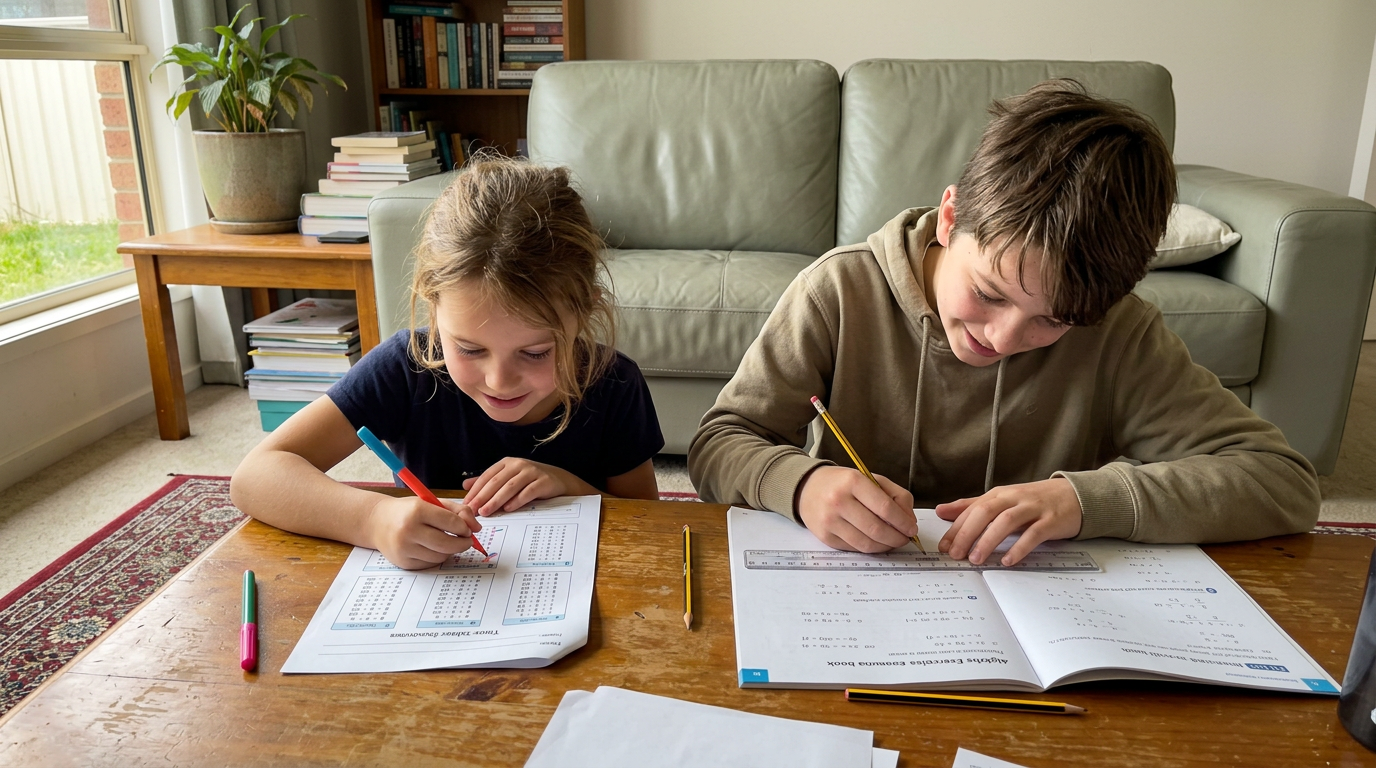
What is personalised learning?
Personalised learning is an educational approach that adjusts the content, pace, and method of teaching to each student's existing knowledge, learning preferences and goals. Instead of a single curriculum delivered to a whole class on a fixed timetable, a personalised approach starts with a diagnostic — what does this student already know, where are the gaps, and what motivates them — and builds a tailored plan from there. The teacher or tutor then adjusts the plan continuously as the student progresses.
In an Australian context, personalised learning sits alongside the Australian Curriculum rather than replacing it. The end-of-year expectations stay the same; the path each student takes to get there is what changes.
Is personalised learning the same as adaptive learning or differentiated instruction?
No, although the terms overlap. Differentiated instruction is what teachers do inside a single classroom to vary the work for different ability groups. Adaptive learning usually refers to software that adjusts question difficulty based on a student's responses. Personalised learning is the broader idea — it includes both, plus tutor-designed plans, project-based work, and goal-setting conversations with the student.
How does personalised learning work in practice?
Personalised learning typically follows four steps. First, a diagnostic assessment maps the student's current skills against the curriculum standard for their year. Second, the teacher or tutor sets specific learning goals based on the gaps and the student's interests. Third, lessons are designed around those goals using the student's preferred mode — visual, hands-on, written, or conversational. Fourth, progress is checked frequently (often weekly), and the plan is adjusted before the student falls behind or stalls.
The result is a sequence of skills — sometimes called a personalised learning pathway — that begins where the student actually is and ends at the curriculum expectation for their year level. Pacing accelerates on topics the student picks up quickly and slows on topics that need more practice.
Where does personalised learning happen?
Three places, in roughly this order of intensity. One-to-one tutoring is the most personalised setting — a single tutor designs the entire plan around one student. Small-group work in classrooms (often led by a teaching assistant) allows for some personalisation across three to five students with similar needs. Whole-class personalisation uses adaptive software, choice boards, or project work to give each student a slightly different path through the same lesson — the most scalable form, but also the least intensive.
What are the benefits of personalised learning?
Research consistently points to three benefits: stronger academic progress, higher engagement, and better visibility for parents and teachers over what is actually being learned. The Education Endowment Foundation reports that one-to-one tuition — the most personalised form of learning — adds an average of five months of additional progress over a school year. Benjamin Bloom's well-known "2-sigma problem" found that students taught one-to-one with mastery learning performed two standard deviations above students in conventional classrooms.
1. It lifts academic performance
When teaching meets a student at their actual starting point, knowledge gaps get filled instead of compounded. A Year 5 student who never properly grasped place value will keep struggling with decimals, percentages, and fractions until that gap is fixed. Personalised learning identifies the gap, fills it, and then moves forward — which is why one-to-one tuition shows up so consistently in the evidence base.
2. It improves engagement and motivation
Students engage more when the work feels appropriately challenging — neither too easy (boring) nor too hard (defeating). Personalised learning sits in that sweet spot by design. It also lets students see their own progress, which builds the self-regulation and perseverance habits that John Hattie's Visible Learning meta-analyses identify as some of the highest-leverage learning behaviours.
3. It gives parents real visibility
A traditional report card tells you a grade once a term. A personalised learning plan tells you which specific skills your child has mastered, which they are working on, and which need more practice — every week. That changes the conversation at home from "how was school?" to "I noticed you cracked long division this week — show me how."

Personalised learning starts where your child actually is, not where the calendar says they should be.
Personalised learning starts where your child actually is, not where the calendar says they should be.
Does personalised learning improve student outcomes?
The evidence is strongest at the most personalised end of the spectrum and softer for whole-class implementations. The Education Endowment Foundation's Teaching and Learning Toolkit rates one-to-one tuition as +5 months of additional progress, small-group tuition as +4 months, and mastery learning (a personalised approach to pacing) as +5 months. The same toolkit notes that scaling these gains across an entire school is harder — the gains are real, but the implementation matters.
For Australian families weighing whether to add tutoring, that evidence points the same direction. A student who is behind, ahead, or simply disengaged in a one-size-fits-all classroom benefits most from a setting where the plan is genuinely built around them.
What does personalised learning look like at different year levels?
It looks quite different at primary, lower-secondary and senior. The principle is the same — meet the student where they are — but the practical shape varies.
Primary (Year 1–6)
For younger students, personalisation is mostly about pacing and confidence. Sessions are usually 30 minutes to keep attention manageable, and parents often sit nearby, especially in the early years. Content is concrete — number lines, manipulatives, reading aloud, hand-drawn worksheets — and the goal is steady, low-pressure progress rather than acceleration.
Lower-secondary (Year 7–10)
In the middle years, personalisation focuses on filling content gaps that built up in primary (especially in maths fundamentals) and on building independent study habits. Sessions move to 45–60 minutes. Students start owning their learning plan — picking which topic to tackle first, deciding when they are ready for the next concept.
Senior (Year 11–12)
For senior students working towards their ATAR, HSC or VCE, personalisation is exam-specific. The plan is built around the syllabus, past papers, and the student's target marks for the subjects that matter most for their preferred university course. Sessions are typically an hour, and the work is dense — past-paper analysis, targeted weakness work, exam-technique drills.
How can my child benefit from personalised learning?
Three honest paths. First, talk to your child's classroom teacher — many schools already use elements of personalised learning (small-group work, choice boards, mastery checks) and a teacher will tell you what is and isn't being personalised. Second, look at the school's policy on streaming, ability grouping, or learning-support programs. Third, consider one-to-one tutoring if the gap between what your child is being taught and what they actually need is large enough that small-group classroom work isn't closing it.
For Australian families, one-to-one tutoring with Tutero starts at A$65 per hour — the same rate for primary, lower-secondary and senior students. Sessions are designed around your child's specific gaps and goals, not a packaged curriculum, and a parent app shows you exactly which skills are being worked on each week.
What are the challenges of personalised learning?
Three honest ones, worth naming.
It is hard to do at scale
A teacher with 25 students cannot run 25 personalised plans by hand. That is why personalisation in classrooms is usually limited to small groups, choice boards, or adaptive software. The most personalised forms — one-to-one tuition or small-group support — are easier to deliver outside the classroom.
Streaming has trade-offs
Sorting students into ability groups is one way schools attempt personalisation, but the evidence is mixed. Streaming can lift the top group's outcomes while reducing confidence and progress for students placed in lower groups, who can come to see themselves as "not maths kids" — a self-fulfilling label that is hard to undo.
Access is uneven
When personalisation is mostly available through paid services, it can deepen rather than narrow the gap between students whose families can afford tutoring and those who cannot. Online tutoring has helped — it lowers the cost and reaches families in regional and remote areas — but the gap is real and worth being honest about.
How is technology changing personalised learning?
Two shifts are doing most of the work. First, AI-assisted lesson planning lets a teacher or tutor design a tailored plan in minutes that used to take hours, which makes personalisation viable inside ordinary classrooms. Tutero's AI-powered teaching assistant is one example — it gives teachers ready-made activities matched to each student's level. Second, online one-to-one tutoring removes the geographic constraint that used to make tailored support a metro-only luxury. A student in a small town can now have a session with a tutor anywhere in the country.
Both shifts make personalisation cheaper and more available. Neither replaces a real teacher or tutor — the human relationship is still where most of the engagement and motivation comes from.
How do I find personalised learning options for my child?
Four practical steps:
- Diagnose first. Before paying for anything, work out where the gap actually is. Look at your child's most recent maths or English assessment and find the specific topic they are stuck on — not "Year 6 maths" but "fractions with unlike denominators".
- Talk to the classroom teacher. Ask what the school is already doing to personalise the work. Many schools have learning-support programs or small-group tutoring that families don't know about.
- Trial one-to-one tutoring. If the gap is bigger than the school can fix, a tutor who designs lessons around your child's specific weaknesses is the most direct fix. Online sessions reduce friction — no driving, no waiting rooms.
- Check the plan is actually personalised. Ask the tutor: "What did my child work on last week? What's next?" If the answer is generic ("Year 7 maths") rather than specific ("simplifying algebraic fractions, then graphing linear equations next week"), the plan isn't personalised.
Related reading
- How personalised tutoring can help your child — companion piece on tutoring specifically
- 5 key benefits of private tutoring
- How tutoring can improve confidence in maths
- Effective strategies to improve your maths study skills
- 5 signs that your child needs tutoring
- The ideal time to begin tutoring
- How does tutoring help your child
- Ultimate guide to maths tutoring
The bottom line
Personalised learning works because it starts where your child actually is, not where the calendar says they should be. The evidence — from Bloom's 2-sigma problem to the EEF's +5 month estimate for one-to-one tuition — is consistent: students learn faster and engage more deeply when the work is built around them. The trick is making that practical without paying for a private school. For most Australian families, the cheapest and most direct route is one-to-one online tutoring at the topics your child is actually stuck on.
Ready to see what personalised learning looks like for your child? A Tutero tutor will design a plan around your child's specific gaps and goals — at A$65/hour, no contracts, with a parent app that shows you exactly what is being worked on each week. Explore online tutoring with Tutero.
If you have spent any time around primary, lower-secondary or senior students, you have probably noticed how differently they learn. One child grasps multiplication in a single afternoon. Another needs three weeks of patient practice. A teenager who freezes in algebra can write you a 1,200-word essay on World War II. Yet most classrooms ask all of them to move at the same pace, on the same day, in the same way.
Personalised learning is the response to that mismatch. It tailors what a student studies, how they study it, and how quickly they progress to fit their actual starting point and interests. According to a 2017 Grattan Institute report, around 40% of students in an average Australian classroom are unproductive and disengaged on any given day. Personalised learning is one of the few approaches with strong evidence behind closing that gap.
This article is a parent's guide to what personalised learning is, how it works, what the evidence says about its benefits, and how to access it for your child — whether they are in Year 2 or Year 12.
What is personalised learning?
Personalised learning is an educational approach that adjusts the content, pace, and method of teaching to each student's existing knowledge, learning preferences and goals. Instead of a single curriculum delivered to a whole class on a fixed timetable, a personalised approach starts with a diagnostic — what does this student already know, where are the gaps, and what motivates them — and builds a tailored plan from there. The teacher or tutor then adjusts the plan continuously as the student progresses.
In an Australian context, personalised learning sits alongside the Australian Curriculum rather than replacing it. The end-of-year expectations stay the same; the path each student takes to get there is what changes.
Is personalised learning the same as adaptive learning or differentiated instruction?
No, although the terms overlap. Differentiated instruction is what teachers do inside a single classroom to vary the work for different ability groups. Adaptive learning usually refers to software that adjusts question difficulty based on a student's responses. Personalised learning is the broader idea — it includes both, plus tutor-designed plans, project-based work, and goal-setting conversations with the student.
How does personalised learning work in practice?
Personalised learning typically follows four steps. First, a diagnostic assessment maps the student's current skills against the curriculum standard for their year. Second, the teacher or tutor sets specific learning goals based on the gaps and the student's interests. Third, lessons are designed around those goals using the student's preferred mode — visual, hands-on, written, or conversational. Fourth, progress is checked frequently (often weekly), and the plan is adjusted before the student falls behind or stalls.
The result is a sequence of skills — sometimes called a personalised learning pathway — that begins where the student actually is and ends at the curriculum expectation for their year level. Pacing accelerates on topics the student picks up quickly and slows on topics that need more practice.
Where does personalised learning happen?
Three places, in roughly this order of intensity. One-to-one tutoring is the most personalised setting — a single tutor designs the entire plan around one student. Small-group work in classrooms (often led by a teaching assistant) allows for some personalisation across three to five students with similar needs. Whole-class personalisation uses adaptive software, choice boards, or project work to give each student a slightly different path through the same lesson — the most scalable form, but also the least intensive.
What are the benefits of personalised learning?
Research consistently points to three benefits: stronger academic progress, higher engagement, and better visibility for parents and teachers over what is actually being learned. The Education Endowment Foundation reports that one-to-one tuition — the most personalised form of learning — adds an average of five months of additional progress over a school year. Benjamin Bloom's well-known "2-sigma problem" found that students taught one-to-one with mastery learning performed two standard deviations above students in conventional classrooms.
1. It lifts academic performance
When teaching meets a student at their actual starting point, knowledge gaps get filled instead of compounded. A Year 5 student who never properly grasped place value will keep struggling with decimals, percentages, and fractions until that gap is fixed. Personalised learning identifies the gap, fills it, and then moves forward — which is why one-to-one tuition shows up so consistently in the evidence base.
2. It improves engagement and motivation
Students engage more when the work feels appropriately challenging — neither too easy (boring) nor too hard (defeating). Personalised learning sits in that sweet spot by design. It also lets students see their own progress, which builds the self-regulation and perseverance habits that John Hattie's Visible Learning meta-analyses identify as some of the highest-leverage learning behaviours.
3. It gives parents real visibility
A traditional report card tells you a grade once a term. A personalised learning plan tells you which specific skills your child has mastered, which they are working on, and which need more practice — every week. That changes the conversation at home from "how was school?" to "I noticed you cracked long division this week — show me how."
FAQ
.svg)
.svg)
Online maths tutoring at Tutero is catering to students of all year levels. We offer programs tailored to the unique learning curves of each age group.
We also have expert NAPLAN and ATAR subject tutors, ensuring students are well-equipped for these pivotal assessments.
We recommend at least two to three session per week for consistent progress. However, this can vary based on your child's needs and goals.
Our platform uses advanced security protocols to ensure the safety and privacy of all our online sessions.
Parents are welcome to observe sessions. We believe in a collaborative approach to education.
We provide regular progress reports and assessments to track your child’s academic development.
Yes, we prioritise the student-tutor relationship and can arrange a change if the need arises.
Yes, we offer a range of resources and materials, including interactive exercises and practice worksheets.
Does personalised learning improve student outcomes?
The evidence is strongest at the most personalised end of the spectrum and softer for whole-class implementations. The Education Endowment Foundation's Teaching and Learning Toolkit rates one-to-one tuition as +5 months of additional progress, small-group tuition as +4 months, and mastery learning (a personalised approach to pacing) as +5 months. The same toolkit notes that scaling these gains across an entire school is harder — the gains are real, but the implementation matters.
For Australian families weighing whether to add tutoring, that evidence points the same direction. A student who is behind, ahead, or simply disengaged in a one-size-fits-all classroom benefits most from a setting where the plan is genuinely built around them.
What does personalised learning look like at different year levels?
It looks quite different at primary, lower-secondary and senior. The principle is the same — meet the student where they are — but the practical shape varies.
Primary (Year 1–6)
For younger students, personalisation is mostly about pacing and confidence. Sessions are usually 30 minutes to keep attention manageable, and parents often sit nearby, especially in the early years. Content is concrete — number lines, manipulatives, reading aloud, hand-drawn worksheets — and the goal is steady, low-pressure progress rather than acceleration.
Lower-secondary (Year 7–10)
In the middle years, personalisation focuses on filling content gaps that built up in primary (especially in maths fundamentals) and on building independent study habits. Sessions move to 45–60 minutes. Students start owning their learning plan — picking which topic to tackle first, deciding when they are ready for the next concept.
Senior (Year 11–12)
For senior students working towards their ATAR, HSC or VCE, personalisation is exam-specific. The plan is built around the syllabus, past papers, and the student's target marks for the subjects that matter most for their preferred university course. Sessions are typically an hour, and the work is dense — past-paper analysis, targeted weakness work, exam-technique drills.
How can my child benefit from personalised learning?
Three honest paths. First, talk to your child's classroom teacher — many schools already use elements of personalised learning (small-group work, choice boards, mastery checks) and a teacher will tell you what is and isn't being personalised. Second, look at the school's policy on streaming, ability grouping, or learning-support programs. Third, consider one-to-one tutoring if the gap between what your child is being taught and what they actually need is large enough that small-group classroom work isn't closing it.
For Australian families, one-to-one tutoring with Tutero starts at A$65 per hour — the same rate for primary, lower-secondary and senior students. Sessions are designed around your child's specific gaps and goals, not a packaged curriculum, and a parent app shows you exactly which skills are being worked on each week.
What are the challenges of personalised learning?
Three honest ones, worth naming.
It is hard to do at scale
A teacher with 25 students cannot run 25 personalised plans by hand. That is why personalisation in classrooms is usually limited to small groups, choice boards, or adaptive software. The most personalised forms — one-to-one tuition or small-group support — are easier to deliver outside the classroom.
Streaming has trade-offs
Sorting students into ability groups is one way schools attempt personalisation, but the evidence is mixed. Streaming can lift the top group's outcomes while reducing confidence and progress for students placed in lower groups, who can come to see themselves as "not maths kids" — a self-fulfilling label that is hard to undo.
Access is uneven
When personalisation is mostly available through paid services, it can deepen rather than narrow the gap between students whose families can afford tutoring and those who cannot. Online tutoring has helped — it lowers the cost and reaches families in regional and remote areas — but the gap is real and worth being honest about.
How is technology changing personalised learning?
Two shifts are doing most of the work. First, AI-assisted lesson planning lets a teacher or tutor design a tailored plan in minutes that used to take hours, which makes personalisation viable inside ordinary classrooms. Tutero's AI-powered teaching assistant is one example — it gives teachers ready-made activities matched to each student's level. Second, online one-to-one tutoring removes the geographic constraint that used to make tailored support a metro-only luxury. A student in a small town can now have a session with a tutor anywhere in the country.
Both shifts make personalisation cheaper and more available. Neither replaces a real teacher or tutor — the human relationship is still where most of the engagement and motivation comes from.
How do I find personalised learning options for my child?
Four practical steps:
- Diagnose first. Before paying for anything, work out where the gap actually is. Look at your child's most recent maths or English assessment and find the specific topic they are stuck on — not "Year 6 maths" but "fractions with unlike denominators".
- Talk to the classroom teacher. Ask what the school is already doing to personalise the work. Many schools have learning-support programs or small-group tutoring that families don't know about.
- Trial one-to-one tutoring. If the gap is bigger than the school can fix, a tutor who designs lessons around your child's specific weaknesses is the most direct fix. Online sessions reduce friction — no driving, no waiting rooms.
- Check the plan is actually personalised. Ask the tutor: "What did my child work on last week? What's next?" If the answer is generic ("Year 7 maths") rather than specific ("simplifying algebraic fractions, then graphing linear equations next week"), the plan isn't personalised.
Related reading
- How personalised tutoring can help your child — companion piece on tutoring specifically
- 5 key benefits of private tutoring
- How tutoring can improve confidence in maths
- Effective strategies to improve your maths study skills
- 5 signs that your child needs tutoring
- The ideal time to begin tutoring
- How does tutoring help your child
- Ultimate guide to maths tutoring
The bottom line
Personalised learning works because it starts where your child actually is, not where the calendar says they should be. The evidence — from Bloom's 2-sigma problem to the EEF's +5 month estimate for one-to-one tuition — is consistent: students learn faster and engage more deeply when the work is built around them. The trick is making that practical without paying for a private school. For most Australian families, the cheapest and most direct route is one-to-one online tutoring at the topics your child is actually stuck on.
Ready to see what personalised learning looks like for your child? A Tutero tutor will design a plan around your child's specific gaps and goals — at A$65/hour, no contracts, with a parent app that shows you exactly what is being worked on each week. Explore online tutoring with Tutero.
Personalised learning starts where your child actually is, not where the calendar says they should be.
Personalised learning starts where your child actually is, not where the calendar says they should be.

Personalised learning starts where your child actually is, not where the calendar says they should be.
Does personalised learning improve student outcomes?
The evidence is strongest at the most personalised end of the spectrum and softer for whole-class implementations. The Education Endowment Foundation's Teaching and Learning Toolkit rates one-to-one tuition as +5 months of additional progress, small-group tuition as +4 months, and mastery learning (a personalised approach to pacing) as +5 months. The same toolkit notes that scaling these gains across an entire school is harder — the gains are real, but the implementation matters.
For Australian families weighing whether to add tutoring, that evidence points the same direction. A student who is behind, ahead, or simply disengaged in a one-size-fits-all classroom benefits most from a setting where the plan is genuinely built around them.
What does personalised learning look like at different year levels?
It looks quite different at primary, lower-secondary and senior. The principle is the same — meet the student where they are — but the practical shape varies.
Primary (Year 1–6)
For younger students, personalisation is mostly about pacing and confidence. Sessions are usually 30 minutes to keep attention manageable, and parents often sit nearby, especially in the early years. Content is concrete — number lines, manipulatives, reading aloud, hand-drawn worksheets — and the goal is steady, low-pressure progress rather than acceleration.
Lower-secondary (Year 7–10)
In the middle years, personalisation focuses on filling content gaps that built up in primary (especially in maths fundamentals) and on building independent study habits. Sessions move to 45–60 minutes. Students start owning their learning plan — picking which topic to tackle first, deciding when they are ready for the next concept.
Senior (Year 11–12)
For senior students working towards their ATAR, HSC or VCE, personalisation is exam-specific. The plan is built around the syllabus, past papers, and the student's target marks for the subjects that matter most for their preferred university course. Sessions are typically an hour, and the work is dense — past-paper analysis, targeted weakness work, exam-technique drills.
How can my child benefit from personalised learning?
Three honest paths. First, talk to your child's classroom teacher — many schools already use elements of personalised learning (small-group work, choice boards, mastery checks) and a teacher will tell you what is and isn't being personalised. Second, look at the school's policy on streaming, ability grouping, or learning-support programs. Third, consider one-to-one tutoring if the gap between what your child is being taught and what they actually need is large enough that small-group classroom work isn't closing it.
For Australian families, one-to-one tutoring with Tutero starts at A$65 per hour — the same rate for primary, lower-secondary and senior students. Sessions are designed around your child's specific gaps and goals, not a packaged curriculum, and a parent app shows you exactly which skills are being worked on each week.
What are the challenges of personalised learning?
Three honest ones, worth naming.
It is hard to do at scale
A teacher with 25 students cannot run 25 personalised plans by hand. That is why personalisation in classrooms is usually limited to small groups, choice boards, or adaptive software. The most personalised forms — one-to-one tuition or small-group support — are easier to deliver outside the classroom.
Streaming has trade-offs
Sorting students into ability groups is one way schools attempt personalisation, but the evidence is mixed. Streaming can lift the top group's outcomes while reducing confidence and progress for students placed in lower groups, who can come to see themselves as "not maths kids" — a self-fulfilling label that is hard to undo.
Access is uneven
When personalisation is mostly available through paid services, it can deepen rather than narrow the gap between students whose families can afford tutoring and those who cannot. Online tutoring has helped — it lowers the cost and reaches families in regional and remote areas — but the gap is real and worth being honest about.
How is technology changing personalised learning?
Two shifts are doing most of the work. First, AI-assisted lesson planning lets a teacher or tutor design a tailored plan in minutes that used to take hours, which makes personalisation viable inside ordinary classrooms. Tutero's AI-powered teaching assistant is one example — it gives teachers ready-made activities matched to each student's level. Second, online one-to-one tutoring removes the geographic constraint that used to make tailored support a metro-only luxury. A student in a small town can now have a session with a tutor anywhere in the country.
Both shifts make personalisation cheaper and more available. Neither replaces a real teacher or tutor — the human relationship is still where most of the engagement and motivation comes from.
How do I find personalised learning options for my child?
Four practical steps:
- Diagnose first. Before paying for anything, work out where the gap actually is. Look at your child's most recent maths or English assessment and find the specific topic they are stuck on — not "Year 6 maths" but "fractions with unlike denominators".
- Talk to the classroom teacher. Ask what the school is already doing to personalise the work. Many schools have learning-support programs or small-group tutoring that families don't know about.
- Trial one-to-one tutoring. If the gap is bigger than the school can fix, a tutor who designs lessons around your child's specific weaknesses is the most direct fix. Online sessions reduce friction — no driving, no waiting rooms.
- Check the plan is actually personalised. Ask the tutor: "What did my child work on last week? What's next?" If the answer is generic ("Year 7 maths") rather than specific ("simplifying algebraic fractions, then graphing linear equations next week"), the plan isn't personalised.
Related reading
- How personalised tutoring can help your child — companion piece on tutoring specifically
- 5 key benefits of private tutoring
- How tutoring can improve confidence in maths
- Effective strategies to improve your maths study skills
- 5 signs that your child needs tutoring
- The ideal time to begin tutoring
- How does tutoring help your child
- Ultimate guide to maths tutoring
The bottom line
Personalised learning works because it starts where your child actually is, not where the calendar says they should be. The evidence — from Bloom's 2-sigma problem to the EEF's +5 month estimate for one-to-one tuition — is consistent: students learn faster and engage more deeply when the work is built around them. The trick is making that practical without paying for a private school. For most Australian families, the cheapest and most direct route is one-to-one online tutoring at the topics your child is actually stuck on.
Ready to see what personalised learning looks like for your child? A Tutero tutor will design a plan around your child's specific gaps and goals — at A$65/hour, no contracts, with a parent app that shows you exactly what is being worked on each week. Explore online tutoring with Tutero.
Ask the tutor: what did my child work on last week, and what's next? If the answer isn't specific, the plan isn't personalised.
If you have spent any time around primary, lower-secondary or senior students, you have probably noticed how differently they learn. One child grasps multiplication in a single afternoon. Another needs three weeks of patient practice. A teenager who freezes in algebra can write you a 1,200-word essay on World War II. Yet most classrooms ask all of them to move at the same pace, on the same day, in the same way.
Personalised learning is the response to that mismatch. It tailors what a student studies, how they study it, and how quickly they progress to fit their actual starting point and interests. According to a 2017 Grattan Institute report, around 40% of students in an average Australian classroom are unproductive and disengaged on any given day. Personalised learning is one of the few approaches with strong evidence behind closing that gap.
This article is a parent's guide to what personalised learning is, how it works, what the evidence says about its benefits, and how to access it for your child — whether they are in Year 2 or Year 12.
What is personalised learning?
Personalised learning is an educational approach that adjusts the content, pace, and method of teaching to each student's existing knowledge, learning preferences and goals. Instead of a single curriculum delivered to a whole class on a fixed timetable, a personalised approach starts with a diagnostic — what does this student already know, where are the gaps, and what motivates them — and builds a tailored plan from there. The teacher or tutor then adjusts the plan continuously as the student progresses.
In an Australian context, personalised learning sits alongside the Australian Curriculum rather than replacing it. The end-of-year expectations stay the same; the path each student takes to get there is what changes.
Is personalised learning the same as adaptive learning or differentiated instruction?
No, although the terms overlap. Differentiated instruction is what teachers do inside a single classroom to vary the work for different ability groups. Adaptive learning usually refers to software that adjusts question difficulty based on a student's responses. Personalised learning is the broader idea — it includes both, plus tutor-designed plans, project-based work, and goal-setting conversations with the student.
How does personalised learning work in practice?
Personalised learning typically follows four steps. First, a diagnostic assessment maps the student's current skills against the curriculum standard for their year. Second, the teacher or tutor sets specific learning goals based on the gaps and the student's interests. Third, lessons are designed around those goals using the student's preferred mode — visual, hands-on, written, or conversational. Fourth, progress is checked frequently (often weekly), and the plan is adjusted before the student falls behind or stalls.
The result is a sequence of skills — sometimes called a personalised learning pathway — that begins where the student actually is and ends at the curriculum expectation for their year level. Pacing accelerates on topics the student picks up quickly and slows on topics that need more practice.
Where does personalised learning happen?
Three places, in roughly this order of intensity. One-to-one tutoring is the most personalised setting — a single tutor designs the entire plan around one student. Small-group work in classrooms (often led by a teaching assistant) allows for some personalisation across three to five students with similar needs. Whole-class personalisation uses adaptive software, choice boards, or project work to give each student a slightly different path through the same lesson — the most scalable form, but also the least intensive.
What are the benefits of personalised learning?
Research consistently points to three benefits: stronger academic progress, higher engagement, and better visibility for parents and teachers over what is actually being learned. The Education Endowment Foundation reports that one-to-one tuition — the most personalised form of learning — adds an average of five months of additional progress over a school year. Benjamin Bloom's well-known "2-sigma problem" found that students taught one-to-one with mastery learning performed two standard deviations above students in conventional classrooms.
1. It lifts academic performance
When teaching meets a student at their actual starting point, knowledge gaps get filled instead of compounded. A Year 5 student who never properly grasped place value will keep struggling with decimals, percentages, and fractions until that gap is fixed. Personalised learning identifies the gap, fills it, and then moves forward — which is why one-to-one tuition shows up so consistently in the evidence base.
2. It improves engagement and motivation
Students engage more when the work feels appropriately challenging — neither too easy (boring) nor too hard (defeating). Personalised learning sits in that sweet spot by design. It also lets students see their own progress, which builds the self-regulation and perseverance habits that John Hattie's Visible Learning meta-analyses identify as some of the highest-leverage learning behaviours.
3. It gives parents real visibility
A traditional report card tells you a grade once a term. A personalised learning plan tells you which specific skills your child has mastered, which they are working on, and which need more practice — every week. That changes the conversation at home from "how was school?" to "I noticed you cracked long division this week — show me how."
Personalised learning starts where your child actually is, not where the calendar says they should be.
Does personalised learning improve student outcomes?
The evidence is strongest at the most personalised end of the spectrum and softer for whole-class implementations. The Education Endowment Foundation's Teaching and Learning Toolkit rates one-to-one tuition as +5 months of additional progress, small-group tuition as +4 months, and mastery learning (a personalised approach to pacing) as +5 months. The same toolkit notes that scaling these gains across an entire school is harder — the gains are real, but the implementation matters.
For Australian families weighing whether to add tutoring, that evidence points the same direction. A student who is behind, ahead, or simply disengaged in a one-size-fits-all classroom benefits most from a setting where the plan is genuinely built around them.
What does personalised learning look like at different year levels?
It looks quite different at primary, lower-secondary and senior. The principle is the same — meet the student where they are — but the practical shape varies.
Primary (Year 1–6)
For younger students, personalisation is mostly about pacing and confidence. Sessions are usually 30 minutes to keep attention manageable, and parents often sit nearby, especially in the early years. Content is concrete — number lines, manipulatives, reading aloud, hand-drawn worksheets — and the goal is steady, low-pressure progress rather than acceleration.
Lower-secondary (Year 7–10)
In the middle years, personalisation focuses on filling content gaps that built up in primary (especially in maths fundamentals) and on building independent study habits. Sessions move to 45–60 minutes. Students start owning their learning plan — picking which topic to tackle first, deciding when they are ready for the next concept.
Senior (Year 11–12)
For senior students working towards their ATAR, HSC or VCE, personalisation is exam-specific. The plan is built around the syllabus, past papers, and the student's target marks for the subjects that matter most for their preferred university course. Sessions are typically an hour, and the work is dense — past-paper analysis, targeted weakness work, exam-technique drills.
How can my child benefit from personalised learning?
Three honest paths. First, talk to your child's classroom teacher — many schools already use elements of personalised learning (small-group work, choice boards, mastery checks) and a teacher will tell you what is and isn't being personalised. Second, look at the school's policy on streaming, ability grouping, or learning-support programs. Third, consider one-to-one tutoring if the gap between what your child is being taught and what they actually need is large enough that small-group classroom work isn't closing it.
For Australian families, one-to-one tutoring with Tutero starts at A$65 per hour — the same rate for primary, lower-secondary and senior students. Sessions are designed around your child's specific gaps and goals, not a packaged curriculum, and a parent app shows you exactly which skills are being worked on each week.
What are the challenges of personalised learning?
Three honest ones, worth naming.
It is hard to do at scale
A teacher with 25 students cannot run 25 personalised plans by hand. That is why personalisation in classrooms is usually limited to small groups, choice boards, or adaptive software. The most personalised forms — one-to-one tuition or small-group support — are easier to deliver outside the classroom.
Streaming has trade-offs
Sorting students into ability groups is one way schools attempt personalisation, but the evidence is mixed. Streaming can lift the top group's outcomes while reducing confidence and progress for students placed in lower groups, who can come to see themselves as "not maths kids" — a self-fulfilling label that is hard to undo.
Access is uneven
When personalisation is mostly available through paid services, it can deepen rather than narrow the gap between students whose families can afford tutoring and those who cannot. Online tutoring has helped — it lowers the cost and reaches families in regional and remote areas — but the gap is real and worth being honest about.
How is technology changing personalised learning?
Two shifts are doing most of the work. First, AI-assisted lesson planning lets a teacher or tutor design a tailored plan in minutes that used to take hours, which makes personalisation viable inside ordinary classrooms. Tutero's AI-powered teaching assistant is one example — it gives teachers ready-made activities matched to each student's level. Second, online one-to-one tutoring removes the geographic constraint that used to make tailored support a metro-only luxury. A student in a small town can now have a session with a tutor anywhere in the country.
Both shifts make personalisation cheaper and more available. Neither replaces a real teacher or tutor — the human relationship is still where most of the engagement and motivation comes from.
How do I find personalised learning options for my child?
Four practical steps:
- Diagnose first. Before paying for anything, work out where the gap actually is. Look at your child's most recent maths or English assessment and find the specific topic they are stuck on — not "Year 6 maths" but "fractions with unlike denominators".
- Talk to the classroom teacher. Ask what the school is already doing to personalise the work. Many schools have learning-support programs or small-group tutoring that families don't know about.
- Trial one-to-one tutoring. If the gap is bigger than the school can fix, a tutor who designs lessons around your child's specific weaknesses is the most direct fix. Online sessions reduce friction — no driving, no waiting rooms.
- Check the plan is actually personalised. Ask the tutor: "What did my child work on last week? What's next?" If the answer is generic ("Year 7 maths") rather than specific ("simplifying algebraic fractions, then graphing linear equations next week"), the plan isn't personalised.
Related reading
- How personalised tutoring can help your child — companion piece on tutoring specifically
- 5 key benefits of private tutoring
- How tutoring can improve confidence in maths
- Effective strategies to improve your maths study skills
- 5 signs that your child needs tutoring
- The ideal time to begin tutoring
- How does tutoring help your child
- Ultimate guide to maths tutoring
The bottom line
Personalised learning works because it starts where your child actually is, not where the calendar says they should be. The evidence — from Bloom's 2-sigma problem to the EEF's +5 month estimate for one-to-one tuition — is consistent: students learn faster and engage more deeply when the work is built around them. The trick is making that practical without paying for a private school. For most Australian families, the cheapest and most direct route is one-to-one online tutoring at the topics your child is actually stuck on.
Ready to see what personalised learning looks like for your child? A Tutero tutor will design a plan around your child's specific gaps and goals — at A$65/hour, no contracts, with a parent app that shows you exactly what is being worked on each week. Explore online tutoring with Tutero.
Ask the tutor: what did my child work on last week, and what's next? If the answer isn't specific, the plan isn't personalised.
Personalised learning means adjusting what your child studies, how they study it, and how fast they progress to match their actual starting point and interests. Instead of every student in a class doing the same work on the same day, the content, pace, and method are tailored to the individual.
There is no minimum age — schools personalise reading and number work from Year 1. Outside school, one-to-one tutoring with personalised plans typically starts working well from around Year 2–3 onwards, when children can sit through a 30-minute session. Earlier than that, parent-led reading and play-based maths work better than formal tutoring.
No. The evidence is strongest for students with gaps to fill, but personalisation also works for advanced learners who would otherwise be held back by classroom pacing, and for students who are coasting at grade level but disengaged. Any student whose current setting isn't matching their actual level benefits.
Inside school, it is free where it happens — small-group support, choice boards, and adaptive software are usually built into the curriculum. Outside school, one-to-one tutoring is the most direct form. Tutero starts at A$65 per hour with no contracts, the same rate for primary, lower-secondary and senior students.
No. It complements classroom teaching by filling gaps the classroom can't realistically address — usually in maths fundamentals, writing skills, or exam preparation. Most students benefit from a combination: classroom for breadth and social learning, personalised work for depth on specific weaknesses.
Ask three specific questions before signing up. What did the diagnostic show about my child's gaps? What are the next three skills you'll work on? How will you tell me what was covered each week? If the answers are vague ("we cover Year 7 maths"), the plan isn't personalised — it's a packaged curriculum.
Hoping to improve confidence & grades?

.png)


