
.svg)

If your child is in an Australian school and English isn't your first language at home — or English is just hard for them — proficient English isn't a "nice to have." It's the language that every other subject is taught in, assessed in, and reported on. Reading, writing, maths word problems, science investigations, history sources, even PDHPE worksheets all run on English. So when English proficiency lags, the whole report card lags with it. The good news: the gap is closeable, and there are clear pathways inside the Australian system to close it.
Quick answer: English proficiency matters in Australian education because it's the language of instruction and assessment across every subject from Foundation through to ATAR. NAPLAN tests reading and writing directly. ATAR English (in any of its three forms) is the only compulsory subject. Children learning English as an Additional Language or Dialect (EAL/D — formerly ESL) typically take 5–7 years of consistent support to reach the academic English proficiency their classmates already have, per the Cummins BICS/CALP framework that underpins ACARA's EAL/D guidance.
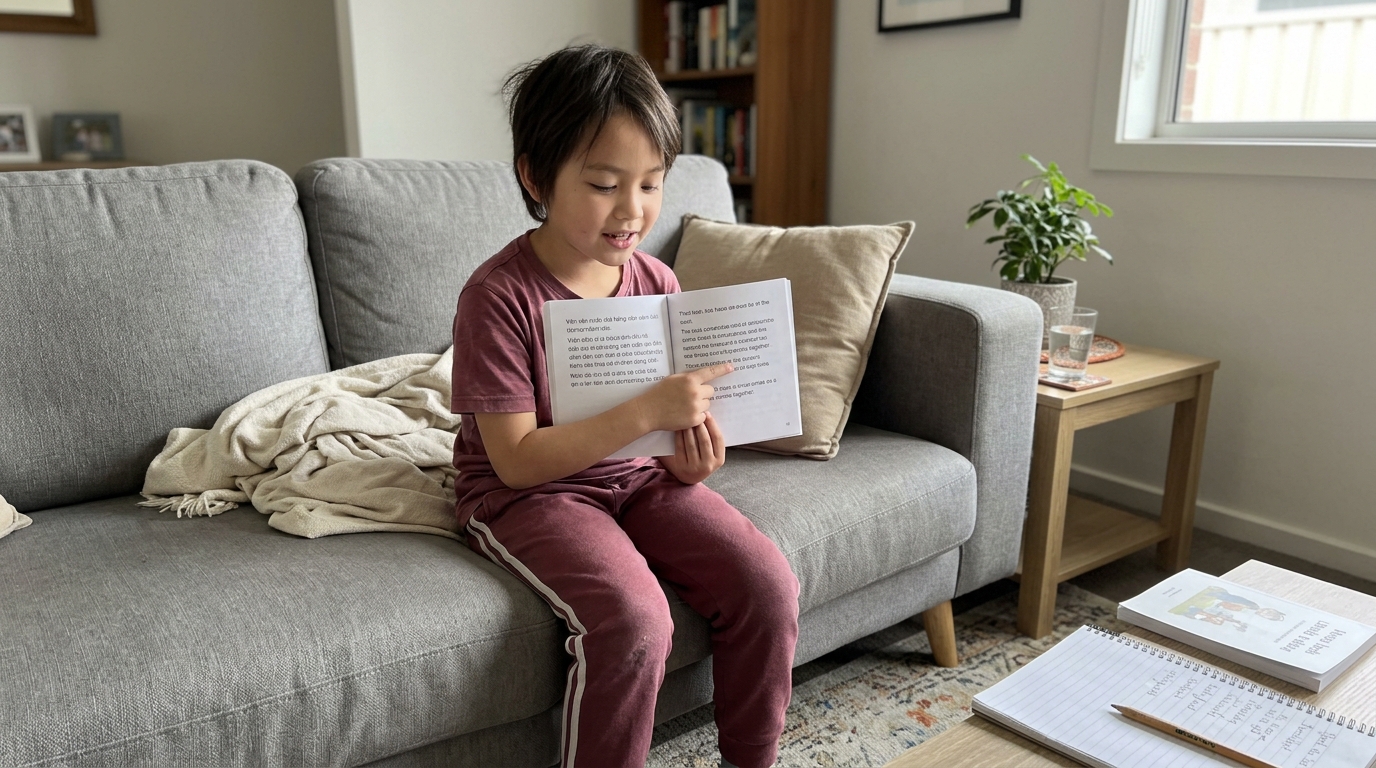
Why is English proficiency important in Australian education?
English is the language of instruction in every Australian state and territory school. That means English proficiency isn't separate from the rest of the curriculum — it sits underneath every other subject. A maths word problem, a science prac write-up, a humanities source analysis, a coding rubric, a sport-team note home: all of it lands in English. When a child reads English fluently, they get the question; when they don't, they're solving two problems at once (decode the language AND answer the maths). ACARA's EAL/D Teacher Resource describes this directly: EAL/D learners are "learning English, through English, and about English simultaneously." Proficiency stops being a literacy issue and becomes the gateway to every report-card grade — primary, lower-secondary, and senior years alike.
How does English proficiency affect NAPLAN results?
NAPLAN tests reading, writing, language conventions (spelling, grammar, punctuation), and numeracy in Years 3, 5, 7 and 9. Three of those four are direct English-proficiency tests; the fourth (numeracy) still relies on reading word problems in English. ACARA reports NAPLAN results against four proficiency standards — Exceeding, Strong, Developing, and Needs additional support — and the bands shift up at each year level, so the bar a Year 9 reader needs to clear is genuinely higher than a Year 3 reader. Children with weaker academic English are disproportionately likely to land in the "Needs additional support" band on reading and writing. The result is national, school-level, and individual: weak English proficiency narrows what the report shows is possible, and a NAPLAN flag is often a parent's first signal that targeted English support — whether at school, at home, or with a one-to-one online tutor — would help.
What does English proficiency mean for ATAR?
English is the only subject every Year 12 student in Australia must take to be eligible for an ATAR. It comes in three streams in most states — mainstream English, English Standard, and EAL/EAL+D (the names vary slightly between NSW HSC, VCE, QCE, SACE, and WACE) — but you can't skip it. ATAR scaling then makes English proficiency matter twice: a stronger English score scales up nicely and lifts the aggregate, while a weaker English score caps how high the ATAR can climb regardless of the other four subjects. EAL/EAL+D streams exist precisely so students whose first language isn't English aren't penalised for that on the ATAR — eligibility for EAL is determined by your state's senior assessment authority based on years of schooling in English. Talk to the school about which English stream genuinely fits your child; the wrong stream choice can quietly cost an ATAR point or two.
How can I help my child with English at home if English isn't our first language?
Read aloud, every day, in any language. The single best-evidence move for primary-aged EAL/D children is shared reading at home — and it works in your home language as much as in English. Strong literacy in a first language transfers to English; ACARA's EAL/D advice and the Cummins framework both make this point explicitly. From Year 3 onwards, add a simple "explain it back" routine: after a chapter or a worksheet, the child explains what just happened in their own words. Watch English TV with English subtitles on (the closed-caption track helps decode words your child hears but can't yet read). Subscribe to a children's library service in your home language too — bilingual readers anchor vocabulary in both directions. Don't drop your home language to "focus on English"; that costs the long-term reading scaffolding without speeding up English.
What support does an EAL/D student get in Australian schools?
EAL/D (English as an Additional Language or Dialect — the term ACARA replaced ESL with) covers a broader group than parents often realise: international students, refugees, Australian-born children of migrants, and Aboriginal and Torres Strait Islander students whose first dialect is Aboriginal English. Schools are funded through state-specific equity loadings — for example, families in Sydney and across NSW receive support through the English Language Proficiency loading, while families in Melbourne and Victoria receive it through the EAL Index, and Queensland uses an EAL/D allocation. Most states use the four-phase EAL/D Learning Progression — Beginning, Emerging, Developing, Consolidating — and report against it in school reports. Practical support usually looks like: pull-out English lessons with a specialist EAL/D teacher, in-class differentiation, scaffolded writing tasks, visual aids, encouragement to use the home language for thinking. The amount and shape of support varies by state and school, so the right move is to ask the classroom teacher specifically: "Is my child being assessed against the EAL/D Learning Progression, and which phase are they in?"
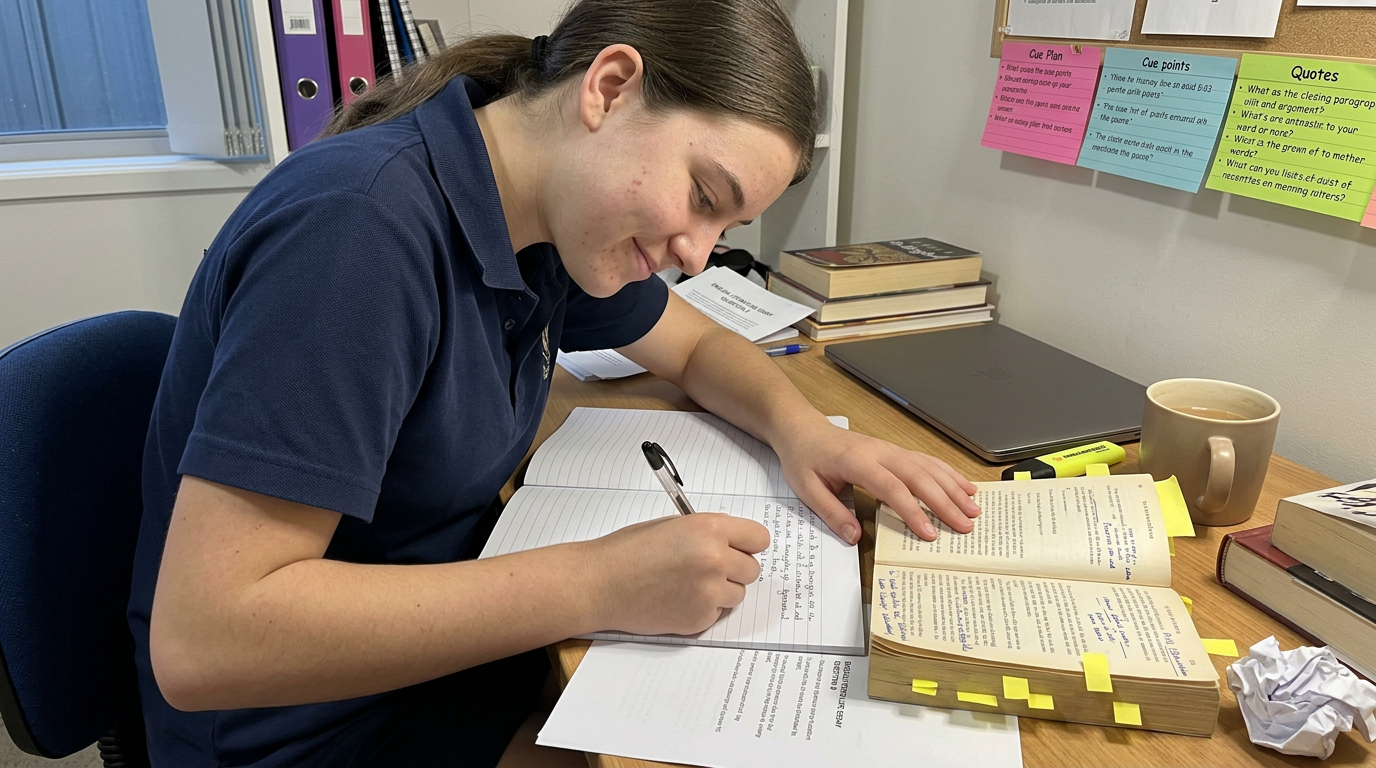
When should we get an English tutor?
Three signals usually mean it's time. One: a school report or NAPLAN result places your child in "Developing" or "Needs additional support" on reading, writing, or language conventions. Two: the teacher mentions reading-comprehension or writing struggles at parent–teacher interviews, or flags that homework is taking far longer than peers. Three: your child is avoiding English-heavy work — pushing back on reading, going quiet on writing tasks, getting frustrated at word problems they could solve if the words were clearer. Earlier is almost always better than later: the gap compounds as the curriculum gets harder. For primary children (Foundation through Year 6), 30-minute sessions are plenty and can run with a parent in the room. For lower-secondary and senior students, a weekly 60-minute one-to-one session with an online English tutor focused on the actual schoolwork is more effective than a generic "English course."
How long does it take to become English-proficient academically?
The honest answer is years, not months — and the research-backed framework that explains why is Cummins' BICS vs CALP distinction. BICS (Basic Interpersonal Communication Skills) is conversational English: ordering food, talking with friends, understanding the playground. Children typically pick this up in 6 months to 2 years and parents often think the work is done at this point. It isn't. CALP (Cognitive Academic Language Proficiency) is the academic English needed to read a textbook, structure an essay, decode a maths word problem, and interpret an exam question. CALP takes 5–7 years of consistent exposure and instruction to fully develop, even for children who sound completely fluent on the playground. ACARA, NSW Department of Education, and the Australian Council of TESOL Associations (ACTA) all use this framework. Plan in years — but small, weekly investments compound.
Should bilingual children focus on English at home?
No — and the research is clear on this. Maintaining the home language is one of the strongest things parents can do for English proficiency, not a competing priority. The Cummins "linguistic interdependence" principle (which underpins ACARA's EAL/D guidance) holds that literacy skills, vocabulary depth, and reasoning developed in a first language transfer to the second. A child who can think and read deeply in their home language has the cognitive scaffolding for academic English to attach to. The opposite — abandoning the home language too early — usually produces children who are conversational in English and shallow in both. Practically, that means: keep reading, talking, and explaining concepts in your home language at home; let school handle the English instruction; if the school has a Languages Other Than English (LOTE) program in your home language, take it. The gain shows up in NAPLAN reading and senior-level essay writing alike.
What does an English tutor for an EAL/D student actually cost in Australia?
Private one-to-one English tutoring in Australia typically runs A$55–A$85 per hour, with marketplace tutors usually at the lower end and managed services at the higher end. Tutero English tutoring starts at A$65 per hour with the same rate from primary through senior — there's no senior premium and no surcharge for EAL/D-focused work, just one rate. There are no contracts, sessions are weekly online, and the tutor is matched to the year level and the specific English need (reading comprehension, writing structure, exam-style essays, NAPLAN prep, EAL stream support). Compared with the cost of a child quietly drifting in primary then needing intensive Year 11–12 support, weekly support starting earlier is usually the cheaper choice over the years 5–7 horizon CALP development needs.
The bottom line
English proficiency is the language every other Australian school subject runs on. NAPLAN tests it directly in Years 3, 5, 7 and 9; ATAR makes it the only compulsory senior subject. EAL/D learners — including children of migrants, Indigenous students whose first dialect is Aboriginal English, and Australian-born bilingual children — usually need 5–7 years of consistent support to reach academic English (CALP), even when they sound fluent in conversation (BICS) earlier. Schools provide structured support through state EAL/D programs and the four-phase Learning Progression. Parents support best by reading aloud daily in any language, keeping the home language strong, and getting targeted weekly help — at home, at school, or with a tutor — as soon as a report or teacher flags a gap. The earlier the support, the smaller the gap stays.
Related reading
- 4 advantages of learning a second language at school — paired companion: why bilingualism is an asset, not a competing priority.
- 5 key benefits of private tutoring — what one-to-one tutoring actually changes.
- The ideal time to begin tutoring — why earlier is usually cheaper over the long horizon.
- How personalised tutoring can help your child — the case for tailoring the lesson to the actual school task.
- 5 signs that your child needs tutoring — the early-warning checklist parents miss.
- 4 tips to know if your child is falling behind at school — what report-card flags actually mean.
- How tutoring can improve confidence in maths — the cross-subject companion: maths struggles often hide reading struggles.
Ready to find an English tutor for your child? Tutero matches you with a one-to-one Australian tutor who works on the actual English your child has at school — reading, writing, comprehension, NAPLAN, EAL stream support, or senior-level essays. A$65 per hour, no contracts, weekly online sessions, primary through Year 12. Find an English tutor in Australia.
If your child is in an Australian school and English isn't your first language at home — or English is just hard for them — proficient English isn't a "nice to have." It's the language that every other subject is taught in, assessed in, and reported on. Reading, writing, maths word problems, science investigations, history sources, even PDHPE worksheets all run on English. So when English proficiency lags, the whole report card lags with it. The good news: the gap is closeable, and there are clear pathways inside the Australian system to close it.
Quick answer: English proficiency matters in Australian education because it's the language of instruction and assessment across every subject from Foundation through to ATAR. NAPLAN tests reading and writing directly. ATAR English (in any of its three forms) is the only compulsory subject. Children learning English as an Additional Language or Dialect (EAL/D — formerly ESL) typically take 5–7 years of consistent support to reach the academic English proficiency their classmates already have, per the Cummins BICS/CALP framework that underpins ACARA's EAL/D guidance.
Why is English proficiency important in Australian education?
English is the language of instruction in every Australian state and territory school. That means English proficiency isn't separate from the rest of the curriculum — it sits underneath every other subject. A maths word problem, a science prac write-up, a humanities source analysis, a coding rubric, a sport-team note home: all of it lands in English. When a child reads English fluently, they get the question; when they don't, they're solving two problems at once (decode the language AND answer the maths). ACARA's EAL/D Teacher Resource describes this directly: EAL/D learners are "learning English, through English, and about English simultaneously." Proficiency stops being a literacy issue and becomes the gateway to every report-card grade — primary, lower-secondary, and senior years alike.
How does English proficiency affect NAPLAN results?
NAPLAN tests reading, writing, language conventions (spelling, grammar, punctuation), and numeracy in Years 3, 5, 7 and 9. Three of those four are direct English-proficiency tests; the fourth (numeracy) still relies on reading word problems in English. ACARA reports NAPLAN results against four proficiency standards — Exceeding, Strong, Developing, and Needs additional support — and the bands shift up at each year level, so the bar a Year 9 reader needs to clear is genuinely higher than a Year 3 reader. Children with weaker academic English are disproportionately likely to land in the "Needs additional support" band on reading and writing. The result is national, school-level, and individual: weak English proficiency narrows what the report shows is possible, and a NAPLAN flag is often a parent's first signal that targeted English support — whether at school, at home, or with a one-to-one online tutor — would help.
What does English proficiency mean for ATAR?
English is the only subject every Year 12 student in Australia must take to be eligible for an ATAR. It comes in three streams in most states — mainstream English, English Standard, and EAL/EAL+D (the names vary slightly between NSW HSC, VCE, QCE, SACE, and WACE) — but you can't skip it. ATAR scaling then makes English proficiency matter twice: a stronger English score scales up nicely and lifts the aggregate, while a weaker English score caps how high the ATAR can climb regardless of the other four subjects. EAL/EAL+D streams exist precisely so students whose first language isn't English aren't penalised for that on the ATAR — eligibility for EAL is determined by your state's senior assessment authority based on years of schooling in English. Talk to the school about which English stream genuinely fits your child; the wrong stream choice can quietly cost an ATAR point or two.
How can I help my child with English at home if English isn't our first language?
Read aloud, every day, in any language. The single best-evidence move for primary-aged EAL/D children is shared reading at home — and it works in your home language as much as in English. Strong literacy in a first language transfers to English; ACARA's EAL/D advice and the Cummins framework both make this point explicitly. From Year 3 onwards, add a simple "explain it back" routine: after a chapter or a worksheet, the child explains what just happened in their own words. Watch English TV with English subtitles on (the closed-caption track helps decode words your child hears but can't yet read). Subscribe to a children's library service in your home language too — bilingual readers anchor vocabulary in both directions. Don't drop your home language to "focus on English"; that costs the long-term reading scaffolding without speeding up English.
What support does an EAL/D student get in Australian schools?
EAL/D (English as an Additional Language or Dialect — the term ACARA replaced ESL with) covers a broader group than parents often realise: international students, refugees, Australian-born children of migrants, and Aboriginal and Torres Strait Islander students whose first dialect is Aboriginal English. Schools are funded through state-specific equity loadings — for example, families in Sydney and across NSW receive support through the English Language Proficiency loading, while families in Melbourne and Victoria receive it through the EAL Index, and Queensland uses an EAL/D allocation. Most states use the four-phase EAL/D Learning Progression — Beginning, Emerging, Developing, Consolidating — and report against it in school reports. Practical support usually looks like: pull-out English lessons with a specialist EAL/D teacher, in-class differentiation, scaffolded writing tasks, visual aids, encouragement to use the home language for thinking. The amount and shape of support varies by state and school, so the right move is to ask the classroom teacher specifically: "Is my child being assessed against the EAL/D Learning Progression, and which phase are they in?"
When should we get an English tutor?
Three signals usually mean it's time. One: a school report or NAPLAN result places your child in "Developing" or "Needs additional support" on reading, writing, or language conventions. Two: the teacher mentions reading-comprehension or writing struggles at parent–teacher interviews, or flags that homework is taking far longer than peers. Three: your child is avoiding English-heavy work — pushing back on reading, going quiet on writing tasks, getting frustrated at word problems they could solve if the words were clearer. Earlier is almost always better than later: the gap compounds as the curriculum gets harder. For primary children (Foundation through Year 6), 30-minute sessions are plenty and can run with a parent in the room. For lower-secondary and senior students, a weekly 60-minute one-to-one session with an online English tutor focused on the actual schoolwork is more effective than a generic "English course."
How long does it take to become English-proficient academically?
The honest answer is years, not months — and the research-backed framework that explains why is Cummins' BICS vs CALP distinction. BICS (Basic Interpersonal Communication Skills) is conversational English: ordering food, talking with friends, understanding the playground. Children typically pick this up in 6 months to 2 years and parents often think the work is done at this point. It isn't. CALP (Cognitive Academic Language Proficiency) is the academic English needed to read a textbook, structure an essay, decode a maths word problem, and interpret an exam question. CALP takes 5–7 years of consistent exposure and instruction to fully develop, even for children who sound completely fluent on the playground. ACARA, NSW Department of Education, and the Australian Council of TESOL Associations (ACTA) all use this framework. Plan in years — but small, weekly investments compound.
Should bilingual children focus on English at home?
No — and the research is clear on this. Maintaining the home language is one of the strongest things parents can do for English proficiency, not a competing priority. The Cummins "linguistic interdependence" principle (which underpins ACARA's EAL/D guidance) holds that literacy skills, vocabulary depth, and reasoning developed in a first language transfer to the second. A child who can think and read deeply in their home language has the cognitive scaffolding for academic English to attach to. The opposite — abandoning the home language too early — usually produces children who are conversational in English and shallow in both. Practically, that means: keep reading, talking, and explaining concepts in your home language at home; let school handle the English instruction; if the school has a Languages Other Than English (LOTE) program in your home language, take it. The gain shows up in NAPLAN reading and senior-level essay writing alike.
What does an English tutor for an EAL/D student actually cost in Australia?
Private one-to-one English tutoring in Australia typically runs A$55–A$85 per hour, with marketplace tutors usually at the lower end and managed services at the higher end. Tutero English tutoring starts at A$65 per hour with the same rate from primary through senior — there's no senior premium and no surcharge for EAL/D-focused work, just one rate. There are no contracts, sessions are weekly online, and the tutor is matched to the year level and the specific English need (reading comprehension, writing structure, exam-style essays, NAPLAN prep, EAL stream support). Compared with the cost of a child quietly drifting in primary then needing intensive Year 11–12 support, weekly support starting earlier is usually the cheaper choice over the years 5–7 horizon CALP development needs.
The bottom line
English proficiency is the language every other Australian school subject runs on. NAPLAN tests it directly in Years 3, 5, 7 and 9; ATAR makes it the only compulsory senior subject. EAL/D learners — including children of migrants, Indigenous students whose first dialect is Aboriginal English, and Australian-born bilingual children — usually need 5–7 years of consistent support to reach academic English (CALP), even when they sound fluent in conversation (BICS) earlier. Schools provide structured support through state EAL/D programs and the four-phase Learning Progression. Parents support best by reading aloud daily in any language, keeping the home language strong, and getting targeted weekly help — at home, at school, or with a tutor — as soon as a report or teacher flags a gap. The earlier the support, the smaller the gap stays.
Related reading
- 4 advantages of learning a second language at school — paired companion: why bilingualism is an asset, not a competing priority.
- 5 key benefits of private tutoring — what one-to-one tutoring actually changes.
- The ideal time to begin tutoring — why earlier is usually cheaper over the long horizon.
- How personalised tutoring can help your child — the case for tailoring the lesson to the actual school task.
- 5 signs that your child needs tutoring — the early-warning checklist parents miss.
- 4 tips to know if your child is falling behind at school — what report-card flags actually mean.
- How tutoring can improve confidence in maths — the cross-subject companion: maths struggles often hide reading struggles.
Ready to find an English tutor for your child? Tutero matches you with a one-to-one Australian tutor who works on the actual English your child has at school — reading, writing, comprehension, NAPLAN, EAL stream support, or senior-level essays. A$65 per hour, no contracts, weekly online sessions, primary through Year 12. Find an English tutor in Australia.
FAQ
.svg)
.svg)
Online maths tutoring at Tutero is catering to students of all year levels. We offer programs tailored to the unique learning curves of each age group.
We also have expert NAPLAN and ATAR subject tutors, ensuring students are well-equipped for these pivotal assessments.
We recommend at least two to three session per week for consistent progress. However, this can vary based on your child's needs and goals.
Our platform uses advanced security protocols to ensure the safety and privacy of all our online sessions.
Parents are welcome to observe sessions. We believe in a collaborative approach to education.
We provide regular progress reports and assessments to track your child’s academic development.
Yes, we prioritise the student-tutor relationship and can arrange a change if the need arises.
Yes, we offer a range of resources and materials, including interactive exercises and practice worksheets.

If your child is in an Australian school and English isn't your first language at home — or English is just hard for them — proficient English isn't a "nice to have." It's the language that every other subject is taught in, assessed in, and reported on. Reading, writing, maths word problems, science investigations, history sources, even PDHPE worksheets all run on English. So when English proficiency lags, the whole report card lags with it. The good news: the gap is closeable, and there are clear pathways inside the Australian system to close it.
Quick answer: English proficiency matters in Australian education because it's the language of instruction and assessment across every subject from Foundation through to ATAR. NAPLAN tests reading and writing directly. ATAR English (in any of its three forms) is the only compulsory subject. Children learning English as an Additional Language or Dialect (EAL/D — formerly ESL) typically take 5–7 years of consistent support to reach the academic English proficiency their classmates already have, per the Cummins BICS/CALP framework that underpins ACARA's EAL/D guidance.
Why is English proficiency important in Australian education?
English is the language of instruction in every Australian state and territory school. That means English proficiency isn't separate from the rest of the curriculum — it sits underneath every other subject. A maths word problem, a science prac write-up, a humanities source analysis, a coding rubric, a sport-team note home: all of it lands in English. When a child reads English fluently, they get the question; when they don't, they're solving two problems at once (decode the language AND answer the maths). ACARA's EAL/D Teacher Resource describes this directly: EAL/D learners are "learning English, through English, and about English simultaneously." Proficiency stops being a literacy issue and becomes the gateway to every report-card grade — primary, lower-secondary, and senior years alike.
How does English proficiency affect NAPLAN results?
NAPLAN tests reading, writing, language conventions (spelling, grammar, punctuation), and numeracy in Years 3, 5, 7 and 9. Three of those four are direct English-proficiency tests; the fourth (numeracy) still relies on reading word problems in English. ACARA reports NAPLAN results against four proficiency standards — Exceeding, Strong, Developing, and Needs additional support — and the bands shift up at each year level, so the bar a Year 9 reader needs to clear is genuinely higher than a Year 3 reader. Children with weaker academic English are disproportionately likely to land in the "Needs additional support" band on reading and writing. The result is national, school-level, and individual: weak English proficiency narrows what the report shows is possible, and a NAPLAN flag is often a parent's first signal that targeted English support — whether at school, at home, or with a one-to-one online tutor — would help.
What does English proficiency mean for ATAR?
English is the only subject every Year 12 student in Australia must take to be eligible for an ATAR. It comes in three streams in most states — mainstream English, English Standard, and EAL/EAL+D (the names vary slightly between NSW HSC, VCE, QCE, SACE, and WACE) — but you can't skip it. ATAR scaling then makes English proficiency matter twice: a stronger English score scales up nicely and lifts the aggregate, while a weaker English score caps how high the ATAR can climb regardless of the other four subjects. EAL/EAL+D streams exist precisely so students whose first language isn't English aren't penalised for that on the ATAR — eligibility for EAL is determined by your state's senior assessment authority based on years of schooling in English. Talk to the school about which English stream genuinely fits your child; the wrong stream choice can quietly cost an ATAR point or two.
How can I help my child with English at home if English isn't our first language?
Read aloud, every day, in any language. The single best-evidence move for primary-aged EAL/D children is shared reading at home — and it works in your home language as much as in English. Strong literacy in a first language transfers to English; ACARA's EAL/D advice and the Cummins framework both make this point explicitly. From Year 3 onwards, add a simple "explain it back" routine: after a chapter or a worksheet, the child explains what just happened in their own words. Watch English TV with English subtitles on (the closed-caption track helps decode words your child hears but can't yet read). Subscribe to a children's library service in your home language too — bilingual readers anchor vocabulary in both directions. Don't drop your home language to "focus on English"; that costs the long-term reading scaffolding without speeding up English.
What support does an EAL/D student get in Australian schools?
EAL/D (English as an Additional Language or Dialect — the term ACARA replaced ESL with) covers a broader group than parents often realise: international students, refugees, Australian-born children of migrants, and Aboriginal and Torres Strait Islander students whose first dialect is Aboriginal English. Schools are funded through state-specific equity loadings — for example, families in Sydney and across NSW receive support through the English Language Proficiency loading, while families in Melbourne and Victoria receive it through the EAL Index, and Queensland uses an EAL/D allocation. Most states use the four-phase EAL/D Learning Progression — Beginning, Emerging, Developing, Consolidating — and report against it in school reports. Practical support usually looks like: pull-out English lessons with a specialist EAL/D teacher, in-class differentiation, scaffolded writing tasks, visual aids, encouragement to use the home language for thinking. The amount and shape of support varies by state and school, so the right move is to ask the classroom teacher specifically: "Is my child being assessed against the EAL/D Learning Progression, and which phase are they in?"
When should we get an English tutor?
Three signals usually mean it's time. One: a school report or NAPLAN result places your child in "Developing" or "Needs additional support" on reading, writing, or language conventions. Two: the teacher mentions reading-comprehension or writing struggles at parent–teacher interviews, or flags that homework is taking far longer than peers. Three: your child is avoiding English-heavy work — pushing back on reading, going quiet on writing tasks, getting frustrated at word problems they could solve if the words were clearer. Earlier is almost always better than later: the gap compounds as the curriculum gets harder. For primary children (Foundation through Year 6), 30-minute sessions are plenty and can run with a parent in the room. For lower-secondary and senior students, a weekly 60-minute one-to-one session with an online English tutor focused on the actual schoolwork is more effective than a generic "English course."
How long does it take to become English-proficient academically?
The honest answer is years, not months — and the research-backed framework that explains why is Cummins' BICS vs CALP distinction. BICS (Basic Interpersonal Communication Skills) is conversational English: ordering food, talking with friends, understanding the playground. Children typically pick this up in 6 months to 2 years and parents often think the work is done at this point. It isn't. CALP (Cognitive Academic Language Proficiency) is the academic English needed to read a textbook, structure an essay, decode a maths word problem, and interpret an exam question. CALP takes 5–7 years of consistent exposure and instruction to fully develop, even for children who sound completely fluent on the playground. ACARA, NSW Department of Education, and the Australian Council of TESOL Associations (ACTA) all use this framework. Plan in years — but small, weekly investments compound.
Should bilingual children focus on English at home?
No — and the research is clear on this. Maintaining the home language is one of the strongest things parents can do for English proficiency, not a competing priority. The Cummins "linguistic interdependence" principle (which underpins ACARA's EAL/D guidance) holds that literacy skills, vocabulary depth, and reasoning developed in a first language transfer to the second. A child who can think and read deeply in their home language has the cognitive scaffolding for academic English to attach to. The opposite — abandoning the home language too early — usually produces children who are conversational in English and shallow in both. Practically, that means: keep reading, talking, and explaining concepts in your home language at home; let school handle the English instruction; if the school has a Languages Other Than English (LOTE) program in your home language, take it. The gain shows up in NAPLAN reading and senior-level essay writing alike.
What does an English tutor for an EAL/D student actually cost in Australia?
Private one-to-one English tutoring in Australia typically runs A$55–A$85 per hour, with marketplace tutors usually at the lower end and managed services at the higher end. Tutero English tutoring starts at A$65 per hour with the same rate from primary through senior — there's no senior premium and no surcharge for EAL/D-focused work, just one rate. There are no contracts, sessions are weekly online, and the tutor is matched to the year level and the specific English need (reading comprehension, writing structure, exam-style essays, NAPLAN prep, EAL stream support). Compared with the cost of a child quietly drifting in primary then needing intensive Year 11–12 support, weekly support starting earlier is usually the cheaper choice over the years 5–7 horizon CALP development needs.
The bottom line
English proficiency is the language every other Australian school subject runs on. NAPLAN tests it directly in Years 3, 5, 7 and 9; ATAR makes it the only compulsory senior subject. EAL/D learners — including children of migrants, Indigenous students whose first dialect is Aboriginal English, and Australian-born bilingual children — usually need 5–7 years of consistent support to reach academic English (CALP), even when they sound fluent in conversation (BICS) earlier. Schools provide structured support through state EAL/D programs and the four-phase Learning Progression. Parents support best by reading aloud daily in any language, keeping the home language strong, and getting targeted weekly help — at home, at school, or with a tutor — as soon as a report or teacher flags a gap. The earlier the support, the smaller the gap stays.
Related reading
- 4 advantages of learning a second language at school — paired companion: why bilingualism is an asset, not a competing priority.
- 5 key benefits of private tutoring — what one-to-one tutoring actually changes.
- The ideal time to begin tutoring — why earlier is usually cheaper over the long horizon.
- How personalised tutoring can help your child — the case for tailoring the lesson to the actual school task.
- 5 signs that your child needs tutoring — the early-warning checklist parents miss.
- 4 tips to know if your child is falling behind at school — what report-card flags actually mean.
- How tutoring can improve confidence in maths — the cross-subject companion: maths struggles often hide reading struggles.
Ready to find an English tutor for your child? Tutero matches you with a one-to-one Australian tutor who works on the actual English your child has at school — reading, writing, comprehension, NAPLAN, EAL stream support, or senior-level essays. A$65 per hour, no contracts, weekly online sessions, primary through Year 12. Find an English tutor in Australia.
<p>English is the language of instruction and assessment in every Australian school subject — maths word problems, science reports, history sources, all of it. NAPLAN tests reading and writing directly in Years 3, 5, 7 and 9, and English is the only compulsory ATAR subject. So English proficiency isn't separate from the report card; it's underneath every line of it. Children learning English as an Additional Language or Dialect (EAL/D) typically need 5–7 years of consistent support to reach the academic English level their classmates already have.</p>
<p>NAPLAN tests reading, writing, language conventions, and numeracy. Three of the four are direct English-proficiency assessments and the fourth still relies on reading word problems in English. ACARA reports against four bands — Exceeding, Strong, Developing, and Needs additional support — with the bar rising at each year level. Children with weaker academic English are over-represented in the Developing and Needs additional support bands, and a NAPLAN flag is often the first signal a parent gets that targeted English tutoring would help.</p>
<p>English is the only compulsory ATAR subject in Australia. Most states offer three streams (mainstream, English Standard, EAL/EAL+D — names vary between HSC, VCE, QCE, SACE and WACE) and ATAR scaling means a stronger English score lifts the aggregate while a weaker one caps how high the ATAR can climb regardless of the other four subjects. EAL streams exist so students whose first language isn't English aren't penalised; eligibility is set by each state's senior assessment authority. Choosing the right English stream matters.</p>
<p>Read aloud every day, in any language — your home language counts and the literacy transfers to English (Cummins linguistic interdependence principle, used by ACARA). From Year 3 onwards, add an explain-it-back routine after each chapter or worksheet. Watch English shows with English subtitles on. Borrow bilingual readers and home-language children's books from your local library. Don't drop the home language to focus on English; that costs the long-term scaffolding without speeding up academic English.</p>
<p>Five to seven years of consistent exposure and instruction, even for children who sound conversationally fluent earlier. The Cummins BICS/CALP framework underpins ACARA's EAL/D guidance: BICS (basic conversational English) takes 6 months to 2 years; CALP (academic English needed for textbooks, essays, and exam questions) takes 5–7 years. Plan in years, not months — but small, weekly investments compound, and the gap can be closed at every year level.</p>
<p>No. Maintaining the home language strengthens English proficiency rather than competing with it. Cummins' linguistic interdependence principle (which underpins ACARA's EAL/D advice) shows that vocabulary depth, reasoning, and reading skills built in a first language transfer to the second. Children who keep their home language strong tend to outperform peers who abandoned it, on both NAPLAN reading and senior English essays. Practical rule: read, talk, and explain ideas in your home language at home; let school handle English instruction.</p>
Hoping to improve confidence & grades?

.png)


