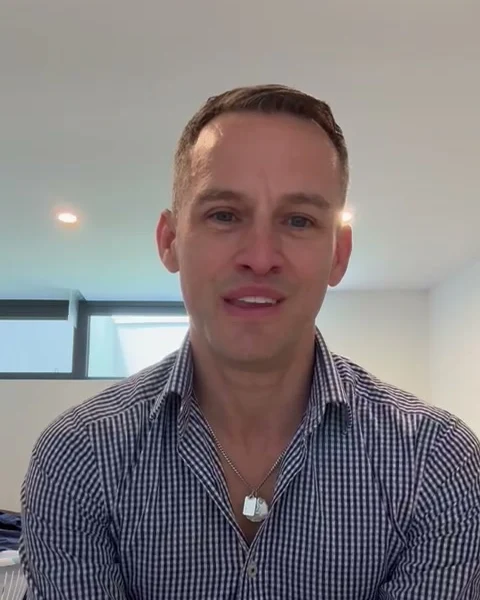





Recorded interview
“She did her catch-up work over summer and lifted from Cs and Bs into the 80s and 90s.”
PriscillaParent of Zoe · Tutor Nazia

Trusted by 4,200+ Australian families
A 1-on-1 QCE Physics tutor, the same one every week. Lessons follow your school's QCE course, from the first unit to the final exam.
The same 1-on-1 QCE Physics tutor every week.
Who is the QCE Physics tutoring for?


Build a consistent relationship with one carefully selected tutor who knows the course inside out.

Each lesson is tailored to the student’s goals to ensure steady, meaningful progress.


“I did my research and Tutero stood out. Our tutor is amazing. I would recommend Tutero to anyone who is looking for tutoring for their kids.”

“She was struggling, and I was trying to find a tutor. The minute I applied for Tutero, I got a call from Joey. I am so grateful that I did.”

“I was searching on Google and I found Tutero. It was convenient and easy to sign up. The tutoring has perfectly fit what we were after.”

Our education team handpicks the perfect tutor for each student based on their needs.

Every family is supported by a dedicated account manager from day one.

Students get access to thousands of engaging resources for every stage of learning.

Track progress with detailed lesson reports available anytime via our app.
Our education team handpicks the perfect tutor for each student based on their needs.
Every family is supported by a dedicated account manager from day one.
Students get access to thousands of engaging resources for every stage of learning.
Track progress with detailed lesson reports available anytime via our app.
4.9 stars from 263 Google reviews.
“She did her catch-up work over summer and lifted from Cs and Bs into the 80s and 90s.”
PriscillaParent of Zoe · Tutor Nazia
“Heath has been fabulous in matching my Year 12 daughter with a tutor who she gets along well with. My daughter has benefitted from this and her work has improved already.”
“Heath has been fabulous in matching my Year 12 daughter with a tutor who she gets along well with. My daughter has benefitted from this and her work has improved already.”
Four ways to get help with QCE Physics tutoring, side by side.
| Tutero | Tutoring centre | Tutor marketplace | Help at school | |
|---|---|---|---|---|
| One tutor per student | Always | Small groups | You vet | Shared |
| Their own curriculum | Every lesson | Sometimes | Depends | Yes |
| Written report | Every lesson | Rarely | Rarely | Rarely |
| Commitment | None | By the term | Varies | School year |
QCE Physics tutoringFrom A$65 an hour, the same rate at every level. No contracts, no sign-up fee. Pay after each lesson.
Get my quoteTutero’s structured tutoring helps QCE Physics students build strong conceptual understanding while preparing thoroughly for school assessments and final exams. Tutors tailor sessions to each student’s learning needs, identifying knowledge gaps and working through challenging topics step by step. With flexible lessons and experienced tutors, students gain greater confidence, improved study habits, and a clearer understanding of key QCE Physics concepts.
From A$65 an hour, the same rate in Year 11 and Year 12. A qualified teacher is from A$75 an hour. There are no contracts and no sign-up fee, and you pay after each lesson.
Every QCE subject, with one tutor per subject. Common choices are General Mathematics, Mathematical Methods, Specialist Mathematics, English, biology, chemistry, physics, psychology and economics. Lessons follow the QCAA syllabuses.
Yes. QCE tutors include qualified teachers and high-achieving graduates who know QCAA syllabuses, internal assessments and external exams. They are selected from the top 2% of applicants.
Yes. Tutors plan lessons around your child’s assessment dates, explain the marking guide and practise the skills each task needs, including problem-solving and modelling tasks in maths.
Yes. Lessons cover revision plans, past external assessment papers, exam technique and timing. Tutors help students find weak areas early and work on them before the exams.
How QCE Physics works, and where a tutor makes the difference.
QCE Physics challenges students to understand and apply scientific principles to real-world systems, from motion and forces to electromagnetism and quantum theory. It’s a subject that rewards logical thinking and precision, but many students struggle to keep up with the pace of internal assessments and external exam preparation.
The Year 11 Physics syllabus forms the foundation for success in Year 12. Topics such as kinematics, energy transfers, wave phenomena, and nuclear processes introduce students to core physics models and problem-solving techniques. Our tutors break these concepts into manageable steps, helping students link theory with real-world applications and lab investigations.
In Year 12, the QCE Physics curriculum shifts to more complex topics including linear motion, electric and magnetic fields, quantum physics, and special relativity. These topics demand conceptual understanding and fluency in calculations. Our tutors guide students through the scaffolding of practical reports, research investigations, and data analysis questions.
What QCE Physics students work on at each stage, and how a tutor helps.
Unit 1 covers heat, nuclear physics and electrical circuits. Unit 2 covers linear motion, forces and waves.
A kettle draws 8 A from a 240 V supply. Find its power.
Answer1920 W
Makes formulas and units second nature, so Units 3 and 4 focus on ideas, not arithmetic.
Based on the QCAA Physics General Senior Syllabus 2025, Units 1 and 2.
Unit 3 covers gravity and motion in two dimensions, then electromagnetism: fields, forces and induction.
A 2 kg mass moves in a circle of radius 0.5 m at 3 m/s. Find the centripetal force.
Answer36 N
Breaks two dimensional problems into clear steps and practises them until the method sticks.
Based on the QCAA Physics General Senior Syllabus 2025, Unit 3.
Unit 4 covers modern physics: special relativity, quantum theory and the Standard Model.
Find the energy of a photon of frequency 5.0 × 10¹⁴ Hz. (h = 6.63 × 10⁻³⁴ J s)
Answer3.3 × 10−19 J
Explains the strange ideas in modern physics clearly and links each one to its evidence.
Based on the QCAA Physics General Senior Syllabus 2025, Unit 4.
In Units 3 and 4, students sit three internal assessments: a data test, a student experiment and a research investigation. Together they count for half the subject result.
A pendulum swings 10 times in 14.0 s. Find its period.
Answer1.40 s
Helps design the experiment, handle uncertainty and write each section to the marking guide.
Based on the QCAA Physics General Senior Syllabus 2025, assessment.
The external exam is set and marked by QCAA, covers Units 3 and 4, and counts for half the subject result.
A ball is thrown horizontally at 15 m/s from 20 m high. How long until it lands? (g = 9.8 m/s2)
AnswerAbout 2.0 s
Times past QCAA papers and marks working line by line, so method marks are never lost.
Based on the QCAA Physics General Senior Syllabus 2025, external assessment.
Who is the tutoring for?