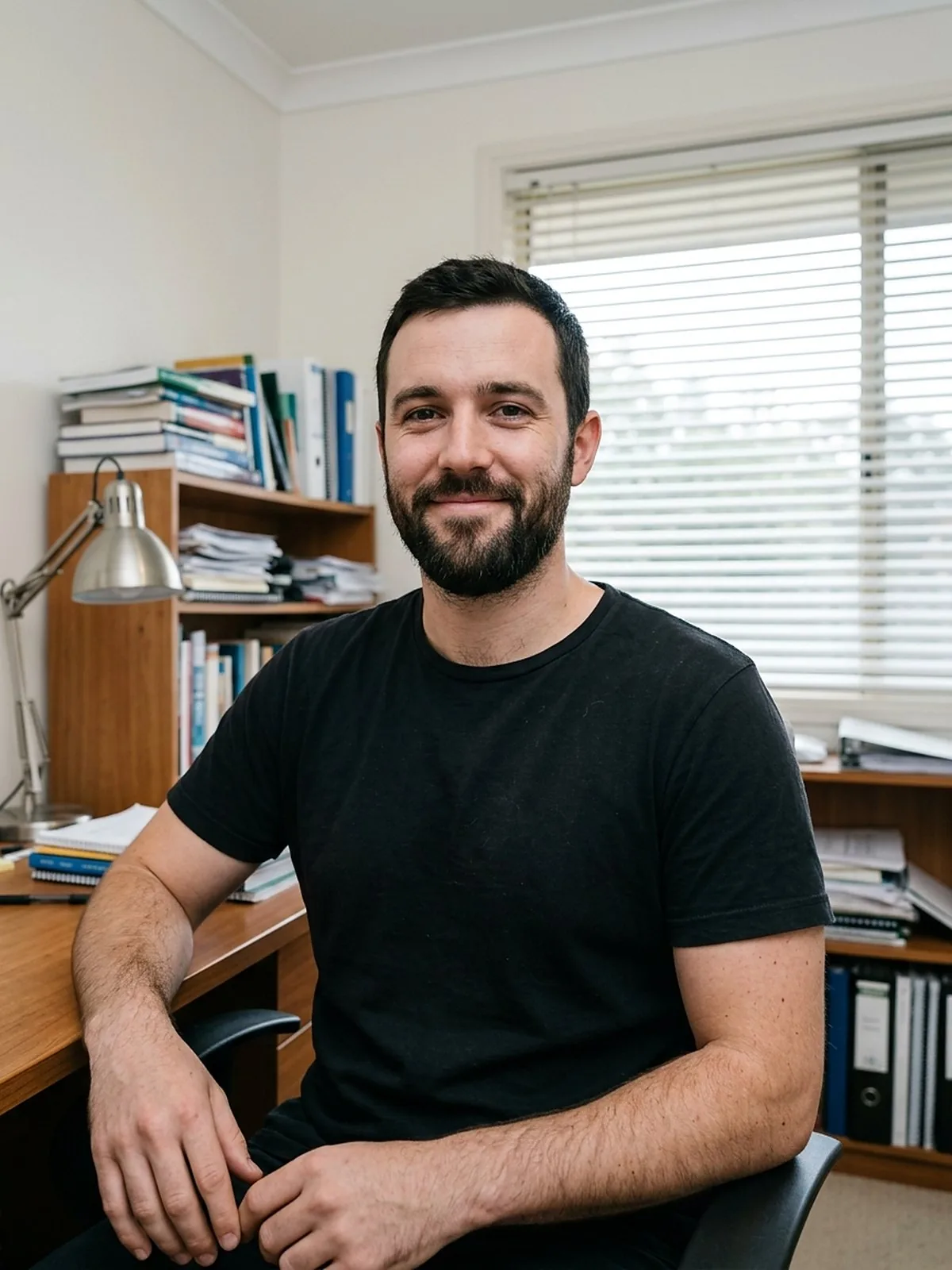
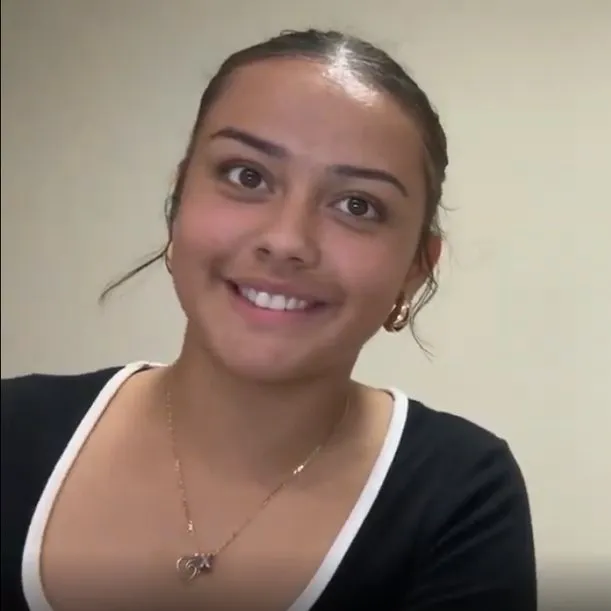
Recorded interview
“I used to rate myself a three. Now my confidence is an eight or a nine.”
XuelaYear 12 maths student

Trusted by 4,200+ Australian families
A 1-on-1 tutor in Wollongong, the same one every week. Lessons follow the NSW syllabus and the HSC.
1-on-1 lessons that follow the NSW syllabus. Same tutor, every week.
Who is the tutoring for?
Tutero students across Wollongong and the wider Illawarra attend a mix of public, Catholic and independent schools, including Illawarra Christian School, St Mary Star of the Sea College, Wollongong High School of the Performing Arts, Edmund Rice College, Smith’s Hill High School, and local schools across Dapto, Shellharbour, Corrimal and Kiama.
 New South Wales
Matched to your child's year and school. The same tutor every week.
Goals set around what your child is learning, reviewed as they go.
After school or on weekends, timed around tests and assessments.
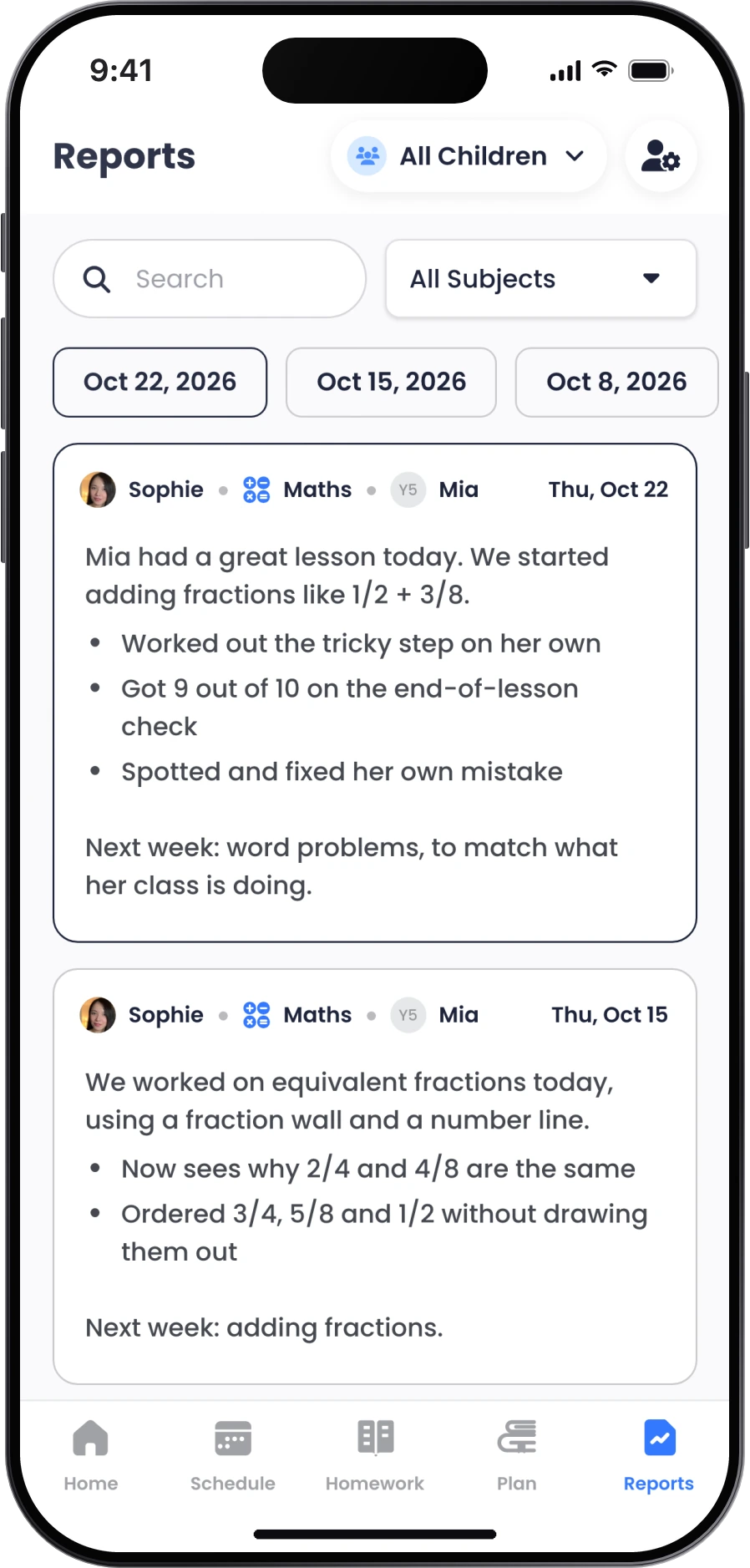
What was covered, how it went and what comes next.
4.9 stars from 263 Google reviews.
“I used to rate myself a three. Now my confidence is an eight or a nine.”
XuelaYear 12 maths student
“My son’s grades have gone up 30% since starting with Tutero 6 months ago. As he is shy in class, having 1:1 tutoring has helped him clarify a lot of core concepts and now he is much better equipped for HSC.”
“My daughter is Year 12 and was facing some challenges with her chemistry. I spoke to Bailey at Tutero and he did a comprehensive review of her needs and matched her with Imogen as her tutor.”
Four ways to get help with tutoring in Wollongong, side by side.
| Tutero | Tutoring centre | Tutor marketplace | Help at school | |
|---|---|---|---|---|
| One tutor per student | Always | Small groups | You vet | Shared |
| Their own curriculum | Every lesson | Sometimes | Depends | Yes |
| Written report | Every lesson | Rarely | Rarely | Rarely |
| Commitment | None | By the term | Varies | School year |
tutoring in WollongongFrom A$65 an hour, the same rate at every level. No contracts, no sign-up fee. Pay after each lesson.
Get my quoteLessons start from A$65/hr. There is no sign-up fee and no contract to sign, so nothing is locked in before the first lesson happens. Billing runs the opposite way to most services: the lesson is delivered, the tutor confirms it, and only then is the family charged. If a week gets busy, you pause. If the student wants a second subject, you add it. The rate reflects the subject and the year level, and your account manager confirms it on the phone before anything is booked.
Kindergarten through to Year 12, across the full subject list: maths, English, science, humanities, languages and economics. A Year 3 student might work on reading and number facts, a Year 9 student on algebra and essay structure, a Year 12 student on senior courses and exam technique. Many families begin with one subject and add a second once the routine sticks. If you are not sure which subject is holding the student back, say so on the quote form and the account manager will work it out on the call.
Not really. Students from schools such as Smith’s Hill High School, Wollongong High School of the Performing Arts, Edmund Rice College, St Mary Star of the Sea College and The Illawarra Grammar School learn with Tutero, and no partnership or referral is needed to start. What matters is the course in front of the student: in Years 11 and 12 that means HSC courses, or the IB Diploma at the schools that offer it, and Tutero tutors both. The goal can be a place at the University of Wollongong or something else entirely.
A person does, not a search filter. An account manager calls before anything is booked, asks what the student is studying, what the last report said and what the goal is, then chooses a tutor who already teaches that course. A Year 7 student finding high school harder than expected and a Year 11 student picking senior subjects need very different tutors, and the call is where that gets sorted. If the fit is wrong after a couple of lessons, say so and we reassign.
Use the quote form at the top of this page. It takes a minute: who the lessons are for, the year level and the subjects that need work. An account manager then calls, usually within 24 hours, to talk through where the student is at and to confirm the rate before anything is booked. The first lesson is scheduled around school, sport and family, and you are only charged after it has happened. Families right along the Illawarra coast start the same way.
Wollongong sits on a narrow strip between the Illawarra escarpment and the sea, and a school week here fills quickly: sport, music, and a train or bus back up the line to Thirroul or south to Dapto before homework even starts. An lesson slots into that week without a drive. In the primary years the work is foundations: reading fluency, number sense and writing that holds together, mapped to the NESA syllabus. Across Years 7 to 10 the subject load widens, and a tutor keeps a student ahead of six or seven courses at once rather than cramming the night before an assessment. In Years 11 and 12 it turns into the HSC: Mathematics Advanced, English Standard or Advanced, Biology, Chemistry or Physics, with assessment tasks and past papers behind them. The tutor is chosen for the course the student is sitting, not for living in the Illawarra. Get a custom quote above and an account manager will call to talk it through.
How school works in New South Wales, from NAPLAN to the HSC, and when tutoring helps most.
The HSC is run by the NSW Education Standards Authority (NESA). Each HSC mark is half the school assessment mark and half the HSC exam mark. School marks are moderated against how the class performs in the exam, so your child’s rank in each school task matters as much as the raw score.
Results are reported in six bands, with Band 6 for marks of 90 and above. UAC then calculates the ATAR from a student’s best 10 scaled units, which must include two units of English. Steady work across Year 12 tasks protects that rank.
NSW schools run four terms. NAPLAN is sat in March in Years 3, 5, 7 and 9, and results are reported in four levels: Exceeding, Strong, Developing and Needs additional support. That gives a clear read on where your child sits against the national standard.
Students choose Year 11 courses in Year 10. English is compulsory, and most students take English Standard or English Advanced, with Extension courses for strong readers and writers. Maths is optional for the HSC, but most students take it, and the level matters for some university courses.
Pick the level your child can do well in, not the one that sounds impressive. Scaling favours harder courses, but a weak result in a harder course can count for less than a strong result in an easier one. Check prerequisites and assumed knowledge first.
Most families start when a subject begins to feel hard, rather than the week before a test. In primary school that is often reading, spelling or times tables. In high school it is usually Year 7, when algebra and essay writing arrive, or Year 10, before senior course choices.
In NSW, Year 12 courses start in Term 4 of Year 11, so the run-in is longer than most families expect. Through Terms 1 to 3, lessons keep every assessment task strong, since school ranks come from those tasks. After the trials, lessons move to past HSC papers under exam timing.
Tutero matches your child, ages 5-18, with a 1-on-1 tutor who knows the NSW syllabus and the HSC. Wollongong families keep the same tutor at the same time each week, lessons start from your child’s own school work, and you get a short report after every lesson. A qualified teacher is from A$75 an hour.
What students in New South Wales learn at every year level, and how a tutor helps.
In NSW the first school year is Kindergarten. The NESA syllabus starts with phonics, early reading and counting, then builds spelling, place value and adding by Year 2.
What is 9 + 7?
Answer16
Secures sounds and number facts early, when they are far easier to build than to repair later.
Based on the NESA English K to 10 and Mathematics K to 10 Syllabuses, Early Stage 1 and Stage 1.
Stages 2 and 3 build comprehension, spelling and planned writing, with times tables, fractions and decimals in maths. NAPLAN is sat in Years 3 and 5.
The power went out at exactly 7:14. In the dark, Sam heard the back gate swing open, then shut again.
Builds paragraph and number skills before high school, while habits are easiest to change.
Based on the NESA English K to 10 and Mathematics K to 10 Syllabuses, Stages 2 and 3.
Stage 4 brings algebra, integers and equations in maths, and analytical and persuasive writing in English. NAPLAN is sat in Year 7.
Solve 3x + 5 = 20.
Answerx = 5
Explains each step of working clearly, so your child can tackle new problems instead of relying on memory.
Based on the NESA Mathematics K to 10 and English K to 10 Syllabuses, Stage 4.
Stage 5 covers essays on set texts, trigonometry and non-linear graphs. Students can also start the HSC minimum standard tests in reading, writing and numeracy from Year 10.
The poet repeats the word 'empty' across three stanzas, so the absence grows louder each time we read it.
Strengthens essays and algebra before Stage 6, and helps your child choose between HSC courses.
Based on the NESA English K to 10 and Mathematics K to 10 Syllabuses, Stage 5; NESA HSC minimum standard.
HSC students choose courses such as English Advanced or Standard and Mathematics Standard, Advanced or Extension. Each HSC mark combines school assessment with the HSC exam.
Differentiate y = 3x2 − 4x + 1.
Answerdy/dx = 6x − 4
Prepares for each assessment task and works through past HSC papers under exam timing.
Based on the NESA Stage 6 Syllabuses and HSC assessment and reporting.
Who is the tutoring for?