




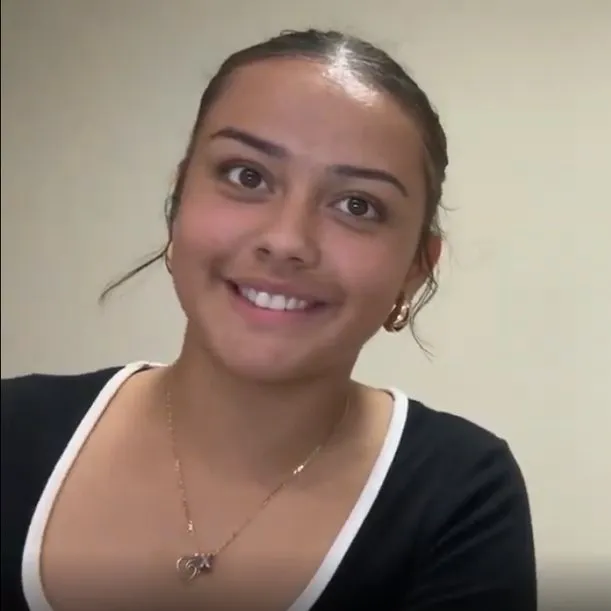
Recorded interview
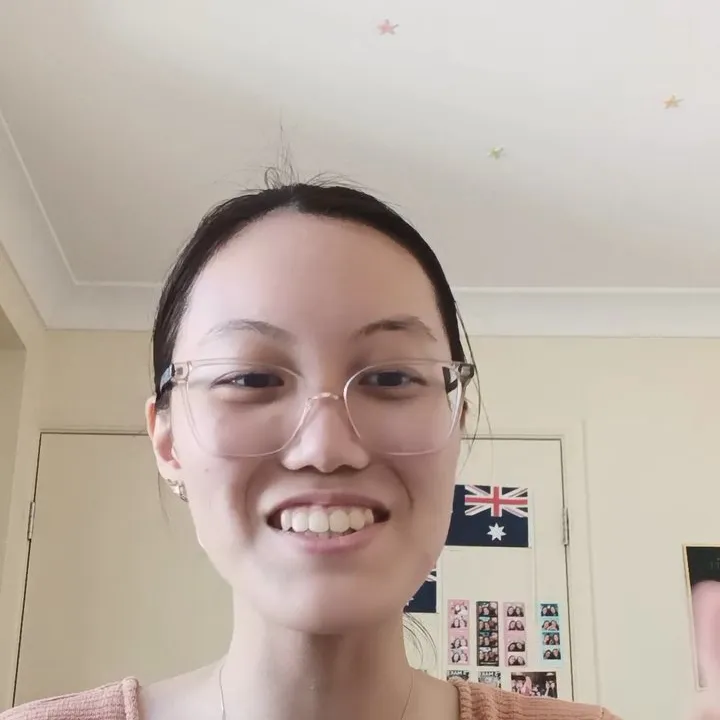
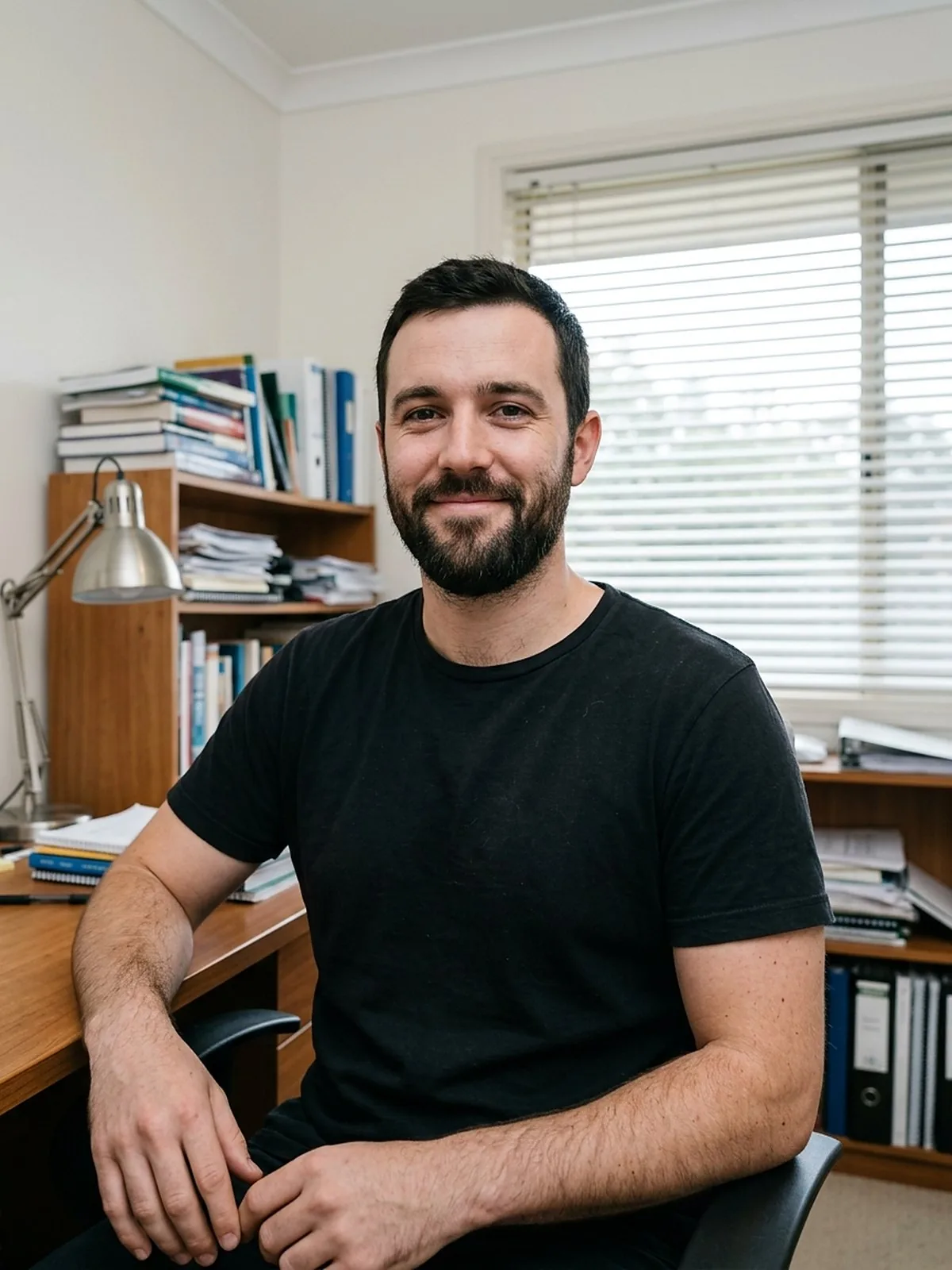
“I used to rate myself a three. Now my confidence is an eight or a nine.”
XuelaYear 12 maths student

Trusted by 4,200+ Australian families
A 1-on-1 tutor in St Kilda, the same one every week. Lessons follow the Victorian Curriculum and the VCE.
1-on-1 lessons that follow the Victorian Curriculum. Same tutor, every week.
Who is the tutoring for?
Students who live in St Kilda may attend one of several nearby schools, including primary schools like St Kilda Primary School, Middle Park Primary School, or Elwood Primary School, and secondary schools like Wesley College, MacRobertson Girls' High School, and Melbourne High School. These schools offer a range of academic programs, extracurricular activities, and sports teams for students to participate in.
Matched to your child's year and school. The same tutor every week.
Goals set around what your child is learning, reviewed as they go.
After school or on weekends, timed around tests and assessments.
What was covered, how it went and what comes next.
4.9 stars from 263 Google reviews.
“I used to rate myself a three. Now my confidence is an eight or a nine.”
XuelaYear 12 maths student
“My daughter is Year 12 and was facing some challenges with her chemistry. I spoke to Bailey at Tutero and he did a comprehensive review of her needs and matched her with Imogen as her tutor.”
“I felt like my grades were poor for my standard in VCE Chemistry at the start of the year. I signed up with Tutero and was given a wonderful tutor. I observed a 39% rise in my grades after our sessions began.”
Four ways to get help with tutoring in St Kilda, side by side.
| Tutero | Tutoring centre | Tutor marketplace | Help at school | |
|---|---|---|---|---|
| One tutor per student | Always | Small groups | You vet | Shared |
| Their own curriculum | Every lesson | Sometimes | Depends | Yes |
| Written report | Every lesson | Rarely | Rarely | Rarely |
| Commitment | None | By the term | Varies | School year |
tutoring in St KildaFrom A$65 an hour, the same rate at every level. No contracts, no sign-up fee. Pay after each lesson.
Get my quoteSt Kilda students from Prep to Year 12 have access to tutoring in core subjects including maths, English, sciences, humanities, and economics. Because tutors follow the Victorian Curriculum F - 10 and VCE Study Designs, students get support that matches their actual schoolwork.
Tutoring starts at A$65 per hour, and the final price reflects the year level, subject, and the kind of support the student needs. St Kilda families receive personalised plans that match their child’s academic goals and pace. Contact our team and we’ll help find the tutor who’s the best fit for your child.
The Victorian Curriculum is the foundation for all sessions with St Kilda students. That includes awareness of NAPLAN requirements and how expectations shift across year levels. The aim is for tutoring to reinforce school learning, and that’s how sessions are planned.
Yes. For senior students in St Kilda, Tutero tutors support VCE subject preparation, including SACs and exam technique. ATAR strategy is part of the process, helping students see how their effort translates into results. Everything is geared towards the student’s specific tertiary goals, not a generic study plan.
The matching process for St Kilda students considers subject, year level, learning style, and goals. Students working towards VCE get tutors who know the exam landscape. Students focused on foundational learning get tutors who specialise in building those skills from the ground up. Matching is completed before sessions begin, so there’s no adjustment period.
All year levels from Prep to Year 12. At primary level, St Kilda students build strong foundations in reading, writing, and maths, guided by the Victorian Curriculum F - 10 and VCE Study Designs. Through secondary school, support keeps pace with more subjects and higher expectations. In senior years, sessions focus on VCE subject mastery and exam preparation, with university readiness woven in throughout.
How school works in Victoria, from NAPLAN to the VCE, and when tutoring helps most.
The VCE is run by the Victorian Curriculum and Assessment Authority (VCAA). Students usually take Units 1 and 2 in Year 11 and Units 3 and 4 in Year 12. Units 1 and 2 are assessed by the school. In Units 3 and 4, school-assessed coursework (SACs) is combined with at least one VCAA exam.
Each Units 3 and 4 subject gets a study score out of 50. VTAC scales the scores and builds the ATAR from an English subject plus the best three other subjects, with 10% of a fifth and sixth subject added on top.
Victorian schools run four terms. NAPLAN is sat in March in Years 3, 5, 7 and 9, and results are reported in four levels: Exceeding, Strong, Developing and Needs additional support. That gives a clear read on where your child sits against the national standard.
Students pick VCE subjects in Year 10, and many schools let them start one Units 1 and 2 subject early. Choose subjects your child enjoys and can do well in, then check prerequisites for the university courses they are considering. VCE VM is the applied pathway into TAFE, apprenticeships or work.
Most families start when a subject begins to feel hard, rather than the week before a test. In primary school that is often reading, spelling or times tables. In high school it is usually Year 7, when algebra and essay writing arrive, or Year 10, before senior course choices.
In Year 12, SACs run all year, so steady weekly work counts. Through Terms 1 to 3, lessons prepare for each SAC and fill the gaps it shows. From the September holidays, lessons move to past VCAA exams under timed conditions, with short review sessions in the weeks before exams start.
Tutero matches your child, ages 5-18, with a 1-on-1 tutor who knows the Victorian Curriculum and the VCE. Melbourne families keep the same tutor at the same time each week, lessons start from your child’s own school work, and you get a short report after every lesson. A qualified teacher is from A$75 an hour.
What students in Victoria learn at every year level, and how a tutor helps.
The Victorian Curriculum starts with letter sounds, early reading and counting, then builds spelling, sentences, place value and adding by Year 2.
On Saturday I helped Dad plant tomatoes, and I got dirt all over my shoes.
Practises sounds, reading aloud and number facts in short, regular sessions, so the basics become automatic.
Based on the VCAA Victorian Curriculum F to 10 (Version 2.0): English and Mathematics, Foundation to Level 2.
Years 3 to 6 build times tables, fractions and decimals, along with comprehension and planned writing. NAPLAN is sat in Years 3 and 5.
What is 3/4 of 28?
Answer21
Finds the exact gap, often times tables or paragraph structure, and works on it every week.
Based on the VCAA Victorian Curriculum F to 10 (Version 2.0), Levels 3 to 6.
The first years of secondary school bring algebra, integers and ratios in maths, and analytical paragraphs about novels, films and poems in English. NAPLAN is sat in Year 7.
Primary students should still get some homework. Ten minutes of reading each night builds a habit that makes high school easier.
Shows your child how to set out working and plan a paragraph, so new topics build on solid habits.
Based on the VCAA Victorian Curriculum F to 10 (Version 2.0), Levels 7 and 8.
Years 9 and 10 cover quadratics, trigonometry and probability, plus text response essays. NAPLAN is sat in Year 9, and Year 10 subject choices shape the VCE.
Solve x2 − 5x + 6 = 0.
Answerx = 2 or x = 3
Strengthens algebra and essay writing before the VCE, and helps your child test which subjects suit them.
Based on the VCAA Victorian Curriculum F to 10 (Version 2.0), Levels 9 and 10.
VCE students take Units 1 to 4 in subjects such as English and Mathematical Methods, with school-assessed coursework and VCAA exams in Year 12. VCE VM is the applied option.
In Macbeth, ambition is not a single choice. Shakespeare shows it as a slow poison that turns a loyal soldier into a tyrant.
Prepares for each SAC and works through past VCAA exams under timed conditions.
Based on the VCAA VCE Study Designs and VCE Vocational Major.
Who is the tutoring for?