


If your child freezes over a maths worksheet, insists they are "just dumb at maths", or gets a tummy ache before a test they could pass easily at home, you are not watching laziness or a lack of ability. You are watching maths anxiety, and it is one of the most common and most fixable reasons a capable child stops trying.
This guide explains why maths anxiety happens, how to spot it, and the calm, practical things you can do at the kitchen table tonight. It is written for parents of children from Reception to Year 9, and it draws on research from the University of Cambridge and guidance from the NHS rather than guesswork.
Quick answer
Maths anxiety is a real feeling of worry or dread about maths that can make a capable child freeze, and it is not a sign of low ability. You can help by keeping maths talk calm at home, practising little and often without a timer, praising effort over speed, and talking to your child's school or GP if the worry starts to affect daily life.
What is maths anxiety in children?
In short: maths anxiety is a genuine stress response to maths, not a measure of ability.

Maths anxiety is a feeling of tension, dread or fear that switches on when a child faces numbers, and it gets in the way of their thinking. It is a real reaction, not an excuse or a mood. It is also easy to miss: research from the University of Cambridge, funded by the Nuffield Foundation, found that three quarters (77%) of children with high maths anxiety are normal to high achievers on curriculum maths tests.
The important part for parents is this: maths anxiety and maths ability are different things. A child can understand a concept perfectly on Tuesday and blank on the same question in a Thursday test. The anxiety, not the knowledge, is what changed.
Why does my child freeze on maths they can do at home?
In short: worry uses up the mental space your child needs to actually do the maths.
Working memory is the small mental "desk" where we hold numbers while we work on them. When a child is anxious, worried thoughts crowd onto that desk and leave little room for the actual problem. This is why a confident home learner can go blank in a test: the maths did not disappear, the working memory did.
So when your Year 4 or Year 7 child says "my brain went blank", they are describing something real. The Year 4 multiplication tables check is a set of 25 timed questions, and timed tests like it, or KS2 SATs in Year 6, can set off exactly this freeze. That is one reason a strong classroom learner and a disappointing test result are not a contradiction. The fix is not more pressure. It is lowering the worry so the desk clears. If the freeze shows up in every subject around exam time, our guide to exam stress covers the wider picture.
What causes maths anxiety in the first place?
In short: it usually builds from a mix of early bad experiences, timed pressure, and messages that maths is a fixed talent.
Maths anxiety rarely has a single cause. Common roots include a stressful early experience (a timed test, or being called on and getting it wrong in front of the class), a small knowledge gap that snowballs, and the widespread belief that people are either "a maths person" or not. Speed pressure is a big one: many children read a timer as a threat, and the threat itself is what freezes them.
Children in the Cambridge study named their own triggers. They pointed to poor marks or test results, and to negative comparisons with friends or siblings. Secondary pupils added the move from primary to secondary school, when the work felt harder, along with test pressure, in particular SATs, and more homework. Parents can also pass anxiety on without meaning to. When a loving adult says "I was hopeless at maths too", a child hears permission to give up.
How can I tell if it is maths anxiety, and what helps?
In short: the behaviour you see has a cause underneath it, and each cause has a simple home response.
Maths anxiety shows up as behaviour, and it is easy to misread the behaviour as attitude. The NHS notes that anxious younger children may become irritable, tearful or clingy, and that older children may start avoiding everyday activities, including going to school. The table below matches the things parents most often notice to what is actually going on, and one calm thing that helps. Use it as a quick check the next time a maths session goes sideways.
| What you might notice | What is happening, and what helps |
|---|---|
| Freezes on a test they can do at home | Worry fills working memory; practise with no timer |
| Says "I am just dumb at maths" | A fixed belief has formed; praise effort and strategy |
| Tummy ache before maths | A real stress response; name it, breathe, small steps |
| Avoids or hides maths homework | Avoidance grows the gap; short regular sessions |
| Melts down over one hard question | All-or-nothing thinking; celebrate partial progress |
| Rushes and will not check | Wants the discomfort to end; one question at a time |
Source: signs and responses drawn from NHS guidance on anxiety in children and the Nuffield-funded University of Cambridge study of maths anxiety.
How do I help my child with maths anxiety at home?
In short: keep sessions short and calm, remove the clock, and treat mistakes as normal.
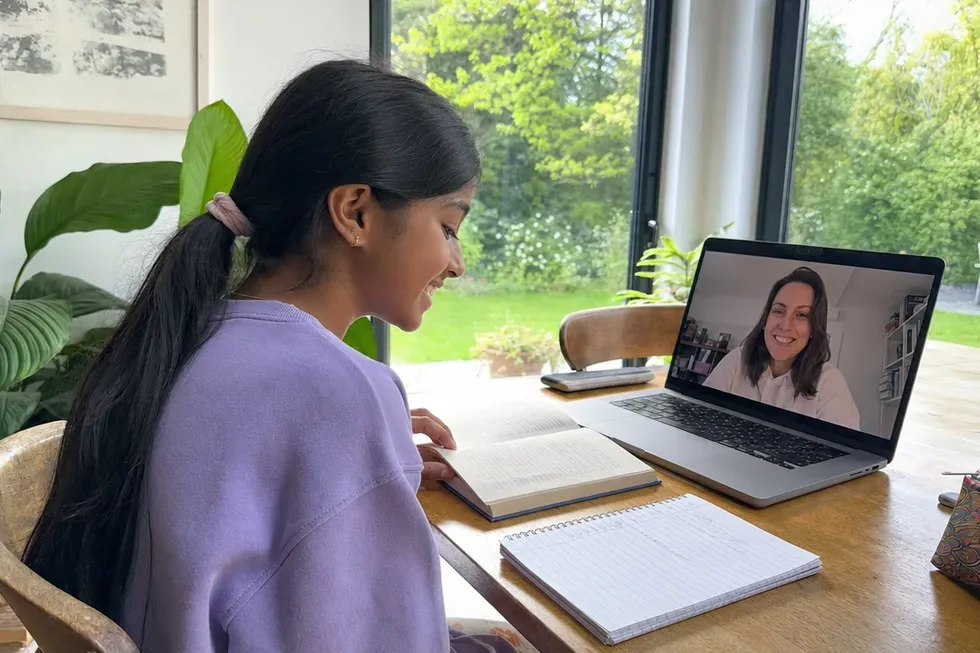
The single most useful shift is to lower the stakes. Anxiety feeds on pressure, so short, regular, untimed sessions beat long, tense marathons. Sit alongside your child rather than across from them, work one question at a time, and let them see you make and fix a mistake without drama. When they get stuck, break the question into smaller steps instead of rescuing them with the answer. For everyday routines, times tables included, see our guide on how to help with maths at home.
A few concrete moves that work:
- Bin the timer. Speed and accuracy are different skills. Build accuracy first and speed follows.
- Name the feeling. "Your brain feels full right now. That is the worry talking, not the maths." Naming it shrinks it.
- Praise the process. "You tried two strategies" beats "you are so smart", which quietly raises the stakes.
- End on a win. Finish each session with a question they can definitely do, so maths gets linked to success rather than dread.
The NHS advice on anxiety in children points the same way: talk to your child about their worries, try not to become overprotective or anxious yourself, and stick to regular routines, which children of all ages find reassuring. Your steadiness is doing more work than any worksheet.
Should I tell my child I was bad at maths too?
In short: no, because it hands them a reason to stop trying.
It feels kind and relatable, but "I was never a maths person" teaches a child that maths ability is fixed and that they have inherited the wrong genes. That belief, called a fixed mindset, makes giving up feel reasonable. The Cambridge researchers make the same point: teachers and parents need to be aware that their own maths anxiety might influence a child's maths anxiety. Swap the old line for language that treats maths as a skill built through practice: "This is tricky, which means your brain is growing" or "You could not do this last month and now you can."
This is not blind positivity. Empty praise does not fool children for long. What rebuilds confidence is clear, well-sequenced teaching that lets them experience real success, one solved question at a time, on work pitched just above what they can already do.
Does avoiding maths make the anxiety worse?
In short: yes, avoidance calms the fear today but widens the gap that caused it.
Avoidance is a trap because it works in the short term. Skipping the homework makes the anxious feeling go away tonight, which teaches the brain that maths is genuinely dangerous and that dodging it is the safe move. Meanwhile the small gap that started the anxiety grows, so the next encounter is harder and the fear is confirmed. The Cambridge review calls this a vicious circle: maths anxiety leading to poorer performance, and poorer performance increasing maths anxiety. It is the loop that turns a wobble in Year 3 into "I hate maths" by Year 7.
Breaking the loop does not mean forcing hour-long sessions. It means small, consistent, low-pressure practice: ten calm minutes most days, on material that is only slightly stretching, so your child collects evidence that maths is survivable and that they are capable. The habit pays off later too, because a loop left alone in Year 7 tends to follow a child into GCSE maths.
When should I get outside help for maths anxiety?
In short: when the fear is persistent, spilling into other subjects, or your own help is turning into conflict.
Get extra support if the anxiety lasts for weeks, shows up as ongoing physical symptoms, leads to school refusal, or if homework has become a nightly battle that is straining your relationship. The NHS says a visit to a GP is a good place to start, and that if anxiety is affecting school life, it is a good idea to talk to the school as well. You can ask for a meeting with your child's class teacher or the SENCO (special educational needs co-ordinator), and most schools offer quiet or safe spaces for anxious pupils.
If the issue is confidence and a specific knowledge gap, one calm, patient adult working 1‑to‑1 can turn it around. A good tutor for 1‑to‑1 maths tutoring helps because the setting removes the two biggest triggers: the audience of a classroom and the clock. If you are weighing a class against a single tutor, our guide to 1‑to‑1 vs group tutoring compares the two. A tutor does not replace help from the school or a GP when distress is serious, but can rebuild the missing foundations at your child's pace.
Related reading
- How to help your child with maths at home
- How to help your child manage exam stress
- Group vs 1‑to‑1 tutoring: which is right for your child?
- ADHD teaching strategies for tutoring
- How to improve your child's attention span
What should you do next?
Start small this week: one untimed, ten-minute session that ends on a question your child can definitely do. If the worry persists, talk to the class teacher or your GP.
If you want a calm adult in your corner, Tutero matches your child with a 1‑to‑1 tutor, from primary tutoring for Reception to Year 6 all the way to Year 13. You can read reviews from other parents first. Lessons are from £45 an hour, or from £65 an hour with a qualified teacher, the same rate at every level and aligned with the National Curriculum. You pay after each lesson, with no contracts, and you can cancel any time. You can meet the tutors and see how online tutoring works before committing to anything.
Whatever path you choose, the goal is the same: enough small, genuine wins that your child changes the story they tell themselves from "I am bad at maths" to "I can get better at this". That single change is what turns maths anxiety around.
If your child freezes over a maths worksheet, insists they are "just dumb at maths", or gets a tummy ache before a test they could pass easily at home, you are not watching laziness or a lack of ability. You are watching maths anxiety, and it is one of the most common and most fixable reasons a capable child stops trying.
This guide explains why maths anxiety happens, how to spot it, and the calm, practical things you can do at the kitchen table tonight. It is written for parents of children from Reception to Year 9, and it draws on research from the University of Cambridge and guidance from the NHS rather than guesswork.
Quick answer
Maths anxiety is a real feeling of worry or dread about maths that can make a capable child freeze, and it is not a sign of low ability. You can help by keeping maths talk calm at home, practising little and often without a timer, praising effort over speed, and talking to your child's school or GP if the worry starts to affect daily life.
What is maths anxiety in children?
In short: maths anxiety is a genuine stress response to maths, not a measure of ability.
Maths anxiety is a feeling of tension, dread or fear that switches on when a child faces numbers, and it gets in the way of their thinking. It is a real reaction, not an excuse or a mood. It is also easy to miss: research from the University of Cambridge, funded by the Nuffield Foundation, found that three quarters (77%) of children with high maths anxiety are normal to high achievers on curriculum maths tests.
The important part for parents is this: maths anxiety and maths ability are different things. A child can understand a concept perfectly on Tuesday and blank on the same question in a Thursday test. The anxiety, not the knowledge, is what changed.
Why does my child freeze on maths they can do at home?
In short: worry uses up the mental space your child needs to actually do the maths.
Working memory is the small mental "desk" where we hold numbers while we work on them. When a child is anxious, worried thoughts crowd onto that desk and leave little room for the actual problem. This is why a confident home learner can go blank in a test: the maths did not disappear, the working memory did.
So when your Year 4 or Year 7 child says "my brain went blank", they are describing something real. The Year 4 multiplication tables check is a set of 25 timed questions, and timed tests like it, or KS2 SATs in Year 6, can set off exactly this freeze. That is one reason a strong classroom learner and a disappointing test result are not a contradiction. The fix is not more pressure. It is lowering the worry so the desk clears. If the freeze shows up in every subject around exam time, our guide to exam stress covers the wider picture.
What causes maths anxiety in the first place?
In short: it usually builds from a mix of early bad experiences, timed pressure, and messages that maths is a fixed talent.
Maths anxiety rarely has a single cause. Common roots include a stressful early experience (a timed test, or being called on and getting it wrong in front of the class), a small knowledge gap that snowballs, and the widespread belief that people are either "a maths person" or not. Speed pressure is a big one: many children read a timer as a threat, and the threat itself is what freezes them.
Children in the Cambridge study named their own triggers. They pointed to poor marks or test results, and to negative comparisons with friends or siblings. Secondary pupils added the move from primary to secondary school, when the work felt harder, along with test pressure, in particular SATs, and more homework. Parents can also pass anxiety on without meaning to. When a loving adult says "I was hopeless at maths too", a child hears permission to give up.
How can I tell if it is maths anxiety, and what helps?
In short: the behaviour you see has a cause underneath it, and each cause has a simple home response.
Maths anxiety shows up as behaviour, and it is easy to misread the behaviour as attitude. The NHS notes that anxious younger children may become irritable, tearful or clingy, and that older children may start avoiding everyday activities, including going to school. The table below matches the things parents most often notice to what is actually going on, and one calm thing that helps. Use it as a quick check the next time a maths session goes sideways.
| What you might notice | What is happening, and what helps |
|---|---|
| Freezes on a test they can do at home | Worry fills working memory; practise with no timer |
| Says "I am just dumb at maths" | A fixed belief has formed; praise effort and strategy |
| Tummy ache before maths | A real stress response; name it, breathe, small steps |
| Avoids or hides maths homework | Avoidance grows the gap; short regular sessions |
| Melts down over one hard question | All-or-nothing thinking; celebrate partial progress |
| Rushes and will not check | Wants the discomfort to end; one question at a time |
Source: signs and responses drawn from NHS guidance on anxiety in children and the Nuffield-funded University of Cambridge study of maths anxiety.
How do I help my child with maths anxiety at home?
In short: keep sessions short and calm, remove the clock, and treat mistakes as normal.
The single most useful shift is to lower the stakes. Anxiety feeds on pressure, so short, regular, untimed sessions beat long, tense marathons. Sit alongside your child rather than across from them, work one question at a time, and let them see you make and fix a mistake without drama. When they get stuck, break the question into smaller steps instead of rescuing them with the answer. For everyday routines, times tables included, see our guide on how to help with maths at home.
A few concrete moves that work:
- Bin the timer. Speed and accuracy are different skills. Build accuracy first and speed follows.
- Name the feeling. "Your brain feels full right now. That is the worry talking, not the maths." Naming it shrinks it.
- Praise the process. "You tried two strategies" beats "you are so smart", which quietly raises the stakes.
- End on a win. Finish each session with a question they can definitely do, so maths gets linked to success rather than dread.
The NHS advice on anxiety in children points the same way: talk to your child about their worries, try not to become overprotective or anxious yourself, and stick to regular routines, which children of all ages find reassuring. Your steadiness is doing more work than any worksheet.
Should I tell my child I was bad at maths too?
In short: no, because it hands them a reason to stop trying.
It feels kind and relatable, but "I was never a maths person" teaches a child that maths ability is fixed and that they have inherited the wrong genes. That belief, called a fixed mindset, makes giving up feel reasonable. The Cambridge researchers make the same point: teachers and parents need to be aware that their own maths anxiety might influence a child's maths anxiety. Swap the old line for language that treats maths as a skill built through practice: "This is tricky, which means your brain is growing" or "You could not do this last month and now you can."
This is not blind positivity. Empty praise does not fool children for long. What rebuilds confidence is clear, well-sequenced teaching that lets them experience real success, one solved question at a time, on work pitched just above what they can already do.
Does avoiding maths make the anxiety worse?
In short: yes, avoidance calms the fear today but widens the gap that caused it.
Avoidance is a trap because it works in the short term. Skipping the homework makes the anxious feeling go away tonight, which teaches the brain that maths is genuinely dangerous and that dodging it is the safe move. Meanwhile the small gap that started the anxiety grows, so the next encounter is harder and the fear is confirmed. The Cambridge review calls this a vicious circle: maths anxiety leading to poorer performance, and poorer performance increasing maths anxiety. It is the loop that turns a wobble in Year 3 into "I hate maths" by Year 7.
Breaking the loop does not mean forcing hour-long sessions. It means small, consistent, low-pressure practice: ten calm minutes most days, on material that is only slightly stretching, so your child collects evidence that maths is survivable and that they are capable. The habit pays off later too, because a loop left alone in Year 7 tends to follow a child into GCSE maths.
When should I get outside help for maths anxiety?
In short: when the fear is persistent, spilling into other subjects, or your own help is turning into conflict.
Get extra support if the anxiety lasts for weeks, shows up as ongoing physical symptoms, leads to school refusal, or if homework has become a nightly battle that is straining your relationship. The NHS says a visit to a GP is a good place to start, and that if anxiety is affecting school life, it is a good idea to talk to the school as well. You can ask for a meeting with your child's class teacher or the SENCO (special educational needs co-ordinator), and most schools offer quiet or safe spaces for anxious pupils.
If the issue is confidence and a specific knowledge gap, one calm, patient adult working 1‑to‑1 can turn it around. A good tutor for 1‑to‑1 maths tutoring helps because the setting removes the two biggest triggers: the audience of a classroom and the clock. If you are weighing a class against a single tutor, our guide to 1‑to‑1 vs group tutoring compares the two. A tutor does not replace help from the school or a GP when distress is serious, but can rebuild the missing foundations at your child's pace.
Related reading
- How to help your child with maths at home
- How to help your child manage exam stress
- Group vs 1‑to‑1 tutoring: which is right for your child?
- ADHD teaching strategies for tutoring
- How to improve your child's attention span
What should you do next?
Start small this week: one untimed, ten-minute session that ends on a question your child can definitely do. If the worry persists, talk to the class teacher or your GP.
If you want a calm adult in your corner, Tutero matches your child with a 1‑to‑1 tutor, from primary tutoring for Reception to Year 6 all the way to Year 13. You can read reviews from other parents first. Lessons are from £45 an hour, or from £65 an hour with a qualified teacher, the same rate at every level and aligned with the National Curriculum. You pay after each lesson, with no contracts, and you can cancel any time. You can meet the tutors and see how online tutoring works before committing to anything.
Whatever path you choose, the goal is the same: enough small, genuine wins that your child changes the story they tell themselves from "I am bad at maths" to "I can get better at this". That single change is what turns maths anxiety around.


Maths anxiety is a real feeling of tension, dread or fear that switches on when a child faces numbers, and it gets in the way of their thinking. It is a stress response, not laziness or a lack of ability. Research from the University of Cambridge found that 77% of children with high maths anxiety are normal to high achievers on curriculum maths tests, so it is easy to miss.
Anxiety fills up working memory, the small mental space a child uses to hold and work through numbers. When worried thoughts crowd that space, there is little room left for the maths, so a confident home learner can go blank in a test. The knowledge did not vanish, the working memory did. Lowering the pressure clears the space.
Keep sessions short, calm and untimed, sit alongside your child rather than opposite them, and work one question at a time. Break hard questions into smaller steps, praise effort and strategy rather than being clever, and treat mistakes as normal. Finish each session on a question they can definitely do, so maths gets linked to success.
No. Saying you were never a maths person teaches your child that maths ability is fixed and inherited, which gives them a reason to stop trying. Swap it for language that treats maths as a skill built through practice, and point to things they could not do last month but can do now.
They can trigger it in a child who is already worried, because timed tests feel like a threat. The Year 4 multiplication tables check is 25 timed questions, and pupils in a University of Cambridge study named test pressure, in particular SATs, as a cause of maths anxiety. Practising without a clock at home, and keeping the test low key, helps lower the stakes.
Get support if the anxiety lasts for weeks, brings ongoing physical symptoms, leads to school refusal, or turns homework into a nightly battle. The NHS suggests starting with your GP and talking to your child's school, including the class teacher or SENCO. For a confidence and knowledge gap, a patient 1‑to‑1 tutor can rebuild the foundations in a calm setting.
Hoping to improve confidence & grades?


