Recorded interview
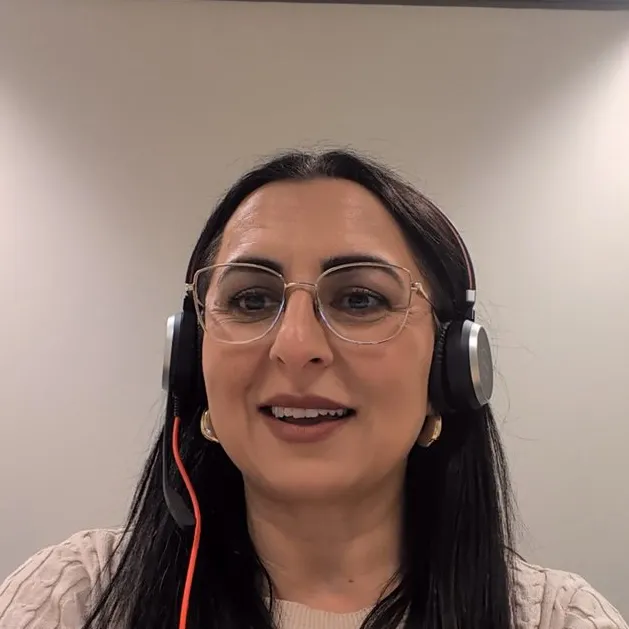
“Amrita loves her tutor Rishika and reaches for maths far more now.”
MadhuParent of Amrita · Tutor Rishika

Trusted by 4,200+ families
A 1-to-1 primary tutor for your child, the same one every week. Reading, writing and Maths, from Reception to the Year 6 SATs.
The same 1-to-1 primary tutor every week, Reception to Year 6.
Who is the primary tutoring for?


Build a consistent relationship with a carefully selected tutor who suits each student's needs.

Each lesson is tailored to the student’s goals to ensure steady, meaningful progress.


“I did my research and Tutero stood out. Our tutor is amazing. I would recommend Tutero to anyone who is looking for tutoring for their kids.”

“She was struggling, and I was trying to find a tutor. The minute I applied for Tutero, I got a call from Joey. I am so grateful that I did.”

“I was searching on Google and I found Tutero. It was convenient and easy to sign up. The tutoring has perfectly fit what we were after.”

Our education team handpicks the perfect tutor for each student based on their needs.

Every family is supported by a dedicated account manager from day one.

Students get access to thousands of engaging resources for every stage of learning.

Track progress with detailed lesson reports available anytime via our app.
Our education team handpicks the perfect tutor for each student based on their needs.
Every family is supported by a dedicated account manager from day one.
Students get access to thousands of engaging resources for every stage of learning.
Track progress with detailed lesson reports available anytime via our app.
4.9 stars from 250+ Google reviews.
“Amrita loves her tutor Rishika and reaches for maths far more now.”
MadhuParent of Amrita · Tutor Rishika
“I highly recommend Tutero. It was very easy to find a tutor and the coaching and the materials are amazing. Thanks to Nathan and Naz for the guidance.”
“My daughter's math teacher is very patient, and she knows how to encourage my daughter to learn it. I am very happy with my daughter's progress.”
Four ways to get help with primary tutoring, side by side.
| Tutero | Tutoring centre | Tutor marketplace | Help at school | |
|---|---|---|---|---|
| One tutor per student | Always | Small groups | You vet | Shared |
| Their own curriculum | Every lesson | Sometimes | Depends | Yes |
| Written report | Every lesson | Rarely | Rarely | Rarely |
| Commitment | None | By the term | Varies | School year |
primary tutoringFrom £45 an hour, the same rate at every level. No contracts, no sign-up fee. Pay after each lesson.
Get my quoteFrom £45 an hour, the same rate from Reception to Year 6. A qualified teacher is from £65 an hour. There are no contracts and no sign-up fee, and you pay after each lesson. All prices are in GBP.
Reading, phonics, writing, spelling, grammar and Maths, plus science and other primary subjects. Lessons follow the National Curriculum for Key Stages 1 and 2 and start from your child’s own school work.
Yes. Tutors prepare children for the KS2 reading, grammar, punctuation and spelling, and Maths papers, with timed practice and a calm routine so test week feels familiar.
Yes. We teach children from Reception to Year 6. Early lessons build phonics, reading and number skills, which are much easier to secure early than to repair later.
Tutors who know the National Curriculum and the primary checks, matched to your child’s needs and year group. Every tutor is selected from the top 2% of applicants.
Tell us about your child and an account manager calls within 24 hours to learn their goals and choose their tutor. Lessons then start 1-to-1, with the same tutor each week and a report after every lesson.
How primary assessment works in England, the dates that matter, and when tutoring helps most.
Primary schools in England follow the National Curriculum, set by the DfE. Reception follows the Early Years Foundation Stage, Years 1 and 2 are Key Stage 1, and Years 3 to 6 are Key Stage 2. National checks are run by the Standards and Testing Agency.
KS2 SATs results are reported as scaled scores from 80 to 120, and 100 or more means a child has met the expected standard. Schools also report teacher assessment in writing. The results go to your child’s secondary school.
The school year runs from September to July in three terms, each with a half term. The national checks below happen in every state primary school in England, and your child’s school will share the exact week.
In Reception and KS1, phonics and number facts matter most. A child who decodes words easily and knows number bonds to 10 has the base for everything that follows. The phonics check in Year 1 gives a clear read on decoding.
In KS2, the work shifts to understanding: inference in reading, planned paragraphs in writing, and fractions, decimals and times tables in Maths. Times tables up to 12 × 12 are expected by the end of Year 4, and they speed up almost every later topic.
Most families start when a subject begins to feel hard, rather than the week before a test. In KS1 that is often reading or number facts. In KS2 it is usually times tables, fractions or writing, or in Year 5 ahead of SATs or the 11+.
In Year 6, a good weekly rhythm is one short timed SATs-style section, marked together, then the topics behind any lost marks. Keep practice calm and short, so test week in May feels routine rather than something to dread.
Your child keeps the same tutor every week, and lessons start from their own school work: this week’s spellings, the times table they are learning or the topic coming next. Lessons are 1-to-1, and you receive a written report after every lesson.
What primary children learn at each stage, and how a tutor helps.
Reception follows the Early Years Foundation Stage. Children start phonics, early reading and counting, and are assessed against the early learning goals at the end of the year.
What is 6 + 3?
Answer9
Makes sounds and numbers fun and secure, so Year 1 starts with confidence.
Based on the DfE Statutory framework for the Early Years Foundation Stage.
Key Stage 1 builds phonics, reading fluency, spelling and handwriting, with place value and addition and subtraction in Maths. The phonics screening check is in June of Year 1.
What is 9 + 7?
Answer16
Secures sounds and number facts early, when they are far easier to build than to repair later.
Based on the DfE National Curriculum in England: English and mathematics programmes of study, Key Stage 1.
Lower Key Stage 2 builds comprehension, paragraphs and grammar, with times tables and written methods in Maths. The multiplication tables check is in June of Year 4.
What is 34 × 6?
Answer204
Builds fast recall and clear written methods before upper KS2.
Based on the DfE National Curriculum in England: Key Stage 2; STA multiplication tables check guidance.
Upper Key Stage 2 brings fractions, decimals and percentages, longer written pieces and inference in reading.
The lights went out at exactly seven o'clock. In the dark, Sam heard the back gate swing open, then shut again.
Builds paragraph and number skills before secondary school, while habits are easiest to change.
Based on the DfE National Curriculum in England: English and mathematics programmes of study, Key Stage 2.
KS2 SATs are sat in May of Year 6, in reading, grammar, punctuation and spelling, and Maths. Writing is assessed by the teacher.
Work out 3/4 of 48.
Answer36
Practises each paper under timed conditions, so test week feels familiar.
Based on the STA Key stage 2 assessment and reporting arrangements.
SATs results are reported as scaled scores, where 100 is the expected standard. Children move to secondary school in Year 7.
Round 4.678 to one decimal place.
Answer4.7
Closes any gaps before Year 7, so secondary school starts strong.
Based on the STA Key stage 2 assessment and reporting arrangements.
Who is the tutoring for?