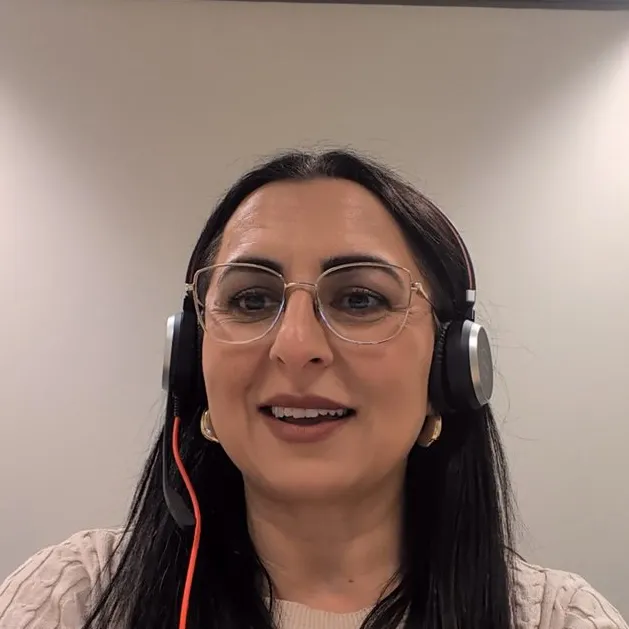



Recorded interview
“I used to rate myself a three. Now my confidence is an eight or a nine.”
XuelaStudent

Trusted by 4,200+ families
A 1-to-1 A level Maths tutor for your child, the same one every week. Pure, statistics and mechanics, plus Further Maths where needed.
The same 1-to-1 A level Maths tutor every week.
Who is the A level Maths tutoring for?


Build a consistent relationship with one carefully selected tutor who knows the course inside out.

Each lesson is tailored to the student’s goals to ensure steady, meaningful progress.


“I did my research and Tutero stood out. Our tutor is amazing. I would recommend Tutero to anyone who is looking for tutoring for their kids.”

“She was struggling, and I was trying to find a tutor. The minute I applied for Tutero, I got a call from Joey. I am so grateful that I did.”

“I was searching on Google and I found Tutero. It was convenient and easy to sign up. The tutoring has perfectly fit what we were after.”

Our education team handpicks the perfect tutor for each student based on their needs.

Every family is supported by a dedicated account manager from day one.

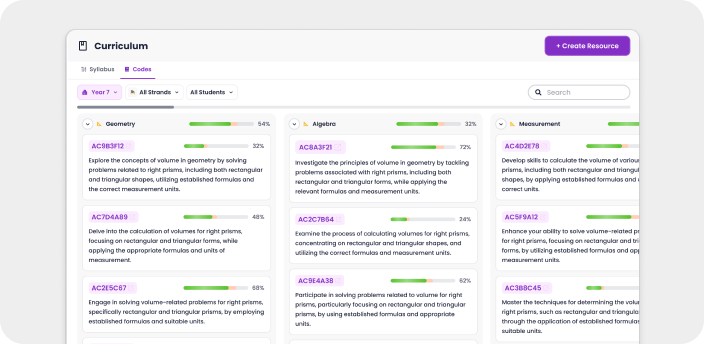
Students get access to thousands of engaging resources for every stage of learning.

Track progress with detailed lesson reports available anytime via our app.
Our education team handpicks the perfect tutor for each student based on their needs.
Every family is supported by a dedicated account manager from day one.
Students get access to thousands of engaging resources for every stage of learning.
Track progress with detailed lesson reports available anytime via our app.
4.9 stars from 250+ Google reviews.
“I used to rate myself a three. Now my confidence is an eight or a nine.”
XuelaStudent
“Tutero has really helped me lift up my grades significantly. My tutor has also helped me pinpoint what I need to work on most and how I can improve.”
“I highly recommend Tutero. It was very easy to find a tutor and the coaching and the materials are amazing. Thanks to Nathan and Naz for the guidance.”
Four ways to get help with A level Maths tutoring, side by side.
| Tutero | Tutoring centre | Tutor marketplace | Help at school | |
|---|---|---|---|---|
| One tutor per student | Always | Small groups | You vet | Shared |
| Their own curriculum | Every lesson | Sometimes | Depends | Yes |
| Written report | Every lesson | Rarely | Rarely | Rarely |
| Commitment | None | By the term | Varies | School year |
A level Maths tutoringFrom £45 an hour, the same rate at every level. No contracts, no sign-up fee. Pay after each lesson.
Get my quoteFrom £45 an hour, the same rate in Year 12 and Year 13. A qualified teacher is from £65 an hour. There are no contracts and no sign-up fee, and you pay after each lesson. All prices are in GBP.
Yes. Tutors teach A level Further Maths alongside A level Maths, including complex numbers, matrices and the optional applied topics. Lessons follow your child’s exam board.
Yes. A level Maths tutors know the AQA, Pearson Edexcel and OCR specifications, including MEI, and the large data set for each. They are selected from the top 2% of applicants.
Yes. Many students find the first term of Year 12 hard because the algebra moves faster. Tutors secure that algebra early, so calculus and the applied topics have a firm base.
Yes. Lessons cover revision plans, past papers, proof and problem-solving practice, exam technique and timing. Tutors help students find weak topics early and work on them before the exams.
Tell us about your child and an account manager calls within 24 hours to learn their goals and choose their tutor. Lessons then start 1-to-1, with the same tutor each week and a report after every lesson.
How A level Maths is assessed, the dates that matter, the exam boards and planning the final months.
A level Maths is regulated by Ofqual and set by exam boards, with content set by the DfE. It is linear: students sit three two-hour papers at the end of Year 13, covering both years. About two thirds is pure maths, and the rest is statistics and mechanics.
It is graded A* to E, and there is no coursework, so the three papers decide the grade. Many universities ask for A level Maths for courses such as engineering, economics and physics, and some ask for Further Maths too.
Each school sets its own mock dates, so ask for them early in Year 13. The summer papers are spread across May and June, and exam boards publish the timetable. University applications go through UCAS in Year 13, with two main deadlines.
Each school chooses one board. The DfE sets the content, so every board covers the same topics, but paper structure and the large data set differ. Ask which board your child sits and practise with that board’s past papers and data set.
The first half term of Year 12 is the best time to start, because the step up from GCSE algebra shows quickly. Weekly lessons work best when they follow class topics: secure this week’s work, then go back to one weak spot. Further Maths students benefit from starting early, as the load doubles.
After Year 13 mocks, the focus shifts to full past papers, timed and marked against the board’s mark schemes. Keep a list of lost marks by topic and redo those questions a week later. Proof and problem-solving questions reward regular practice.
Your child keeps the same tutor every week, and lessons start from their own class work and exam board. Lessons are 1-to-1, and you receive a written report after every lesson, so you always know what was covered and what comes next.
What A level Maths students work on at each stage, and how a tutor helps.
Students decide whether to take A level Maths. Higher tier algebra, especially quadratics and surds, is the best predictor of a smooth start.
Simplify √50 + √18.
Answer8√2
Tries real A level questions with your child, so the decision is made on evidence.
Based on the DfE GCSE mathematics subject content.
Pure maths makes up about two thirds of the A level: algebra, functions, trigonometry, calculus and proof.
Find the stationary point of y = x2 − 8x + 3.
Answer(4, −13)
Builds fluent algebra first, because every pure topic depends on it.
Based on the DfE GCE AS and A level subject content for mathematics.
Statistics covers sampling, probability, distributions and hypothesis testing. Every board sets a large data set that questions can draw on.
X ~ B(10, 0.5). Find P(X = 3).
Answer0.117 (3 s.f.)
Explains the reasoning behind each test, so answers are written in context.
Based on the DfE GCE AS and A level subject content for mathematics.
Mechanics covers kinematics, forces, Newton's laws and moments.
A car accelerates from rest at 2 m/s2 for 5 seconds. How far does it travel?
Answer25 m
Draws a clear diagram for every problem, then picks the right equation.
Based on the DfE GCE AS and A level subject content for mathematics.
Students sit three two-hour papers at the end of Year 13, and a calculator is allowed in all of them.
Integrate 3x2 + 2 with respect to x.
Answerx3 + 2x + c
Runs past papers under timed conditions and checks answers against the mark scheme.
Based on the AQA 7357, Pearson Edexcel 9MA0, OCR H240 and OCR MEI H640 specifications.
Further Maths is a separate A level taken alongside Maths. It adds complex numbers, matrices and further calculus, plus optional applied topics.
Find (2 + 3i)(1 − i).
Answer5 + i
Keeps both Maths A levels moving together, so neither falls behind.
Based on the DfE GCE AS and A level subject content for further mathematics.
Who is the tutoring for?