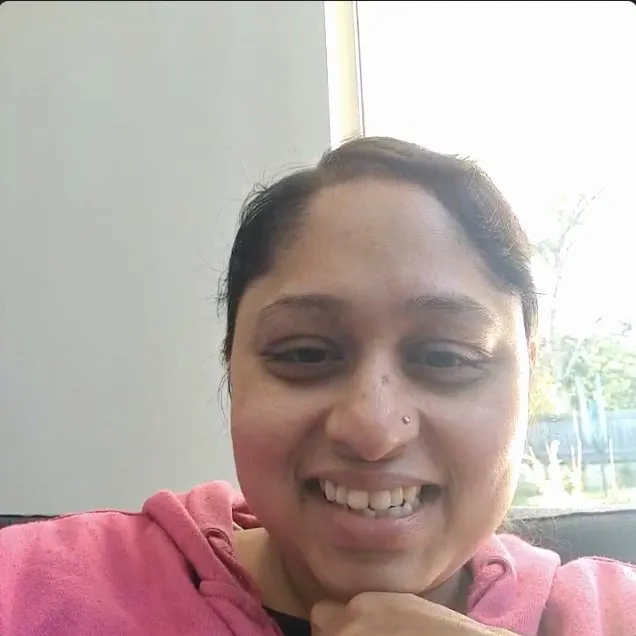
Recorded interview
“Amrita loves her tutor Rishika and reaches for maths far more now.”
MadhuParent of Amrita · Tutor Rishika

Trusted by 4,200+ families
A 1-to-1 11+ tutor for your child, the same one every week. Lessons build English, Maths and reasoning skills, from Year 4 to the test.
The same 1-to-1 11+ tutor every week, Years 4 to 6.
Who is the 11+ tutoring for?


Build a consistent relationship with a carefully selected tutor who suits each student's needs.

Each lesson is tailored to the student’s goals to ensure steady, meaningful progress.


“I did my research and Tutero stood out. Our tutor is amazing. I would recommend Tutero to anyone who is looking for tutoring for their kids.”

“She was struggling, and I was trying to find a tutor. The minute I applied for Tutero, I got a call from Joey. I am so grateful that I did.”

“I was searching on Google and I found Tutero. It was convenient and easy to sign up. The tutoring has perfectly fit what we were after.”

Our education team handpicks the perfect tutor for each student based on their needs.

Every family is supported by a dedicated account manager from day one.

Students get access to thousands of engaging resources for every stage of learning.

Track progress with detailed lesson reports available anytime via our app.
Our education team handpicks the perfect tutor for each student based on their needs.
Every family is supported by a dedicated account manager from day one.
Students get access to thousands of engaging resources for every stage of learning.
Track progress with detailed lesson reports available anytime via our app.
4.9 stars from 250+ Google reviews.
“Amrita loves her tutor Rishika and reaches for maths far more now.”
MadhuParent of Amrita · Tutor Rishika
“I highly recommend Tutero. It was very easy to find a tutor and the coaching and the materials are amazing. Thanks to Nathan and Naz for the guidance.”
“My daughter's math teacher is very patient, and she knows how to encourage my daughter to learn it. I am very happy with my daughter's progress.”
Four ways to get help with 11+ tutoring, side by side.
| Tutero | Tutoring centre | Tutor marketplace | Help at school | |
|---|---|---|---|---|
| One tutor per student | Always | Small groups | You vet | Shared |
| Their own curriculum | Every lesson | Sometimes | Depends | Yes |
| Written report | Every lesson | Rarely | Rarely | Rarely |
| Commitment | None | By the term | Varies | School year |
11+ tutoringFrom £45 an hour, the same rate at every level. No contracts, no sign-up fee. Pay after each lesson.
Get my quoteFrom £45 an hour, the same rate in every year group. A qualified teacher is from £65 an hour. There are no contracts and no sign-up fee, and you pay after each lesson. All prices are in GBP.
English, Maths, verbal reasoning and non-verbal reasoning, matched to the test format in your area. Lessons cover comprehension, vocabulary, problem solving, question types and timed practice.
Many families start in Year 4 or early Year 5, which leaves time to secure Key Stage 2 skills before timed papers. Starting later in Year 5 still helps, with more focus on question types and timing.
Yes. Tutors prepare students for independent school entrance tests and interviews, as well as grammar school 11+ tests. Lessons follow the format of the schools you are applying to.
Tutors who know the 11+ question types and Key Stage 2 content, matched to your child’s needs. Every tutor is selected from the top 2% of applicants.
Tell us about your child and an account manager calls within 24 hours to learn their goals and choose their tutor. Lessons then start 1-to-1, with the same tutor each week and a report after every lesson.
How the 11+ works, the dates that matter, grammar and independent schools, and planning the preparation.
The 11+ is a selection test for grammar schools and some independent schools. There is no single national test: each area, consortium or school sets its own, so the subjects, format and pass mark vary. Most include some mix of English, Maths, verbal reasoning and non-verbal reasoning.
Grammar schools are state schools, so there are no fees, but only some areas of England have them. Many areas use age-standardised scores, so children born later in the school year are not at a disadvantage.
Dates vary by area, so check the admissions pages of your local authority and the schools you are considering, ideally early in Year 5. The pattern below is the most common one for grammar school entry, and the application deadline and offer day are the same across England.
Grammar school places are usually decided by the test score, then by each school’s admission criteria, such as distance. Passing the test is not the same as getting a place, so list your preferences carefully on the local authority form.
Independent schools usually set their own entrance tests during Year 6, often with an interview, and some add a reference from the current school. Check each school’s format early, because preparation differs: some test reasoning, while others set their own English and Maths papers.
Many families start in Year 4 or early Year 5. That leaves time to secure KS2 Maths and English before adding reasoning and timed papers. Starting late in Year 5 still helps, but more time goes on question types than on the skills underneath.
In the summer before the test, a good weekly rhythm is one timed paper in your area’s format, marked together, plus a short list of errors to redo a week later. Keep practice short and steady in the final weeks, so your child arrives rested.
Your child keeps the same tutor every week, and lessons start from their own school work and your area’s test format. Lessons are 1-to-1, and you receive a written report after every lesson, so you always know what was covered and what comes next.
What 11+ students work on at each stage, and how a tutor helps.
Children secure times tables, written methods and reading stamina. These are the base that every 11+ paper builds on.
What is 7 × 8?
Answer56
Secures number facts and reading habits early, when they are easiest to build.
Based on the DfE National Curriculum in England: Key Stage 2 programmes of study.
Most families prepare in earnest this year. Registration for the test usually opens in the spring or summer of Year 5.
It shows he did not want to go in, so his fear of the house is stronger than his curiosity.
Builds the KS2 content the test draws on, then adds timed practice.
Based on the DfE National Curriculum in England: Key Stage 2 programmes of study.
Many areas test verbal reasoning: word codes, letter sequences, odd ones out and vocabulary under time pressure.
Which word is the odd one out: oak, ash, rose, elm?
AnswerRose
Teaches each question type until your child can spot the pattern quickly.
Based on the Local authority and grammar school admission arrangements.
Many areas also test non-verbal reasoning: shapes, patterns and sequences that check logical thinking without words.
What comes next: 3, 7, 15, 31, ...?
Answer63
Breaks each pattern type into steps, then builds speed with timed sets.
Based on the Local authority and grammar school admission arrangements.
The 11+ is usually sat in September of Year 6. The format and subjects vary by area, so check your local arrangements.
A coat costs £60 and is reduced by 25%. What is the new price?
Answer£45
Runs papers in your area's format under timed conditions, so test day feels familiar.
Based on the Local authority and grammar school admission arrangements.
Results usually come before the secondary application deadline of 31 October. Places are offered on 1 March, National Offer Day.
Write 3/8 as a percentage.
Answer37.5%
Keeps Year 6 class work strong after the test, ready for secondary school.
Based on the DfE School Admissions Code.
Who is the tutoring for?