


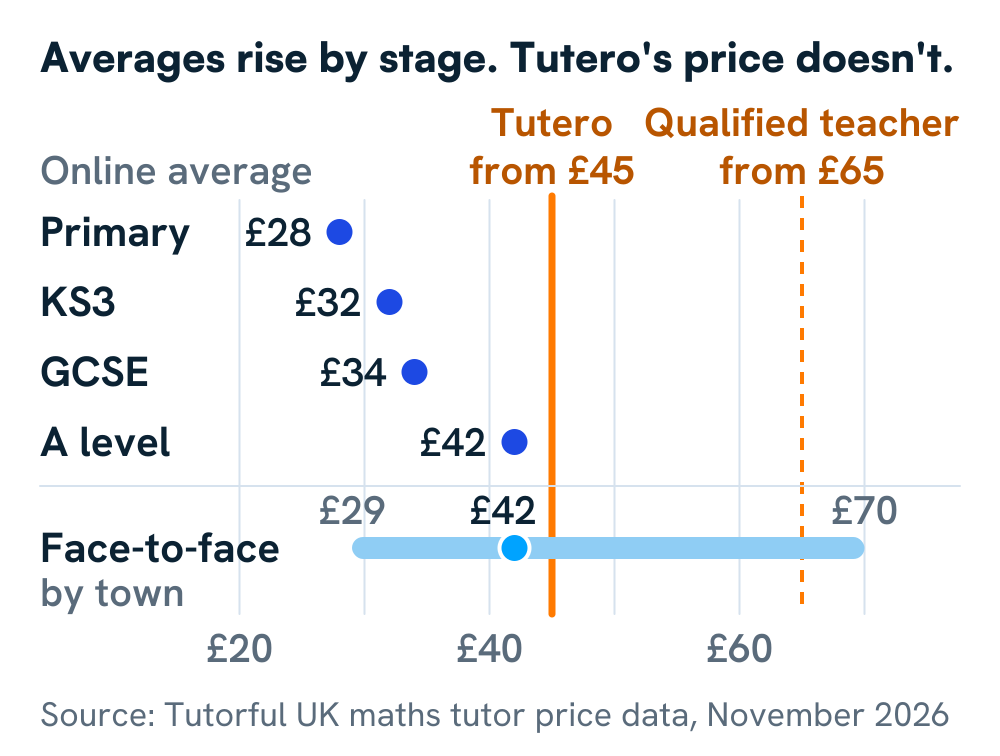
If you've ever looked at a quote for a maths tutor and thought "that can't be right", you're not alone. In the UK, published averages run from about £28 an hour for primary maths to about £42 an hour for A level, and face-to-face rates in some towns go past £70. Most of that gap comes down to who the tutor is, where they teach and what comes with the lesson, not how much help your child gets in the hour.
This guide gives you the published range for primary, secondary and sixth form students, explains what moves the price, and shows where Tutero sits: from £45 an hour, the same rate from Reception to Year 13.
Quick answer
Price data published by the UK tutoring marketplace Tutorful (November 2026) puts the average private maths tutor at about £35 an hour online, from about £28 an hour for primary to about £42 for A level. Face-to-face tutors average about £42 an hour and can charge over £70 in some towns. Tutero starts from £45 an hour, or from £65 an hour with a qualified teacher. The rate is the same at every level, from Reception and KS2 to GCSE and A level.
How much does a maths tutor cost in the UK in 2026?
Rates depend most on your child's stage and on whether lessons are online or face-to-face. Across all levels, the same published data puts online maths tutors at an average of about £35 an hour and face-to-face maths tutors at about £42 an hour.
Updated November 2026
| Stage | Average online rate an hour |
|---|---|
| Primary, including KS2 and 11+ prep | about £28 |
| KS3 (Year 7 to Year 9) | about £32 |
| GCSE (Year 10 to Year 11) | about £34 |
| A level (Year 12 to Year 13) | about £42 |
These are averages, so plenty of tutors charge more or less. Two patterns stand out. First, the price climbs with the stage: an A level maths tutor costs about £14 an hour more than a primary maths tutor on average. Second, face-to-face rates depend on the town. The same data lists face-to-face maths tutors at about £29 an hour in Liverpool, about £46 in London and about £70 in Staines.
A Year 6 student preparing for the 11+ exam sits in the primary row. A Year 11 student working towards a grade with GCSE maths tutoring sits in the GCSE row.
What's a fair hourly rate for a maths tutor?
For most families, a fair rate is one close to the published average for your child's stage, with a tutor who plans the lesson and tells you how it went. At the low end, you'll usually find a tutor quoting a bare hourly rate, often a university student, with no planning time between lessons. At the high end, you're usually paying for a qualified teacher, an exam specialist or a face-to-face tutor's travel.
Cheap isn't automatically poor value, and expensive isn't automatically better. The fair-rate question is really: does the price match what comes with the hour? A lesson with a well-matched tutor, a written plan and a short update after every session is good value. A lesson with no preparation, no feedback and no one to call if it goes wrong isn't, whatever it costs.
Why do tutors charge different rates?
Five things move the price up or down for any maths tutor in the UK. Once you can see them, the spread of quotes you get stops feeling random.
- The tutor's background. A university student tutoring Year 5 fractions sits at the lower end. A teacher with Qualified Teacher Status (QTS), which is a legal requirement to teach in many English schools, charges more because their classroom experience sets a higher floor. Exam specialists who coach A level and Further Maths students sit at the top.
- What comes with the lesson. Some tutors quote a bare hourly rate with no planning time and no resources. Others include a written plan, notes for parents and practice between lessons. That support costs money, so ask what you get for it.
- Online or face-to-face. A face-to-face tutor builds travel time into the rate. Published data puts face-to-face maths tutors about £6 an hour above online tutors on average.
- Where you live. Face-to-face rates vary a lot between towns, from under £30 an hour to over £70 in the published data. Online removes this gap.
- Checks and recourse. Anyone can advertise as a tutor. Ask how tutors are chosen, what checks are done and what happens if a lesson goes wrong. That work is built into the rate.
How much does Tutero charge for maths tutoring?
Tutero charges from £45 an hour for 1‑to‑1 maths tutoring, the same rate from Reception to Year 13. Year 3 times tables in primary tutoring is from £45 an hour. Year 9 algebra is from £45 an hour. Working with an A level maths tutor is from £45 an hour too. If you'd like a qualified teacher, that option is from £65 an hour. The tutor changes by level. The price doesn't.
Tutero lessons run online, so there's no travel built into the rate and the price is the same wherever you live. You pay after each lesson. There are no contracts, and you can cancel any time.
Are expensive tutors better than cheap ones?
Not reliably. The strongest sign of a good tutor is the match to your child, not the price. A tutor with years of A level Further Maths experience is brilliant for a Year 13 student aiming for an A*, and the wrong fit for a Year 4 student who needs to enjoy maths again. A patient tutor who explains times tables three different ways is excellent for that Year 4 student, and the wrong fit for the Year 13 student.
Where higher rates do buy something: deep knowledge of how GCSE and A level papers are marked, and focused past-paper practice in the months before the exam. If your child is aiming for grades 7 to 9 at GCSE or an A* at A level, ask the tutor how many students they've taken through that exam board's papers. Where higher rates don't help: Reception to Year 9 maths, where clear explanation, patience and confidence matter far more than exam credentials.
How many hours of tutoring should I pay for each week?
For most students, one hour a week is the right starting point, whether they're in Year 5, Year 9 or Year 12. It's enough time to work through the week's mistakes, do a small piece of practice together and leave your child with two or three questions to try before the next lesson. For students preparing for KS2 SATs, the 11+, GCSEs or A levels, two hours a week from about three months out is the usual step up. With lessons from £45 an hour, one hour a week comes to from £180 over a four-week month, and two hours a week to from £360.
What doesn't work: booking three hours a week from the start to "make up for lost time". Maths is a confidence subject, and overloading a child who's already struggling pushes them further from the page, not closer. Build the habit at one hour, let the small wins land, and add a second hour when your child is ready for more.
Is online maths tutoring cheaper than face-to-face?
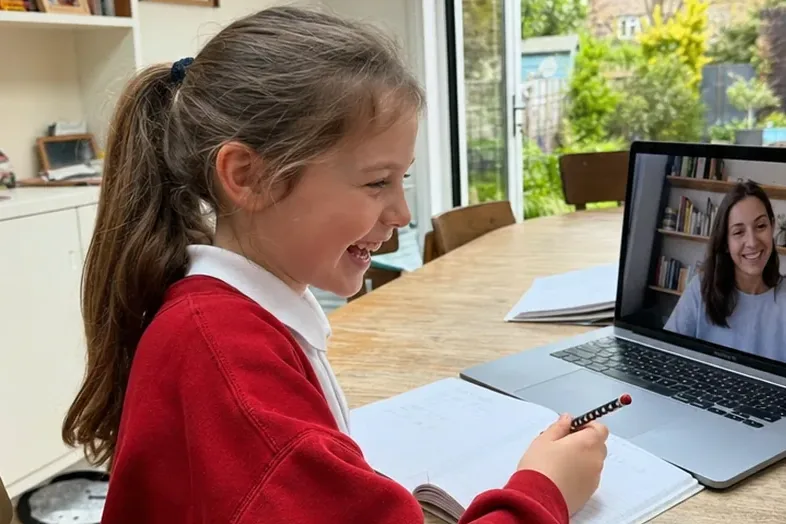
Usually, yes. Published UK data puts online maths tutors at about £35 an hour on average, against about £42 for face-to-face. A face-to-face tutor builds travel time into the rate, and an online tutor doesn't. For families, online also removes the disruption of a tutor arriving at 4.30pm, dinner being pushed back and younger siblings hovering around the lesson.
The other advantage of online: your choice of tutor is no longer limited to whoever lives nearby. The face-to-face gap between towns, from under £30 an hour to over £70, also disappears, because the tutor doesn't need to travel to you.
Is private maths tutoring worth the money?
For most families who spot a maths confidence problem early and act on it, yes, when the tutor is matched to your child and the schedule is one you can keep up. The change parents usually notice first is a child who used to dread maths homework starting to ask when the next lesson is, whether that child is in Year 4, Year 8 or Year 12.
It isn't worth the money in three situations: when lessons are booked and then forgotten, with no follow-through between them; when your child and the tutor still haven't clicked by the third or fourth lesson and nothing changes; or when you're paying for credentials your child doesn't need. A Year 4 student doesn't need an A level examiner, however impressive the profile.
How do I know I'm getting good value from a maths tutor?
Three things to expect from any maths tutor, whatever the rate, and a fair test of whether the money is being put to work:
- A written plan before lesson three. Lessons one and two show the tutor where the gaps are. By lesson three, you should have a written plan: which topics, in which order, over how many lessons. If you don't, ask for one.
- Clear feedback after every lesson. What was covered, how your child went and what to practise before next week. Two short paragraphs is enough. Without it, the tutor is just a homework helper.
- A change in mood within 4 to 6 lessons. The first sign tutoring is working is usually not the test mark. It's your child doing maths homework without being asked, or dropping the "I'm not a maths person" line. If nothing has changed by lesson six, raise it with the tutor. Whether your child works with a maths tutor in Year 2 or Year 13, confidence comes first and the marks follow.
Related reading
- Is Kumon worth it? What the fees buy you
- Online vs face-to-face tutoring
- 5 signs your child needs a tutor
- Where to find a tutor in the UK
- Group vs 1‑to‑1 tutoring
- What makes a good tutor
- When to start tutoring
- Kip McGrath review
What should you do next?
Start with your child's stage. Find their row in the table above, then decide whether you want online or face-to-face lessons and whether a qualified teacher matters to you. If you'd like a 1‑to‑1 maths tutor at one flat rate, Tutero is from £45 an hour, or from £65 an hour with a qualified teacher, at every level from Reception to Year 13. You pay after each lesson, with no contracts.
If you've ever looked at a quote for a maths tutor and thought "that can't be right", you're not alone. In the UK, published averages run from about £28 an hour for primary maths to about £42 an hour for A level, and face-to-face rates in some towns go past £70. Most of that gap comes down to who the tutor is, where they teach and what comes with the lesson, not how much help your child gets in the hour.
This guide gives you the published range for primary, secondary and sixth form students, explains what moves the price, and shows where Tutero sits: from £45 an hour, the same rate from Reception to Year 13.
Quick answer
Price data published by the UK tutoring marketplace Tutorful (November 2026) puts the average private maths tutor at about £35 an hour online, from about £28 an hour for primary to about £42 for A level. Face-to-face tutors average about £42 an hour and can charge over £70 in some towns. Tutero starts from £45 an hour, or from £65 an hour with a qualified teacher. The rate is the same at every level, from Reception and KS2 to GCSE and A level.
How much does a maths tutor cost in the UK in 2026?
Rates depend most on your child's stage and on whether lessons are online or face-to-face. Across all levels, the same published data puts online maths tutors at an average of about £35 an hour and face-to-face maths tutors at about £42 an hour.
Updated November 2026
| Stage | Average online rate an hour |
|---|---|
| Primary, including KS2 and 11+ prep | about £28 |
| KS3 (Year 7 to Year 9) | about £32 |
| GCSE (Year 10 to Year 11) | about £34 |
| A level (Year 12 to Year 13) | about £42 |
These are averages, so plenty of tutors charge more or less. Two patterns stand out. First, the price climbs with the stage: an A level maths tutor costs about £14 an hour more than a primary maths tutor on average. Second, face-to-face rates depend on the town. The same data lists face-to-face maths tutors at about £29 an hour in Liverpool, about £46 in London and about £70 in Staines.
A Year 6 student preparing for the 11+ exam sits in the primary row. A Year 11 student working towards a grade with GCSE maths tutoring sits in the GCSE row.
What's a fair hourly rate for a maths tutor?
For most families, a fair rate is one close to the published average for your child's stage, with a tutor who plans the lesson and tells you how it went. At the low end, you'll usually find a tutor quoting a bare hourly rate, often a university student, with no planning time between lessons. At the high end, you're usually paying for a qualified teacher, an exam specialist or a face-to-face tutor's travel.
Cheap isn't automatically poor value, and expensive isn't automatically better. The fair-rate question is really: does the price match what comes with the hour? A lesson with a well-matched tutor, a written plan and a short update after every session is good value. A lesson with no preparation, no feedback and no one to call if it goes wrong isn't, whatever it costs.
Why do tutors charge different rates?
Five things move the price up or down for any maths tutor in the UK. Once you can see them, the spread of quotes you get stops feeling random.
- The tutor's background. A university student tutoring Year 5 fractions sits at the lower end. A teacher with Qualified Teacher Status (QTS), which is a legal requirement to teach in many English schools, charges more because their classroom experience sets a higher floor. Exam specialists who coach A level and Further Maths students sit at the top.
- What comes with the lesson. Some tutors quote a bare hourly rate with no planning time and no resources. Others include a written plan, notes for parents and practice between lessons. That support costs money, so ask what you get for it.
- Online or face-to-face. A face-to-face tutor builds travel time into the rate. Published data puts face-to-face maths tutors about £6 an hour above online tutors on average.
- Where you live. Face-to-face rates vary a lot between towns, from under £30 an hour to over £70 in the published data. Online removes this gap.
- Checks and recourse. Anyone can advertise as a tutor. Ask how tutors are chosen, what checks are done and what happens if a lesson goes wrong. That work is built into the rate.
How much does Tutero charge for maths tutoring?
Tutero charges from £45 an hour for 1‑to‑1 maths tutoring, the same rate from Reception to Year 13. Year 3 times tables in primary tutoring is from £45 an hour. Year 9 algebra is from £45 an hour. Working with an A level maths tutor is from £45 an hour too. If you'd like a qualified teacher, that option is from £65 an hour. The tutor changes by level. The price doesn't.
Tutero lessons run online, so there's no travel built into the rate and the price is the same wherever you live. You pay after each lesson. There are no contracts, and you can cancel any time.
Are expensive tutors better than cheap ones?
Not reliably. The strongest sign of a good tutor is the match to your child, not the price. A tutor with years of A level Further Maths experience is brilliant for a Year 13 student aiming for an A*, and the wrong fit for a Year 4 student who needs to enjoy maths again. A patient tutor who explains times tables three different ways is excellent for that Year 4 student, and the wrong fit for the Year 13 student.
Where higher rates do buy something: deep knowledge of how GCSE and A level papers are marked, and focused past-paper practice in the months before the exam. If your child is aiming for grades 7 to 9 at GCSE or an A* at A level, ask the tutor how many students they've taken through that exam board's papers. Where higher rates don't help: Reception to Year 9 maths, where clear explanation, patience and confidence matter far more than exam credentials.
How many hours of tutoring should I pay for each week?
For most students, one hour a week is the right starting point, whether they're in Year 5, Year 9 or Year 12. It's enough time to work through the week's mistakes, do a small piece of practice together and leave your child with two or three questions to try before the next lesson. For students preparing for KS2 SATs, the 11+, GCSEs or A levels, two hours a week from about three months out is the usual step up. With lessons from £45 an hour, one hour a week comes to from £180 over a four-week month, and two hours a week to from £360.
What doesn't work: booking three hours a week from the start to "make up for lost time". Maths is a confidence subject, and overloading a child who's already struggling pushes them further from the page, not closer. Build the habit at one hour, let the small wins land, and add a second hour when your child is ready for more.
Is online maths tutoring cheaper than face-to-face?
Usually, yes. Published UK data puts online maths tutors at about £35 an hour on average, against about £42 for face-to-face. A face-to-face tutor builds travel time into the rate, and an online tutor doesn't. For families, online also removes the disruption of a tutor arriving at 4.30pm, dinner being pushed back and younger siblings hovering around the lesson.
The other advantage of online: your choice of tutor is no longer limited to whoever lives nearby. The face-to-face gap between towns, from under £30 an hour to over £70, also disappears, because the tutor doesn't need to travel to you.
Is private maths tutoring worth the money?
For most families who spot a maths confidence problem early and act on it, yes, when the tutor is matched to your child and the schedule is one you can keep up. The change parents usually notice first is a child who used to dread maths homework starting to ask when the next lesson is, whether that child is in Year 4, Year 8 or Year 12.
It isn't worth the money in three situations: when lessons are booked and then forgotten, with no follow-through between them; when your child and the tutor still haven't clicked by the third or fourth lesson and nothing changes; or when you're paying for credentials your child doesn't need. A Year 4 student doesn't need an A level examiner, however impressive the profile.
How do I know I'm getting good value from a maths tutor?
Three things to expect from any maths tutor, whatever the rate, and a fair test of whether the money is being put to work:
- A written plan before lesson three. Lessons one and two show the tutor where the gaps are. By lesson three, you should have a written plan: which topics, in which order, over how many lessons. If you don't, ask for one.
- Clear feedback after every lesson. What was covered, how your child went and what to practise before next week. Two short paragraphs is enough. Without it, the tutor is just a homework helper.
- A change in mood within 4 to 6 lessons. The first sign tutoring is working is usually not the test mark. It's your child doing maths homework without being asked, or dropping the "I'm not a maths person" line. If nothing has changed by lesson six, raise it with the tutor. Whether your child works with a maths tutor in Year 2 or Year 13, confidence comes first and the marks follow.
Related reading
- Is Kumon worth it? What the fees buy you
- Online vs face-to-face tutoring
- 5 signs your child needs a tutor
- Where to find a tutor in the UK
- Group vs 1‑to‑1 tutoring
- What makes a good tutor
- When to start tutoring
- Kip McGrath review
What should you do next?
Start with your child's stage. Find their row in the table above, then decide whether you want online or face-to-face lessons and whether a qualified teacher matters to you. If you'd like a 1‑to‑1 maths tutor at one flat rate, Tutero is from £45 an hour, or from £65 an hour with a qualified teacher, at every level from Reception to Year 13. You pay after each lesson, with no contracts.


Published UK tutoring marketplace data (November 2026) puts the average private maths tutor at about £35 an hour online, rising from about £28 for primary to about £42 for A level. Face-to-face tutors average about £42 an hour and can charge over £70 in some towns. Tutero charges from £45 an hour, or from £65 an hour with a qualified teacher, the same rate at every level from Reception to Year 13.
For most students, yes. One hour a week is enough to work through the week's mistakes, practise together and leave your child with a few questions to try before the next lesson. Two hours a week from about three months before KS2 SATs, the 11+, GCSEs or A levels is the usual step up. Booking three hours a week from the start usually backfires, because overloading a child who is already struggling knocks their confidence.
Across the market, yes. Published UK data (November 2026) puts online GCSE maths tutors at about £34 an hour on average and A level maths tutors at about £42, against about £28 for primary. At Tutero there is no exam-year premium: GCSE and A level maths are from £45 an hour, the same as primary.
Usually, yes. Published UK data puts online maths tutors at about £35 an hour on average, against about £42 for face-to-face. A face-to-face tutor builds travel time into the rate, and face-to-face prices also vary a lot between towns. Tutero lessons are online, from £45 an hour wherever you live.
No. Tutero charges from £45 an hour from Reception to Year 13, so a Year 3 lesson, a Year 9 lesson and an A level lesson all cost the same. The qualified teacher option is from £65 an hour at every level. You pay after each lesson, there are no contracts and you can cancel any time.
For most families, it is one hour a week of online 1‑to‑1 tutoring with a tutor matched to your child's stage. Online keeps travel out of the rate, and one focused hour a week is enough for most students. Group sessions can cost less per hour, but your child shares the tutor's attention with other students. Tutero is online, 1‑to‑1 and from £45 an hour at every level.
Hoping to improve confidence & grades?


