.svg)

Grades and report cards arrive twice a year. Real learning happens every week — and most of it is invisible if you're not looking for it. Below are five quiet signals American parents can watch for to know whether their child is genuinely learning, not just memorizing for the next test, plus what to do when the signals are missing.
Quick answer
Your child is learning when they can explain a new concept in their own words, ask better questions about it a week later, apply it to something outside school, and move from confident to wobbly to confident again. Grades are the lagging indicator; the conversation at the dinner table is the leading one. If those signals are missing, talk to the teacher first, then bring in a one-to-one tutor — often the fastest way to surface a hidden gap. Tutoring with Tutero starts at US$45/hour, no contracts, with a tutor matched to your child's grade level and learning style.
How do I know what my child is actually learning at school?
The most useful starting point isn't the homework folder — it's the curriculum overview the school sends home each semester (sometimes called a "scope and sequence" or "course outline"). It lists the topics each subject will cover. Pin it on the fridge, and once a week ask one specific topic question: "You're doing fractions this semester — show me the trickiest one this week." Looking at recent assignments and asking what the feedback meant is more useful than asking generally how school is going. Parent-teacher conferences each semester are the third lever; come with one specific question per subject rather than waiting for the teacher to summarize everything in ten minutes.
What should I ask my child's teacher to know if they're learning?
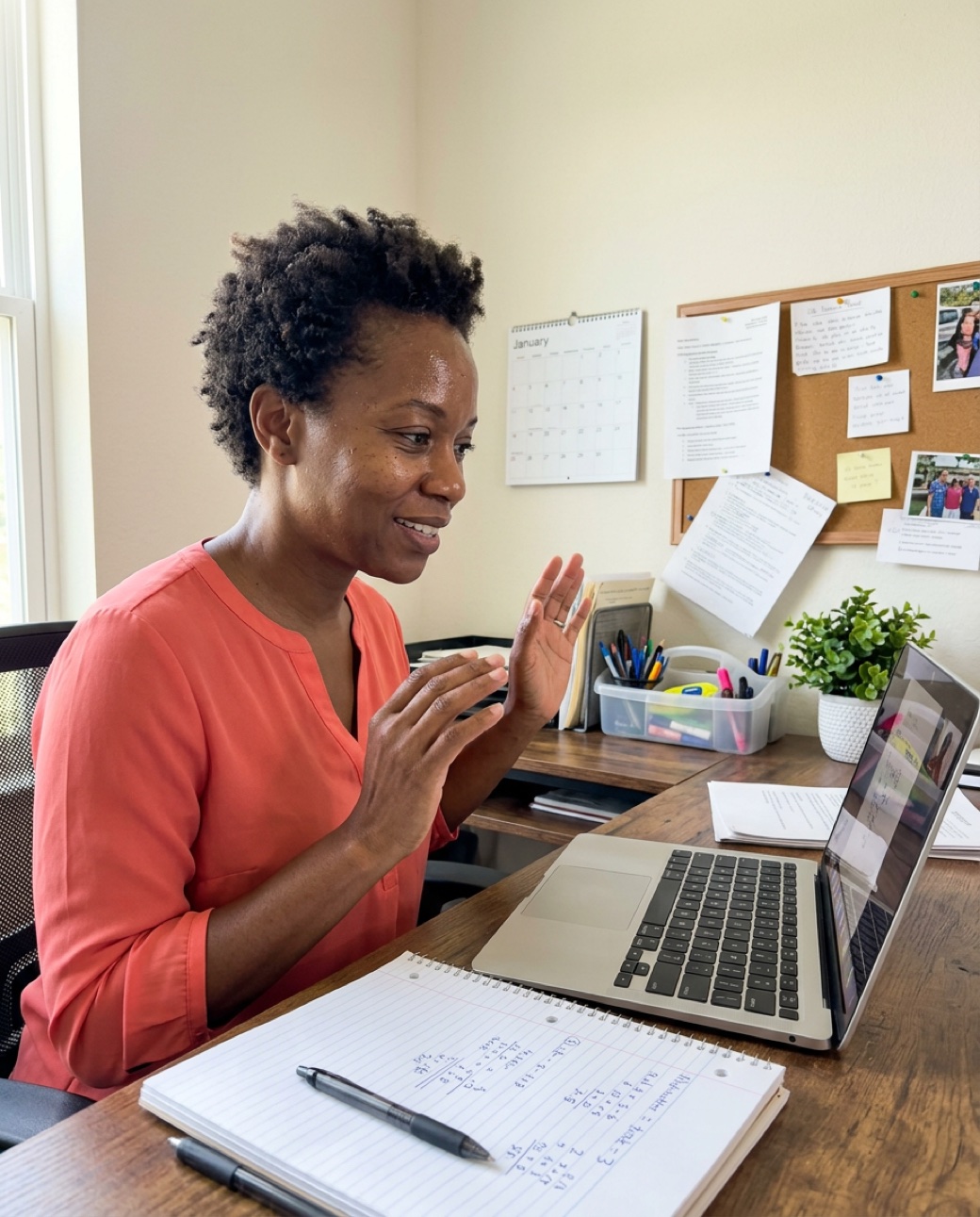
Replace generic check-ins ("how's Sam going?") with three specific questions: (1) "Where exactly is Sam in this semester's content — at grade level, ahead, or behind?" (2) "What's one specific thing Sam should work on at home over the next month?" (3) "If we wanted to lift Sam's understanding in this subject, where would you start?" American teachers carry detailed mental maps of every student's progress and respond well to specific questions. Keep notes and circle back next semester to check whether the suggested focus actually moved the dial.
Can my child explain what they've learned in their own words?
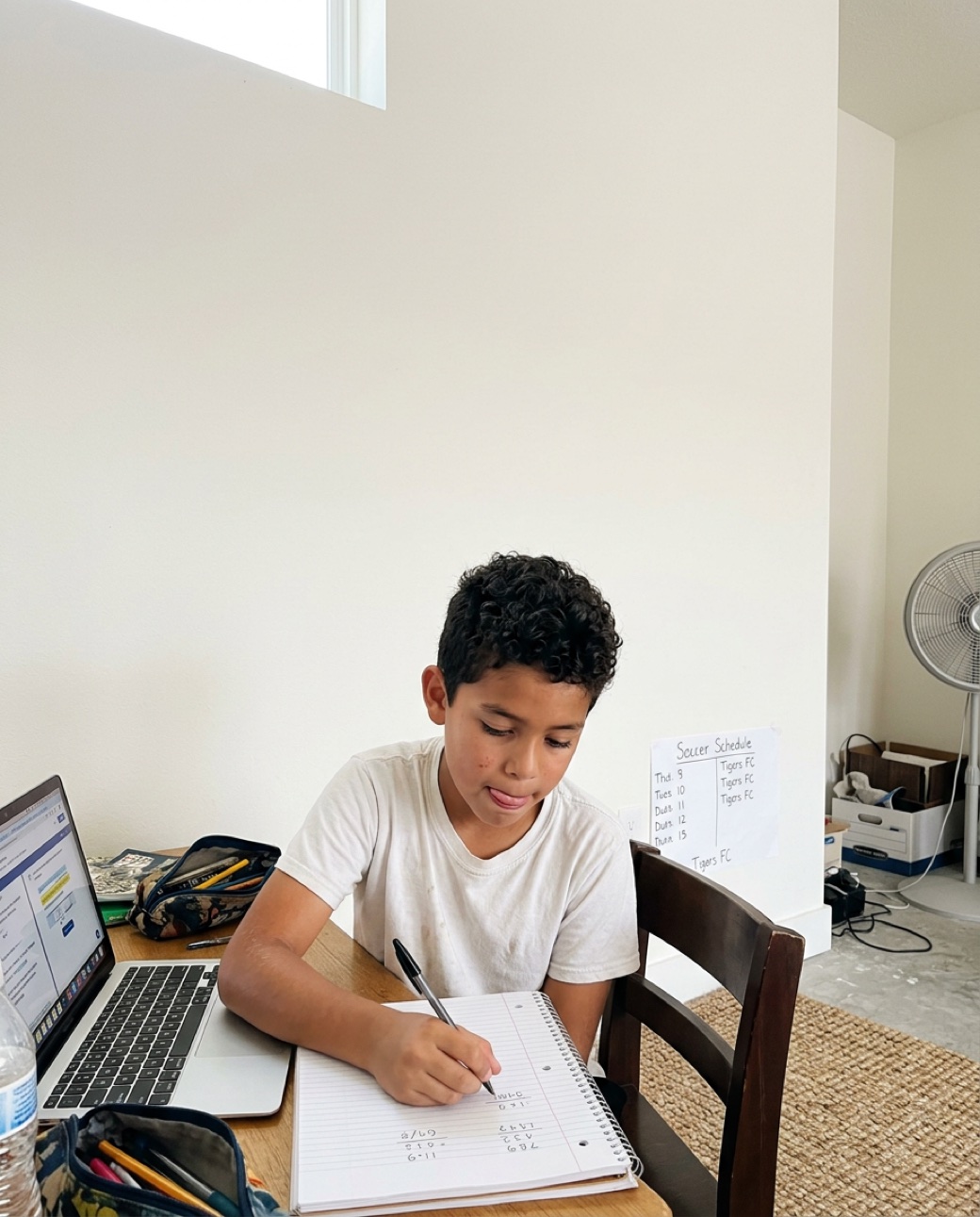
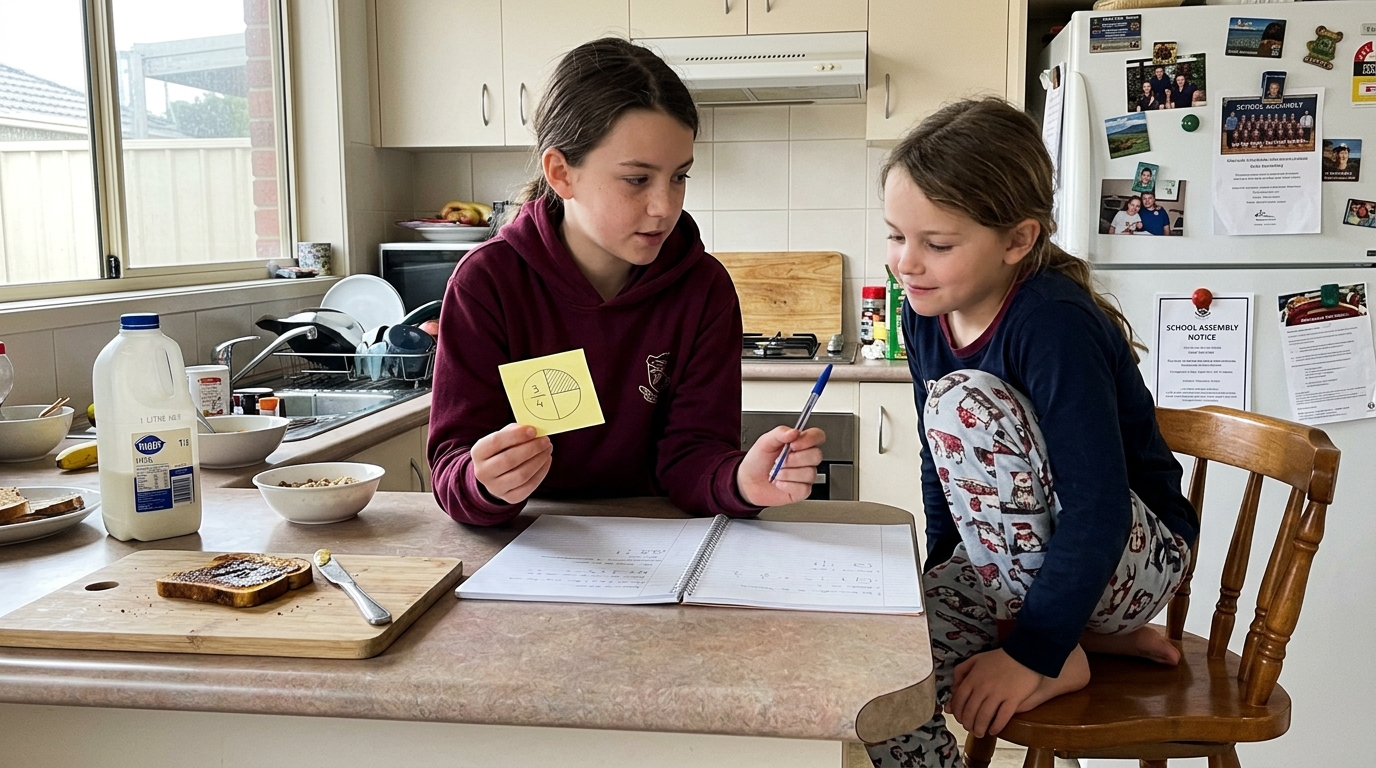
This is the single best test of whether learning has stuck. After your child finishes a topic at school, ask them to explain it to you, a younger sibling, or a grandparent — in their own words, without their book open. If they can do it cleanly, the learning has gone in. If they can only repeat the textbook phrasing, they've memorized. If they can't explain it at all, the gap is real and worth addressing. This works at every grade level: a 3rd grader explaining how plants grow, a 7th grader explaining what a fraction means, an 11th grader explaining a chemistry reaction. The "explain it back" test takes five minutes and beats an hour of homework supervision.
Should I use online tests and quizzes to check my child's learning?
Yes — short ones, used as a diagnostic, not a verdict. A well-designed quiz on Khan Academy, IXL, or Prodigy surfaces where your child is and isn't fluent in five to ten minutes. Use them to diagnose ("which fractions topic does this 5th grader need to revisit?"), not to grade ("you got 6 out of 10 — try harder"). For high schoolers, past SAT and AP practice papers from College Board and state-test practice questions are gold for identifying which topics need targeted work before exams. Avoid making quiz scores a source of pressure; they're a tool for finding the gap, not a measure of the child.
When should I bring in a tutor to check my child's learning?
Bring in a tutor when the signals are mixed and you can't tell whether your child is learning or just coping. A skilled one-to-one tutor will spot a hidden gap inside the first two sessions — they'll watch how your child solves a problem (not just whether they solve it) and pinpoint the underlying skill that's missing. A weekly tutor also gives you a second opinion outside school: a 7th grader who's "going fine" by the school's report can quietly be a 5th-grade reader, and a senior "on track" for strong college admissions can be missing one foundational skill that limits their final score. Tutero matches your child to a tutor from US$45/hour, no lock-in contracts.
Bottom line: how can I tell if my child is really learning?
Watch for the four quiet signals: they can explain a topic in their own words, ask better questions a week later, apply what they've learned to something outside school, and move from confident to wobbly to confident again as new material lands. Cross-check those signals with their teacher each semester. Use short online quizzes as a diagnostic, not a verdict. And if the signals are missing or you can't read them clearly, a one-to-one tutor is often the fastest way to find out exactly where your child is — and what to do next.
Grades and report cards arrive twice a year. Real learning happens every week — and most of it is invisible if you're not looking for it. Below are five quiet signals American parents can watch for to know whether their child is genuinely learning, not just memorizing for the next test, plus what to do when the signals are missing.
Quick answer
Your child is learning when they can explain a new concept in their own words, ask better questions about it a week later, apply it to something outside school, and move from confident to wobbly to confident again. Grades are the lagging indicator; the conversation at the dinner table is the leading one. If those signals are missing, talk to the teacher first, then bring in a one-to-one tutor — often the fastest way to surface a hidden gap. Tutoring with Tutero starts at US$45/hour, no contracts, with a tutor matched to your child's grade level and learning style.
How do I know what my child is actually learning at school?
The most useful starting point isn't the homework folder — it's the curriculum overview the school sends home each semester (sometimes called a "scope and sequence" or "course outline"). It lists the topics each subject will cover. Pin it on the fridge, and once a week ask one specific topic question: "You're doing fractions this semester — show me the trickiest one this week." Looking at recent assignments and asking what the feedback meant is more useful than asking generally how school is going. Parent-teacher conferences each semester are the third lever; come with one specific question per subject rather than waiting for the teacher to summarize everything in ten minutes.
What should I ask my child's teacher to know if they're learning?
Replace generic check-ins ("how's Sam going?") with three specific questions: (1) "Where exactly is Sam in this semester's content — at grade level, ahead, or behind?" (2) "What's one specific thing Sam should work on at home over the next month?" (3) "If we wanted to lift Sam's understanding in this subject, where would you start?" American teachers carry detailed mental maps of every student's progress and respond well to specific questions. Keep notes and circle back next semester to check whether the suggested focus actually moved the dial.
Can my child explain what they've learned in their own words?
This is the single best test of whether learning has stuck. After your child finishes a topic at school, ask them to explain it to you, a younger sibling, or a grandparent — in their own words, without their book open. If they can do it cleanly, the learning has gone in. If they can only repeat the textbook phrasing, they've memorized. If they can't explain it at all, the gap is real and worth addressing. This works at every grade level: a 3rd grader explaining how plants grow, a 7th grader explaining what a fraction means, an 11th grader explaining a chemistry reaction. The "explain it back" test takes five minutes and beats an hour of homework supervision.
Should I use online tests and quizzes to check my child's learning?
Yes — short ones, used as a diagnostic, not a verdict. A well-designed quiz on Khan Academy, IXL, or Prodigy surfaces where your child is and isn't fluent in five to ten minutes. Use them to diagnose ("which fractions topic does this 5th grader need to revisit?"), not to grade ("you got 6 out of 10 — try harder"). For high schoolers, past SAT and AP practice papers from College Board and state-test practice questions are gold for identifying which topics need targeted work before exams. Avoid making quiz scores a source of pressure; they're a tool for finding the gap, not a measure of the child.
When should I bring in a tutor to check my child's learning?
Bring in a tutor when the signals are mixed and you can't tell whether your child is learning or just coping. A skilled one-to-one tutor will spot a hidden gap inside the first two sessions — they'll watch how your child solves a problem (not just whether they solve it) and pinpoint the underlying skill that's missing. A weekly tutor also gives you a second opinion outside school: a 7th grader who's "going fine" by the school's report can quietly be a 5th-grade reader, and a senior "on track" for strong college admissions can be missing one foundational skill that limits their final score. Tutero matches your child to a tutor from US$45/hour, no lock-in contracts.
Bottom line: how can I tell if my child is really learning?
Watch for the four quiet signals: they can explain a topic in their own words, ask better questions a week later, apply what they've learned to something outside school, and move from confident to wobbly to confident again as new material lands. Cross-check those signals with their teacher each semester. Use short online quizzes as a diagnostic, not a verdict. And if the signals are missing or you can't read them clearly, a one-to-one tutor is often the fastest way to find out exactly where your child is — and what to do next.

Grades and report cards arrive twice a year. Real learning happens every week — and most of it is invisible if you're not looking for it. Below are five quiet signals American parents can watch for to know whether their child is genuinely learning, not just memorizing for the next test, plus what to do when the signals are missing.
Quick answer
Your child is learning when they can explain a new concept in their own words, ask better questions about it a week later, apply it to something outside school, and move from confident to wobbly to confident again. Grades are the lagging indicator; the conversation at the dinner table is the leading one. If those signals are missing, talk to the teacher first, then bring in a one-to-one tutor — often the fastest way to surface a hidden gap. Tutoring with Tutero starts at US$45/hour, no contracts, with a tutor matched to your child's grade level and learning style.
How do I know what my child is actually learning at school?
The most useful starting point isn't the homework folder — it's the curriculum overview the school sends home each semester (sometimes called a "scope and sequence" or "course outline"). It lists the topics each subject will cover. Pin it on the fridge, and once a week ask one specific topic question: "You're doing fractions this semester — show me the trickiest one this week." Looking at recent assignments and asking what the feedback meant is more useful than asking generally how school is going. Parent-teacher conferences each semester are the third lever; come with one specific question per subject rather than waiting for the teacher to summarize everything in ten minutes.
What should I ask my child's teacher to know if they're learning?
Replace generic check-ins ("how's Sam going?") with three specific questions: (1) "Where exactly is Sam in this semester's content — at grade level, ahead, or behind?" (2) "What's one specific thing Sam should work on at home over the next month?" (3) "If we wanted to lift Sam's understanding in this subject, where would you start?" American teachers carry detailed mental maps of every student's progress and respond well to specific questions. Keep notes and circle back next semester to check whether the suggested focus actually moved the dial.
Can my child explain what they've learned in their own words?
This is the single best test of whether learning has stuck. After your child finishes a topic at school, ask them to explain it to you, a younger sibling, or a grandparent — in their own words, without their book open. If they can do it cleanly, the learning has gone in. If they can only repeat the textbook phrasing, they've memorized. If they can't explain it at all, the gap is real and worth addressing. This works at every grade level: a 3rd grader explaining how plants grow, a 7th grader explaining what a fraction means, an 11th grader explaining a chemistry reaction. The "explain it back" test takes five minutes and beats an hour of homework supervision.
Should I use online tests and quizzes to check my child's learning?
Yes — short ones, used as a diagnostic, not a verdict. A well-designed quiz on Khan Academy, IXL, or Prodigy surfaces where your child is and isn't fluent in five to ten minutes. Use them to diagnose ("which fractions topic does this 5th grader need to revisit?"), not to grade ("you got 6 out of 10 — try harder"). For high schoolers, past SAT and AP practice papers from College Board and state-test practice questions are gold for identifying which topics need targeted work before exams. Avoid making quiz scores a source of pressure; they're a tool for finding the gap, not a measure of the child.
When should I bring in a tutor to check my child's learning?
Bring in a tutor when the signals are mixed and you can't tell whether your child is learning or just coping. A skilled one-to-one tutor will spot a hidden gap inside the first two sessions — they'll watch how your child solves a problem (not just whether they solve it) and pinpoint the underlying skill that's missing. A weekly tutor also gives you a second opinion outside school: a 7th grader who's "going fine" by the school's report can quietly be a 5th-grade reader, and a senior "on track" for strong college admissions can be missing one foundational skill that limits their final score. Tutero matches your child to a tutor from US$45/hour, no lock-in contracts.
Bottom line: how can I tell if my child is really learning?
Watch for the four quiet signals: they can explain a topic in their own words, ask better questions a week later, apply what they've learned to something outside school, and move from confident to wobbly to confident again as new material lands. Cross-check those signals with their teacher each semester. Use short online quizzes as a diagnostic, not a verdict. And if the signals are missing or you can't read them clearly, a one-to-one tutor is often the fastest way to find out exactly where your child is — and what to do next.
.svg)
.svg)
Hoping to improve confidence & grades?

.png)