.svg)

Updated May 6, 2026. If your child has lost interest in school, dragged their feet over homework for weeks, or seems to care more about a screen than their classwork, this guide is the practical version of what the research actually says — and what works for elementary, middle, and high school students.
Quick answer: how do I motivate my child?
Motivation isn't a personality trait — it's the by-product of three needs being met (autonomy, competence, and relatedness, per Self-Determination Theory). The fastest way to lift a child's motivation is to stop pushing harder and start protecting those three things: give them real choices about how they study, set tasks they can succeed at within 15–25 minutes, and stay warm when they fail. Rewards have a place, but only for boring, repetitive tasks — not for things you want them to enjoy. Most parents see a meaningful shift in 2–4 weeks if they change their own behavior first.
Why is my child not motivated to do schoolwork?
Most "unmotivated" children are not lazy — they are protecting themselves from feeling incompetent, controlled, or disconnected. Self-Determination Theory, developed by psychologists Edward Deci and Richard Ryan and now backed by 40+ years of research, identifies three psychological needs every child has: autonomy (a sense of choice), competence (a sense of getting better at something), and relatedness (warm relationships with the adults around them). When schoolwork chronically threatens one of those — for example, work that's always too hard, a parent who always corrects, or a classroom where they have no friends — the child's brain quietly switches to avoidance. What looks like laziness is usually a child trying to avoid feeling bad. Naming which of the three needs is missing for your child is the first move; it's almost always more useful than the next reward chart.
Is my child lazy or unmotivated — what's the difference?
"Lazy" is a label parents reach for when a behavior repeats; it almost never describes what's actually happening. A child who avoids math but spends two hours mastering a Minecraft redstone circuit is not lazy — they are unmotivated about math specifically, and the reason is usually one of four things: the work is too hard (competence threat), too easy (boredom), too controlled (autonomy threat), or socially unsafe (relatedness threat — they don't want to be the one getting it wrong in class). Treating the underlying threat lifts effort almost every time. Calling the child lazy lifts nothing — and worse, the label gets internalized, which is the opposite of what motivation needs.
What's the difference between intrinsic and extrinsic motivation for kids?
Intrinsic motivation is doing something because the activity itself is rewarding — a child who reads at night because they want to know what happens next. Extrinsic motivation is doing it for an outside reward — pocket money, a sticker, screen time, a grade. Both work, but they don't work in the same situations. Decades of motivation research, including Deci and Ryan's meta-analyses, show that extrinsic rewards are useful for repetitive or boring tasks (handwriting drills, multiplication facts, tidying the desk) but they actively damage intrinsic motivation when used on tasks the child already enjoys or that require creativity. The practical rule: reward the boring stuff, never the creative stuff, and never reward something they already like — you'll teach them they only do it for the prize.
Should I reward my child for good grades?
Reward effort and behavior, not grades. The Education Endowment Foundation's evidence summaries on metacognition and self-regulation are clear: rewarding the controllable inputs (showing up to study, attempting hard problems, checking work) builds self-regulation, while rewarding the uncontrollable outcome (the grade) builds anxiety. A grade depends on the test paper, the grader, the day — things your child can't control. So pay them for studying for 25 minutes without their phone in the room, not for the A. If you want to celebrate a result, celebrate it without making it the deal — "I'm proud of how much you stuck with this semester" lands very differently from "Here's $50 because you got an A."
How does autonomy-supportive parenting build motivation?
Autonomy-supportive parenting means giving your child real, age-appropriate choices about how they meet expectations — not whether they meet them. Instead of "Do your math now," it's "You've got 40 minutes of math to get through tonight — would you rather do it before or after dinner, at the kitchen table or your room, and would you rather start with the hardest question or the easiest?" The destination is non-negotiable, the route is theirs. Research from Wendy Grolnick and colleagues shows children of autonomy-supportive parents report higher engagement, better grades, and lower anxiety than children of controlling parents — even when both groups have the same expectations. The shift takes practice; most parents have to bite their tongue for two weeks before it stops feeling unnatural.
How do I motivate an elementary-school child (grades K–5)?
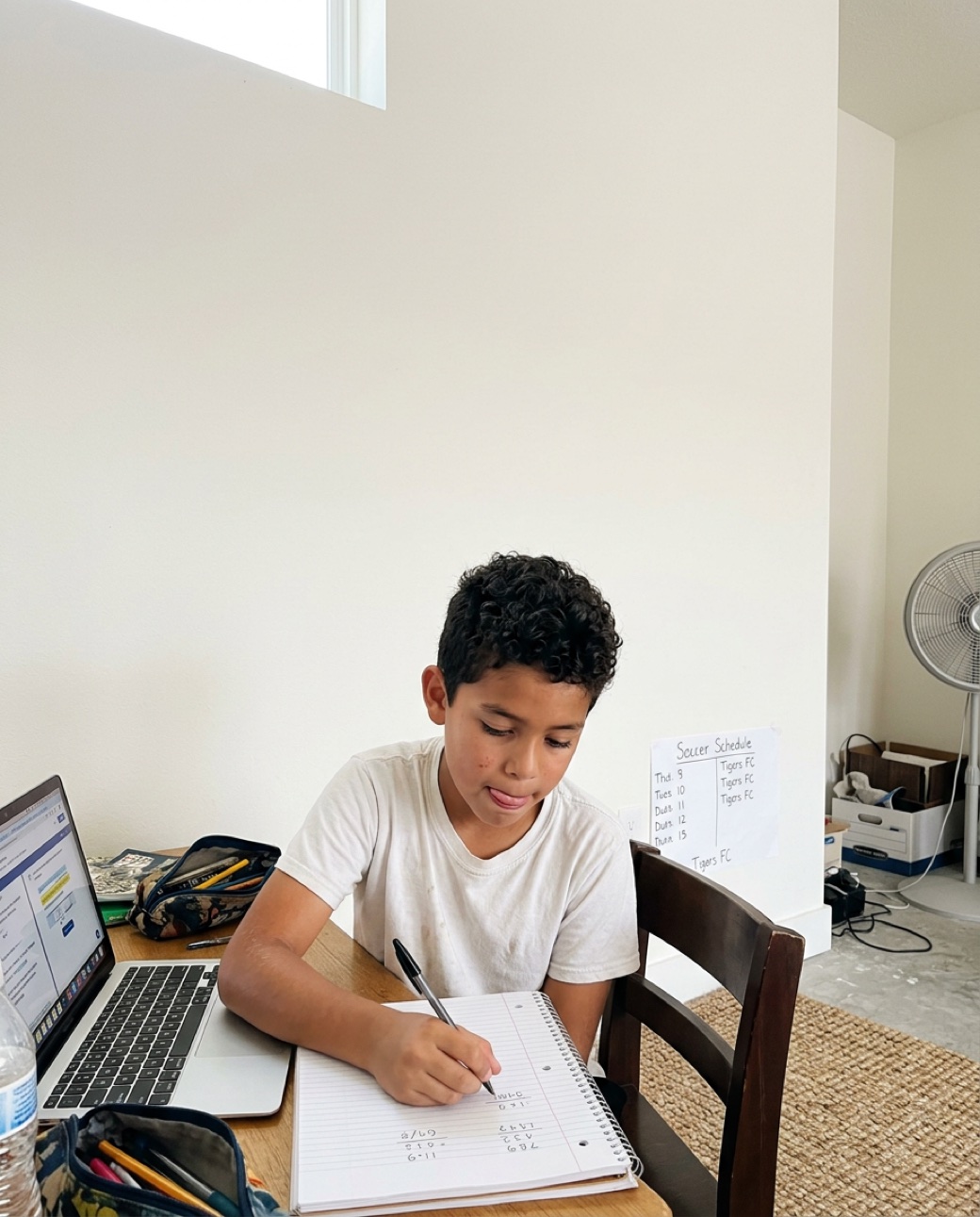
For elementary-school children, the goal is to protect the curiosity they were born with rather than manufacture motivation that isn't there yet. Three moves carry the most weight at this age. First, keep study sessions short — 15 to 25 minutes for younger elementary, up to 30 for upper elementary. A child who finishes feels competent; a child who burns out at 50 minutes learns that schoolwork is suffering. Second, sit beside them rather than behind them — your presence is the relatedness need, doing it for them undoes the competence need. Third, name effort specifically: "You stuck with that even when it was hard" beats "Good job" because it tells them what to repeat. If they want a parent in the room, that's normal at this age — it's a relatedness anchor, not a crutch.
How do I motivate a middle-school student (grades 6–8)?
Middle school is the age where motivation gets identity-shaped — your child is starting to ask whether they are "a math person" or "a writer" and whether their friends think school is cool. Two moves matter most. First, separate the homework conversation from the relationship conversation; if every dinner is about grades, the relatedness need shuts down and motivation collapses. Reserve nights for non-school talk. Second, replace "How was the test?" with "What did you find hardest in the test?" — the second question signals that struggle is the work, not failure. Carol Dweck's growth-mindset research found that praising the strategy ("you tried a different approach when the first one didn't work") rather than the trait ("you're so smart") produces students who choose harder problems and bounce back faster. The shift is subtle and the language matters.
How do I motivate a teenager who has lost interest in school?
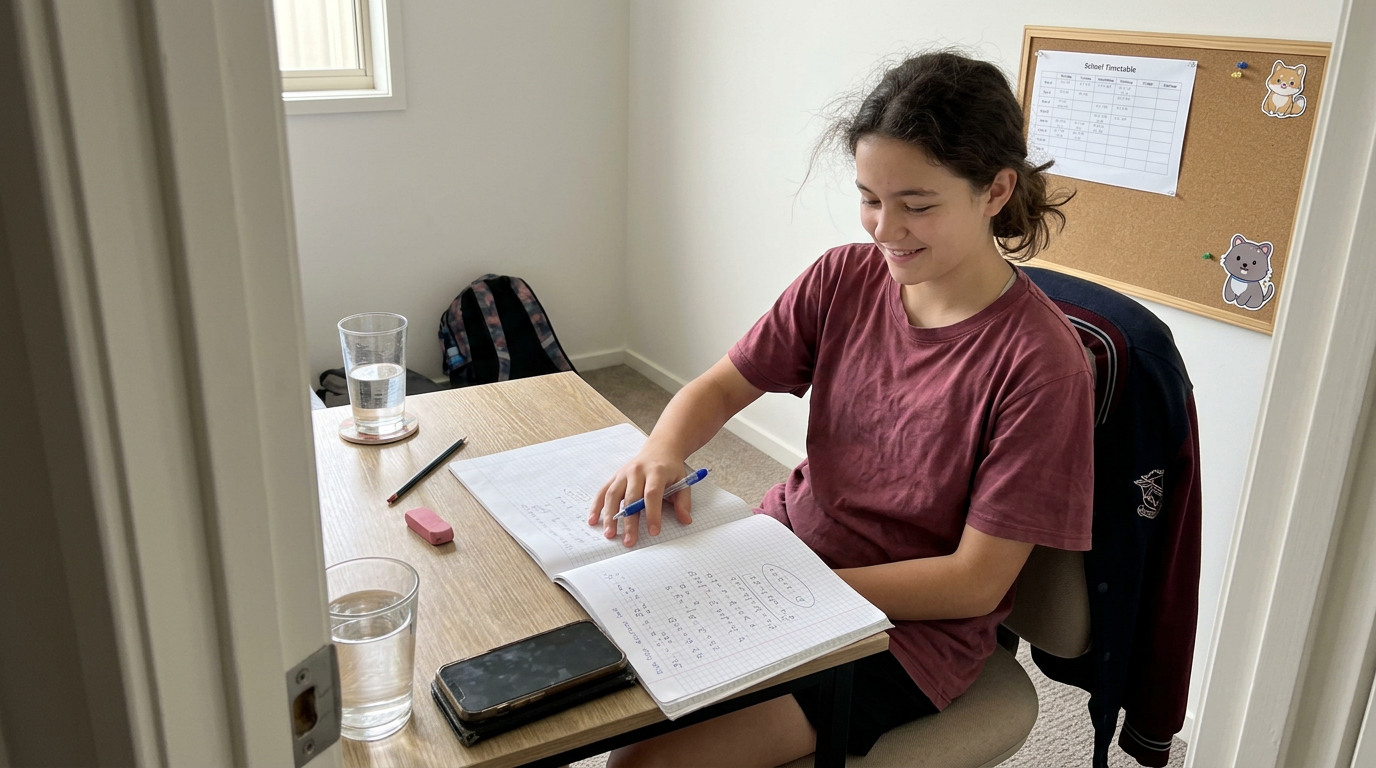
For high-school students (grades 9–12), the most reliable lever is connecting today's effort to a future they actually want — but you can only do that once you've earned the right to have the conversation. Start by asking, not telling: "What do you want next year to look like?" If they don't know, that's information; the work is helping them figure it out, not pushing them through senior year toward a goal that's yours, not theirs. Once the goal is theirs, John Hattie's Visible Learning meta-analyses identify two of the highest-leverage interventions for high-school students: deliberate goal-setting (effect size around 0.50–0.68) and self-reported grading (asking them to predict their next grade, which improves accuracy and ownership). Practical version: ask them to set one weekly study goal and predict their next assessment grade in their own words. Don't take over the prediction; the act of doing it is the work.
When should I get a tutor for an unmotivated child?
A tutor helps when the motivation problem is downstream of a competence gap — when your child has fallen behind enough that the daily classwork is genuinely too hard, and no amount of autonomy-support fixes that. Five clear signals point to "yes, get a tutor": grades dropping more than half a letter, homework taking three times longer than the teacher estimated, the child saying "I'm dumb" or "I hate this subject," avoidance of one specific subject they used to be fine with, and you finding yourself in homework arguments most weeknights. Tutoring works in this situation because a one-to-one tutor can rebuild the missing foundation at the child's actual level — which restores the competence need, which is what was suppressing motivation. Confidence usually returns within four to six sessions if the gap is the real cause; if it doesn't, the issue is somewhere else.
What does an American tutor cost, and is it worth it for motivation?
In the US, private tutoring typically runs US$40–US$80 per hour for one-to-one online tutoring, with Tutero starting at US$45/hr at the same rate across grades K–12 (no AP/SAT premium, no contracts). For a motivation-driven case, two sessions a week for four to six weeks is usually enough to know whether tutoring is the right intervention — that's around US$360–US$540 of investment to find out. The reason it's worth doing properly rather than half-heartedly: a tutor who shows up once every two weeks can't restore competence fast enough to break the avoidance loop, but two-a-week for a short block usually does. The other five benefits of private tutoring stack on top — but for motivation specifically, intensity over a short window is the lever.
What are five things that kill motivation that parents accidentally do?
- Hovering over homework. Standing behind your child, correcting in real time, signals you don't trust them — competence need collapses.
- Comparing siblings or classmates. "Your sister never struggled with this" is the single most reliable way to flatten effort. The child either gives up to confirm the comparison or rebels against it.
- Removing things they love as punishment for grades. Per The Atlantic's 2025 reporting on this exact pattern, taking away a child's "island of competence" — the sport, instrument, or hobby they're actually good at — is the wrong lever; it removes the only place their competence need is being met.
- Using grades as the only success metric. Grades are outcomes; effort, strategy, and attempts are inputs. Praising only outcomes teaches the child to avoid hard things.
- Talking about school every meal. The relatedness need needs unstructured time. If every conversation is "how's the assignment going," the child stops bringing the relationship to the table.
How long does it take to rebuild a child's motivation?
Most parents who consistently change their own behavior — switching from controlling to autonomy-supportive language, separating relationship time from homework time, and rewarding effort over grades — see a meaningful lift in their child's engagement within two to four weeks. The full shift takes a semester. Two things slow it down: inconsistency between parents (one autonomy-supportive, one controlling — the child plays both ends), and reverting under pressure right before a test. Pick two weeks that are relatively quiet, commit to the language change, and don't drop it just because their next assessment is on Friday. The research is clear that the parent's own behavior change is the leading indicator; the child follows.
What if nothing works?
If you've tried autonomy-supportive language, separated homework from relationship time, rewarded the right things, and given it a clear month — and your child is still flat, withdrawn, or avoiding school — the issue is probably no longer in the motivation system. Persistent low motivation that doesn't respond to the moves above can signal an underlying anxiety, learning difference, or social problem at school that needs a different kind of support. Speak to your pediatrician, the school counselor, or an educational psychologist. If the issue is sustained focus rather than motivation, that's a different lever; if it's acute test pressure, that needs a test-stress framework. Don't keep applying the motivation lever to a problem that isn't a motivation problem.
Bottom line
Motivation isn't something you install in your child — it's something you stop blocking. Protect their autonomy with real choices, their competence with right-sized tasks, and their relatedness with warm unstructured time. Reward effort, not grades. Match the move to the age. And if a real competence gap has opened up, close it with proper one-to-one help before the avoidance loop hardens. Tutero's online tutors work with elementary, middle, and high school students across the US at US$45/hr — same rate across every grade level, no contracts, and usually four to six sessions to know whether tutoring is the right lever for your child.
Motivation isn't a personality trait — it's the by-product of three psychological needs being met: autonomy, competence, and relatedness.
Motivation isn't a personality trait — it's the by-product of three psychological needs being met: autonomy, competence, and relatedness.
Updated May 6, 2026. If your child has lost interest in school, dragged their feet over homework for weeks, or seems to care more about a screen than their classwork, this guide is the practical version of what the research actually says — and what works for elementary, middle, and high school students.
Quick answer: how do I motivate my child?
Motivation isn't a personality trait — it's the by-product of three needs being met (autonomy, competence, and relatedness, per Self-Determination Theory). The fastest way to lift a child's motivation is to stop pushing harder and start protecting those three things: give them real choices about how they study, set tasks they can succeed at within 15–25 minutes, and stay warm when they fail. Rewards have a place, but only for boring, repetitive tasks — not for things you want them to enjoy. Most parents see a meaningful shift in 2–4 weeks if they change their own behavior first.
Why is my child not motivated to do schoolwork?
Most "unmotivated" children are not lazy — they are protecting themselves from feeling incompetent, controlled, or disconnected. Self-Determination Theory, developed by psychologists Edward Deci and Richard Ryan and now backed by 40+ years of research, identifies three psychological needs every child has: autonomy (a sense of choice), competence (a sense of getting better at something), and relatedness (warm relationships with the adults around them). When schoolwork chronically threatens one of those — for example, work that's always too hard, a parent who always corrects, or a classroom where they have no friends — the child's brain quietly switches to avoidance. What looks like laziness is usually a child trying to avoid feeling bad. Naming which of the three needs is missing for your child is the first move; it's almost always more useful than the next reward chart.
Is my child lazy or unmotivated — what's the difference?
"Lazy" is a label parents reach for when a behavior repeats; it almost never describes what's actually happening. A child who avoids math but spends two hours mastering a Minecraft redstone circuit is not lazy — they are unmotivated about math specifically, and the reason is usually one of four things: the work is too hard (competence threat), too easy (boredom), too controlled (autonomy threat), or socially unsafe (relatedness threat — they don't want to be the one getting it wrong in class). Treating the underlying threat lifts effort almost every time. Calling the child lazy lifts nothing — and worse, the label gets internalized, which is the opposite of what motivation needs.
What's the difference between intrinsic and extrinsic motivation for kids?
Intrinsic motivation is doing something because the activity itself is rewarding — a child who reads at night because they want to know what happens next. Extrinsic motivation is doing it for an outside reward — pocket money, a sticker, screen time, a grade. Both work, but they don't work in the same situations. Decades of motivation research, including Deci and Ryan's meta-analyses, show that extrinsic rewards are useful for repetitive or boring tasks (handwriting drills, multiplication facts, tidying the desk) but they actively damage intrinsic motivation when used on tasks the child already enjoys or that require creativity. The practical rule: reward the boring stuff, never the creative stuff, and never reward something they already like — you'll teach them they only do it for the prize.
Should I reward my child for good grades?
Reward effort and behavior, not grades. The Education Endowment Foundation's evidence summaries on metacognition and self-regulation are clear: rewarding the controllable inputs (showing up to study, attempting hard problems, checking work) builds self-regulation, while rewarding the uncontrollable outcome (the grade) builds anxiety. A grade depends on the test paper, the grader, the day — things your child can't control. So pay them for studying for 25 minutes without their phone in the room, not for the A. If you want to celebrate a result, celebrate it without making it the deal — "I'm proud of how much you stuck with this semester" lands very differently from "Here's $50 because you got an A."
How does autonomy-supportive parenting build motivation?
Autonomy-supportive parenting means giving your child real, age-appropriate choices about how they meet expectations — not whether they meet them. Instead of "Do your math now," it's "You've got 40 minutes of math to get through tonight — would you rather do it before or after dinner, at the kitchen table or your room, and would you rather start with the hardest question or the easiest?" The destination is non-negotiable, the route is theirs. Research from Wendy Grolnick and colleagues shows children of autonomy-supportive parents report higher engagement, better grades, and lower anxiety than children of controlling parents — even when both groups have the same expectations. The shift takes practice; most parents have to bite their tongue for two weeks before it stops feeling unnatural.
How do I motivate an elementary-school child (grades K–5)?
For elementary-school children, the goal is to protect the curiosity they were born with rather than manufacture motivation that isn't there yet. Three moves carry the most weight at this age. First, keep study sessions short — 15 to 25 minutes for younger elementary, up to 30 for upper elementary. A child who finishes feels competent; a child who burns out at 50 minutes learns that schoolwork is suffering. Second, sit beside them rather than behind them — your presence is the relatedness need, doing it for them undoes the competence need. Third, name effort specifically: "You stuck with that even when it was hard" beats "Good job" because it tells them what to repeat. If they want a parent in the room, that's normal at this age — it's a relatedness anchor, not a crutch.
How do I motivate a middle-school student (grades 6–8)?
Middle school is the age where motivation gets identity-shaped — your child is starting to ask whether they are "a math person" or "a writer" and whether their friends think school is cool. Two moves matter most. First, separate the homework conversation from the relationship conversation; if every dinner is about grades, the relatedness need shuts down and motivation collapses. Reserve nights for non-school talk. Second, replace "How was the test?" with "What did you find hardest in the test?" — the second question signals that struggle is the work, not failure. Carol Dweck's growth-mindset research found that praising the strategy ("you tried a different approach when the first one didn't work") rather than the trait ("you're so smart") produces students who choose harder problems and bounce back faster. The shift is subtle and the language matters.
How do I motivate a teenager who has lost interest in school?
For high-school students (grades 9–12), the most reliable lever is connecting today's effort to a future they actually want — but you can only do that once you've earned the right to have the conversation. Start by asking, not telling: "What do you want next year to look like?" If they don't know, that's information; the work is helping them figure it out, not pushing them through senior year toward a goal that's yours, not theirs. Once the goal is theirs, John Hattie's Visible Learning meta-analyses identify two of the highest-leverage interventions for high-school students: deliberate goal-setting (effect size around 0.50–0.68) and self-reported grading (asking them to predict their next grade, which improves accuracy and ownership). Practical version: ask them to set one weekly study goal and predict their next assessment grade in their own words. Don't take over the prediction; the act of doing it is the work.
When should I get a tutor for an unmotivated child?
A tutor helps when the motivation problem is downstream of a competence gap — when your child has fallen behind enough that the daily classwork is genuinely too hard, and no amount of autonomy-support fixes that. Five clear signals point to "yes, get a tutor": grades dropping more than half a letter, homework taking three times longer than the teacher estimated, the child saying "I'm dumb" or "I hate this subject," avoidance of one specific subject they used to be fine with, and you finding yourself in homework arguments most weeknights. Tutoring works in this situation because a one-to-one tutor can rebuild the missing foundation at the child's actual level — which restores the competence need, which is what was suppressing motivation. Confidence usually returns within four to six sessions if the gap is the real cause; if it doesn't, the issue is somewhere else.
What does an American tutor cost, and is it worth it for motivation?
In the US, private tutoring typically runs US$40–US$80 per hour for one-to-one online tutoring, with Tutero starting at US$45/hr at the same rate across grades K–12 (no AP/SAT premium, no contracts). For a motivation-driven case, two sessions a week for four to six weeks is usually enough to know whether tutoring is the right intervention — that's around US$360–US$540 of investment to find out. The reason it's worth doing properly rather than half-heartedly: a tutor who shows up once every two weeks can't restore competence fast enough to break the avoidance loop, but two-a-week for a short block usually does. The other five benefits of private tutoring stack on top — but for motivation specifically, intensity over a short window is the lever.
What are five things that kill motivation that parents accidentally do?
- Hovering over homework. Standing behind your child, correcting in real time, signals you don't trust them — competence need collapses.
- Comparing siblings or classmates. "Your sister never struggled with this" is the single most reliable way to flatten effort. The child either gives up to confirm the comparison or rebels against it.
- Removing things they love as punishment for grades. Per The Atlantic's 2025 reporting on this exact pattern, taking away a child's "island of competence" — the sport, instrument, or hobby they're actually good at — is the wrong lever; it removes the only place their competence need is being met.
- Using grades as the only success metric. Grades are outcomes; effort, strategy, and attempts are inputs. Praising only outcomes teaches the child to avoid hard things.
- Talking about school every meal. The relatedness need needs unstructured time. If every conversation is "how's the assignment going," the child stops bringing the relationship to the table.
How long does it take to rebuild a child's motivation?
Most parents who consistently change their own behavior — switching from controlling to autonomy-supportive language, separating relationship time from homework time, and rewarding effort over grades — see a meaningful lift in their child's engagement within two to four weeks. The full shift takes a semester. Two things slow it down: inconsistency between parents (one autonomy-supportive, one controlling — the child plays both ends), and reverting under pressure right before a test. Pick two weeks that are relatively quiet, commit to the language change, and don't drop it just because their next assessment is on Friday. The research is clear that the parent's own behavior change is the leading indicator; the child follows.
What if nothing works?
If you've tried autonomy-supportive language, separated homework from relationship time, rewarded the right things, and given it a clear month — and your child is still flat, withdrawn, or avoiding school — the issue is probably no longer in the motivation system. Persistent low motivation that doesn't respond to the moves above can signal an underlying anxiety, learning difference, or social problem at school that needs a different kind of support. Speak to your pediatrician, the school counselor, or an educational psychologist. If the issue is sustained focus rather than motivation, that's a different lever; if it's acute test pressure, that needs a test-stress framework. Don't keep applying the motivation lever to a problem that isn't a motivation problem.
Bottom line
Motivation isn't something you install in your child — it's something you stop blocking. Protect their autonomy with real choices, their competence with right-sized tasks, and their relatedness with warm unstructured time. Reward effort, not grades. Match the move to the age. And if a real competence gap has opened up, close it with proper one-to-one help before the avoidance loop hardens. Tutero's online tutors work with elementary, middle, and high school students across the US at US$45/hr — same rate across every grade level, no contracts, and usually four to six sessions to know whether tutoring is the right lever for your child.
Motivation isn't a personality trait — it's the by-product of three psychological needs being met: autonomy, competence, and relatedness.
Motivation isn't a personality trait — it's the by-product of three psychological needs being met: autonomy, competence, and relatedness.

Motivation isn't a personality trait — it's the by-product of three psychological needs being met: autonomy, competence, and relatedness.
Reward effort, never grades. Effort is controllable; grades aren't — and rewarding what they can't control builds anxiety, not motivation.
Updated May 6, 2026. If your child has lost interest in school, dragged their feet over homework for weeks, or seems to care more about a screen than their classwork, this guide is the practical version of what the research actually says — and what works for elementary, middle, and high school students.
Quick answer: how do I motivate my child?
Motivation isn't a personality trait — it's the by-product of three needs being met (autonomy, competence, and relatedness, per Self-Determination Theory). The fastest way to lift a child's motivation is to stop pushing harder and start protecting those three things: give them real choices about how they study, set tasks they can succeed at within 15–25 minutes, and stay warm when they fail. Rewards have a place, but only for boring, repetitive tasks — not for things you want them to enjoy. Most parents see a meaningful shift in 2–4 weeks if they change their own behavior first.
Why is my child not motivated to do schoolwork?
Most "unmotivated" children are not lazy — they are protecting themselves from feeling incompetent, controlled, or disconnected. Self-Determination Theory, developed by psychologists Edward Deci and Richard Ryan and now backed by 40+ years of research, identifies three psychological needs every child has: autonomy (a sense of choice), competence (a sense of getting better at something), and relatedness (warm relationships with the adults around them). When schoolwork chronically threatens one of those — for example, work that's always too hard, a parent who always corrects, or a classroom where they have no friends — the child's brain quietly switches to avoidance. What looks like laziness is usually a child trying to avoid feeling bad. Naming which of the three needs is missing for your child is the first move; it's almost always more useful than the next reward chart.
Is my child lazy or unmotivated — what's the difference?
"Lazy" is a label parents reach for when a behavior repeats; it almost never describes what's actually happening. A child who avoids math but spends two hours mastering a Minecraft redstone circuit is not lazy — they are unmotivated about math specifically, and the reason is usually one of four things: the work is too hard (competence threat), too easy (boredom), too controlled (autonomy threat), or socially unsafe (relatedness threat — they don't want to be the one getting it wrong in class). Treating the underlying threat lifts effort almost every time. Calling the child lazy lifts nothing — and worse, the label gets internalized, which is the opposite of what motivation needs.
What's the difference between intrinsic and extrinsic motivation for kids?
Intrinsic motivation is doing something because the activity itself is rewarding — a child who reads at night because they want to know what happens next. Extrinsic motivation is doing it for an outside reward — pocket money, a sticker, screen time, a grade. Both work, but they don't work in the same situations. Decades of motivation research, including Deci and Ryan's meta-analyses, show that extrinsic rewards are useful for repetitive or boring tasks (handwriting drills, multiplication facts, tidying the desk) but they actively damage intrinsic motivation when used on tasks the child already enjoys or that require creativity. The practical rule: reward the boring stuff, never the creative stuff, and never reward something they already like — you'll teach them they only do it for the prize.
Should I reward my child for good grades?
Reward effort and behavior, not grades. The Education Endowment Foundation's evidence summaries on metacognition and self-regulation are clear: rewarding the controllable inputs (showing up to study, attempting hard problems, checking work) builds self-regulation, while rewarding the uncontrollable outcome (the grade) builds anxiety. A grade depends on the test paper, the grader, the day — things your child can't control. So pay them for studying for 25 minutes without their phone in the room, not for the A. If you want to celebrate a result, celebrate it without making it the deal — "I'm proud of how much you stuck with this semester" lands very differently from "Here's $50 because you got an A."
How does autonomy-supportive parenting build motivation?
Autonomy-supportive parenting means giving your child real, age-appropriate choices about how they meet expectations — not whether they meet them. Instead of "Do your math now," it's "You've got 40 minutes of math to get through tonight — would you rather do it before or after dinner, at the kitchen table or your room, and would you rather start with the hardest question or the easiest?" The destination is non-negotiable, the route is theirs. Research from Wendy Grolnick and colleagues shows children of autonomy-supportive parents report higher engagement, better grades, and lower anxiety than children of controlling parents — even when both groups have the same expectations. The shift takes practice; most parents have to bite their tongue for two weeks before it stops feeling unnatural.
How do I motivate an elementary-school child (grades K–5)?
For elementary-school children, the goal is to protect the curiosity they were born with rather than manufacture motivation that isn't there yet. Three moves carry the most weight at this age. First, keep study sessions short — 15 to 25 minutes for younger elementary, up to 30 for upper elementary. A child who finishes feels competent; a child who burns out at 50 minutes learns that schoolwork is suffering. Second, sit beside them rather than behind them — your presence is the relatedness need, doing it for them undoes the competence need. Third, name effort specifically: "You stuck with that even when it was hard" beats "Good job" because it tells them what to repeat. If they want a parent in the room, that's normal at this age — it's a relatedness anchor, not a crutch.
How do I motivate a middle-school student (grades 6–8)?
Middle school is the age where motivation gets identity-shaped — your child is starting to ask whether they are "a math person" or "a writer" and whether their friends think school is cool. Two moves matter most. First, separate the homework conversation from the relationship conversation; if every dinner is about grades, the relatedness need shuts down and motivation collapses. Reserve nights for non-school talk. Second, replace "How was the test?" with "What did you find hardest in the test?" — the second question signals that struggle is the work, not failure. Carol Dweck's growth-mindset research found that praising the strategy ("you tried a different approach when the first one didn't work") rather than the trait ("you're so smart") produces students who choose harder problems and bounce back faster. The shift is subtle and the language matters.
How do I motivate a teenager who has lost interest in school?
For high-school students (grades 9–12), the most reliable lever is connecting today's effort to a future they actually want — but you can only do that once you've earned the right to have the conversation. Start by asking, not telling: "What do you want next year to look like?" If they don't know, that's information; the work is helping them figure it out, not pushing them through senior year toward a goal that's yours, not theirs. Once the goal is theirs, John Hattie's Visible Learning meta-analyses identify two of the highest-leverage interventions for high-school students: deliberate goal-setting (effect size around 0.50–0.68) and self-reported grading (asking them to predict their next grade, which improves accuracy and ownership). Practical version: ask them to set one weekly study goal and predict their next assessment grade in their own words. Don't take over the prediction; the act of doing it is the work.
When should I get a tutor for an unmotivated child?
A tutor helps when the motivation problem is downstream of a competence gap — when your child has fallen behind enough that the daily classwork is genuinely too hard, and no amount of autonomy-support fixes that. Five clear signals point to "yes, get a tutor": grades dropping more than half a letter, homework taking three times longer than the teacher estimated, the child saying "I'm dumb" or "I hate this subject," avoidance of one specific subject they used to be fine with, and you finding yourself in homework arguments most weeknights. Tutoring works in this situation because a one-to-one tutor can rebuild the missing foundation at the child's actual level — which restores the competence need, which is what was suppressing motivation. Confidence usually returns within four to six sessions if the gap is the real cause; if it doesn't, the issue is somewhere else.
What does an American tutor cost, and is it worth it for motivation?
In the US, private tutoring typically runs US$40–US$80 per hour for one-to-one online tutoring, with Tutero starting at US$45/hr at the same rate across grades K–12 (no AP/SAT premium, no contracts). For a motivation-driven case, two sessions a week for four to six weeks is usually enough to know whether tutoring is the right intervention — that's around US$360–US$540 of investment to find out. The reason it's worth doing properly rather than half-heartedly: a tutor who shows up once every two weeks can't restore competence fast enough to break the avoidance loop, but two-a-week for a short block usually does. The other five benefits of private tutoring stack on top — but for motivation specifically, intensity over a short window is the lever.
What are five things that kill motivation that parents accidentally do?
- Hovering over homework. Standing behind your child, correcting in real time, signals you don't trust them — competence need collapses.
- Comparing siblings or classmates. "Your sister never struggled with this" is the single most reliable way to flatten effort. The child either gives up to confirm the comparison or rebels against it.
- Removing things they love as punishment for grades. Per The Atlantic's 2025 reporting on this exact pattern, taking away a child's "island of competence" — the sport, instrument, or hobby they're actually good at — is the wrong lever; it removes the only place their competence need is being met.
- Using grades as the only success metric. Grades are outcomes; effort, strategy, and attempts are inputs. Praising only outcomes teaches the child to avoid hard things.
- Talking about school every meal. The relatedness need needs unstructured time. If every conversation is "how's the assignment going," the child stops bringing the relationship to the table.
How long does it take to rebuild a child's motivation?
Most parents who consistently change their own behavior — switching from controlling to autonomy-supportive language, separating relationship time from homework time, and rewarding effort over grades — see a meaningful lift in their child's engagement within two to four weeks. The full shift takes a semester. Two things slow it down: inconsistency between parents (one autonomy-supportive, one controlling — the child plays both ends), and reverting under pressure right before a test. Pick two weeks that are relatively quiet, commit to the language change, and don't drop it just because their next assessment is on Friday. The research is clear that the parent's own behavior change is the leading indicator; the child follows.
What if nothing works?
If you've tried autonomy-supportive language, separated homework from relationship time, rewarded the right things, and given it a clear month — and your child is still flat, withdrawn, or avoiding school — the issue is probably no longer in the motivation system. Persistent low motivation that doesn't respond to the moves above can signal an underlying anxiety, learning difference, or social problem at school that needs a different kind of support. Speak to your pediatrician, the school counselor, or an educational psychologist. If the issue is sustained focus rather than motivation, that's a different lever; if it's acute test pressure, that needs a test-stress framework. Don't keep applying the motivation lever to a problem that isn't a motivation problem.
Bottom line
Motivation isn't something you install in your child — it's something you stop blocking. Protect their autonomy with real choices, their competence with right-sized tasks, and their relatedness with warm unstructured time. Reward effort, not grades. Match the move to the age. And if a real competence gap has opened up, close it with proper one-to-one help before the avoidance loop hardens. Tutero's online tutors work with elementary, middle, and high school students across the US at US$45/hr — same rate across every grade level, no contracts, and usually four to six sessions to know whether tutoring is the right lever for your child.
Motivation isn't a personality trait — it's the by-product of three psychological needs being met: autonomy, competence, and relatedness.
Reward effort, never grades. Effort is controllable; grades aren't — and rewarding what they can't control builds anxiety, not motivation.
.svg)
.svg)
<p>The fastest move is to stop trying to fix their feelings about school and instead change one of the three psychological needs underneath the dread: autonomy, competence, or relatedness. Pick the smallest piece of the school day that's actually broken — homework that's too hard, a teacher they feel unsafe around, or a friend group that's shifted — and adjust that one thing. "Hating school" is almost always shorthand for "there's a specific thing at school I can't talk about." Asking "what's the worst part of your day?" rather than "why don't you like school?" surfaces the answer in about a week and gives you something concrete to fix.</p>
<p>Removing screens as punishment usually backfires — it removes one of the few places your child feels competent and connected to friends, which collapses the very motivation systems you're trying to lift. The research-aligned move is to ring-fence screen time around the work, not in opposition to it: phone in another room during a 25-minute study block, then full access afterwards. That keeps the screen as a reliable reward for the boring repetitive task (which extrinsic rewards work for) without making it the enemy. Punitive screen removal builds resentment and short-term compliance; ring-fenced access builds the habit of focused work followed by genuine downtime.</p>
<p>The research shows the underlying motivation system — autonomy, competence, relatedness — works the same regardless of gender, but the way it shows up on the surface often differs. Boys more often externalize a competence threat as "I don't care" or visible disengagement; girls more often internalize it as anxiety, perfectionism, or going quiet. The move is the same — protect the three needs — but the diagnosis differs. With a withdrawn child, you're looking for the missing competence or relatedness need; with an anxious or perfectionist child, you're usually looking at autonomy and effort-vs-grade praise. Avoid assuming the surface behavior is the cause.</p>
<p>A tutor changes motivation when the motivation problem is downstream of a competence gap — and only then. If your child has fallen behind enough that the daily work is genuinely too hard, no amount of autonomy-support fixes that, and a one-to-one tutor rebuilding the missing foundation usually restores motivation within four to six sessions. If the issue is autonomy (parents over-controlling), relatedness (no friends in class), or anxiety (clinical), a tutor won't move the needle and can even make it worse by adding another adult demanding output. The diagnostic question: is your child saying "I don't get it" or "I don't care"? The first responds to tutoring; the second usually doesn't.</p>
<p>Because the three psychological needs — autonomy, competence, relatedness — are met by the activity they love and threatened by school. A child who can spend three hours on Minecraft, soccer, or art has chosen what to do (autonomy), is steadily getting better (competence), and is doing it with friends or a parent who isn't correcting them (relatedness). School often inverts all three: someone else picks the task, success is uncertain, and the social environment can feel unsafe. The move isn't to ban the thing they love — it's to import what works about it into homework: real choice, right-sized tasks, and warm presence rather than supervision.</p>
<p>For a child with ADHD, motivation systems still work the same way, but the timescales shrink dramatically. Tasks need to be 10–15 minutes maximum, broken into visible micro-steps, with immediate feedback rather than end-of-week rewards. Body-doubling — a parent or tutor sitting beside them doing their own quiet work — meets the relatedness need and helps with task initiation, which is usually the bottleneck. Right-sized work is non-negotiable: a child with ADHD who can't see the end of a task disengages within minutes. If your child has a formal diagnosis, work with their clinician on medication, sleep, and exercise as the foundation; the parenting moves above sit on top of that, not instead of it.</p>
Hoping to improve confidence & grades?

.png)