.svg)

Updated May 7, 2026. Most parents arrive at the same question after a tricky semester: should I be rewarding my child more, less, or differently? The research is clearer than the parenting advice columns suggest. Reward effort, strategy and progress, not grades. Use the smallest reward that does the job. And know the moment a reward turns into a bribe — it has nothing to do with the size of the gift, and everything to do with what you said in the lead-up.
Quick answer. Reward the behavior you want repeated — effort, strategy and progress — not the outcome. Acknowledge in the moment with words and small genuine gestures, save material rewards for milestones rather than daily chores, and never pre-promise a reward in exchange for a grade. Three lenses help: Deci and Ryan's Self-Determination Theory (autonomy, competence, relatedness), Carol Dweck's growth-mindset research (praise the process, not the trait), and the overjustification effect (paying a child to do something they already enjoy can dampen their interest). Tutoring sessions from US$45/hr at Tutero work well alongside this — a tutor builds the competence so the reward stays connected to real progress.
How should I reward my child?
Reward what you want to see more of, and reward it as close to the moment as possible. For most parents, that means catching effort and strategy in real time — "you stuck with that problem for fifteen minutes before asking for help, that's exactly the muscle that pays off in middle school math" — rather than waiting for a report card. Verbal acknowledgement, time together, choice over the next family activity, and small earned privileges (an extra half-hour of reading-in-bed, picking the Saturday breakfast) cover most situations.
Save physical or money-based rewards for genuine milestones — finishing a tough semester, sticking with piano for the full year, completing a self-set goal. The danger is reaching for a material reward as the daily currency of parenting; that's where the overjustification effect kicks in and the child stops doing the activity for its own sake. The simple test: if you took the reward away, would your child still want to do this? If yes, you're reinforcing intrinsic motivation. If no, the reward has become the reason.
Should I reward my child for good grades?
Mostly no — and the research is unusually consistent on this. When you tie a cash reward or material gift to a grade, you teach the child that the grade is the point. Carol Dweck's growth-mindset work at Stanford found that children praised for being "smart" after a good result became more cautious and avoided harder tasks the next time around, while children praised for the strategy and effort they used kept volunteering for the harder work. Pre-promising "an A in math gets you a new phone" anchors your child to the same trait-and-outcome frame.
A better version: celebrate the report card, name the specific habits that produced it ("you did the homework on Wednesdays and Sundays without a fight, that's why this happened"), and pick a non-material acknowledgement — a meal out, a movie night, a day off chores. If you do want a material gift to mark a milestone, give it after the fact and frame it as recognition of the work, not payment for the grade. The distinction looks small; for the child's motivation system, it's the whole game. If the grade itself is the worry, working with a tutor (Tutero starts at US$45/hr, same rate every grade level) addresses the underlying skill rather than dialing up the incentive.
What's the difference between bribing and rewarding?
Timing and framing. A reward acknowledges a behavior after the fact: "you stuck with the homework even when it got hard, let's grab ice cream on the way home." A bribe pre-promises something to override resistance in the moment: "if you stop crying right now I'll buy you the toy." The first reinforces a habit you want to see again; the second teaches your child that resistance is a negotiating tactic that produces gifts.
The everyday test is whether you're trying to escape an unpleasant moment or recognize a positive one. Tired parents reach for bribes — most of us have, at the supermarket checkout — and one or two won't ruin a child. The pattern is what matters. If "if you do X, I'll give you Y" is becoming the default sentence structure of your parenting, the reward system has tipped into a transaction. Pull back, name behaviors after they happen instead of before, and use the reward as recognition rather than as currency.
Are sticker charts effective?
Yes, for elementary-school children, for short bursts, on specific behaviors. Sticker charts work when they make a behavior visible and the child gets a steady drip of small wins — the pleasure is in seeing the row of stickers grow, not in whatever sits at the end. They stop working when they run too long (the novelty fades by week three), when they cover too many behaviors at once (the child can't tell what's actually being tracked), or when the prize at the end is so big it crowds out the daily satisfaction.
A simple chart that works: one specific behavior ("did 15 minutes of reading before screens"), a sticker for each day, a small celebration after seven days, then retire the chart and move to verbal acknowledgement. Marty Rossmann's longitudinal research on chores found that children who participated in household tasks from age three to four — without elaborate reward systems, just expectation and acknowledgement — showed the strongest adult outcomes on independence and life satisfaction. The implication is that you want the chart to teach the habit, then the habit to teach itself.
What rewards work for teenagers?
Autonomy and time. Teens are wired for independence — Self-Determination Theory's autonomy-relatedness-competence framework lights up especially hard in adolescence — so the rewards that land are the ones that hand them more control over their own life. An extra Saturday-morning sleep-in, a longer screen-time pass on a Friday night, a yes to the friend's place this weekend, the choice of where the family eats out, a later curfew for one specific event. Material gifts still matter for milestones, but small autonomy rewards on a weekly cadence build motivation more reliably than another pair of headphones.

A practical rhythm: link small autonomy rewards to consistent effort over a week or two weeks rather than to single grades. "If you've kept up with the study plan all week, you pick the family movie and stay up an extra hour Friday." For high-school students juggling junior and senior workload, the most generous reward is often a clear cut-off — homework done by 8pm means the rest of the night is theirs, no negotiation. If their study plan needs scaffolding, a tutor handles that without you having to be the homework police; online tutoring through Tutero starts at US$45/hr, same rate at every grade level.
How do I reward effort instead of outcome?
Name the behavior, not the result. The phrase that does most of the work is something like "I noticed you…" followed by a specific observable action. "I noticed you re-read the question three times before you answered." "I noticed you went back and checked your work without me asking." "I noticed you picked the harder reading challenge even though the easier one was an option." Carol Dweck's process-praise research found that this framing kept children volunteering for harder tasks and bouncing back from setbacks; the alternative — "you're so smart" — produced the opposite.
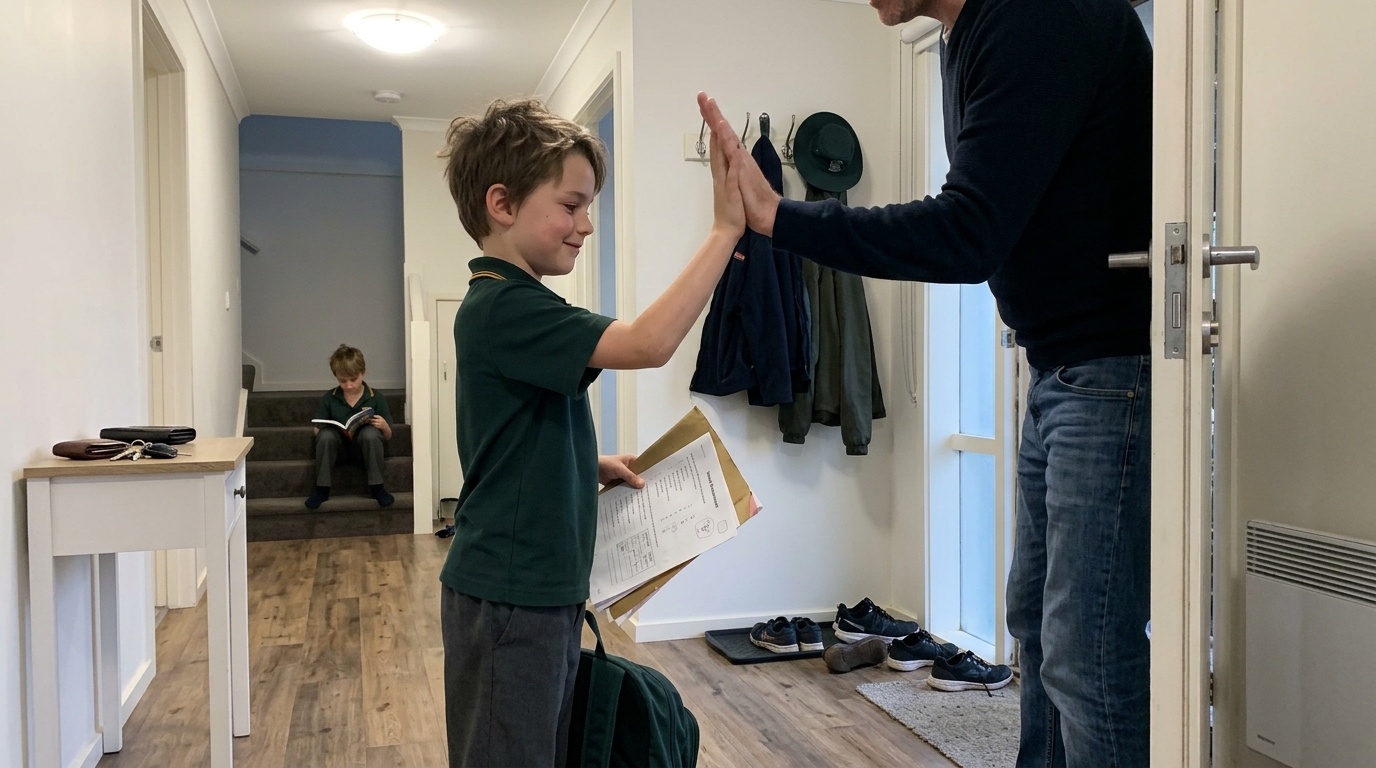
For younger children (1st grade through 4th grade), pair the verbal acknowledgement with a small in-the-moment gesture — a high-five, a fist-bump, sitting down on the floor next to them for five minutes to look at what they made. For middle-school kids (5th through 8th grade), the same words still work but the gesture shifts to giving them a small choice — picking the next book in the household read-aloud, choosing what's on the dinner menu Friday night. For high-school students, the gesture becomes time and trust — backing off from monitoring and letting them run their own week, with you as the sounding board when they ask. The aim is to build a child who praises their own effort internally; you're modeling the voice they'll eventually use on themselves. (Our piece on setting academic goals with your child covers the goal-setting half of this loop.)
Do material rewards harm motivation?
They can — when they're attached to activities the child already enjoys. Edward Deci's overjustification studies in the early 1970s gave children rewards for drawing, an activity they were already happy to do for free. The children who were rewarded showed less interest in drawing afterwards than the children who weren't; the reward had replaced the intrinsic enjoyment as the reason. The pattern has been replicated dozens of times since, most influentially in Deci and Ryan's Self-Determination Theory, which now sits behind a generation of motivation research.
The practical translation: don't pay your child for things they already do for fun, don't pay them for things you want them to discover the intrinsic pleasure of, and be careful about turning effort into a transaction. Material rewards are fine for genuine milestones (finishing a hard semester, completing a long-running goal, sticking with a tough commitment) and for chores that everyone agrees are unpleasant. They become a problem when they're the daily currency of parenting and especially when they're attached to learning, reading and curiosity — the things you most want to be self-sustaining.
What are non-material rewards I can give my child?
Most of the rewards that build long-term motivation cost nothing. Below is the working list parents in our Tutero community come back to most often.
| Age range | Non-material reward | Why it works |
|---|---|---|
| 1st through 4th grade | High-five in the moment, sitting on the floor for five minutes to look at what they made, "I noticed you…" praise, picking the family Friday-night meal | Younger children read presence as the reward; the gesture-plus-words combination beats material gifts at this age |
| 5th through 8th grade | Choice over the weekend plan, an extra book at the library, an "after-homework" walk to the park together, control of the family playlist in the car | Middle-school kids respond to small grants of autonomy; "you choose" is the headline emotion |
| 9th through 12th grade | Saturday-morning sleep-in, longer screen-time pass on a Friday, a later curfew for a specific event, a coffee out together with no agenda | Teenagers value time and autonomy more than objects; SDT's autonomy lever is the strongest at this age |
The cheapest reward in parenting is the one that's already in your hands — your attention, your time, and a sentence that names the specific thing you saw your child do well.
When do reward systems backfire?
Three patterns crop up. The first is reward inflation — what worked at age six (a single sticker) needs to be a chocolate by age seven and a movie ticket by age eight. The fix is to step the reward back down and reset expectations early; if you're constantly upgrading the prize, the prize is now the activity. The second is the all-or-nothing reward, where a child who falls short of the bar gets nothing — feels like fairness, lands as discouragement; partial progress deserves partial acknowledgement. The third is a reward that's so big the lead-up to it changes your child's behavior for the worse — the new bike for top grades that turns the final weeks of the semester into a stress spiral.
Two preventative habits help. First, decide rewards privately rather than telegraphing them in advance — the child can be surprised by recognition, but not be working towards a fixed prize. Second, separate "rewards for being a person in this family" (which is just the rhythm of family life — pancakes on weekends, choosing what we watch) from "rewards for achievements," and don't let the second creep into the first. If everything is a reward, nothing is. Building responsibility and self-directed learning happens faster when reward isn't the carrot in front of every step.
When should I bring in extra support instead of bigger rewards?
When the reward is doing the work the skill should be doing. The signal is when you find yourself raising the stakes — bigger gifts, more screen time, more elaborate sticker charts — to get a behavior that used to come more easily. That usually means the underlying skill (reading fluency, math foundations, study habits, organization) has fallen behind, and the child is avoiding the work because it feels impossibly hard, not because they don't want the reward. No reward fixes a skill gap; only practice does.
A weekly tutoring session reframes the dynamic — instead of you negotiating every homework block, a tutor builds the competence so the homework feels doable, and your role goes back to being the parent rather than the enforcer. Tutero online tutoring starts at US$45/hr, same rate at every grade level (no senior premium, no contracts). Many parents find that two semesters of consistent tutoring resolves the cycle that no reward system was solving. The ideal time to begin tutoring is usually before the gap widens — earlier intervention, smaller reward needed.
Bottom line
Reward effort, strategy and progress, not grades. Acknowledge in the moment with words and small gestures rather than transactions. Save material rewards for genuine milestones, and keep them after-the-fact and quietly given. For teenagers, autonomy is the currency. And the moment you notice yourself raising the stakes to get a behavior you used to get for free, look at the underlying skill — that's where the work belongs.
Related reading
- 4 tips for setting academic goals with your child — the goal-setting half of the motivation loop.
- 5 tips to promote self-directed learning at home — autonomy-supportive parenting in practice.
- How to teach your child to be more responsible — building responsibility without sticker fatigue.
- 5 most common habits of highly successful students — the behaviors worth reinforcing.
- 5 key benefits of private tutoring — when extra support outperforms bigger rewards.
- The ideal time to begin tutoring — earlier intervention, smaller reward needed.
Ready to swap reward inflation for real progress? A weekly Tutero tutor starts at US$45/hr, same rate every grade level, no contracts. Find a tutor matched to your child and let the skill do the work the reward was doing.
Updated May 7, 2026. Most parents arrive at the same question after a tricky semester: should I be rewarding my child more, less, or differently? The research is clearer than the parenting advice columns suggest. Reward effort, strategy and progress, not grades. Use the smallest reward that does the job. And know the moment a reward turns into a bribe — it has nothing to do with the size of the gift, and everything to do with what you said in the lead-up.
Quick answer. Reward the behavior you want repeated — effort, strategy and progress — not the outcome. Acknowledge in the moment with words and small genuine gestures, save material rewards for milestones rather than daily chores, and never pre-promise a reward in exchange for a grade. Three lenses help: Deci and Ryan's Self-Determination Theory (autonomy, competence, relatedness), Carol Dweck's growth-mindset research (praise the process, not the trait), and the overjustification effect (paying a child to do something they already enjoy can dampen their interest). Tutoring sessions from US$45/hr at Tutero work well alongside this — a tutor builds the competence so the reward stays connected to real progress.
How should I reward my child?
Reward what you want to see more of, and reward it as close to the moment as possible. For most parents, that means catching effort and strategy in real time — "you stuck with that problem for fifteen minutes before asking for help, that's exactly the muscle that pays off in middle school math" — rather than waiting for a report card. Verbal acknowledgement, time together, choice over the next family activity, and small earned privileges (an extra half-hour of reading-in-bed, picking the Saturday breakfast) cover most situations.
Save physical or money-based rewards for genuine milestones — finishing a tough semester, sticking with piano for the full year, completing a self-set goal. The danger is reaching for a material reward as the daily currency of parenting; that's where the overjustification effect kicks in and the child stops doing the activity for its own sake. The simple test: if you took the reward away, would your child still want to do this? If yes, you're reinforcing intrinsic motivation. If no, the reward has become the reason.
Should I reward my child for good grades?
Mostly no — and the research is unusually consistent on this. When you tie a cash reward or material gift to a grade, you teach the child that the grade is the point. Carol Dweck's growth-mindset work at Stanford found that children praised for being "smart" after a good result became more cautious and avoided harder tasks the next time around, while children praised for the strategy and effort they used kept volunteering for the harder work. Pre-promising "an A in math gets you a new phone" anchors your child to the same trait-and-outcome frame.
A better version: celebrate the report card, name the specific habits that produced it ("you did the homework on Wednesdays and Sundays without a fight, that's why this happened"), and pick a non-material acknowledgement — a meal out, a movie night, a day off chores. If you do want a material gift to mark a milestone, give it after the fact and frame it as recognition of the work, not payment for the grade. The distinction looks small; for the child's motivation system, it's the whole game. If the grade itself is the worry, working with a tutor (Tutero starts at US$45/hr, same rate every grade level) addresses the underlying skill rather than dialing up the incentive.
What's the difference between bribing and rewarding?
Timing and framing. A reward acknowledges a behavior after the fact: "you stuck with the homework even when it got hard, let's grab ice cream on the way home." A bribe pre-promises something to override resistance in the moment: "if you stop crying right now I'll buy you the toy." The first reinforces a habit you want to see again; the second teaches your child that resistance is a negotiating tactic that produces gifts.
The everyday test is whether you're trying to escape an unpleasant moment or recognize a positive one. Tired parents reach for bribes — most of us have, at the supermarket checkout — and one or two won't ruin a child. The pattern is what matters. If "if you do X, I'll give you Y" is becoming the default sentence structure of your parenting, the reward system has tipped into a transaction. Pull back, name behaviors after they happen instead of before, and use the reward as recognition rather than as currency.
Are sticker charts effective?
Yes, for elementary-school children, for short bursts, on specific behaviors. Sticker charts work when they make a behavior visible and the child gets a steady drip of small wins — the pleasure is in seeing the row of stickers grow, not in whatever sits at the end. They stop working when they run too long (the novelty fades by week three), when they cover too many behaviors at once (the child can't tell what's actually being tracked), or when the prize at the end is so big it crowds out the daily satisfaction.
A simple chart that works: one specific behavior ("did 15 minutes of reading before screens"), a sticker for each day, a small celebration after seven days, then retire the chart and move to verbal acknowledgement. Marty Rossmann's longitudinal research on chores found that children who participated in household tasks from age three to four — without elaborate reward systems, just expectation and acknowledgement — showed the strongest adult outcomes on independence and life satisfaction. The implication is that you want the chart to teach the habit, then the habit to teach itself.
What rewards work for teenagers?
Autonomy and time. Teens are wired for independence — Self-Determination Theory's autonomy-relatedness-competence framework lights up especially hard in adolescence — so the rewards that land are the ones that hand them more control over their own life. An extra Saturday-morning sleep-in, a longer screen-time pass on a Friday night, a yes to the friend's place this weekend, the choice of where the family eats out, a later curfew for one specific event. Material gifts still matter for milestones, but small autonomy rewards on a weekly cadence build motivation more reliably than another pair of headphones.
A practical rhythm: link small autonomy rewards to consistent effort over a week or two weeks rather than to single grades. "If you've kept up with the study plan all week, you pick the family movie and stay up an extra hour Friday." For high-school students juggling junior and senior workload, the most generous reward is often a clear cut-off — homework done by 8pm means the rest of the night is theirs, no negotiation. If their study plan needs scaffolding, a tutor handles that without you having to be the homework police; online tutoring through Tutero starts at US$45/hr, same rate at every grade level.
How do I reward effort instead of outcome?
Name the behavior, not the result. The phrase that does most of the work is something like "I noticed you…" followed by a specific observable action. "I noticed you re-read the question three times before you answered." "I noticed you went back and checked your work without me asking." "I noticed you picked the harder reading challenge even though the easier one was an option." Carol Dweck's process-praise research found that this framing kept children volunteering for harder tasks and bouncing back from setbacks; the alternative — "you're so smart" — produced the opposite.
For younger children (1st grade through 4th grade), pair the verbal acknowledgement with a small in-the-moment gesture — a high-five, a fist-bump, sitting down on the floor next to them for five minutes to look at what they made. For middle-school kids (5th through 8th grade), the same words still work but the gesture shifts to giving them a small choice — picking the next book in the household read-aloud, choosing what's on the dinner menu Friday night. For high-school students, the gesture becomes time and trust — backing off from monitoring and letting them run their own week, with you as the sounding board when they ask. The aim is to build a child who praises their own effort internally; you're modeling the voice they'll eventually use on themselves. (Our piece on setting academic goals with your child covers the goal-setting half of this loop.)
Do material rewards harm motivation?
They can — when they're attached to activities the child already enjoys. Edward Deci's overjustification studies in the early 1970s gave children rewards for drawing, an activity they were already happy to do for free. The children who were rewarded showed less interest in drawing afterwards than the children who weren't; the reward had replaced the intrinsic enjoyment as the reason. The pattern has been replicated dozens of times since, most influentially in Deci and Ryan's Self-Determination Theory, which now sits behind a generation of motivation research.
The practical translation: don't pay your child for things they already do for fun, don't pay them for things you want them to discover the intrinsic pleasure of, and be careful about turning effort into a transaction. Material rewards are fine for genuine milestones (finishing a hard semester, completing a long-running goal, sticking with a tough commitment) and for chores that everyone agrees are unpleasant. They become a problem when they're the daily currency of parenting and especially when they're attached to learning, reading and curiosity — the things you most want to be self-sustaining.
What are non-material rewards I can give my child?
Most of the rewards that build long-term motivation cost nothing. Below is the working list parents in our Tutero community come back to most often.
| Age range | Non-material reward | Why it works |
|---|---|---|
| 1st through 4th grade | High-five in the moment, sitting on the floor for five minutes to look at what they made, "I noticed you…" praise, picking the family Friday-night meal | Younger children read presence as the reward; the gesture-plus-words combination beats material gifts at this age |
| 5th through 8th grade | Choice over the weekend plan, an extra book at the library, an "after-homework" walk to the park together, control of the family playlist in the car | Middle-school kids respond to small grants of autonomy; "you choose" is the headline emotion |
| 9th through 12th grade | Saturday-morning sleep-in, longer screen-time pass on a Friday, a later curfew for a specific event, a coffee out together with no agenda | Teenagers value time and autonomy more than objects; SDT's autonomy lever is the strongest at this age |
The cheapest reward in parenting is the one that's already in your hands — your attention, your time, and a sentence that names the specific thing you saw your child do well.
When do reward systems backfire?
Three patterns crop up. The first is reward inflation — what worked at age six (a single sticker) needs to be a chocolate by age seven and a movie ticket by age eight. The fix is to step the reward back down and reset expectations early; if you're constantly upgrading the prize, the prize is now the activity. The second is the all-or-nothing reward, where a child who falls short of the bar gets nothing — feels like fairness, lands as discouragement; partial progress deserves partial acknowledgement. The third is a reward that's so big the lead-up to it changes your child's behavior for the worse — the new bike for top grades that turns the final weeks of the semester into a stress spiral.
Two preventative habits help. First, decide rewards privately rather than telegraphing them in advance — the child can be surprised by recognition, but not be working towards a fixed prize. Second, separate "rewards for being a person in this family" (which is just the rhythm of family life — pancakes on weekends, choosing what we watch) from "rewards for achievements," and don't let the second creep into the first. If everything is a reward, nothing is. Building responsibility and self-directed learning happens faster when reward isn't the carrot in front of every step.
When should I bring in extra support instead of bigger rewards?
When the reward is doing the work the skill should be doing. The signal is when you find yourself raising the stakes — bigger gifts, more screen time, more elaborate sticker charts — to get a behavior that used to come more easily. That usually means the underlying skill (reading fluency, math foundations, study habits, organization) has fallen behind, and the child is avoiding the work because it feels impossibly hard, not because they don't want the reward. No reward fixes a skill gap; only practice does.
A weekly tutoring session reframes the dynamic — instead of you negotiating every homework block, a tutor builds the competence so the homework feels doable, and your role goes back to being the parent rather than the enforcer. Tutero online tutoring starts at US$45/hr, same rate at every grade level (no senior premium, no contracts). Many parents find that two semesters of consistent tutoring resolves the cycle that no reward system was solving. The ideal time to begin tutoring is usually before the gap widens — earlier intervention, smaller reward needed.
Bottom line
Reward effort, strategy and progress, not grades. Acknowledge in the moment with words and small gestures rather than transactions. Save material rewards for genuine milestones, and keep them after-the-fact and quietly given. For teenagers, autonomy is the currency. And the moment you notice yourself raising the stakes to get a behavior you used to get for free, look at the underlying skill — that's where the work belongs.
Related reading
- 4 tips for setting academic goals with your child — the goal-setting half of the motivation loop.
- 5 tips to promote self-directed learning at home — autonomy-supportive parenting in practice.
- How to teach your child to be more responsible — building responsibility without sticker fatigue.
- 5 most common habits of highly successful students — the behaviors worth reinforcing.
- 5 key benefits of private tutoring — when extra support outperforms bigger rewards.
- The ideal time to begin tutoring — earlier intervention, smaller reward needed.
Ready to swap reward inflation for real progress? A weekly Tutero tutor starts at US$45/hr, same rate every grade level, no contracts. Find a tutor matched to your child and let the skill do the work the reward was doing.

Updated May 7, 2026. Most parents arrive at the same question after a tricky semester: should I be rewarding my child more, less, or differently? The research is clearer than the parenting advice columns suggest. Reward effort, strategy and progress, not grades. Use the smallest reward that does the job. And know the moment a reward turns into a bribe — it has nothing to do with the size of the gift, and everything to do with what you said in the lead-up.
Quick answer. Reward the behavior you want repeated — effort, strategy and progress — not the outcome. Acknowledge in the moment with words and small genuine gestures, save material rewards for milestones rather than daily chores, and never pre-promise a reward in exchange for a grade. Three lenses help: Deci and Ryan's Self-Determination Theory (autonomy, competence, relatedness), Carol Dweck's growth-mindset research (praise the process, not the trait), and the overjustification effect (paying a child to do something they already enjoy can dampen their interest). Tutoring sessions from US$45/hr at Tutero work well alongside this — a tutor builds the competence so the reward stays connected to real progress.
How should I reward my child?
Reward what you want to see more of, and reward it as close to the moment as possible. For most parents, that means catching effort and strategy in real time — "you stuck with that problem for fifteen minutes before asking for help, that's exactly the muscle that pays off in middle school math" — rather than waiting for a report card. Verbal acknowledgement, time together, choice over the next family activity, and small earned privileges (an extra half-hour of reading-in-bed, picking the Saturday breakfast) cover most situations.
Save physical or money-based rewards for genuine milestones — finishing a tough semester, sticking with piano for the full year, completing a self-set goal. The danger is reaching for a material reward as the daily currency of parenting; that's where the overjustification effect kicks in and the child stops doing the activity for its own sake. The simple test: if you took the reward away, would your child still want to do this? If yes, you're reinforcing intrinsic motivation. If no, the reward has become the reason.
Should I reward my child for good grades?
Mostly no — and the research is unusually consistent on this. When you tie a cash reward or material gift to a grade, you teach the child that the grade is the point. Carol Dweck's growth-mindset work at Stanford found that children praised for being "smart" after a good result became more cautious and avoided harder tasks the next time around, while children praised for the strategy and effort they used kept volunteering for the harder work. Pre-promising "an A in math gets you a new phone" anchors your child to the same trait-and-outcome frame.
A better version: celebrate the report card, name the specific habits that produced it ("you did the homework on Wednesdays and Sundays without a fight, that's why this happened"), and pick a non-material acknowledgement — a meal out, a movie night, a day off chores. If you do want a material gift to mark a milestone, give it after the fact and frame it as recognition of the work, not payment for the grade. The distinction looks small; for the child's motivation system, it's the whole game. If the grade itself is the worry, working with a tutor (Tutero starts at US$45/hr, same rate every grade level) addresses the underlying skill rather than dialing up the incentive.
What's the difference between bribing and rewarding?
Timing and framing. A reward acknowledges a behavior after the fact: "you stuck with the homework even when it got hard, let's grab ice cream on the way home." A bribe pre-promises something to override resistance in the moment: "if you stop crying right now I'll buy you the toy." The first reinforces a habit you want to see again; the second teaches your child that resistance is a negotiating tactic that produces gifts.
The everyday test is whether you're trying to escape an unpleasant moment or recognize a positive one. Tired parents reach for bribes — most of us have, at the supermarket checkout — and one or two won't ruin a child. The pattern is what matters. If "if you do X, I'll give you Y" is becoming the default sentence structure of your parenting, the reward system has tipped into a transaction. Pull back, name behaviors after they happen instead of before, and use the reward as recognition rather than as currency.
Are sticker charts effective?
Yes, for elementary-school children, for short bursts, on specific behaviors. Sticker charts work when they make a behavior visible and the child gets a steady drip of small wins — the pleasure is in seeing the row of stickers grow, not in whatever sits at the end. They stop working when they run too long (the novelty fades by week three), when they cover too many behaviors at once (the child can't tell what's actually being tracked), or when the prize at the end is so big it crowds out the daily satisfaction.
A simple chart that works: one specific behavior ("did 15 minutes of reading before screens"), a sticker for each day, a small celebration after seven days, then retire the chart and move to verbal acknowledgement. Marty Rossmann's longitudinal research on chores found that children who participated in household tasks from age three to four — without elaborate reward systems, just expectation and acknowledgement — showed the strongest adult outcomes on independence and life satisfaction. The implication is that you want the chart to teach the habit, then the habit to teach itself.
What rewards work for teenagers?
Autonomy and time. Teens are wired for independence — Self-Determination Theory's autonomy-relatedness-competence framework lights up especially hard in adolescence — so the rewards that land are the ones that hand them more control over their own life. An extra Saturday-morning sleep-in, a longer screen-time pass on a Friday night, a yes to the friend's place this weekend, the choice of where the family eats out, a later curfew for one specific event. Material gifts still matter for milestones, but small autonomy rewards on a weekly cadence build motivation more reliably than another pair of headphones.
A practical rhythm: link small autonomy rewards to consistent effort over a week or two weeks rather than to single grades. "If you've kept up with the study plan all week, you pick the family movie and stay up an extra hour Friday." For high-school students juggling junior and senior workload, the most generous reward is often a clear cut-off — homework done by 8pm means the rest of the night is theirs, no negotiation. If their study plan needs scaffolding, a tutor handles that without you having to be the homework police; online tutoring through Tutero starts at US$45/hr, same rate at every grade level.
How do I reward effort instead of outcome?
Name the behavior, not the result. The phrase that does most of the work is something like "I noticed you…" followed by a specific observable action. "I noticed you re-read the question three times before you answered." "I noticed you went back and checked your work without me asking." "I noticed you picked the harder reading challenge even though the easier one was an option." Carol Dweck's process-praise research found that this framing kept children volunteering for harder tasks and bouncing back from setbacks; the alternative — "you're so smart" — produced the opposite.
For younger children (1st grade through 4th grade), pair the verbal acknowledgement with a small in-the-moment gesture — a high-five, a fist-bump, sitting down on the floor next to them for five minutes to look at what they made. For middle-school kids (5th through 8th grade), the same words still work but the gesture shifts to giving them a small choice — picking the next book in the household read-aloud, choosing what's on the dinner menu Friday night. For high-school students, the gesture becomes time and trust — backing off from monitoring and letting them run their own week, with you as the sounding board when they ask. The aim is to build a child who praises their own effort internally; you're modeling the voice they'll eventually use on themselves. (Our piece on setting academic goals with your child covers the goal-setting half of this loop.)
Do material rewards harm motivation?
They can — when they're attached to activities the child already enjoys. Edward Deci's overjustification studies in the early 1970s gave children rewards for drawing, an activity they were already happy to do for free. The children who were rewarded showed less interest in drawing afterwards than the children who weren't; the reward had replaced the intrinsic enjoyment as the reason. The pattern has been replicated dozens of times since, most influentially in Deci and Ryan's Self-Determination Theory, which now sits behind a generation of motivation research.
The practical translation: don't pay your child for things they already do for fun, don't pay them for things you want them to discover the intrinsic pleasure of, and be careful about turning effort into a transaction. Material rewards are fine for genuine milestones (finishing a hard semester, completing a long-running goal, sticking with a tough commitment) and for chores that everyone agrees are unpleasant. They become a problem when they're the daily currency of parenting and especially when they're attached to learning, reading and curiosity — the things you most want to be self-sustaining.
What are non-material rewards I can give my child?
Most of the rewards that build long-term motivation cost nothing. Below is the working list parents in our Tutero community come back to most often.
| Age range | Non-material reward | Why it works |
|---|---|---|
| 1st through 4th grade | High-five in the moment, sitting on the floor for five minutes to look at what they made, "I noticed you…" praise, picking the family Friday-night meal | Younger children read presence as the reward; the gesture-plus-words combination beats material gifts at this age |
| 5th through 8th grade | Choice over the weekend plan, an extra book at the library, an "after-homework" walk to the park together, control of the family playlist in the car | Middle-school kids respond to small grants of autonomy; "you choose" is the headline emotion |
| 9th through 12th grade | Saturday-morning sleep-in, longer screen-time pass on a Friday, a later curfew for a specific event, a coffee out together with no agenda | Teenagers value time and autonomy more than objects; SDT's autonomy lever is the strongest at this age |
The cheapest reward in parenting is the one that's already in your hands — your attention, your time, and a sentence that names the specific thing you saw your child do well.
When do reward systems backfire?
Three patterns crop up. The first is reward inflation — what worked at age six (a single sticker) needs to be a chocolate by age seven and a movie ticket by age eight. The fix is to step the reward back down and reset expectations early; if you're constantly upgrading the prize, the prize is now the activity. The second is the all-or-nothing reward, where a child who falls short of the bar gets nothing — feels like fairness, lands as discouragement; partial progress deserves partial acknowledgement. The third is a reward that's so big the lead-up to it changes your child's behavior for the worse — the new bike for top grades that turns the final weeks of the semester into a stress spiral.
Two preventative habits help. First, decide rewards privately rather than telegraphing them in advance — the child can be surprised by recognition, but not be working towards a fixed prize. Second, separate "rewards for being a person in this family" (which is just the rhythm of family life — pancakes on weekends, choosing what we watch) from "rewards for achievements," and don't let the second creep into the first. If everything is a reward, nothing is. Building responsibility and self-directed learning happens faster when reward isn't the carrot in front of every step.
When should I bring in extra support instead of bigger rewards?
When the reward is doing the work the skill should be doing. The signal is when you find yourself raising the stakes — bigger gifts, more screen time, more elaborate sticker charts — to get a behavior that used to come more easily. That usually means the underlying skill (reading fluency, math foundations, study habits, organization) has fallen behind, and the child is avoiding the work because it feels impossibly hard, not because they don't want the reward. No reward fixes a skill gap; only practice does.
A weekly tutoring session reframes the dynamic — instead of you negotiating every homework block, a tutor builds the competence so the homework feels doable, and your role goes back to being the parent rather than the enforcer. Tutero online tutoring starts at US$45/hr, same rate at every grade level (no senior premium, no contracts). Many parents find that two semesters of consistent tutoring resolves the cycle that no reward system was solving. The ideal time to begin tutoring is usually before the gap widens — earlier intervention, smaller reward needed.
Bottom line
Reward effort, strategy and progress, not grades. Acknowledge in the moment with words and small gestures rather than transactions. Save material rewards for genuine milestones, and keep them after-the-fact and quietly given. For teenagers, autonomy is the currency. And the moment you notice yourself raising the stakes to get a behavior you used to get for free, look at the underlying skill — that's where the work belongs.
Related reading
- 4 tips for setting academic goals with your child — the goal-setting half of the motivation loop.
- 5 tips to promote self-directed learning at home — autonomy-supportive parenting in practice.
- How to teach your child to be more responsible — building responsibility without sticker fatigue.
- 5 most common habits of highly successful students — the behaviors worth reinforcing.
- 5 key benefits of private tutoring — when extra support outperforms bigger rewards.
- The ideal time to begin tutoring — earlier intervention, smaller reward needed.
Ready to swap reward inflation for real progress? A weekly Tutero tutor starts at US$45/hr, same rate every grade level, no contracts. Find a tutor matched to your child and let the skill do the work the reward was doing.
.svg)
.svg)
Hoping to improve confidence & grades?

.png)