.svg)

If your child refuses to do schoolwork, the worst move is to push harder. Refusal is almost always a signal — confusion that's gone unspoken, a subject that has stopped making sense, or a stretch of homework that's become a daily battle. Below is a calm five-step plan American parents use to turn resistance back into engagement, without bribes, threats, or tears at the kitchen table.
Quick answer
Start by listening before fixing. Ask your child what specifically feels too hard, then talk to their classroom teacher to confirm where the gap sits. From there, swap repetition for engaging tools (short videos, games, hands-on tasks), explain how each subject connects to something they already care about, and bring in a one-to-one tutor if the gap is bigger than weekly homework can close. Most "refusal" disappears within two weeks once the child feels heard and the work matches their level. Tutoring with Tutero starts at US$45/hour, no contracts.
Why is my child refusing to do schoolwork?
Children rarely refuse schoolwork on principle. Underneath almost every "I'm not doing it" is a specific frustration: they don't understand the topic, the work is pitched too high, they've fallen behind and feel embarrassed, or they're tired and the homework is the last straw of the day. American elementary and middle-school students cope with up to six different subjects a day; high schoolers juggle AP and SAT-relevant subjects alongside quizzes and tests. When one subject becomes confusing, refusal is often the only language a child has to ask for help. Treating refusal as a clue, not a behavioral problem, is the first step.
Should I talk to my child's teacher when they refuse to learn?
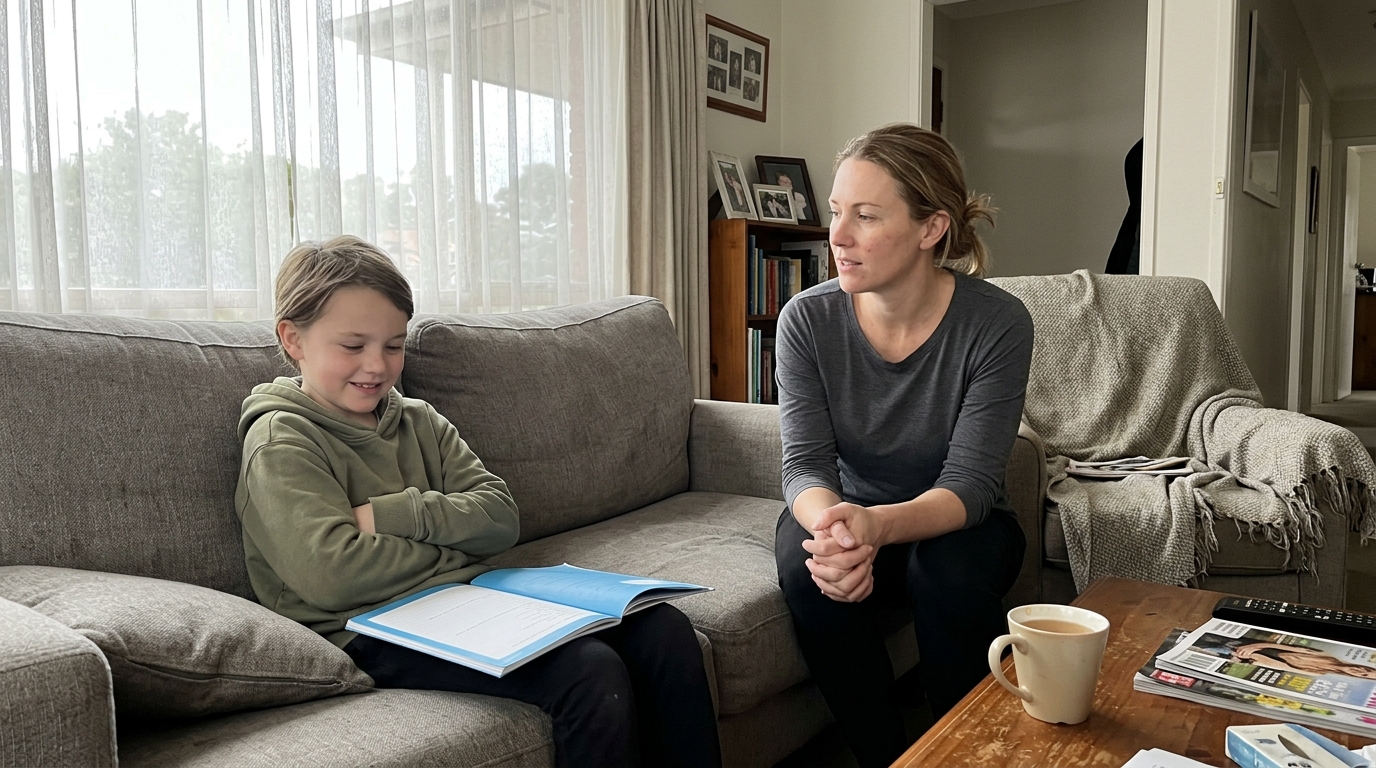
Yes — the teacher is your best diagnostic. They see your child against twenty-five peers every day and can tell you exactly which topic the wheels came off, whether the refusal is happening at school too, and what worked the last time it happened. Email the classroom teacher (or homeroom teacher in middle school) with one specific question: "We're seeing resistance with English homework — is there a topic this semester Sam has been finding tough?" Most American teachers will reply within a few days. Pair their answer with what your child has told you and you'll usually find the gap inside a week.
What learning tools actually re-engage a reluctant learner?
Switch the format, not the content. If your child is stuck on long division, watching one focused 8-minute video on Khan Academy often beats another worksheet. If they're avoiding reading, swap chapter books for graphic novels for two weeks — the reading load is similar, the resistance disappears. Hands-on works for elementary students (counters, dice, kitchen-counter fractions); short interactive games work for middle schoolers (Prodigy, BBC Bitesize, Quizlet). For high schoolers, swap re-reading notes for active recall apps like Anki. The aim isn't to entertain — it's to find the format that lets the same content actually go in.
How do I help my child see the point of learning?
A short, honest conversation works better than a lecture. Tie what they're learning right now to something they already care about: a 4th grader who loves football can practice multiplication by working out passing percentages; a freshman into gaming can learn the algebra behind game economies; a senior aiming at a specific college major can map which subjects open which pathways. Avoid vague claims like "education is important". Concrete connections — "this fraction work is what you'll use to read your phone bill" — outperform abstract motivation every time.

When should I get a private tutor for a child who refuses to learn?
Get a tutor as soon as the gap is bigger than weekly homework can close — usually after two to three weeks of refusal that hasn't shifted with format swaps and a teacher chat. A one-to-one tutor does what a classroom of 25 can't: starts exactly where your child is, breaks the work into smaller pieces, and lets your child ask the question they were too embarrassed to ask in class. Tutero matches your child to a tutor based on subject, grade level, and personality fit, with sessions from US$45 per hour and no lock-in contracts. Most parents see refusal soften within four to six weekly sessions because the work finally matches the child.
Bottom line: how do I get my child learning again?
Listen first, fix second. Ask what specifically feels too hard, check in with the teacher, switch the format of the work, connect the topic to something your child already cares about, and bring in a one-to-one tutor if the gap is bigger than weekly homework can close. Patience matters more than pressure. A child who refused yesterday is rarely the same child two weeks later once the work has been re-pitched at their level — and once they've been genuinely heard by an adult who didn't immediately try to fix them.
If your child refuses to do schoolwork, the worst move is to push harder. Refusal is almost always a signal — confusion that's gone unspoken, a subject that has stopped making sense, or a stretch of homework that's become a daily battle. Below is a calm five-step plan American parents use to turn resistance back into engagement, without bribes, threats, or tears at the kitchen table.
Quick answer
Start by listening before fixing. Ask your child what specifically feels too hard, then talk to their classroom teacher to confirm where the gap sits. From there, swap repetition for engaging tools (short videos, games, hands-on tasks), explain how each subject connects to something they already care about, and bring in a one-to-one tutor if the gap is bigger than weekly homework can close. Most "refusal" disappears within two weeks once the child feels heard and the work matches their level. Tutoring with Tutero starts at US$45/hour, no contracts.
Why is my child refusing to do schoolwork?
Children rarely refuse schoolwork on principle. Underneath almost every "I'm not doing it" is a specific frustration: they don't understand the topic, the work is pitched too high, they've fallen behind and feel embarrassed, or they're tired and the homework is the last straw of the day. American elementary and middle-school students cope with up to six different subjects a day; high schoolers juggle AP and SAT-relevant subjects alongside quizzes and tests. When one subject becomes confusing, refusal is often the only language a child has to ask for help. Treating refusal as a clue, not a behavioral problem, is the first step.
Should I talk to my child's teacher when they refuse to learn?
Yes — the teacher is your best diagnostic. They see your child against twenty-five peers every day and can tell you exactly which topic the wheels came off, whether the refusal is happening at school too, and what worked the last time it happened. Email the classroom teacher (or homeroom teacher in middle school) with one specific question: "We're seeing resistance with English homework — is there a topic this semester Sam has been finding tough?" Most American teachers will reply within a few days. Pair their answer with what your child has told you and you'll usually find the gap inside a week.
What learning tools actually re-engage a reluctant learner?
Switch the format, not the content. If your child is stuck on long division, watching one focused 8-minute video on Khan Academy often beats another worksheet. If they're avoiding reading, swap chapter books for graphic novels for two weeks — the reading load is similar, the resistance disappears. Hands-on works for elementary students (counters, dice, kitchen-counter fractions); short interactive games work for middle schoolers (Prodigy, BBC Bitesize, Quizlet). For high schoolers, swap re-reading notes for active recall apps like Anki. The aim isn't to entertain — it's to find the format that lets the same content actually go in.
How do I help my child see the point of learning?
A short, honest conversation works better than a lecture. Tie what they're learning right now to something they already care about: a 4th grader who loves football can practice multiplication by working out passing percentages; a freshman into gaming can learn the algebra behind game economies; a senior aiming at a specific college major can map which subjects open which pathways. Avoid vague claims like "education is important". Concrete connections — "this fraction work is what you'll use to read your phone bill" — outperform abstract motivation every time.
When should I get a private tutor for a child who refuses to learn?
Get a tutor as soon as the gap is bigger than weekly homework can close — usually after two to three weeks of refusal that hasn't shifted with format swaps and a teacher chat. A one-to-one tutor does what a classroom of 25 can't: starts exactly where your child is, breaks the work into smaller pieces, and lets your child ask the question they were too embarrassed to ask in class. Tutero matches your child to a tutor based on subject, grade level, and personality fit, with sessions from US$45 per hour and no lock-in contracts. Most parents see refusal soften within four to six weekly sessions because the work finally matches the child.
Bottom line: how do I get my child learning again?
Listen first, fix second. Ask what specifically feels too hard, check in with the teacher, switch the format of the work, connect the topic to something your child already cares about, and bring in a one-to-one tutor if the gap is bigger than weekly homework can close. Patience matters more than pressure. A child who refused yesterday is rarely the same child two weeks later once the work has been re-pitched at their level — and once they've been genuinely heard by an adult who didn't immediately try to fix them.
FAQ
.svg)
.svg)
Online maths tutoring at Tutero is catering to students of all year levels. We offer programs tailored to the unique learning curves of each age group.
We also have expert NAPLAN and ATAR subject tutors, ensuring students are well-equipped for these pivotal assessments.
We recommend at least two to three session per week for consistent progress. However, this can vary based on your child's needs and goals.
Our platform uses advanced security protocols to ensure the safety and privacy of all our online sessions.
Parents are welcome to observe sessions. We believe in a collaborative approach to education.
We provide regular progress reports and assessments to track your child’s academic development.
Yes, we prioritise the student-tutor relationship and can arrange a change if the need arises.
Yes, we offer a range of resources and materials, including interactive exercises and practice worksheets.

If your child refuses to do schoolwork, the worst move is to push harder. Refusal is almost always a signal — confusion that's gone unspoken, a subject that has stopped making sense, or a stretch of homework that's become a daily battle. Below is a calm five-step plan American parents use to turn resistance back into engagement, without bribes, threats, or tears at the kitchen table.
Quick answer
Start by listening before fixing. Ask your child what specifically feels too hard, then talk to their classroom teacher to confirm where the gap sits. From there, swap repetition for engaging tools (short videos, games, hands-on tasks), explain how each subject connects to something they already care about, and bring in a one-to-one tutor if the gap is bigger than weekly homework can close. Most "refusal" disappears within two weeks once the child feels heard and the work matches their level. Tutoring with Tutero starts at US$45/hour, no contracts.
Why is my child refusing to do schoolwork?
Children rarely refuse schoolwork on principle. Underneath almost every "I'm not doing it" is a specific frustration: they don't understand the topic, the work is pitched too high, they've fallen behind and feel embarrassed, or they're tired and the homework is the last straw of the day. American elementary and middle-school students cope with up to six different subjects a day; high schoolers juggle AP and SAT-relevant subjects alongside quizzes and tests. When one subject becomes confusing, refusal is often the only language a child has to ask for help. Treating refusal as a clue, not a behavioral problem, is the first step.
Should I talk to my child's teacher when they refuse to learn?
Yes — the teacher is your best diagnostic. They see your child against twenty-five peers every day and can tell you exactly which topic the wheels came off, whether the refusal is happening at school too, and what worked the last time it happened. Email the classroom teacher (or homeroom teacher in middle school) with one specific question: "We're seeing resistance with English homework — is there a topic this semester Sam has been finding tough?" Most American teachers will reply within a few days. Pair their answer with what your child has told you and you'll usually find the gap inside a week.
What learning tools actually re-engage a reluctant learner?
Switch the format, not the content. If your child is stuck on long division, watching one focused 8-minute video on Khan Academy often beats another worksheet. If they're avoiding reading, swap chapter books for graphic novels for two weeks — the reading load is similar, the resistance disappears. Hands-on works for elementary students (counters, dice, kitchen-counter fractions); short interactive games work for middle schoolers (Prodigy, BBC Bitesize, Quizlet). For high schoolers, swap re-reading notes for active recall apps like Anki. The aim isn't to entertain — it's to find the format that lets the same content actually go in.
How do I help my child see the point of learning?
A short, honest conversation works better than a lecture. Tie what they're learning right now to something they already care about: a 4th grader who loves football can practice multiplication by working out passing percentages; a freshman into gaming can learn the algebra behind game economies; a senior aiming at a specific college major can map which subjects open which pathways. Avoid vague claims like "education is important". Concrete connections — "this fraction work is what you'll use to read your phone bill" — outperform abstract motivation every time.
When should I get a private tutor for a child who refuses to learn?
Get a tutor as soon as the gap is bigger than weekly homework can close — usually after two to three weeks of refusal that hasn't shifted with format swaps and a teacher chat. A one-to-one tutor does what a classroom of 25 can't: starts exactly where your child is, breaks the work into smaller pieces, and lets your child ask the question they were too embarrassed to ask in class. Tutero matches your child to a tutor based on subject, grade level, and personality fit, with sessions from US$45 per hour and no lock-in contracts. Most parents see refusal soften within four to six weekly sessions because the work finally matches the child.
Bottom line: how do I get my child learning again?
Listen first, fix second. Ask what specifically feels too hard, check in with the teacher, switch the format of the work, connect the topic to something your child already cares about, and bring in a one-to-one tutor if the gap is bigger than weekly homework can close. Patience matters more than pressure. A child who refused yesterday is rarely the same child two weeks later once the work has been re-pitched at their level — and once they've been genuinely heard by an adult who didn't immediately try to fix them.
Hoping to improve confidence & grades?

.png)