.svg)

A good dyslexia tutoring session is a calm, structured hour. Your child reviews sounds and spelling patterns they already know, learns one new pattern taught directly, practices it in words and sentences, reads real text aloud and spends the last part on schoolwork. If you're paying for dyslexia tutoring, that's the shape to look for.
I co-founded Tutero, where every lesson is live, 1-on-1 and online with the same certified teacher each week. I wrote this guide so you know what a well-built session looks like whoever you choose, what to expect at weeks 4, 8 and 12, and which warning signs mean you should ask questions. Good programs differ in the details. You should still recognize the same building blocks.
Short answer
Most one-on-one dyslexia sessions run about 60 minutes, two or three times a week. Understood, the US nonprofit for learning differences, says that's what most one-on-one programs recommend. Inside the hour you should see five parts: review, one new skill taught directly, practice in words and sentences, reading connected text aloud, and schoolwork.
The teaching method behind it is called structured literacy: explicit, step-by-step teaching of how sounds and letters work. The International Dyslexia Association (IDA) calls it the most effective approach for students who find reading and spelling unusually hard.
What happens in a 60-minute dyslexia tutoring session?
Here's how a typical hour breaks down. The order and minutes shift with your child, the day and what's due at school, but these five parts should show up in most lessons.
| Part | Minutes | What the teacher does | What your child does |
|---|---|---|---|
| Review | 0 to 10 | Runs quick practice on sounds, words and patterns from earlier weeks | Says sounds, reads and spells words they already know |
| New skill | 10 to 20 | Explains one new sound, pattern or rule and shows it | Says it, marks it, uses it straight away |
| Practice | 20 to 35 | Listens to every word and corrects errors on the spot | Reads and spells words, then sentences, then writes from dictation |
| Reading | 35 to 45 | Chooses a passage at the right level and notes errors | Reads aloud, then talks about what it meant |
| Schoolwork | 45 to 60 | Applies the same skills to what's due this week | Works on a spelling list, reading log or written answer |
Review (about 10 minutes)
The lesson opens with things your child already knows: letter sounds, spelling patterns, a handful of tricky words. It's quick and easy on purpose. The IDA notes that students with dyslexia often need "a great deal of structured practice and immediate, corrective feedback" before they can read words automatically. A pattern that isn't revisited fades.
What it sounds like: the teacher shows a card with "sh" and your child says the sound. The teacher says "ship" and your child spells it aloud while writing it. Ten or fifteen of those, fast. Starting with wins also takes the edge off for a child who may have spent years feeling behind.
One new skill, taught directly (about 10 minutes)
Next comes one new thing, and only one. For example: the spellings -ck, -tch and -dge come straight after a short vowel sound, as in duck, catch and badge. That's an example the IDA uses itself.
The teacher explains the rule plainly, shows it on the whiteboard and gets your child using it immediately, perhaps sorting words into a "-ck" column and a "-k" column and marking the short vowel in each. Nothing is left to guesswork. In the IDA's words, students "are not expected to discover or intuit language concepts simply from exposure." If your child gets stuck, the teacher steps back to the skill underneath, such as hearing the short vowel at all, rather than pushing on.
Practice in words and sentences (10 to 15 minutes)
Your child reads a list of words with the new pattern mixed in with older ones, so they have to think rather than repeat. Then short sentences. Then dictation: the teacher says "The duck is stuck in the truck," your child says it back, writes it and checks it.
How the teacher corrects matters more than almost anything else in the hour. A good teacher doesn't just say the right word. They point your child back to the pattern: "Look at the end of that word. What do we know about -ck?" Your child fixes it themselves, and that's the part that sticks.
Expect some hands-on work too. The IDA lists methods like moving letter tiles into sound boxes, tapping out sounds on fingers before spelling a word and color-coding parts of sentences.
Reading real text aloud (about 10 minutes)
Drills alone don't make a reader. Every session should include connected text: a decodable book for a beginner, a short passage, or a page of the class novel for an older child. The teacher listens, notes errors to come back to, and asks questions to check your child understood what they read.
The IDA says reading worthwhile texts that make children think is a critical part of structured literacy, even when the text is read aloud to a child who can't yet read it alone.
Schoolwork (the rest of the hour)
The last part goes to whatever is due: Friday's spelling test, a reading log, a written answer for science. The teacher uses the same strategies on real work, like splitting long words into syllables or giving a word bank so your child's ideas aren't limited by what they can spell.
Ideas and vocabulary should stay at your child's grade level even while their decoding catches up. That's how they keep learning content and avoid falling further behind in class. If home practice suits your child, the teacher sets a short task for the week.
What does a dyslexia tutor actually teach over a year?
One hour can look small. It's one step in a long, ordered sequence. Structured literacy covers far more than phonics: it works on language at every level. Here's the IDA's description, in plain terms:
- Sounds in spoken words. Hearing, splitting and blending the separate sounds in a word, done out loud without print. The IDA says many people with dyslexia need prolonged practice here.
- Letters and sounds. How the roughly 43 sounds of English map to letters and letter combinations like th, oa and igh.
- Spelling patterns and rules. When to use -ck instead of -k, why some letters double, which letters never end a word.
- Six syllable types. Closed (com, mand), open (me, no), vowel-consonant-e (take), vowel team (mean), vowel-r (car) and consonant-le (little). Knowing them lets your child break a long word into readable chunks.
- Word parts that carry meaning. Prefixes, roots and suffixes, which help with spelling and vocabulary in later grades.
- Sentences and meaning. Grammar, vocabulary and understanding longer texts.
The IDA says this work follows a planned sequence from easier to harder, each concept building on the last, and that teaching the full code "may take several years to complete."
What happens in the first dyslexia tutoring session?
The first lesson is partly about the teacher getting to know your child. A good first session usually includes:
- A conversation about interests, so examples and reading material connect with your child.
- An informal check of what's secure. Letter sounds, a short list of real and made-up words (made-up words show whether a child can sound out rather than remember), a short passage and a few spelling words. This is a starting point for planning, not a diagnosis.
- A short, achievable piece of teaching, so your child leaves with a win.
It helps to send a few things beforehand: a recent school report or reading scores, any evaluation, the IEP or 504 plan if there is one, this week's spelling list and the name of the school's reading program.
What does dyslexia tutoring look like online?
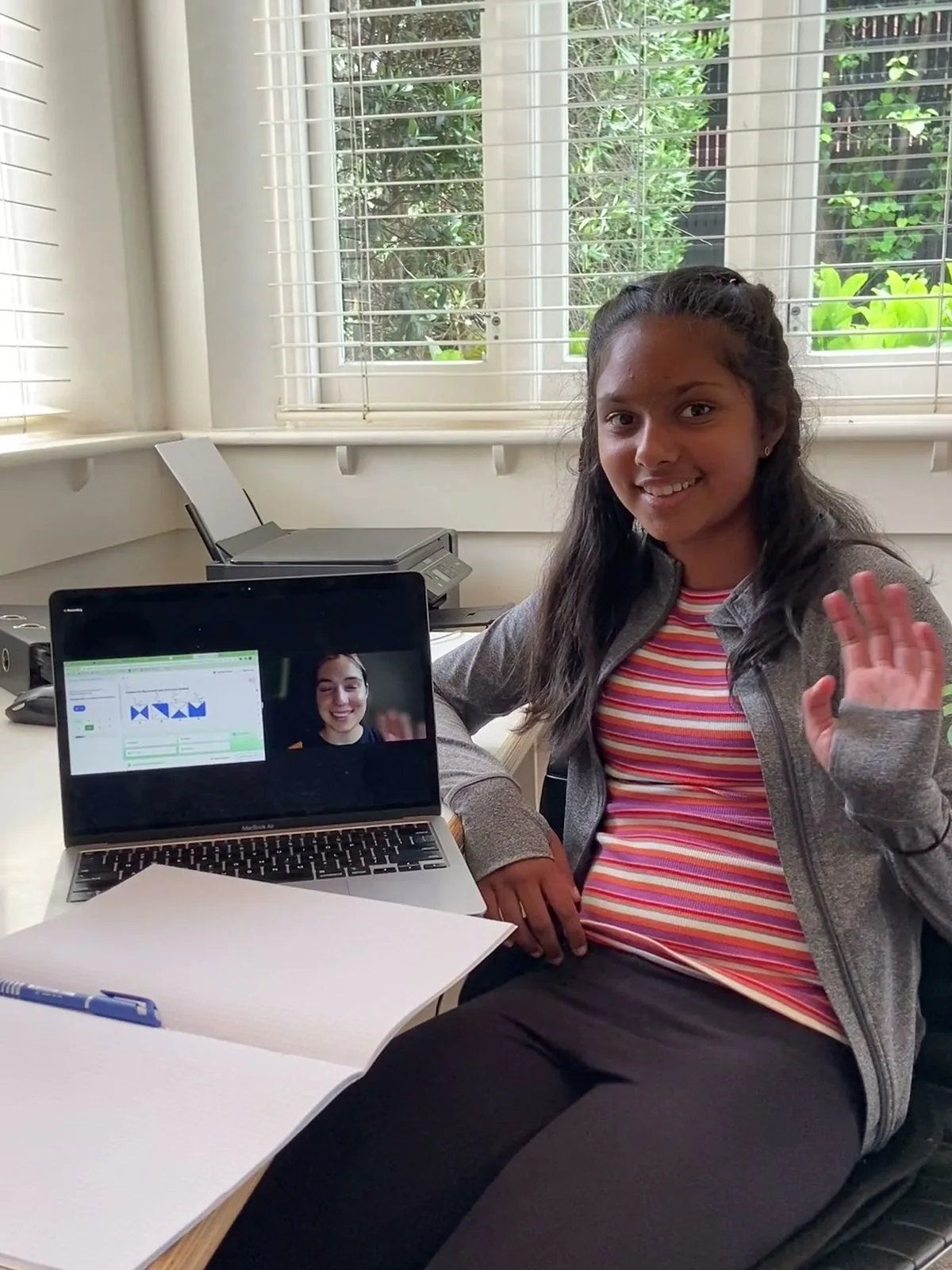
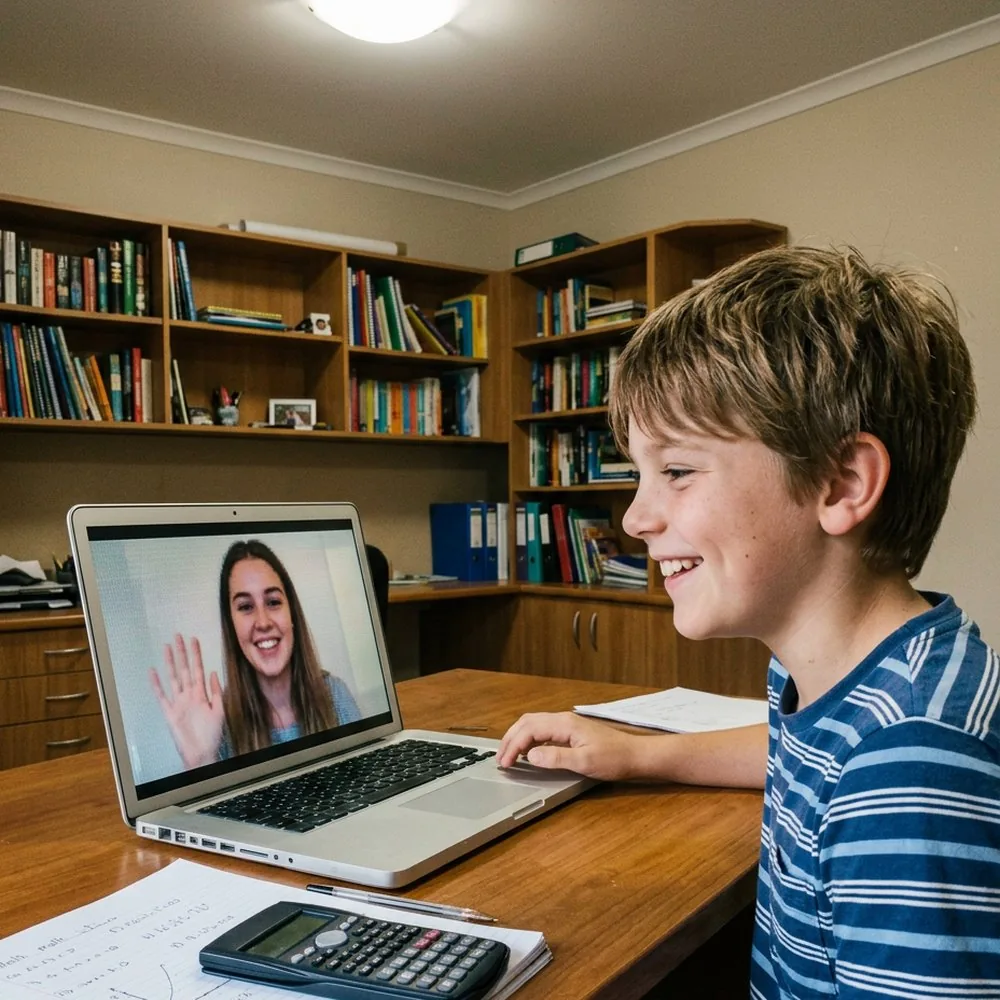
Less different than most parents expect. The teacher can see and hear your child on video, so every sound gets heard and corrected in the moment, which is the part that matters most. A shared whiteboard replaces the table: your child can write, highlight and move letter tiles on screen while the teacher does the same.
Understood puts it simply: "When online tutoring is done right, it can be just as helpful as meeting with a tutor in person." The key, they add, is a tutor who knows the method and is good at teaching online.
A setup that works:
- A laptop or tablet, not a phone. The whiteboard needs room.
- A headset with a microphone. It helps the teacher hear the difference between similar sounds like /f/ and /th/.
- The same quiet spot each time.
- Pencil and paper within reach for handwriting and dictation.
- A parent nearby for the first few lessons if your child is young, mostly for the technology.
How often should a child with dyslexia have tutoring, and for how long?
Understood says most one-on-one programs recommend 60-minute sessions two or three times a week. More practice usually means faster progress, but a schedule your family can keep for months beats an ambitious one that collapses after a few weeks.
Once a week is better than nothing. Progress is slower, because patterns fade between lessons. If once a week is all that works, the short home practice below matters more.
As for the long run, the IDA's dyslexia basics page estimates that most children need 80 to 100 hours of specialized tutoring to move up one grade level. At two hours a week, that's roughly a school year. It's worth knowing before you start, so you judge progress against the right clock.
What should you see after 4, 8 and 12 weeks of dyslexia tutoring?
These are typical patterns, not guarantees. Every child moves at a different pace, and a child with more severe dyslexia may take longer.
| When | What you might notice | What to ask the teacher |
|---|---|---|
| Week 4 | Your child knows the routine and resists less. Patterns from the first week come faster. Reading aloud happens every lesson. | "Which patterns are secure, and which are still shaky?" |
| Week 8 | Better accuracy on taught patterns in new words, including in schoolwork. Spelling on those patterns improves. Confidence often moves before speed does. | "Can you show me a before and after on the same kind of passage?" |
| Week 12 | Steadier accuracy reading connected text. Your child may try longer words by splitting them into syllables. Speed usually still lags. | "What's the plan for the next 12 weeks, and why?" |
Keep the numbers in mind. Twelve weeks at two or three sessions a week is about 24 to 36 hours of teaching. That's well short of the 80 to 100 hours the IDA links to a grade level of growth, so a reading level that hasn't jumped by week 12 is normal.
If you want something you can measure, ask the teacher to time your child reading an unpracticed passage at their level for one minute every few weeks and count the words read correctly. Reading Rockets publishes grade-level fluency norms that give a reference point. Watch the trend over months, not any single score.
When to raise it: if after about three months taught patterns still aren't sticking, sessions rarely include reading aloud, or your child dreads every lesson. That doesn't always mean tutoring isn't working. It does mean it's time for a direct conversation about the plan.
What can you do at home in 10 minutes?
Short and regular beats long and occasional. Here's a 10-minute routine for the days between lessons:
- Minutes 1 to 4: re-read a familiar passage. The same short text, read aloud two or three times while you listen and help. The National Reading Panel found that guided repeated oral reading improves fluency.
- Minutes 5 to 7: five words with this week's pattern. Ask the teacher for them. Your child reads all five, then you say two and your child spells them.
- Minutes 8 to 10: you read aloud, or they listen. Read a chapter of a book they love, or put on the audiobook of whatever their friends are reading. The IDA notes that audiobooks and text-reading software help students with dyslexia. It keeps vocabulary and a love of stories growing while decoding catches up.
How you correct matters as much as what you practice. Don't jump in on every error. Wait a few seconds, then point to the part of the word that went wrong. Praise effort specifically: "You split that long word into syllables yourself." And stop while it's still going well.
What are the red flags in a dyslexia tutoring session?
Ask questions if you see any of these:
- All worksheets, no reading aloud. Your child needs to read connected text to a skilled listener.
- Your child is told to guess words from the picture or the first letter. That's the opposite of the explicit teaching the IDA describes.
- The tutor does the reading or writing for your child. Helpful in the moment, but nothing gets built.
- A different tutor most weeks. A teacher who sees your child every week learns which sounds slip under pressure. A rotating one starts from zero.
- No record of what was taught. You should know what was covered and what comes next.
- A large prepaid package before you've seen a lesson.
- Promises to "cure" dyslexia, or a promised jump in reading level by a set date. The IDA is clear that dyslexia is lifelong. What changes is how well your child reads and how hard it feels.
- A tutor who says they can diagnose dyslexia. The IDA says formal testing of reading, language and writing is the only way to confirm it.
How does dyslexia tutoring fit with school, an IEP or a 504 plan?
Tutoring adds practice and teaching time. It doesn't replace support at school. Understood says that ideally the tutor uses the same or a compatible program as the school, and that the tutor and teacher talk to each other so each reinforces the other.
In practice:
- Tell the tutor the name of the school's reading program and which pattern the class is on.
- Share accommodations from the IEP or 504 plan, such as extra time or audiobooks, so the tutor can practice with them.
- Pass lesson notes to the teacher or case manager if they'd find them useful.
- If your child hasn't been evaluated, ask the school in writing. The IDA says parents have the right to request a comprehensive evaluation under federal law at any point. Public school evaluations are free. Tutoring can start while you wait. A tutor can't diagnose dyslexia or write an IEP.
How does Tutero run dyslexia tutoring sessions?
At Tutero, we match your child with a certified teacher experienced with dyslexia. An account manager calls within 24 hours, learns about your child and chooses a teacher who has experience with their learning needs. The teacher gets a brief before the first lesson. No diagnosis is needed.
After that it's the same teacher every week, live and 1-on-1 online, with a shared whiteboard for the hands-on parts. You get a lesson report after every lesson: what was covered, what stuck and what comes next. Lessons work alongside your child's IEP or 504 plan. We don't describe our teachers as Orton-Gillingham or Wilson certified, so if your child's IEP names a specific certified program, ask us and we'll tell you whether we're the right fit.
Lessons start from US$45 an hour. You pay after each lesson, with no contracts. Some families use scholarship or HSA funds to pay for lessons.
See how dyslexia tutoring works at Tutero, or book a matched teacher. Still deciding whether tutoring is the right step at all? Read will a tutor help with dyslexia?, and our guide to Orton-Gillingham explains the methods you'll hear about.
A good dyslexia lesson teaches one thing clearly, comes back to old patterns often and always includes real reading.
A good dyslexia lesson teaches one thing clearly, comes back to old patterns often and always includes real reading.
A good dyslexia tutoring session is a calm, structured hour. Your child reviews sounds and spelling patterns they already know, learns one new pattern taught directly, practices it in words and sentences, reads real text aloud and spends the last part on schoolwork. If you're paying for dyslexia tutoring, that's the shape to look for.
I co-founded Tutero, where every lesson is live, 1-on-1 and online with the same certified teacher each week. I wrote this guide so you know what a well-built session looks like whoever you choose, what to expect at weeks 4, 8 and 12, and which warning signs mean you should ask questions. Good programs differ in the details. You should still recognize the same building blocks.
Short answer
Most one-on-one dyslexia sessions run about 60 minutes, two or three times a week. Understood, the US nonprofit for learning differences, says that's what most one-on-one programs recommend. Inside the hour you should see five parts: review, one new skill taught directly, practice in words and sentences, reading connected text aloud, and schoolwork.
The teaching method behind it is called structured literacy: explicit, step-by-step teaching of how sounds and letters work. The International Dyslexia Association (IDA) calls it the most effective approach for students who find reading and spelling unusually hard.
What happens in a 60-minute dyslexia tutoring session?
Here's how a typical hour breaks down. The order and minutes shift with your child, the day and what's due at school, but these five parts should show up in most lessons.
| Part | Minutes | What the teacher does | What your child does |
|---|---|---|---|
| Review | 0 to 10 | Runs quick practice on sounds, words and patterns from earlier weeks | Says sounds, reads and spells words they already know |
| New skill | 10 to 20 | Explains one new sound, pattern or rule and shows it | Says it, marks it, uses it straight away |
| Practice | 20 to 35 | Listens to every word and corrects errors on the spot | Reads and spells words, then sentences, then writes from dictation |
| Reading | 35 to 45 | Chooses a passage at the right level and notes errors | Reads aloud, then talks about what it meant |
| Schoolwork | 45 to 60 | Applies the same skills to what's due this week | Works on a spelling list, reading log or written answer |
Review (about 10 minutes)
The lesson opens with things your child already knows: letter sounds, spelling patterns, a handful of tricky words. It's quick and easy on purpose. The IDA notes that students with dyslexia often need "a great deal of structured practice and immediate, corrective feedback" before they can read words automatically. A pattern that isn't revisited fades.
What it sounds like: the teacher shows a card with "sh" and your child says the sound. The teacher says "ship" and your child spells it aloud while writing it. Ten or fifteen of those, fast. Starting with wins also takes the edge off for a child who may have spent years feeling behind.
One new skill, taught directly (about 10 minutes)
Next comes one new thing, and only one. For example: the spellings -ck, -tch and -dge come straight after a short vowel sound, as in duck, catch and badge. That's an example the IDA uses itself.
The teacher explains the rule plainly, shows it on the whiteboard and gets your child using it immediately, perhaps sorting words into a "-ck" column and a "-k" column and marking the short vowel in each. Nothing is left to guesswork. In the IDA's words, students "are not expected to discover or intuit language concepts simply from exposure." If your child gets stuck, the teacher steps back to the skill underneath, such as hearing the short vowel at all, rather than pushing on.
Practice in words and sentences (10 to 15 minutes)
Your child reads a list of words with the new pattern mixed in with older ones, so they have to think rather than repeat. Then short sentences. Then dictation: the teacher says "The duck is stuck in the truck," your child says it back, writes it and checks it.
How the teacher corrects matters more than almost anything else in the hour. A good teacher doesn't just say the right word. They point your child back to the pattern: "Look at the end of that word. What do we know about -ck?" Your child fixes it themselves, and that's the part that sticks.
Expect some hands-on work too. The IDA lists methods like moving letter tiles into sound boxes, tapping out sounds on fingers before spelling a word and color-coding parts of sentences.
Reading real text aloud (about 10 minutes)
Drills alone don't make a reader. Every session should include connected text: a decodable book for a beginner, a short passage, or a page of the class novel for an older child. The teacher listens, notes errors to come back to, and asks questions to check your child understood what they read.
The IDA says reading worthwhile texts that make children think is a critical part of structured literacy, even when the text is read aloud to a child who can't yet read it alone.
Schoolwork (the rest of the hour)
The last part goes to whatever is due: Friday's spelling test, a reading log, a written answer for science. The teacher uses the same strategies on real work, like splitting long words into syllables or giving a word bank so your child's ideas aren't limited by what they can spell.
Ideas and vocabulary should stay at your child's grade level even while their decoding catches up. That's how they keep learning content and avoid falling further behind in class. If home practice suits your child, the teacher sets a short task for the week.
What does a dyslexia tutor actually teach over a year?
One hour can look small. It's one step in a long, ordered sequence. Structured literacy covers far more than phonics: it works on language at every level. Here's the IDA's description, in plain terms:
- Sounds in spoken words. Hearing, splitting and blending the separate sounds in a word, done out loud without print. The IDA says many people with dyslexia need prolonged practice here.
- Letters and sounds. How the roughly 43 sounds of English map to letters and letter combinations like th, oa and igh.
- Spelling patterns and rules. When to use -ck instead of -k, why some letters double, which letters never end a word.
- Six syllable types. Closed (com, mand), open (me, no), vowel-consonant-e (take), vowel team (mean), vowel-r (car) and consonant-le (little). Knowing them lets your child break a long word into readable chunks.
- Word parts that carry meaning. Prefixes, roots and suffixes, which help with spelling and vocabulary in later grades.
- Sentences and meaning. Grammar, vocabulary and understanding longer texts.
The IDA says this work follows a planned sequence from easier to harder, each concept building on the last, and that teaching the full code "may take several years to complete."
What happens in the first dyslexia tutoring session?
The first lesson is partly about the teacher getting to know your child. A good first session usually includes:
- A conversation about interests, so examples and reading material connect with your child.
- An informal check of what's secure. Letter sounds, a short list of real and made-up words (made-up words show whether a child can sound out rather than remember), a short passage and a few spelling words. This is a starting point for planning, not a diagnosis.
- A short, achievable piece of teaching, so your child leaves with a win.
It helps to send a few things beforehand: a recent school report or reading scores, any evaluation, the IEP or 504 plan if there is one, this week's spelling list and the name of the school's reading program.
What does dyslexia tutoring look like online?
Less different than most parents expect. The teacher can see and hear your child on video, so every sound gets heard and corrected in the moment, which is the part that matters most. A shared whiteboard replaces the table: your child can write, highlight and move letter tiles on screen while the teacher does the same.
Understood puts it simply: "When online tutoring is done right, it can be just as helpful as meeting with a tutor in person." The key, they add, is a tutor who knows the method and is good at teaching online.
A setup that works:
- A laptop or tablet, not a phone. The whiteboard needs room.
- A headset with a microphone. It helps the teacher hear the difference between similar sounds like /f/ and /th/.
- The same quiet spot each time.
- Pencil and paper within reach for handwriting and dictation.
- A parent nearby for the first few lessons if your child is young, mostly for the technology.
How often should a child with dyslexia have tutoring, and for how long?
Understood says most one-on-one programs recommend 60-minute sessions two or three times a week. More practice usually means faster progress, but a schedule your family can keep for months beats an ambitious one that collapses after a few weeks.
Once a week is better than nothing. Progress is slower, because patterns fade between lessons. If once a week is all that works, the short home practice below matters more.
As for the long run, the IDA's dyslexia basics page estimates that most children need 80 to 100 hours of specialized tutoring to move up one grade level. At two hours a week, that's roughly a school year. It's worth knowing before you start, so you judge progress against the right clock.
What should you see after 4, 8 and 12 weeks of dyslexia tutoring?
These are typical patterns, not guarantees. Every child moves at a different pace, and a child with more severe dyslexia may take longer.
| When | What you might notice | What to ask the teacher |
|---|---|---|
| Week 4 | Your child knows the routine and resists less. Patterns from the first week come faster. Reading aloud happens every lesson. | "Which patterns are secure, and which are still shaky?" |
| Week 8 | Better accuracy on taught patterns in new words, including in schoolwork. Spelling on those patterns improves. Confidence often moves before speed does. | "Can you show me a before and after on the same kind of passage?" |
| Week 12 | Steadier accuracy reading connected text. Your child may try longer words by splitting them into syllables. Speed usually still lags. | "What's the plan for the next 12 weeks, and why?" |
Keep the numbers in mind. Twelve weeks at two or three sessions a week is about 24 to 36 hours of teaching. That's well short of the 80 to 100 hours the IDA links to a grade level of growth, so a reading level that hasn't jumped by week 12 is normal.
If you want something you can measure, ask the teacher to time your child reading an unpracticed passage at their level for one minute every few weeks and count the words read correctly. Reading Rockets publishes grade-level fluency norms that give a reference point. Watch the trend over months, not any single score.
When to raise it: if after about three months taught patterns still aren't sticking, sessions rarely include reading aloud, or your child dreads every lesson. That doesn't always mean tutoring isn't working. It does mean it's time for a direct conversation about the plan.
What can you do at home in 10 minutes?
Short and regular beats long and occasional. Here's a 10-minute routine for the days between lessons:
- Minutes 1 to 4: re-read a familiar passage. The same short text, read aloud two or three times while you listen and help. The National Reading Panel found that guided repeated oral reading improves fluency.
- Minutes 5 to 7: five words with this week's pattern. Ask the teacher for them. Your child reads all five, then you say two and your child spells them.
- Minutes 8 to 10: you read aloud, or they listen. Read a chapter of a book they love, or put on the audiobook of whatever their friends are reading. The IDA notes that audiobooks and text-reading software help students with dyslexia. It keeps vocabulary and a love of stories growing while decoding catches up.
How you correct matters as much as what you practice. Don't jump in on every error. Wait a few seconds, then point to the part of the word that went wrong. Praise effort specifically: "You split that long word into syllables yourself." And stop while it's still going well.
What are the red flags in a dyslexia tutoring session?
Ask questions if you see any of these:
- All worksheets, no reading aloud. Your child needs to read connected text to a skilled listener.
- Your child is told to guess words from the picture or the first letter. That's the opposite of the explicit teaching the IDA describes.
- The tutor does the reading or writing for your child. Helpful in the moment, but nothing gets built.
- A different tutor most weeks. A teacher who sees your child every week learns which sounds slip under pressure. A rotating one starts from zero.
- No record of what was taught. You should know what was covered and what comes next.
- A large prepaid package before you've seen a lesson.
- Promises to "cure" dyslexia, or a promised jump in reading level by a set date. The IDA is clear that dyslexia is lifelong. What changes is how well your child reads and how hard it feels.
- A tutor who says they can diagnose dyslexia. The IDA says formal testing of reading, language and writing is the only way to confirm it.
How does dyslexia tutoring fit with school, an IEP or a 504 plan?
Tutoring adds practice and teaching time. It doesn't replace support at school. Understood says that ideally the tutor uses the same or a compatible program as the school, and that the tutor and teacher talk to each other so each reinforces the other.
In practice:
- Tell the tutor the name of the school's reading program and which pattern the class is on.
- Share accommodations from the IEP or 504 plan, such as extra time or audiobooks, so the tutor can practice with them.
- Pass lesson notes to the teacher or case manager if they'd find them useful.
- If your child hasn't been evaluated, ask the school in writing. The IDA says parents have the right to request a comprehensive evaluation under federal law at any point. Public school evaluations are free. Tutoring can start while you wait. A tutor can't diagnose dyslexia or write an IEP.
How does Tutero run dyslexia tutoring sessions?
At Tutero, we match your child with a certified teacher experienced with dyslexia. An account manager calls within 24 hours, learns about your child and chooses a teacher who has experience with their learning needs. The teacher gets a brief before the first lesson. No diagnosis is needed.
After that it's the same teacher every week, live and 1-on-1 online, with a shared whiteboard for the hands-on parts. You get a lesson report after every lesson: what was covered, what stuck and what comes next. Lessons work alongside your child's IEP or 504 plan. We don't describe our teachers as Orton-Gillingham or Wilson certified, so if your child's IEP names a specific certified program, ask us and we'll tell you whether we're the right fit.
Lessons start from US$45 an hour. You pay after each lesson, with no contracts. Some families use scholarship or HSA funds to pay for lessons.
See how dyslexia tutoring works at Tutero, or book a matched teacher. Still deciding whether tutoring is the right step at all? Read will a tutor help with dyslexia?, and our guide to Orton-Gillingham explains the methods you'll hear about.
A good dyslexia lesson teaches one thing clearly, comes back to old patterns often and always includes real reading.
A good dyslexia lesson teaches one thing clearly, comes back to old patterns often and always includes real reading.

A good dyslexia lesson teaches one thing clearly, comes back to old patterns often and always includes real reading.
A good dyslexia tutoring session is a calm, structured hour. Your child reviews sounds and spelling patterns they already know, learns one new pattern taught directly, practices it in words and sentences, reads real text aloud and spends the last part on schoolwork. If you're paying for dyslexia tutoring, that's the shape to look for.
I co-founded Tutero, where every lesson is live, 1-on-1 and online with the same certified teacher each week. I wrote this guide so you know what a well-built session looks like whoever you choose, what to expect at weeks 4, 8 and 12, and which warning signs mean you should ask questions. Good programs differ in the details. You should still recognize the same building blocks.
Short answer
Most one-on-one dyslexia sessions run about 60 minutes, two or three times a week. Understood, the US nonprofit for learning differences, says that's what most one-on-one programs recommend. Inside the hour you should see five parts: review, one new skill taught directly, practice in words and sentences, reading connected text aloud, and schoolwork.
The teaching method behind it is called structured literacy: explicit, step-by-step teaching of how sounds and letters work. The International Dyslexia Association (IDA) calls it the most effective approach for students who find reading and spelling unusually hard.
What happens in a 60-minute dyslexia tutoring session?
Here's how a typical hour breaks down. The order and minutes shift with your child, the day and what's due at school, but these five parts should show up in most lessons.
| Part | Minutes | What the teacher does | What your child does |
|---|---|---|---|
| Review | 0 to 10 | Runs quick practice on sounds, words and patterns from earlier weeks | Says sounds, reads and spells words they already know |
| New skill | 10 to 20 | Explains one new sound, pattern or rule and shows it | Says it, marks it, uses it straight away |
| Practice | 20 to 35 | Listens to every word and corrects errors on the spot | Reads and spells words, then sentences, then writes from dictation |
| Reading | 35 to 45 | Chooses a passage at the right level and notes errors | Reads aloud, then talks about what it meant |
| Schoolwork | 45 to 60 | Applies the same skills to what's due this week | Works on a spelling list, reading log or written answer |
Review (about 10 minutes)
The lesson opens with things your child already knows: letter sounds, spelling patterns, a handful of tricky words. It's quick and easy on purpose. The IDA notes that students with dyslexia often need "a great deal of structured practice and immediate, corrective feedback" before they can read words automatically. A pattern that isn't revisited fades.
What it sounds like: the teacher shows a card with "sh" and your child says the sound. The teacher says "ship" and your child spells it aloud while writing it. Ten or fifteen of those, fast. Starting with wins also takes the edge off for a child who may have spent years feeling behind.
One new skill, taught directly (about 10 minutes)
Next comes one new thing, and only one. For example: the spellings -ck, -tch and -dge come straight after a short vowel sound, as in duck, catch and badge. That's an example the IDA uses itself.
The teacher explains the rule plainly, shows it on the whiteboard and gets your child using it immediately, perhaps sorting words into a "-ck" column and a "-k" column and marking the short vowel in each. Nothing is left to guesswork. In the IDA's words, students "are not expected to discover or intuit language concepts simply from exposure." If your child gets stuck, the teacher steps back to the skill underneath, such as hearing the short vowel at all, rather than pushing on.
Practice in words and sentences (10 to 15 minutes)
Your child reads a list of words with the new pattern mixed in with older ones, so they have to think rather than repeat. Then short sentences. Then dictation: the teacher says "The duck is stuck in the truck," your child says it back, writes it and checks it.
How the teacher corrects matters more than almost anything else in the hour. A good teacher doesn't just say the right word. They point your child back to the pattern: "Look at the end of that word. What do we know about -ck?" Your child fixes it themselves, and that's the part that sticks.
Expect some hands-on work too. The IDA lists methods like moving letter tiles into sound boxes, tapping out sounds on fingers before spelling a word and color-coding parts of sentences.
Reading real text aloud (about 10 minutes)
Drills alone don't make a reader. Every session should include connected text: a decodable book for a beginner, a short passage, or a page of the class novel for an older child. The teacher listens, notes errors to come back to, and asks questions to check your child understood what they read.
The IDA says reading worthwhile texts that make children think is a critical part of structured literacy, even when the text is read aloud to a child who can't yet read it alone.
Schoolwork (the rest of the hour)
The last part goes to whatever is due: Friday's spelling test, a reading log, a written answer for science. The teacher uses the same strategies on real work, like splitting long words into syllables or giving a word bank so your child's ideas aren't limited by what they can spell.
Ideas and vocabulary should stay at your child's grade level even while their decoding catches up. That's how they keep learning content and avoid falling further behind in class. If home practice suits your child, the teacher sets a short task for the week.
What does a dyslexia tutor actually teach over a year?
One hour can look small. It's one step in a long, ordered sequence. Structured literacy covers far more than phonics: it works on language at every level. Here's the IDA's description, in plain terms:
- Sounds in spoken words. Hearing, splitting and blending the separate sounds in a word, done out loud without print. The IDA says many people with dyslexia need prolonged practice here.
- Letters and sounds. How the roughly 43 sounds of English map to letters and letter combinations like th, oa and igh.
- Spelling patterns and rules. When to use -ck instead of -k, why some letters double, which letters never end a word.
- Six syllable types. Closed (com, mand), open (me, no), vowel-consonant-e (take), vowel team (mean), vowel-r (car) and consonant-le (little). Knowing them lets your child break a long word into readable chunks.
- Word parts that carry meaning. Prefixes, roots and suffixes, which help with spelling and vocabulary in later grades.
- Sentences and meaning. Grammar, vocabulary and understanding longer texts.
The IDA says this work follows a planned sequence from easier to harder, each concept building on the last, and that teaching the full code "may take several years to complete."
What happens in the first dyslexia tutoring session?
The first lesson is partly about the teacher getting to know your child. A good first session usually includes:
- A conversation about interests, so examples and reading material connect with your child.
- An informal check of what's secure. Letter sounds, a short list of real and made-up words (made-up words show whether a child can sound out rather than remember), a short passage and a few spelling words. This is a starting point for planning, not a diagnosis.
- A short, achievable piece of teaching, so your child leaves with a win.
It helps to send a few things beforehand: a recent school report or reading scores, any evaluation, the IEP or 504 plan if there is one, this week's spelling list and the name of the school's reading program.
What does dyslexia tutoring look like online?
Less different than most parents expect. The teacher can see and hear your child on video, so every sound gets heard and corrected in the moment, which is the part that matters most. A shared whiteboard replaces the table: your child can write, highlight and move letter tiles on screen while the teacher does the same.
Understood puts it simply: "When online tutoring is done right, it can be just as helpful as meeting with a tutor in person." The key, they add, is a tutor who knows the method and is good at teaching online.
A setup that works:
- A laptop or tablet, not a phone. The whiteboard needs room.
- A headset with a microphone. It helps the teacher hear the difference between similar sounds like /f/ and /th/.
- The same quiet spot each time.
- Pencil and paper within reach for handwriting and dictation.
- A parent nearby for the first few lessons if your child is young, mostly for the technology.
How often should a child with dyslexia have tutoring, and for how long?
Understood says most one-on-one programs recommend 60-minute sessions two or three times a week. More practice usually means faster progress, but a schedule your family can keep for months beats an ambitious one that collapses after a few weeks.
Once a week is better than nothing. Progress is slower, because patterns fade between lessons. If once a week is all that works, the short home practice below matters more.
As for the long run, the IDA's dyslexia basics page estimates that most children need 80 to 100 hours of specialized tutoring to move up one grade level. At two hours a week, that's roughly a school year. It's worth knowing before you start, so you judge progress against the right clock.
What should you see after 4, 8 and 12 weeks of dyslexia tutoring?
These are typical patterns, not guarantees. Every child moves at a different pace, and a child with more severe dyslexia may take longer.
| When | What you might notice | What to ask the teacher |
|---|---|---|
| Week 4 | Your child knows the routine and resists less. Patterns from the first week come faster. Reading aloud happens every lesson. | "Which patterns are secure, and which are still shaky?" |
| Week 8 | Better accuracy on taught patterns in new words, including in schoolwork. Spelling on those patterns improves. Confidence often moves before speed does. | "Can you show me a before and after on the same kind of passage?" |
| Week 12 | Steadier accuracy reading connected text. Your child may try longer words by splitting them into syllables. Speed usually still lags. | "What's the plan for the next 12 weeks, and why?" |
Keep the numbers in mind. Twelve weeks at two or three sessions a week is about 24 to 36 hours of teaching. That's well short of the 80 to 100 hours the IDA links to a grade level of growth, so a reading level that hasn't jumped by week 12 is normal.
If you want something you can measure, ask the teacher to time your child reading an unpracticed passage at their level for one minute every few weeks and count the words read correctly. Reading Rockets publishes grade-level fluency norms that give a reference point. Watch the trend over months, not any single score.
When to raise it: if after about three months taught patterns still aren't sticking, sessions rarely include reading aloud, or your child dreads every lesson. That doesn't always mean tutoring isn't working. It does mean it's time for a direct conversation about the plan.
What can you do at home in 10 minutes?
Short and regular beats long and occasional. Here's a 10-minute routine for the days between lessons:
- Minutes 1 to 4: re-read a familiar passage. The same short text, read aloud two or three times while you listen and help. The National Reading Panel found that guided repeated oral reading improves fluency.
- Minutes 5 to 7: five words with this week's pattern. Ask the teacher for them. Your child reads all five, then you say two and your child spells them.
- Minutes 8 to 10: you read aloud, or they listen. Read a chapter of a book they love, or put on the audiobook of whatever their friends are reading. The IDA notes that audiobooks and text-reading software help students with dyslexia. It keeps vocabulary and a love of stories growing while decoding catches up.
How you correct matters as much as what you practice. Don't jump in on every error. Wait a few seconds, then point to the part of the word that went wrong. Praise effort specifically: "You split that long word into syllables yourself." And stop while it's still going well.
What are the red flags in a dyslexia tutoring session?
Ask questions if you see any of these:
- All worksheets, no reading aloud. Your child needs to read connected text to a skilled listener.
- Your child is told to guess words from the picture or the first letter. That's the opposite of the explicit teaching the IDA describes.
- The tutor does the reading or writing for your child. Helpful in the moment, but nothing gets built.
- A different tutor most weeks. A teacher who sees your child every week learns which sounds slip under pressure. A rotating one starts from zero.
- No record of what was taught. You should know what was covered and what comes next.
- A large prepaid package before you've seen a lesson.
- Promises to "cure" dyslexia, or a promised jump in reading level by a set date. The IDA is clear that dyslexia is lifelong. What changes is how well your child reads and how hard it feels.
- A tutor who says they can diagnose dyslexia. The IDA says formal testing of reading, language and writing is the only way to confirm it.
How does dyslexia tutoring fit with school, an IEP or a 504 plan?
Tutoring adds practice and teaching time. It doesn't replace support at school. Understood says that ideally the tutor uses the same or a compatible program as the school, and that the tutor and teacher talk to each other so each reinforces the other.
In practice:
- Tell the tutor the name of the school's reading program and which pattern the class is on.
- Share accommodations from the IEP or 504 plan, such as extra time or audiobooks, so the tutor can practice with them.
- Pass lesson notes to the teacher or case manager if they'd find them useful.
- If your child hasn't been evaluated, ask the school in writing. The IDA says parents have the right to request a comprehensive evaluation under federal law at any point. Public school evaluations are free. Tutoring can start while you wait. A tutor can't diagnose dyslexia or write an IEP.
How does Tutero run dyslexia tutoring sessions?
At Tutero, we match your child with a certified teacher experienced with dyslexia. An account manager calls within 24 hours, learns about your child and chooses a teacher who has experience with their learning needs. The teacher gets a brief before the first lesson. No diagnosis is needed.
After that it's the same teacher every week, live and 1-on-1 online, with a shared whiteboard for the hands-on parts. You get a lesson report after every lesson: what was covered, what stuck and what comes next. Lessons work alongside your child's IEP or 504 plan. We don't describe our teachers as Orton-Gillingham or Wilson certified, so if your child's IEP names a specific certified program, ask us and we'll tell you whether we're the right fit.
Lessons start from US$45 an hour. You pay after each lesson, with no contracts. Some families use scholarship or HSA funds to pay for lessons.
See how dyslexia tutoring works at Tutero, or book a matched teacher. Still deciding whether tutoring is the right step at all? Read will a tutor help with dyslexia?, and our guide to Orton-Gillingham explains the methods you'll hear about.
A good dyslexia lesson teaches one thing clearly, comes back to old patterns often and always includes real reading.
.svg)
.svg)
Most one-on-one dyslexia sessions are about 60 minutes. Understood says most one-on-one programs recommend 60-minute sessions two or three times a week.
A good session has five parts: a review of sounds and patterns your child already knows, one new skill taught directly, practice in words and sentences, reading real text aloud, and time on schoolwork. The order shifts with your child's needs.
It can. Understood says online tutoring done right can be just as helpful as in person. The teacher hears every sound on video and corrects it straight away, and a shared whiteboard replaces letter tiles on a table. Use a laptop and a headset, not a phone.
The International Dyslexia Association estimates most children need 80 to 100 hours of specialized tutoring to move up one grade level. At two one-hour sessions a week, that's roughly a school year.
A routine your child is comfortable with, better accuracy on the patterns they've been taught, reading aloud in every session and specific notes on what was covered. Reading speed and reading level usually take longer to move.
No. Only formal testing of reading, language and writing can confirm dyslexia. If you think your child has dyslexia, ask the school for an evaluation in writing. Public school evaluations are free, and tutoring can start while you wait.
Hoping to improve confidence & grades?

.png)