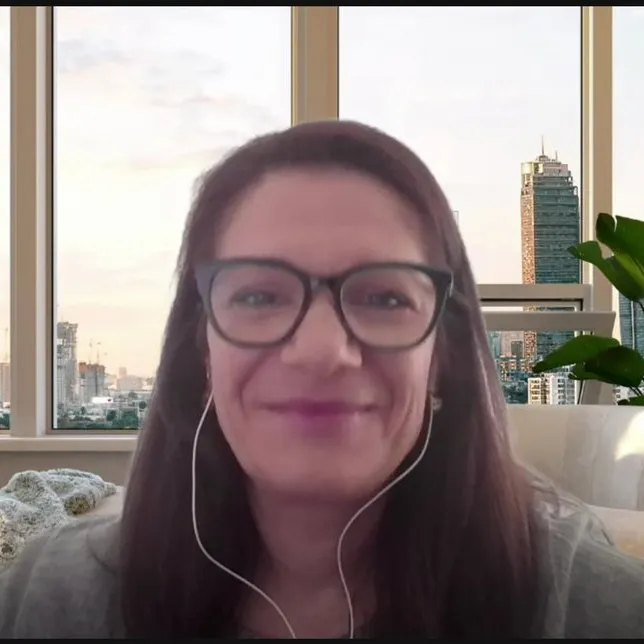
Recorded interview
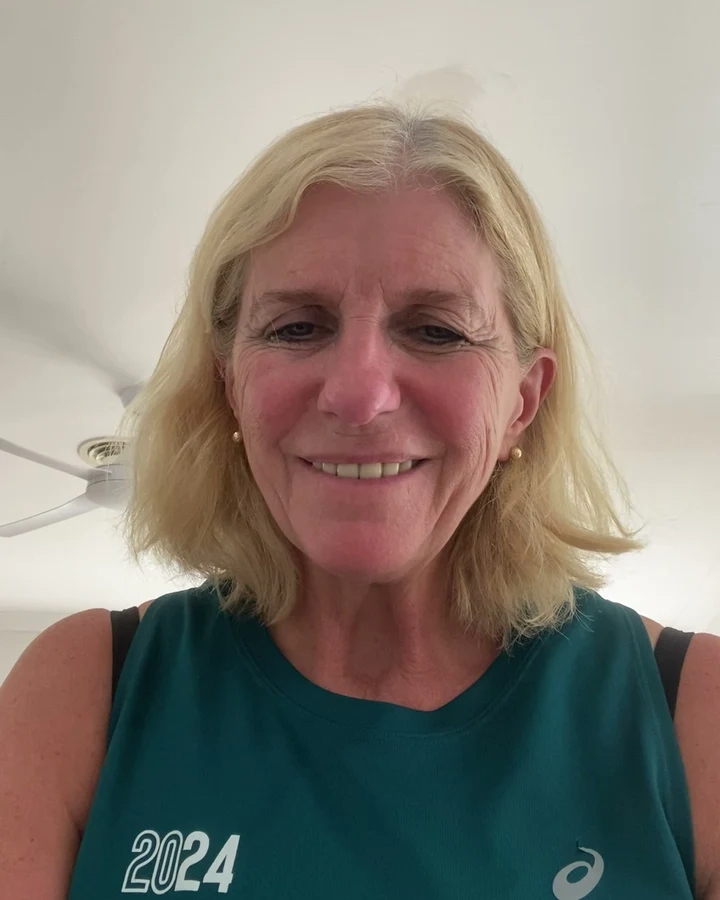
“Amrita loves her tutor Rishika and reaches for maths far more now.”
MadhuParent of Amrita · Tutor Rishika

Trusted by 4,200+ families
A 1-to-1 tutor for your child, the same one every week. Lessons follow the MOE syllabus, from P1 number bonds to PSLE papers.
The same 1-to-1 tutor every week, P1 to P6 and the PSLE.
Who is the PSLE tuition for?


Build a consistent relationship with a carefully selected tutor who suits each student's needs.

Each lesson is tailored to the student’s goals to ensure steady, meaningful progress.


“I did my research and Tutero stood out. Our tutor is amazing. I would recommend Tutero to anyone who is looking for tutoring for their kids.”

“She was struggling, and I was trying to find a tutor. The minute I applied for Tutero, I got a call from Joey. I am so grateful that I did.”

“I was searching on Google and I found Tutero. It was convenient and easy to sign up. The tutoring has perfectly fit what we were after.”

Our education team handpicks the perfect tutor for each student based on their needs.

Every family is supported by a dedicated account manager from day one.

Students get access to thousands of engaging resources for every stage of learning.

Track progress with detailed lesson reports available anytime via our app.
Our education team handpicks the perfect tutor for each student based on their needs.
Every family is supported by a dedicated account manager from day one.
Students get access to thousands of engaging resources for every stage of learning.
Track progress with detailed lesson reports available anytime via our app.
4.9 stars from 250+ Google reviews.
“Amrita loves her tutor Rishika and reaches for maths far more now.”
MadhuParent of Amrita · Tutor Rishika
“I highly recommend Tutero. It was very easy to find a tutor and the coaching and the materials are amazing. Thanks to Nathan and Naz for the guidance.”
“My daughter's math teacher is very patient, and she knows how to encourage my daughter to learn it. I am very happy with my daughter's progress.”
Four ways to get help with PSLE tuition, side by side.
| Tutero | Tuition centre | Tutor marketplace | Help at school | |
|---|---|---|---|---|
| One tutor per student | Always | Small groups | You vet | Shared |
| Their own curriculum | Every lesson | Sometimes | Depends | Yes |
| Written report | Every lesson | Rarely | Rarely | Rarely |
| Commitment | None | By the term | Varies | School year |
PSLE tuitionFrom S$65 an hour, the same rate at every level. No contracts, no sign-up fee. Pay after each lesson.
Get my quoteFrom S$65 an hour, the same rate from P1 to P6. A qualified teacher is from S$75 an hour. There are no contracts and no sign-up fee, and you pay after each lesson. All prices are in SGD.
English, Mathematics, Science and other PSLE subjects, at Standard or Foundation level. That includes problem sums, heuristics, composition, comprehension, oral and listening. Lessons follow the MOE syllabus, so students focus on the topics that matter most.
Yes. We teach P1 to P6, and younger children too. Starting early makes number sense, reading and writing easier to build before PSLE content arrives in P5 and P6.
Carefully selected, Singapore-based tutors who are ID-verified and have signed a declaration. Each child is matched on subject and level with a tutor who knows the PSLE format, Achievement Levels and the MOE syllabus.
Yes. Tutors build revision plans, practise past papers and teach exam technique and time management. They find weak areas early and prepare students for the oral, listening and written papers.
Tell us about your child and an account manager calls within 24 hours to learn their goals and choose their tutor. Lessons then start 1-to-1 from home, matched to their subjects and level.
How the PSLE is scored, the dates that shape P6, and how to plan the years before it.
The PSLE is run by MOE and SEAB at the end of P6. Your child sits English, Mother Tongue, Mathematics and Science. Each subject’s mark becomes an Achievement Level, and the four ALs add up to the PSLE Score. Oral and listening count towards the English and Mother Tongue grades, not just the written papers.
The bands are narrow at the top. From 75 marks up, every 5 marks is a new AL, so a few careless slips can cost a whole level. Lower down, AL6 spans 20 marks. Revision should match: accuracy and checking for a strong student, secure core topics for one near a boundary.
The school year runs from January to November in four terms, with a June holiday. P6 is front-loaded: most new content is finished in the first half of the year, and the rest is revision. These are the usual patterns; SEAB publishes the exact timetable each year.
At the end of P4, the school recommends Standard or Foundation level for each subject in P5 and P6, and this can be reviewed at the end of P5. A Foundation subject is graded only from AL6 to AL8, so it limits the best possible score but can protect it where a subject is a real struggle.
After results, families list six secondary school choices. Posting runs on PSLE Score first. When two students tie, MOE looks at citizenship, then the order of choices, then computerised balloting. The order of your list matters, so include a spread of schools with different past cut-off points.
P4 is a natural starting point: fractions and longer word problems arrive, and the Standard or Foundation recommendation comes at the end of the year. P5 matters most for Mathematics, because ratio, percentage and the model method carry straight into PSLE papers. Starting in P6 still helps, but time goes on exam technique rather than rebuilding foundations.
From the June holidays of P6, a good weekly rhythm is one timed paper section, then marking it together against the answer scheme. Keep a list of errors by topic and redo those questions a week later. Practise reading aloud and stimulus-based conversation in the weeks before the August oral.
Your child keeps the same tutor every week, and lessons start from their own school work: last week’s test, this week’s homework or the topic coming next. As the PSLE gets closer, lessons shift to timed papers, marking and exam technique.
What PSLE students work on at each stage, and how a tutor helps.
Lower primary builds number sense, reading and writing. There are no exams in P1 and P2, so it is the easiest time to fix gaps.
Mei has 45 stickers. She gives away 18. How many are left?
Answer27 stickers
Builds number facts and reading habits early, while there is no exam pressure.
Based on the MOE Primary Mathematics Syllabus (2021) and English Language Syllabus (2020).
Science starts in P3. Mathematics moves into fractions, area and longer word problems, and compositions get longer.
The crowd at the night market swallowed Mum's red umbrella. One moment it bobbed ahead of me, and the next it was gone.
Breaks long word problems and compositions into clear steps your child can repeat alone.
Based on the MOE Primary Science Syllabus (2023) and English Language Syllabus (2020).
P5 is where PSLE Mathematics builds fastest: ratio, percentage, area of triangles and volume. Schools recommend Standard or Foundation subjects at the end of P4.
Ali has 3/5 as many stamps as Ben. Together they have 96 stamps. How many stamps does Ben have?
Answer60 stamps
Practises the model method and heuristics until your child can pick the right one for a new problem.
Based on the MOE Primary Mathematics Syllabus (2021), P5.
P6 is revision and practice for the PSLE. Mathematics Paper 1 is without a calculator and Paper 2 allows one.
Metal is a better conductor of heat than wood. The metal spoon conducts heat away from the hand faster, so it feels colder.
Works through timed papers and marks answers the way examiners do, so your child knows what earns marks.
Based on the SEAB PSLE examination syllabuses (2026).
Each subject gets an Achievement Level from AL1 to AL8. The four ALs add up to a PSLE Score from 4 to 32, which sets the Posting Group for Sec 1.
A student gets AL2 in English, AL3 in Mother Tongue, AL1 in Mathematics and AL2 in Science. What is their PSLE Score?
Answer8
Focuses revision on the subject where one AL makes the biggest difference to the total.
Based on the MOE PSLE scoring and Secondary 1 posting (2026).
Who is the tuition for?