Updated for 2026. Most parents look at a school report once a quarter and try to read between the lines. But academic progress is a bigger story than the letter on the page — and you can usually see it weeks before a report card confirms it. This guide walks you through how to measure your child’s progress at home, at school, and with a tutor, across elementary, middle, and high school years.
Quick answer
You measure academic progress by tracking three layers together: formative signals (small day-to-day evidence — a question answered without help, a confident first try, a self-correction); summative signals (assessments, reports, state tests, exam scores); and habit signals (effort, focus, willingness to ask questions). Grades alone are a lagging indicator. Effort, retention, and self-explanation are leading indicators that show up weeks earlier — and they’re what predict the next grade move.

What does academic progress actually mean?
Academic progress is the gap between what a student could do last month and what they can do now — across knowledge (what they remember), skill (what they can do), and disposition (how they approach learning). The most useful framing comes from John Hattie’s Visible Learning work: progress is biggest when students get clear feedback on where they are, where they need to go, and what to do next. A child who can self-explain a math concept they couldn’t two weeks ago has progressed — even if their next test sits at the same percentage. That’s the gap most parents miss when they only watch the report card.
How do you measure academic progress at home?
At home, the strongest measurement is regular, low-stakes evidence you collect across two weeks, not a single check. Three approaches that work for elementary, middle, and high school students:
- Visible streak chart. Tape a letter-size chart to the fridge. One row per week. One column per habit you care about — reading, math practice, asking a question in class. A check or sticker per day. Children as young as Grade 1 can read a streak chart, and high schoolers will quietly engage if you frame it as their chart, not yours.
- Two-question Friday. Once a week, ask: “What’s one thing you can do now that you couldn’t two weeks ago?” and “Where are you stuck?” If the answer to the first is concrete (“long division with remainders”), that’s real progress. Vague answers (“math is fine”) usually mean nothing has shifted yet.
- Self-explanation check. Ask your child to teach you something they learned this week for 60 seconds. If they can explain it without notes, they own it. If they can’t, the topic is still in short-term memory only — the grade hasn’t caught up yet, but it will.
What’s the difference between formative and summative assessment?
Formative assessment is during learning — it’s evidence collected while a student is still working on a topic so feedback can change what happens next. A teacher walking the room and asking targeted questions is formative. A self-quiz a student does mid-week is formative. Summative assessment is after learning — it’s the end-of-unit test, the report-card grade, the state test result, the final exam. It measures what the student has retained but can’t change anything in time. Black & Wiliam’s 1998 paper Inside the Black Box showed that formative assessment is one of the highest-leverage shifts a student can make. For parents, that means: if you only measure progress through report cards, you’re measuring the slowest-moving signal in the system.
Are grades the only measure of academic progress?
No — and treating them as the only measure is the most common parent mistake. Grades are a lagging indicator: they reflect work done weeks earlier and they compress dozens of decisions into one letter. Three signals move before grades do:
- Effort under difficulty. A child who used to give up after one wrong answer and now tries three approaches has progressed — that effort change usually precedes a grade lift by a quarter.
- Retention across weeks. A topic understood on Monday and still understood on Friday is real learning. A topic understood on Monday and forgotten by Friday is short-term memory dressed up as understanding.
- Quality of questions. Vague questions (“I don’t get it”) become specific questions (“why does the sign flip when I divide by a negative?”). That shift maps almost perfectly to the next grade move.
How often should I check on my child’s school progress?
Weekly for habits, every two weeks for content, quarterly for grades. A weekly two-minute check-in on effort and focus catches motivation slumps before they harden into a grade slide. A bi-weekly look at one piece of returned work — together, asking “what did the teacher mark you down on?” — surfaces specific gaps you can act on. A quarterly look at the report card puts the slow signal in context. Daily check-ins are usually counter-productive: the noise drowns the signal and the conversation becomes about you, not the work. Quarterly-only check-ins are too slow to catch a problem before it shows up on the report card.
What signs show academic progress beyond grades?
Six observable signals that your child is progressing — usable at elementary, middle, and high school level:
- They start asking sharper, more specific questions — about steps, not the whole topic.
- They self-correct mid-sentence — “Wait, no, that should be six” — instead of waiting to be told.
- They can re-explain a concept five days later without re-reading the book.
- They attempt a problem before asking for help — even one wrong attempt is progress over the “I don’t know” freeze.
- Their language about a subject changes — from “I’m bad at math” to “I’m okay at fractions but stuck on decimals.”
- They hand work in finished — the friction of starting and the friction of finishing are different signals; both move before grades do.

How do I tell if my child is improving even if grades aren’t moving?
Look for under-the-surface change before on-the-surface change. If your child is now finishing homework without prompting, that’s a habit shift that hasn’t hit the report card yet. If they’re asking the teacher questions in class — behavior their teacher will tell you about if you ask — that’s engagement that grades will catch up to. The Education Endowment Foundation’s research on metacognition and self-regulation shows that students who plan, monitor, and reflect on their own work add roughly seven months of additional progress in a year, even before that progress is visible in grades. The grade lag is real, and patience here pays off.
What does academic progress look like at elementary, middle, and high school?
Progress looks different at each stage, and using the wrong yardstick wastes a lot of parent worry:
- Elementary (Grades K–5). Progress is mostly about fluency — reading miles, math facts recalled in seconds, tidy-enough handwriting that thinking goes into what to write rather than how. A confident first attempt, a willingness to try a hard question, a 30-second explanation back to you — these matter more than the worksheet score. One-to-one tutoring built around fluency closes gaps fast at this stage.
- Middle school (Grades 6–8). Progress shifts to ownership — can your child plan a week, find their own gaps, ask the teacher one targeted question per week. The state test result is one signal here but not the most important one; test-score improvement follows from steadier weekly habits, not last-minute review.
- High school (Grades 9–12). Progress is about transfer — can they take a method from one question and apply it to a new one. Practice-test performance is the single best leading indicator for the GPA and the SAT/ACT; if practice scores are climbing two weeks before a school exam, the school grade almost always follows.
How does a tutor measure academic progress differently?
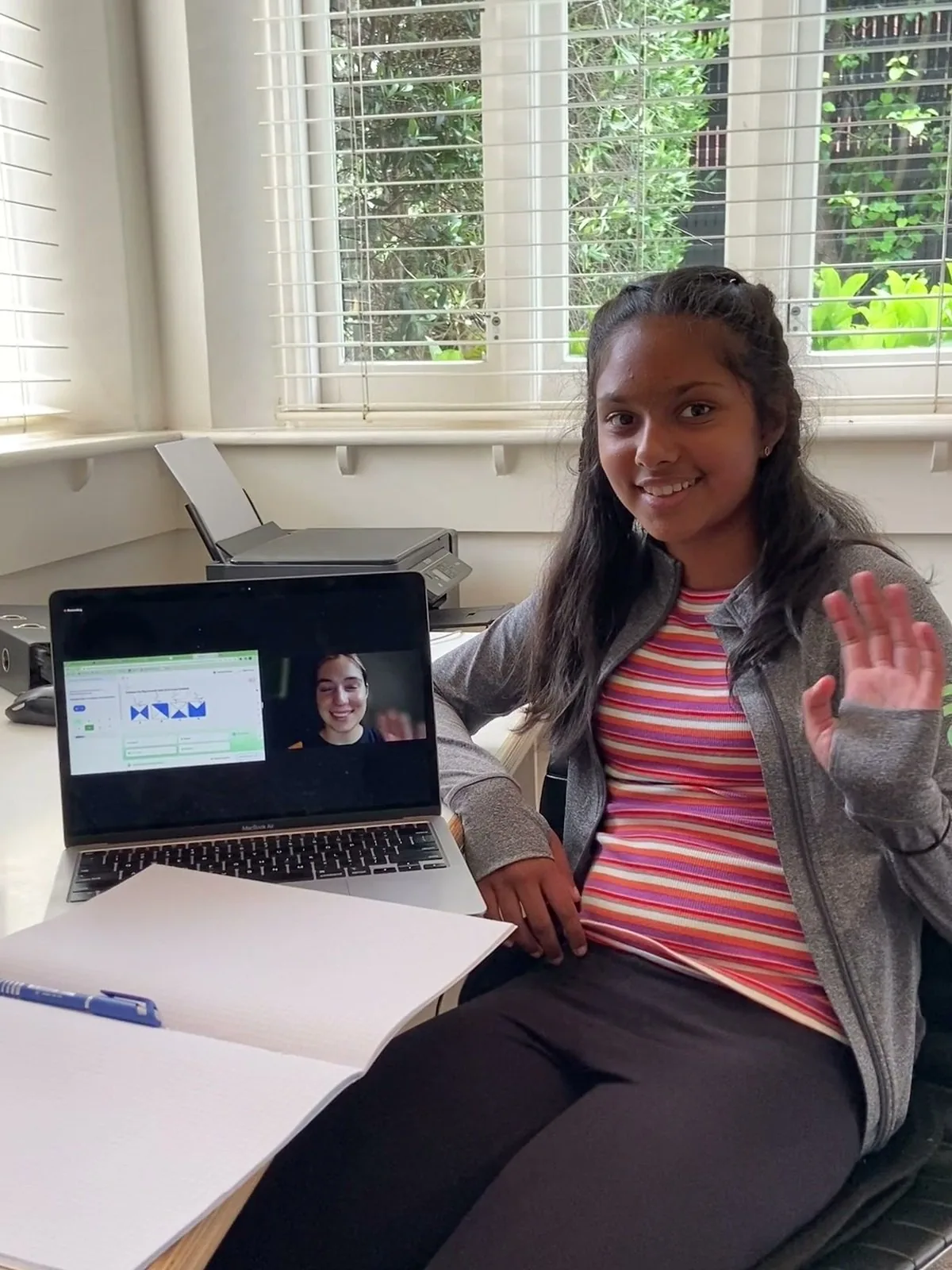
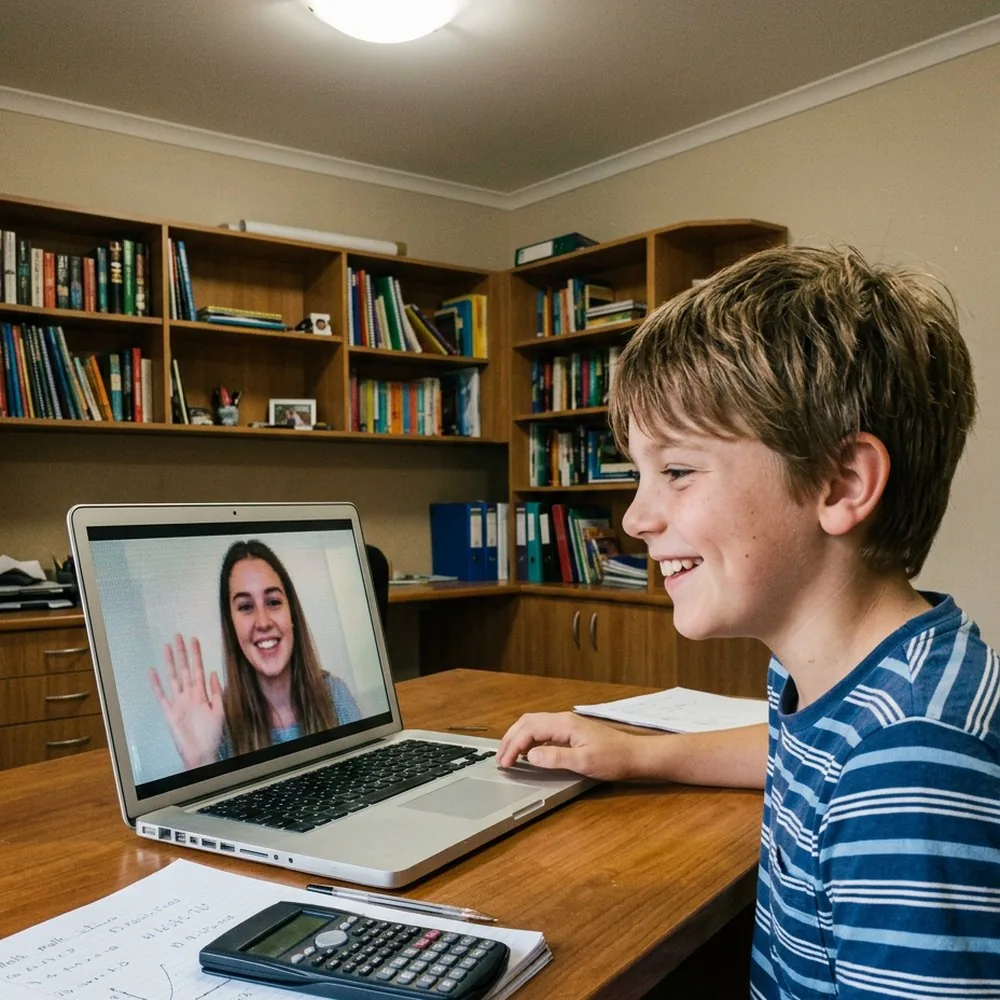
A good tutor measures progress at a much higher resolution than a school can. Schools see a student for one period a day across a class of 25; a tutor sees them one-to-one for an hour a week and can map exactly which sub-skill is shaky. At Tutero, sessions start at US$45/hr and progress is tracked per sub-topic across the quarter — not as a single quarterly grade. If you’re curious whether tutoring is moving the needle, our guide on how to know if your child is getting value from their tutor walks through the specific signals to watch for in the first six sessions.
The single biggest measurement mistake parents make is collapsing all of progress into one letter on a report card. Effort, retention, and the quality of questions move first. Grades follow.
What does a simple at-home progress tracker look like?
If you want a 5-minute setup that works across elementary, middle, and high school:
- Pick three things to track. One habit (e.g. 20 minutes of reading), one skill (e.g. times tables, essay paragraphs), one disposition (e.g. asked a question in class).
- Tape a letter-size grid to the fridge. Days across the top. Three rows for the three things. A check per day done.
- Friday two-question check-in. “What’s one thing you can do now that you couldn’t two weeks ago?” and “Where are you stuck?”
- Bi-weekly returned-work review. Pick one piece of graded work. Read the teacher comments together. Pick one thing to fix.
- Quarterly report-card contextualization. When the report card arrives, lay it next to the streak chart. The streak chart usually predicted what you’re reading.
What’s the most reliable single signal of academic progress?
If you only ever measured one thing, measure retention across two weeks. Pick a topic your child learned recently. Ask them to explain it 14 days later. If they can explain it without re-reading the book or watching a video, they own it — and the grade will follow. If they can’t, the topic is still short-term memory and the grade is overstating their understanding. Carol Dweck’s growth-mindset research and OECD PISA evidence on metacognition both converge on this: the students who get better fastest are the ones who keep returning to old material and checking it’s still there.
Frequently asked questions
Should I tell my child what I’m measuring?
Yes. Hidden trackers feel like surveillance and breed resistance. Visible trackers — the fridge chart, the Friday check-in — turn measurement into a shared project. From around Grade 5 upward, ask your child what they want to track too; the best home trackers are co-owned.
What if the school doesn’t share enough information about my child’s progress?
Email the classroom teacher with one specific question, not a general “how is she doing?” The most useful prompt is: “What’s one thing you’ve seen her improve at this quarter, and what’s the one thing she’s still finding tricky?” That gives the teacher a low-effort path to a useful answer and gives you something concrete to act on at home.
How long does it take to see real progress with a tutor?
For most students, the first signal of progress shows up within four to six sessions — usually as a confidence shift, sharper questions, and faster first attempts before the grade move arrives. The grade move typically follows in the second school assessment after starting, not the first. When to begin tutoring covers this timeline in more depth.
Are state tests a reliable measure of academic progress?
They’re an annual snapshot — useful as a directional check, not as a primary tracker. State tests tell you where your child sits on a state-wide distribution; they don’t tell you whether they’re improving week to week. Use state-test results to confirm the picture you’re already building from weekly evidence, not as the picture itself. Our breakdown of how tutoring improves test results goes deeper here.
What should I do if my child is going backwards?
Don’t panic and don’t add hours. Going backwards is usually a habits problem (sleep, screens, motivation) or a foundational gap that’s finally caught up. Pick one habit to fix this week, one foundational topic to revisit next week, and run the two-question Friday check-in for two weeks. If progress hasn’t resumed after three weeks, that’s the right time to consider a tutor — the value of one-to-one is highest when the gap is specific and recent. Our guide on signs your child needs tutoring covers when to act.
Related reading
- How to know if your child is getting value from their tutor — the post-purchase measurement playbook.
- 4 tips for setting academic goals with your child — the goal-setting frame that makes progress measurable.
- How tutoring improves test results — what state-test movement actually requires.
- 5 habits of highly successful students — the habits that show up in progress data first.
- Effective strategies to improve math study skills — specific to a subject parents most often want to measure.
- 5 signs your child needs tutoring — when measurement says it’s time to add support.
- The ideal time to begin tutoring — the timing question for parents who’ve seen the warning signs.
- 5 key benefits of private tutoring — what tutoring adds beyond the report card.
- How GPA is calculated — for high school parents tracking the lagging indicator that matters most.
The bottom line
Measure academic progress on three time-scales at once: weekly habits, bi-weekly content, quarterly grades. Don’t wait for the report card — it’s the slowest-moving signal in the system. Watch effort, retention, and the quality of questions; they move first, and they’re where the next grade comes from. If the picture you’re building from weekly evidence shows a real, specific gap, that’s the right moment to bring in a one-to-one tutor — and the right tutor will measure progress at higher resolution than the school can, on the same three layers, every session.
Updated for 2026. Most parents look at a school report once a quarter and try to read between the lines. But academic progress is a bigger story than the letter on the page — and you can usually see it weeks before a report card confirms it. This guide walks you through how to measure your child’s progress at home, at school, and with a tutor, across elementary, middle, and high school years.
Quick answer
You measure academic progress by tracking three layers together: formative signals (small day-to-day evidence — a question answered without help, a confident first try, a self-correction); summative signals (assessments, reports, state tests, exam scores); and habit signals (effort, focus, willingness to ask questions). Grades alone are a lagging indicator. Effort, retention, and self-explanation are leading indicators that show up weeks earlier — and they’re what predict the next grade move.
What does academic progress actually mean?
Academic progress is the gap between what a student could do last month and what they can do now — across knowledge (what they remember), skill (what they can do), and disposition (how they approach learning). The most useful framing comes from John Hattie’s Visible Learning work: progress is biggest when students get clear feedback on where they are, where they need to go, and what to do next. A child who can self-explain a math concept they couldn’t two weeks ago has progressed — even if their next test sits at the same percentage. That’s the gap most parents miss when they only watch the report card.
How do you measure academic progress at home?
At home, the strongest measurement is regular, low-stakes evidence you collect across two weeks, not a single check. Three approaches that work for elementary, middle, and high school students:
- Visible streak chart. Tape a letter-size chart to the fridge. One row per week. One column per habit you care about — reading, math practice, asking a question in class. A check or sticker per day. Children as young as Grade 1 can read a streak chart, and high schoolers will quietly engage if you frame it as their chart, not yours.
- Two-question Friday. Once a week, ask: “What’s one thing you can do now that you couldn’t two weeks ago?” and “Where are you stuck?” If the answer to the first is concrete (“long division with remainders”), that’s real progress. Vague answers (“math is fine”) usually mean nothing has shifted yet.
- Self-explanation check. Ask your child to teach you something they learned this week for 60 seconds. If they can explain it without notes, they own it. If they can’t, the topic is still in short-term memory only — the grade hasn’t caught up yet, but it will.
What’s the difference between formative and summative assessment?
Formative assessment is during learning — it’s evidence collected while a student is still working on a topic so feedback can change what happens next. A teacher walking the room and asking targeted questions is formative. A self-quiz a student does mid-week is formative. Summative assessment is after learning — it’s the end-of-unit test, the report-card grade, the state test result, the final exam. It measures what the student has retained but can’t change anything in time. Black & Wiliam’s 1998 paper Inside the Black Box showed that formative assessment is one of the highest-leverage shifts a student can make. For parents, that means: if you only measure progress through report cards, you’re measuring the slowest-moving signal in the system.
Are grades the only measure of academic progress?
No — and treating them as the only measure is the most common parent mistake. Grades are a lagging indicator: they reflect work done weeks earlier and they compress dozens of decisions into one letter. Three signals move before grades do:
- Effort under difficulty. A child who used to give up after one wrong answer and now tries three approaches has progressed — that effort change usually precedes a grade lift by a quarter.
- Retention across weeks. A topic understood on Monday and still understood on Friday is real learning. A topic understood on Monday and forgotten by Friday is short-term memory dressed up as understanding.
- Quality of questions. Vague questions (“I don’t get it”) become specific questions (“why does the sign flip when I divide by a negative?”). That shift maps almost perfectly to the next grade move.
How often should I check on my child’s school progress?
Weekly for habits, every two weeks for content, quarterly for grades. A weekly two-minute check-in on effort and focus catches motivation slumps before they harden into a grade slide. A bi-weekly look at one piece of returned work — together, asking “what did the teacher mark you down on?” — surfaces specific gaps you can act on. A quarterly look at the report card puts the slow signal in context. Daily check-ins are usually counter-productive: the noise drowns the signal and the conversation becomes about you, not the work. Quarterly-only check-ins are too slow to catch a problem before it shows up on the report card.
What signs show academic progress beyond grades?
Six observable signals that your child is progressing — usable at elementary, middle, and high school level:
- They start asking sharper, more specific questions — about steps, not the whole topic.
- They self-correct mid-sentence — “Wait, no, that should be six” — instead of waiting to be told.
- They can re-explain a concept five days later without re-reading the book.
- They attempt a problem before asking for help — even one wrong attempt is progress over the “I don’t know” freeze.
- Their language about a subject changes — from “I’m bad at math” to “I’m okay at fractions but stuck on decimals.”
- They hand work in finished — the friction of starting and the friction of finishing are different signals; both move before grades do.
How do I tell if my child is improving even if grades aren’t moving?
Look for under-the-surface change before on-the-surface change. If your child is now finishing homework without prompting, that’s a habit shift that hasn’t hit the report card yet. If they’re asking the teacher questions in class — behavior their teacher will tell you about if you ask — that’s engagement that grades will catch up to. The Education Endowment Foundation’s research on metacognition and self-regulation shows that students who plan, monitor, and reflect on their own work add roughly seven months of additional progress in a year, even before that progress is visible in grades. The grade lag is real, and patience here pays off.
What does academic progress look like at elementary, middle, and high school?
Progress looks different at each stage, and using the wrong yardstick wastes a lot of parent worry:
- Elementary (Grades K–5). Progress is mostly about fluency — reading miles, math facts recalled in seconds, tidy-enough handwriting that thinking goes into what to write rather than how. A confident first attempt, a willingness to try a hard question, a 30-second explanation back to you — these matter more than the worksheet score. One-to-one tutoring built around fluency closes gaps fast at this stage.
- Middle school (Grades 6–8). Progress shifts to ownership — can your child plan a week, find their own gaps, ask the teacher one targeted question per week. The state test result is one signal here but not the most important one; test-score improvement follows from steadier weekly habits, not last-minute review.
- High school (Grades 9–12). Progress is about transfer — can they take a method from one question and apply it to a new one. Practice-test performance is the single best leading indicator for the GPA and the SAT/ACT; if practice scores are climbing two weeks before a school exam, the school grade almost always follows.
How does a tutor measure academic progress differently?
A good tutor measures progress at a much higher resolution than a school can. Schools see a student for one period a day across a class of 25; a tutor sees them one-to-one for an hour a week and can map exactly which sub-skill is shaky. At Tutero, sessions start at US$45/hr and progress is tracked per sub-topic across the quarter — not as a single quarterly grade. If you’re curious whether tutoring is moving the needle, our guide on how to know if your child is getting value from their tutor walks through the specific signals to watch for in the first six sessions.
The single biggest measurement mistake parents make is collapsing all of progress into one letter on a report card. Effort, retention, and the quality of questions move first. Grades follow.
What does a simple at-home progress tracker look like?
If you want a 5-minute setup that works across elementary, middle, and high school:
- Pick three things to track. One habit (e.g. 20 minutes of reading), one skill (e.g. times tables, essay paragraphs), one disposition (e.g. asked a question in class).
- Tape a letter-size grid to the fridge. Days across the top. Three rows for the three things. A check per day done.
- Friday two-question check-in. “What’s one thing you can do now that you couldn’t two weeks ago?” and “Where are you stuck?”
- Bi-weekly returned-work review. Pick one piece of graded work. Read the teacher comments together. Pick one thing to fix.
- Quarterly report-card contextualization. When the report card arrives, lay it next to the streak chart. The streak chart usually predicted what you’re reading.
What’s the most reliable single signal of academic progress?
If you only ever measured one thing, measure retention across two weeks. Pick a topic your child learned recently. Ask them to explain it 14 days later. If they can explain it without re-reading the book or watching a video, they own it — and the grade will follow. If they can’t, the topic is still short-term memory and the grade is overstating their understanding. Carol Dweck’s growth-mindset research and OECD PISA evidence on metacognition both converge on this: the students who get better fastest are the ones who keep returning to old material and checking it’s still there.
Frequently asked questions
Should I tell my child what I’m measuring?
Yes. Hidden trackers feel like surveillance and breed resistance. Visible trackers — the fridge chart, the Friday check-in — turn measurement into a shared project. From around Grade 5 upward, ask your child what they want to track too; the best home trackers are co-owned.
What if the school doesn’t share enough information about my child’s progress?
Email the classroom teacher with one specific question, not a general “how is she doing?” The most useful prompt is: “What’s one thing you’ve seen her improve at this quarter, and what’s the one thing she’s still finding tricky?” That gives the teacher a low-effort path to a useful answer and gives you something concrete to act on at home.
How long does it take to see real progress with a tutor?
For most students, the first signal of progress shows up within four to six sessions — usually as a confidence shift, sharper questions, and faster first attempts before the grade move arrives. The grade move typically follows in the second school assessment after starting, not the first. When to begin tutoring covers this timeline in more depth.
Are state tests a reliable measure of academic progress?
They’re an annual snapshot — useful as a directional check, not as a primary tracker. State tests tell you where your child sits on a state-wide distribution; they don’t tell you whether they’re improving week to week. Use state-test results to confirm the picture you’re already building from weekly evidence, not as the picture itself. Our breakdown of how tutoring improves test results goes deeper here.
What should I do if my child is going backwards?
Don’t panic and don’t add hours. Going backwards is usually a habits problem (sleep, screens, motivation) or a foundational gap that’s finally caught up. Pick one habit to fix this week, one foundational topic to revisit next week, and run the two-question Friday check-in for two weeks. If progress hasn’t resumed after three weeks, that’s the right time to consider a tutor — the value of one-to-one is highest when the gap is specific and recent. Our guide on signs your child needs tutoring covers when to act.
Related reading
- How to know if your child is getting value from their tutor — the post-purchase measurement playbook.
- 4 tips for setting academic goals with your child — the goal-setting frame that makes progress measurable.
- How tutoring improves test results — what state-test movement actually requires.
- 5 habits of highly successful students — the habits that show up in progress data first.
- Effective strategies to improve math study skills — specific to a subject parents most often want to measure.
- 5 signs your child needs tutoring — when measurement says it’s time to add support.
- The ideal time to begin tutoring — the timing question for parents who’ve seen the warning signs.
- 5 key benefits of private tutoring — what tutoring adds beyond the report card.
- How GPA is calculated — for high school parents tracking the lagging indicator that matters most.
The bottom line
Measure academic progress on three time-scales at once: weekly habits, bi-weekly content, quarterly grades. Don’t wait for the report card — it’s the slowest-moving signal in the system. Watch effort, retention, and the quality of questions; they move first, and they’re where the next grade comes from. If the picture you’re building from weekly evidence shows a real, specific gap, that’s the right moment to bring in a one-to-one tutor — and the right tutor will measure progress at higher resolution than the school can, on the same three layers, every session.


Hoping to improve confidence & grades?