.svg)

EMA, the Education Market Assistant, is the Step Up For Students platform where you manage your child's scholarship. Inside EMA you can apply, track scholarship funds, buy through MyScholarShop, submit reimbursement requests and find service providers. Tutoring is booked through the Marketplace, so knowing how it works is the fastest way from an approved scholarship to a first lesson.
This guide covers how to book tutoring in EMA step by step, what Step Up requires from a tutoring provider, how direct billing and reimbursement differ, the advance-payment rules, and what to check when funds have not arrived yet.

Quick answer
To book tutoring in EMA, log in, check that the service is eligible and that your student has enough available funds, then open Marketplace and use Find Providers, which lets you purchase services such as tutoring from pre-approved vendors. With direct billing the provider is paid from the scholarship account after the service is delivered, so you do not pay out of pocket.
Tutoring is covered on UA and PEP, and on FTC and FES-EO when funds remain after private school tuition
Families pay $0 out of pocket. Pick your scholarship:
What is the EMA (Education Market Assistant)?
EMA is Step Up For Students' secure online platform for everything related to your child's scholarship. Step Up describes it as the place where you can apply for a scholarship, use scholarship dollars directly without paying out of pocket, and explore schools and providers. The Marketplace inside EMA has two parts: MyScholarShop for eligible instructional materials and curriculum, and Find Providers for services such as tutoring and therapy.
A few account rules are worth knowing before you book. A student can only be linked to one parent or guardian account, so never create a second EMA account. If a saved login stops working, use the "Forgot Username" and "Forgot Password" options on the EMA login screen. Step Up recommends a desktop or laptop computer and Google Chrome for the best experience.
How do I book tutoring in EMA step by step?
These steps follow Step Up's family handbooks for FES-UA and PEP. Where Step Up does not publish a screen-by-screen guide for tutoring, the step is described in general terms.
- Log in to EMA. Go to stepupforstudents.org, choose the login option and select "Log In to EMA". Use your own guardian account: allowing anyone else, including a provider, to access or manage your EMA account is prohibited and could cost you the scholarship.
- Check eligibility and balance. Before you spend, Step Up asks you to confirm the expense is allowed in the Purchasing Guide or the handbook's authorized-uses chart, and to check that your student has sufficient funds. Part-time private tutoring is an authorized use on FES-UA and PEP, and on FES-EO/FTC from funds left after private school tuition and fees. It is paid by direct pay or reimbursement.
- Open Marketplace, then Find Providers. In Step Up's documented Marketplace flow you click Marketplace on the left-hand side of the dashboard, click Find Providers, and select your student in the Select Student box. Then search or filter for the tutoring provider you want.
- Reserve funds. In the documented flow you add the service to your cart, click the shopping cart icon, review your selections and click Reserve Funds, then check Yes and click Confirm to share your contact information with the provider. Your student must have sufficient funds to reserve services.
- Lessons happen, then the provider bills. Requests for payment directly to a provider may only be approved after the service has been rendered. You can track scholarship funds in EMA as invoices are paid.
If you want help with the EMA side, choose a provider that supports direct billing. To accept direct payment for services, a provider must set up a provider account in EMA and submit a service catalog. For the wider picture of spending your scholarship on lessons, see how to use Step Up funds for tutoring.
Step Up For Students
Use your scholarship for 1-on-1 tutoring
- Certified Florida teachers
- The same teacher every week
- A plan built from your child’s schoolwork
 ★★★★★4.9 from 250 Google reviews
$0out of pocket on UA and PEP, paid through EMA
What does Step Up require from a tutoring provider?
Step Up defines a part-time tutor as someone who provides teaching or instructional support services to students on less than a full-time basis, and it is an eligible service on FES-UA and PEP, and on FTC and FES-EO when funds remain after private school tuition and fees. A part-time tutor must hold one of the credentials on Step Up's list, for example:
- A valid Florida educator's certificate
- A valid professional standard teaching certificate issued by another state
- Certification from an approved research-based training program, such as Orton-Gillingham or the Wilson Reading System
- A bachelor's degree or a graduate degree in the subject area of instruction
The provider's service catalog must include the name of the person rendering services and proof of their credentials. Credentialed providers such as tutors may deliver services virtually; most other services must be delivered in Florida. Part-time tutoring is capped at 720 hours a year for grades K-3 and 900 hours a year for grades 4-12 per student.
Approval tells you a provider met Step Up's requirements. It does not tell you whether the lessons will suit your child, so ask who will teach, whether your child keeps the same teacher, and how progress is reported before you reserve funds.
Direct billing vs reimbursement: which should I use?
Step Up lets you spend scholarship funds in several ways, including direct billing for services through Find Providers and paying out of pocket for eligible expenses and requesting reimbursement. For weekly tutoring, direct billing is simpler because you never carry the cost yourself.
| Direct billing | Reimbursement | |
|---|---|---|
| Who pays first | The provider is paid from the scholarship account | You pay out of pocket, then apply to be reimbursed |
| When money moves | Only after the service has been rendered | Review and processing may take up to 60 days after all documentation is received |
| Your paperwork | Review the provider's invoices in EMA | An invoice on business letterhead with the student's and tutor's names, service dates, hourly rate and total, plus proof of payment |
| Watch out for | Never share your EMA login with a provider | Cash payments to private tutors not affiliated with a company or institution are denied |
Source: Step Up For Students FES-UA Family Handbook and EMA page, 2026-27.
For the 2026-27 year, items or services must be purchased between July 1, 2026 and June 30, 2027, and reimbursement requests must be submitted by July 31, 2027. What counts as an eligible purchase on each scholarship is in our guide to what you can and can't buy with Step Up For Students, and the claim process is in the Step Up reimbursement guide.
Can I pay a provider in advance and get reimbursed?
Yes, within limits. Parents and guardians can submit a reimbursement request for services up to four months in advance; Step Up's own example is a parent applying on August 15 for tutoring fees paid through December 15. Requests for services more than four months ahead may be approved through the rest of the school year, up to one year, if the provider attests that the prepaid services are non-refundable.
Money paid to a provider works differently from a normal purchase: a provider cannot pay scholarship funds back to parents or guardians in any form, including as a rebate. Before you prepay anyone, ask for the non-refundable attestation in writing, and prefer direct billing for recurring lessons.
When do scholarship funds arrive in EMA?
Scholarship funds are deposited into your child's account four times a year. The dates below are when Step Up receives funds from the state; it can take up to two weeks after that for funds to reach your child's account.
| Quarter | Step Up receives funds |
|---|---|
| Quarter 1 | Renewal students: August 1 New students: September 1 |
| Quarter 2 | All students: November 1 |
| Quarter 3 | All students: February 1 |
| Quarter 4 | All students: April 1 |
Source: Step Up For Students UA Fund and PEP Fund pages.
The full 2026-27 calendar and award amounts by program are in our guide to Step Up award amounts 2026-27.
Why don't my funds show in EMA yet?
- You are a new student. New students' first-quarter funds go to Step Up on September 1, a month after renewal students' August 1 date.
- The deposit window. It can take up to two weeks after Step Up receives funds for them to appear in your child's account.
- Renewal status. A renewing student is one who was funded for Quarter 4 for the same scholarship and whose scholarship was not revoked. For 2026-27, renewal applications submitted after the April 30, 2026 deadline were considered new applications.
- A PEP attestation is due. Beginning in 2026-27, PEP families complete an attestation before each quarterly distribution confirming their student is not enrolled full-time in public school.
- A login problem, not a funding problem. If saved credentials no longer work, use the "Forgot Username" and "Forgot Password" options on the EMA login screen.
- MyScholarShop timing. MyScholarShop becomes accessible within a few days after funds are deposited into a student's account.

How do I choose a quality tutoring provider in EMA?
Step Up checks that a provider meets its requirements. The rest is up to you. Five questions separate strong providers from the rest:
- Who teaches? Ask for the teacher's name and credentials, and whether they match the subject your child needs.
- Is it 1-on-1? Confirm your child gets a dedicated teacher and a plan built around their level, not a rotating pool or a group room.
- Does the provider bill directly through EMA? If a provider only works on reimbursement, you carry the cost and the paperwork on every invoice.
- Are the reviews real? Look for reviews on Google or Trustpilot, not only testimonials on the provider's own site.
- Can you talk to a person first? A provider who matches your child to a teacher after a conversation is easier to work with than a booking form.
Tutero offers 1-on-1 lessons from certified Florida teachers, with the same teacher every week. 575 Florida families use Tutero. UA families can see scholarship-specific detail on our Unique Abilities tutoring page, and homeschool families on the PEP tutoring page.
What's the bottom line?
EMA is where a scholarship becomes actual lessons. Check the expense and your balance, book through Find Providers, prefer direct billing for anything recurring, get a non-refundable attestation before any advance payment, and plan around the quarterly funding dates. Ready to book? Tell us about your child and an account manager calls within 24 hours.
How this guide was written
Written by Tutero’s Florida team. Tutero is trusted by 575 Florida families. We check our guides against Step Up’s official purchasing guides and family handbooks for UA and PEP. Rules can change, so confirm the details in your EMA account before you buy.
Related guides: How to use Step Up funds for tutoring, What you can and can’t buy with Step Up, What Florida families need to know about Step Up scholarships and The best Step Up tutoring providers.
Your next step
See how families use Step Up for tutoring
Certified Florida teachers, 1-on-1, paid through EMA with $0 out of pocket. Trusted by 575 Florida families.
Or keep reading: How to use your funds for tutoring →
“With her teacher Lori, she’s focused. She never wants to miss a lesson.”
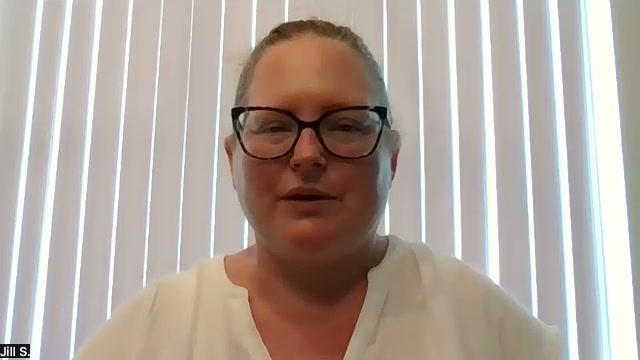 JillMom of Emma, 6th grade
EMA, the Education Market Assistant, is the Step Up For Students platform where you manage your child's scholarship. Inside EMA you can apply, track scholarship funds, buy through MyScholarShop, submit reimbursement requests and find service providers. Tutoring is booked through the Marketplace, so knowing how it works is the fastest way from an approved scholarship to a first lesson.
This guide covers how to book tutoring in EMA step by step, what Step Up requires from a tutoring provider, how direct billing and reimbursement differ, the advance-payment rules, and what to check when funds have not arrived yet.
Quick answer
To book tutoring in EMA, log in, check that the service is eligible and that your student has enough available funds, then open Marketplace and use Find Providers, which lets you purchase services such as tutoring from pre-approved vendors. With direct billing the provider is paid from the scholarship account after the service is delivered, so you do not pay out of pocket.
Tutoring is covered on UA and PEP, and on FTC and FES-EO when funds remain after private school tuition
Families pay $0 out of pocket. Pick your scholarship:
What is the EMA (Education Market Assistant)?
EMA is Step Up For Students' secure online platform for everything related to your child's scholarship. Step Up describes it as the place where you can apply for a scholarship, use scholarship dollars directly without paying out of pocket, and explore schools and providers. The Marketplace inside EMA has two parts: MyScholarShop for eligible instructional materials and curriculum, and Find Providers for services such as tutoring and therapy.
A few account rules are worth knowing before you book. A student can only be linked to one parent or guardian account, so never create a second EMA account. If a saved login stops working, use the "Forgot Username" and "Forgot Password" options on the EMA login screen. Step Up recommends a desktop or laptop computer and Google Chrome for the best experience.
How do I book tutoring in EMA step by step?
These steps follow Step Up's family handbooks for FES-UA and PEP. Where Step Up does not publish a screen-by-screen guide for tutoring, the step is described in general terms.
- Log in to EMA. Go to stepupforstudents.org, choose the login option and select "Log In to EMA". Use your own guardian account: allowing anyone else, including a provider, to access or manage your EMA account is prohibited and could cost you the scholarship.
- Check eligibility and balance. Before you spend, Step Up asks you to confirm the expense is allowed in the Purchasing Guide or the handbook's authorized-uses chart, and to check that your student has sufficient funds. Part-time private tutoring is an authorized use on FES-UA and PEP, and on FES-EO/FTC from funds left after private school tuition and fees. It is paid by direct pay or reimbursement.
- Open Marketplace, then Find Providers. In Step Up's documented Marketplace flow you click Marketplace on the left-hand side of the dashboard, click Find Providers, and select your student in the Select Student box. Then search or filter for the tutoring provider you want.
- Reserve funds. In the documented flow you add the service to your cart, click the shopping cart icon, review your selections and click Reserve Funds, then check Yes and click Confirm to share your contact information with the provider. Your student must have sufficient funds to reserve services.
- Lessons happen, then the provider bills. Requests for payment directly to a provider may only be approved after the service has been rendered. You can track scholarship funds in EMA as invoices are paid.
If you want help with the EMA side, choose a provider that supports direct billing. To accept direct payment for services, a provider must set up a provider account in EMA and submit a service catalog. For the wider picture of spending your scholarship on lessons, see how to use Step Up funds for tutoring.
Step Up For Students
Use your scholarship for 1-on-1 tutoring
- Certified Florida teachers
- The same teacher every week
- A plan built from your child’s schoolwork
★★★★★4.9 from 250 Google reviews$0out of pocket on UA and PEP, paid through EMA
What does Step Up require from a tutoring provider?
Step Up defines a part-time tutor as someone who provides teaching or instructional support services to students on less than a full-time basis, and it is an eligible service on FES-UA and PEP, and on FTC and FES-EO when funds remain after private school tuition and fees. A part-time tutor must hold one of the credentials on Step Up's list, for example:
- A valid Florida educator's certificate
- A valid professional standard teaching certificate issued by another state
- Certification from an approved research-based training program, such as Orton-Gillingham or the Wilson Reading System
- A bachelor's degree or a graduate degree in the subject area of instruction
The provider's service catalog must include the name of the person rendering services and proof of their credentials. Credentialed providers such as tutors may deliver services virtually; most other services must be delivered in Florida. Part-time tutoring is capped at 720 hours a year for grades K-3 and 900 hours a year for grades 4-12 per student.
Approval tells you a provider met Step Up's requirements. It does not tell you whether the lessons will suit your child, so ask who will teach, whether your child keeps the same teacher, and how progress is reported before you reserve funds.
Direct billing vs reimbursement: which should I use?
Step Up lets you spend scholarship funds in several ways, including direct billing for services through Find Providers and paying out of pocket for eligible expenses and requesting reimbursement. For weekly tutoring, direct billing is simpler because you never carry the cost yourself.
| Direct billing | Reimbursement | |
|---|---|---|
| Who pays first | The provider is paid from the scholarship account | You pay out of pocket, then apply to be reimbursed |
| When money moves | Only after the service has been rendered | Review and processing may take up to 60 days after all documentation is received |
| Your paperwork | Review the provider's invoices in EMA | An invoice on business letterhead with the student's and tutor's names, service dates, hourly rate and total, plus proof of payment |
| Watch out for | Never share your EMA login with a provider | Cash payments to private tutors not affiliated with a company or institution are denied |
Source: Step Up For Students FES-UA Family Handbook and EMA page, 2026-27.
For the 2026-27 year, items or services must be purchased between July 1, 2026 and June 30, 2027, and reimbursement requests must be submitted by July 31, 2027. What counts as an eligible purchase on each scholarship is in our guide to what you can and can't buy with Step Up For Students, and the claim process is in the Step Up reimbursement guide.
Can I pay a provider in advance and get reimbursed?
Yes, within limits. Parents and guardians can submit a reimbursement request for services up to four months in advance; Step Up's own example is a parent applying on August 15 for tutoring fees paid through December 15. Requests for services more than four months ahead may be approved through the rest of the school year, up to one year, if the provider attests that the prepaid services are non-refundable.
Money paid to a provider works differently from a normal purchase: a provider cannot pay scholarship funds back to parents or guardians in any form, including as a rebate. Before you prepay anyone, ask for the non-refundable attestation in writing, and prefer direct billing for recurring lessons.
When do scholarship funds arrive in EMA?
Scholarship funds are deposited into your child's account four times a year. The dates below are when Step Up receives funds from the state; it can take up to two weeks after that for funds to reach your child's account.
| Quarter | Step Up receives funds |
|---|---|
| Quarter 1 | Renewal students: August 1 New students: September 1 |
| Quarter 2 | All students: November 1 |
| Quarter 3 | All students: February 1 |
| Quarter 4 | All students: April 1 |
Source: Step Up For Students UA Fund and PEP Fund pages.
The full 2026-27 calendar and award amounts by program are in our guide to Step Up award amounts 2026-27.
Why don't my funds show in EMA yet?
- You are a new student. New students' first-quarter funds go to Step Up on September 1, a month after renewal students' August 1 date.
- The deposit window. It can take up to two weeks after Step Up receives funds for them to appear in your child's account.
- Renewal status. A renewing student is one who was funded for Quarter 4 for the same scholarship and whose scholarship was not revoked. For 2026-27, renewal applications submitted after the April 30, 2026 deadline were considered new applications.
- A PEP attestation is due. Beginning in 2026-27, PEP families complete an attestation before each quarterly distribution confirming their student is not enrolled full-time in public school.
- A login problem, not a funding problem. If saved credentials no longer work, use the "Forgot Username" and "Forgot Password" options on the EMA login screen.
- MyScholarShop timing. MyScholarShop becomes accessible within a few days after funds are deposited into a student's account.
How do I choose a quality tutoring provider in EMA?
Step Up checks that a provider meets its requirements. The rest is up to you. Five questions separate strong providers from the rest:
- Who teaches? Ask for the teacher's name and credentials, and whether they match the subject your child needs.
- Is it 1-on-1? Confirm your child gets a dedicated teacher and a plan built around their level, not a rotating pool or a group room.
- Does the provider bill directly through EMA? If a provider only works on reimbursement, you carry the cost and the paperwork on every invoice.
- Are the reviews real? Look for reviews on Google or Trustpilot, not only testimonials on the provider's own site.
- Can you talk to a person first? A provider who matches your child to a teacher after a conversation is easier to work with than a booking form.
Tutero offers 1-on-1 lessons from certified Florida teachers, with the same teacher every week. 575 Florida families use Tutero. UA families can see scholarship-specific detail on our Unique Abilities tutoring page, and homeschool families on the PEP tutoring page.
What's the bottom line?
EMA is where a scholarship becomes actual lessons. Check the expense and your balance, book through Find Providers, prefer direct billing for anything recurring, get a non-refundable attestation before any advance payment, and plan around the quarterly funding dates. Ready to book? Tell us about your child and an account manager calls within 24 hours.
How this guide was written
Written by Tutero’s Florida team. Tutero is trusted by 575 Florida families. We check our guides against Step Up’s official purchasing guides and family handbooks for UA and PEP. Rules can change, so confirm the details in your EMA account before you buy.
Related guides: How to use Step Up funds for tutoring, What you can and can’t buy with Step Up, What Florida families need to know about Step Up scholarships and The best Step Up tutoring providers.
Your next step
See how families use Step Up for tutoring
Certified Florida teachers, 1-on-1, paid through EMA with $0 out of pocket. Trusted by 575 Florida families.
Or keep reading: How to use your funds for tutoring →
“With her teacher Lori, she’s focused. She never wants to miss a lesson.”
JillMom of Emma, 6th grade

EMA, the Education Market Assistant, is the Step Up For Students platform where you manage your child's scholarship. Inside EMA you can apply, track scholarship funds, buy through MyScholarShop, submit reimbursement requests and find service providers. Tutoring is booked through the Marketplace, so knowing how it works is the fastest way from an approved scholarship to a first lesson.
This guide covers how to book tutoring in EMA step by step, what Step Up requires from a tutoring provider, how direct billing and reimbursement differ, the advance-payment rules, and what to check when funds have not arrived yet.
Quick answer
To book tutoring in EMA, log in, check that the service is eligible and that your student has enough available funds, then open Marketplace and use Find Providers, which lets you purchase services such as tutoring from pre-approved vendors. With direct billing the provider is paid from the scholarship account after the service is delivered, so you do not pay out of pocket.
Tutoring is covered on UA and PEP, and on FTC and FES-EO when funds remain after private school tuition
Families pay $0 out of pocket. Pick your scholarship:
What is the EMA (Education Market Assistant)?
EMA is Step Up For Students' secure online platform for everything related to your child's scholarship. Step Up describes it as the place where you can apply for a scholarship, use scholarship dollars directly without paying out of pocket, and explore schools and providers. The Marketplace inside EMA has two parts: MyScholarShop for eligible instructional materials and curriculum, and Find Providers for services such as tutoring and therapy.
A few account rules are worth knowing before you book. A student can only be linked to one parent or guardian account, so never create a second EMA account. If a saved login stops working, use the "Forgot Username" and "Forgot Password" options on the EMA login screen. Step Up recommends a desktop or laptop computer and Google Chrome for the best experience.
How do I book tutoring in EMA step by step?
These steps follow Step Up's family handbooks for FES-UA and PEP. Where Step Up does not publish a screen-by-screen guide for tutoring, the step is described in general terms.
- Log in to EMA. Go to stepupforstudents.org, choose the login option and select "Log In to EMA". Use your own guardian account: allowing anyone else, including a provider, to access or manage your EMA account is prohibited and could cost you the scholarship.
- Check eligibility and balance. Before you spend, Step Up asks you to confirm the expense is allowed in the Purchasing Guide or the handbook's authorized-uses chart, and to check that your student has sufficient funds. Part-time private tutoring is an authorized use on FES-UA and PEP, and on FES-EO/FTC from funds left after private school tuition and fees. It is paid by direct pay or reimbursement.
- Open Marketplace, then Find Providers. In Step Up's documented Marketplace flow you click Marketplace on the left-hand side of the dashboard, click Find Providers, and select your student in the Select Student box. Then search or filter for the tutoring provider you want.
- Reserve funds. In the documented flow you add the service to your cart, click the shopping cart icon, review your selections and click Reserve Funds, then check Yes and click Confirm to share your contact information with the provider. Your student must have sufficient funds to reserve services.
- Lessons happen, then the provider bills. Requests for payment directly to a provider may only be approved after the service has been rendered. You can track scholarship funds in EMA as invoices are paid.
If you want help with the EMA side, choose a provider that supports direct billing. To accept direct payment for services, a provider must set up a provider account in EMA and submit a service catalog. For the wider picture of spending your scholarship on lessons, see how to use Step Up funds for tutoring.
Step Up For Students
Use your scholarship for 1-on-1 tutoring
- Certified Florida teachers
- The same teacher every week
- A plan built from your child’s schoolwork
★★★★★4.9 from 250 Google reviews$0out of pocket on UA and PEP, paid through EMA
What does Step Up require from a tutoring provider?
Step Up defines a part-time tutor as someone who provides teaching or instructional support services to students on less than a full-time basis, and it is an eligible service on FES-UA and PEP, and on FTC and FES-EO when funds remain after private school tuition and fees. A part-time tutor must hold one of the credentials on Step Up's list, for example:
- A valid Florida educator's certificate
- A valid professional standard teaching certificate issued by another state
- Certification from an approved research-based training program, such as Orton-Gillingham or the Wilson Reading System
- A bachelor's degree or a graduate degree in the subject area of instruction
The provider's service catalog must include the name of the person rendering services and proof of their credentials. Credentialed providers such as tutors may deliver services virtually; most other services must be delivered in Florida. Part-time tutoring is capped at 720 hours a year for grades K-3 and 900 hours a year for grades 4-12 per student.
Approval tells you a provider met Step Up's requirements. It does not tell you whether the lessons will suit your child, so ask who will teach, whether your child keeps the same teacher, and how progress is reported before you reserve funds.
Direct billing vs reimbursement: which should I use?
Step Up lets you spend scholarship funds in several ways, including direct billing for services through Find Providers and paying out of pocket for eligible expenses and requesting reimbursement. For weekly tutoring, direct billing is simpler because you never carry the cost yourself.
| Direct billing | Reimbursement | |
|---|---|---|
| Who pays first | The provider is paid from the scholarship account | You pay out of pocket, then apply to be reimbursed |
| When money moves | Only after the service has been rendered | Review and processing may take up to 60 days after all documentation is received |
| Your paperwork | Review the provider's invoices in EMA | An invoice on business letterhead with the student's and tutor's names, service dates, hourly rate and total, plus proof of payment |
| Watch out for | Never share your EMA login with a provider | Cash payments to private tutors not affiliated with a company or institution are denied |
Source: Step Up For Students FES-UA Family Handbook and EMA page, 2026-27.
For the 2026-27 year, items or services must be purchased between July 1, 2026 and June 30, 2027, and reimbursement requests must be submitted by July 31, 2027. What counts as an eligible purchase on each scholarship is in our guide to what you can and can't buy with Step Up For Students, and the claim process is in the Step Up reimbursement guide.
Can I pay a provider in advance and get reimbursed?
Yes, within limits. Parents and guardians can submit a reimbursement request for services up to four months in advance; Step Up's own example is a parent applying on August 15 for tutoring fees paid through December 15. Requests for services more than four months ahead may be approved through the rest of the school year, up to one year, if the provider attests that the prepaid services are non-refundable.
Money paid to a provider works differently from a normal purchase: a provider cannot pay scholarship funds back to parents or guardians in any form, including as a rebate. Before you prepay anyone, ask for the non-refundable attestation in writing, and prefer direct billing for recurring lessons.
When do scholarship funds arrive in EMA?
Scholarship funds are deposited into your child's account four times a year. The dates below are when Step Up receives funds from the state; it can take up to two weeks after that for funds to reach your child's account.
| Quarter | Step Up receives funds |
|---|---|
| Quarter 1 | Renewal students: August 1 New students: September 1 |
| Quarter 2 | All students: November 1 |
| Quarter 3 | All students: February 1 |
| Quarter 4 | All students: April 1 |
Source: Step Up For Students UA Fund and PEP Fund pages.
The full 2026-27 calendar and award amounts by program are in our guide to Step Up award amounts 2026-27.
Why don't my funds show in EMA yet?
- You are a new student. New students' first-quarter funds go to Step Up on September 1, a month after renewal students' August 1 date.
- The deposit window. It can take up to two weeks after Step Up receives funds for them to appear in your child's account.
- Renewal status. A renewing student is one who was funded for Quarter 4 for the same scholarship and whose scholarship was not revoked. For 2026-27, renewal applications submitted after the April 30, 2026 deadline were considered new applications.
- A PEP attestation is due. Beginning in 2026-27, PEP families complete an attestation before each quarterly distribution confirming their student is not enrolled full-time in public school.
- A login problem, not a funding problem. If saved credentials no longer work, use the "Forgot Username" and "Forgot Password" options on the EMA login screen.
- MyScholarShop timing. MyScholarShop becomes accessible within a few days after funds are deposited into a student's account.
How do I choose a quality tutoring provider in EMA?
Step Up checks that a provider meets its requirements. The rest is up to you. Five questions separate strong providers from the rest:
- Who teaches? Ask for the teacher's name and credentials, and whether they match the subject your child needs.
- Is it 1-on-1? Confirm your child gets a dedicated teacher and a plan built around their level, not a rotating pool or a group room.
- Does the provider bill directly through EMA? If a provider only works on reimbursement, you carry the cost and the paperwork on every invoice.
- Are the reviews real? Look for reviews on Google or Trustpilot, not only testimonials on the provider's own site.
- Can you talk to a person first? A provider who matches your child to a teacher after a conversation is easier to work with than a booking form.
Tutero offers 1-on-1 lessons from certified Florida teachers, with the same teacher every week. 575 Florida families use Tutero. UA families can see scholarship-specific detail on our Unique Abilities tutoring page, and homeschool families on the PEP tutoring page.
What's the bottom line?
EMA is where a scholarship becomes actual lessons. Check the expense and your balance, book through Find Providers, prefer direct billing for anything recurring, get a non-refundable attestation before any advance payment, and plan around the quarterly funding dates. Ready to book? Tell us about your child and an account manager calls within 24 hours.
How this guide was written
Written by Tutero’s Florida team. Tutero is trusted by 575 Florida families. We check our guides against Step Up’s official purchasing guides and family handbooks for UA and PEP. Rules can change, so confirm the details in your EMA account before you buy.
Related guides: How to use Step Up funds for tutoring, What you can and can’t buy with Step Up, What Florida families need to know about Step Up scholarships and The best Step Up tutoring providers.
Your next step
See how families use Step Up for tutoring
Certified Florida teachers, 1-on-1, paid through EMA with $0 out of pocket. Trusted by 575 Florida families.
Or keep reading: How to use your funds for tutoring →
“With her teacher Lori, she’s focused. She never wants to miss a lesson.”
JillMom of Emma, 6th grade
.svg)
.svg)
EMA stands for Education Market Assistant. It is Step Up For Students' online platform where you apply for a scholarship, track scholarship funds, make purchases through MyScholarShop, submit reimbursement requests and find service providers such as tutors. The Marketplace inside EMA is where you book tutoring through Find Providers.
Log in to EMA, confirm tutoring is an eligible expense and that your student has enough available funds, then open Marketplace and use Find Providers, which lets you purchase services such as tutoring from pre-approved vendors. Select your student, choose the provider's service, add it to your cart and reserve funds. The provider bills after lessons are delivered.
Only after the lessons happen. Step Up's handbooks say requests for payment directly to a provider may only be approved after the service has been rendered. The provider is paid from your child's scholarship account, so with direct billing you do not pay out of pocket. If you paid yourself and request reimbursement instead, review and processing may take up to 60 days once all documentation is in.
Funds are deposited four times a year. New students' first-quarter funds reach Step Up on September 1, a month after renewal students' August 1 date, and later quarters follow on November 1, February 1 and April 1. After Step Up receives the funds, it can take up to two weeks for them to appear in your child's account. PEP families also complete an attestation before each quarterly distribution.
Yes, within limits. You can request reimbursement for services up to four months in advance. For services more than four months ahead, Step Up may approve the request through the rest of the school year, up to one year, if the provider attests that the prepaid services are non-refundable. A provider cannot pay scholarship funds back to parents.
No. Schools and providers cannot request or use your EMA login credentials, and allowing another party, including a provider, to access or manage your EMA account is prohibited and could result in the loss of the scholarship. A good provider handles its side through its own provider account in EMA, which it must set up to accept direct billing.
Hoping to improve confidence & grades?

Step Up For Students
1:1 Tutoring with Step Up For Students
.png)